Why a Bengal Cat Needs a Catio
You've brought home a Bengal cat, full of that wild-eyed energy and boundless curiosity, only to realize that keeping such an active, intelligent creature solely confined within four walls is a monumental challenge. Many owners quickly discover their Bengal's intense need for stimulation, and the struggle to provide safe outdoor access without risking their beloved pet's safety is a constant worry. This guide is here to walk you through exactly why a catio isn't just a luxury, but often a necessity, for a happy and well-adjusted Bengal cat, offering them the best of both worlds.
Understanding the Bengal Cat's Instinctual Drive
The Bengal cat is not your average housecat. Their lineage traces directly back to the Asian Leopard Cat, a small, wild feline known for its agility, intelligence, and intense hunting instincts. This wild heritage isn't just reflected in their stunning spotted or marbled coats; it's deeply ingrained in their very being, shaping their temperament and their profound need for environmental enrichment. Understanding this fundamental aspect of your Bengal is the first step toward creating a home environment where they can truly thrive.
The Call of the Wild: Why Bengals Crave the Outdoors
Imagine a creature born with an innate drive to climb the highest trees, stalk elusive prey, and explore every nook and cranny of its territory. That's essentially the psychological blueprint of your Bengal cat. While generations of domestic breeding have softened some of the wild edges, the core instincts remain incredibly strong. They possess an insatiable curiosity and a deep-seated desire to engage with the natural world. This isn't just about sniffing a blade of grass; it's about experiencing the changing seasons, feeling the sun on their fur, hearing the birds, and tracking the movements of insects.
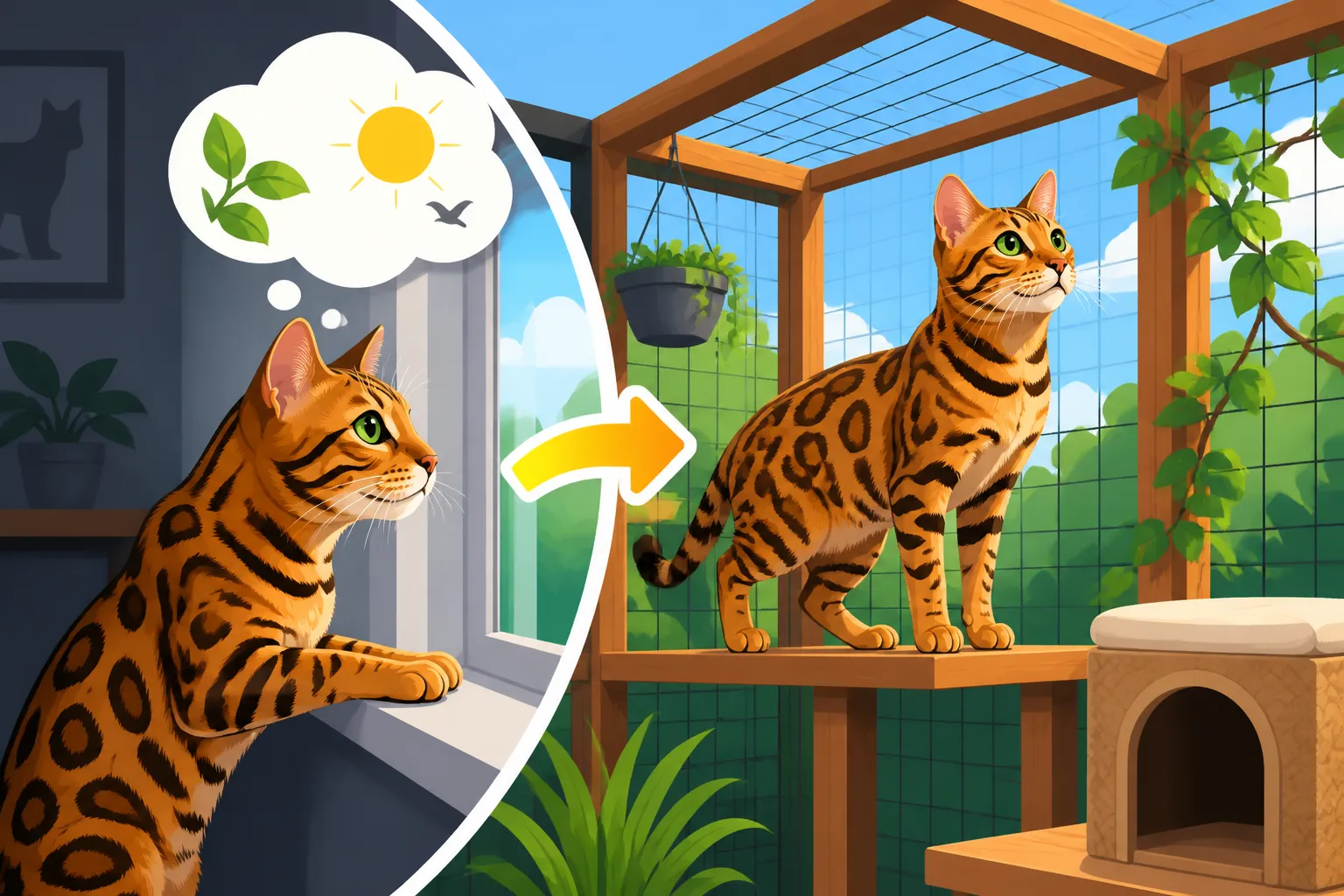
Simply looking out a window, while momentarily entertaining, is rarely enough to satisfy this profound craving for sensory input. A Bengal needs to be in nature, even if it's a carefully curated and enclosed slice of it. Without this connection, they can become restless, prone to destructive behaviors, or even develop anxiety. It's not that they are "bad" cats; it's that their environment isn't meeting their intrinsic needs. They are hardwired to explore, climb, and observe in a dynamic, ever-changing setting, something an indoor-only existence often struggles to provide adequately.
High Energy, High Demands: What an Indoor Bengal Needs
If you've ever owned a Bengal, you know their energy levels are off the charts. They are The Bengal Cat Is the Most Active Cat You Can Own, often described as having dog-like energy and a playful spirit that lasts well into adulthood. They're not content to simply lounge on the sofa for hours on end, though they certainly enjoy a good cuddle after a rigorous play session. Their days need to be filled with purposeful activity, mental challenges, and opportunities to burn off that incredible energy.
An indoor-only Bengal often requires multiple intense play sessions throughout the day, complex puzzle toys, and a home environment rich with vertical climbing spaces. Think tall cat trees, wall-mounted shelves, and plenty of interactive toys. Even with the most dedicated owner, it can be challenging to replicate the varied stimulation and sheer physical exertion that outdoor exploration naturally provides. This is where the concept of a catio truly shines. It provides an extension of their indoor world that caters directly to their high energy needs, allowing them to sprint, jump, and observe in a way that feels natural and fulfilling. Without such an outlet, their boundless energy can quickly turn into frustration, leading to problems that are difficult to manage within the confines of a house.
Safety First: Protecting Your Bengal Cat Outdoors
Every Bengal owner faces a dilemma: their cat clearly wants to be outside, but the dangers are undeniably real. Allowing a Bengal to free-roam outdoors, even in what seems like a safe neighborhood, exposes them to a host of risks that can drastically shorten their lifespan or lead to serious injury. A catio provides a secure middle ground, offering all the benefits of outdoor access without any of the terrifying downsides.
The Real Dangers of Free-Roaming for Bengals
Let's be brutally honest: letting a Bengal cat roam freely outdoors is a gamble with their life. Despite their wild ancestry, domesticated Bengals lack the full survival instincts of a true wild feline. They are vulnerable to traffic accidents, which are tragically common. They can also fall victim to intentional harm from people who don't appreciate cats on their property, or accidental poisoning from lawn chemicals or antifreeze. There's also the very real risk of them getting lost or stolen. A Bengal's striking appearance and often friendly demeanor make them targets for people looking to re-home or even sell a beautiful "wild-looking" cat.
Furthermore, free-roaming Bengals contribute to a significant problem for local wildlife. Their natural hunting prowess, while impressive, means they can decimate bird populations and other small animals. As responsible pet owners, we have a duty to protect both our cats and the environment. A catio eliminates these dangers entirely, giving your Bengal the outdoor sensory experience they crave without putting them in harm's way. It means you can rest easy, knowing your adventurous companion is safe and sound, enjoying the fresh air without any life-threatening risks. You might wonder, How Long a Bengal Cat Would Survive Outdoors – the answer is often not very long in an urban or suburban environment.
Keeping Your Bengal Safe from Predators and Pests
Beyond human-related dangers, the natural world itself presents threats to an unsupervised Bengal. Depending on your location, coyotes, foxes, raptors, and even aggressive dogs can pose a severe danger. While a Bengal is agile, they are still domestic cats and are no match for larger predators. These encounters can be fatal or result in horrific injuries and costly vet bills. Even smaller, seemingly innocuous creatures like raccoons can be dangerous if a confrontation occurs, potentially transmitting diseases or causing injury.
Then there are the unseen threats: parasites and diseases. Fleas, ticks, and internal parasites are far more prevalent in outdoor cats. They can pick up nasty illnesses like feline leukemia (FeLV) or feline immunodeficiency virus (FIV) from interactions with other cats, even brief ones. These diseases can be devastating and significantly shorten a cat's life. A catio acts as a protective barrier, allowing your Bengal to observe the natural world from a safe distance. They can watch birds and squirrels, feel the breeze, and smell the scents of the garden without the risk of becoming prey, picking up fleas, or contracting a preventable illness. This enclosed space protects them from accidental ingestion of toxic plants or chemicals used in gardening, further enhancing their safety.
Enrichment and Mental Stimulation
One of the greatest benefits of a catio is the unparalleled level of enrichment and mental stimulation it offers a Bengal cat. Their keen intellect and high activity levels demand more than just toys scattered around the living room. A catio transforms a simple outdoor space into a dynamic, engaging environment that truly satisfies their complex needs.
Satisfying the Hunter Within: Play and Exploration
Bengal cats are natural hunters, even if their "prey" is just a dust bunny or a wiggling wand toy. This predatory instinct is a significant part of their genetic makeup. A catio provides a safe arena for them to engage these instincts in a more natural setting. They can "hunt" insects, observe birds, and stalk leaves blowing in the wind. The sheer variety of textures, sounds, and smells stimulates their senses in a way indoor environments simply cannot. You might even observe them engaging in "pouncing" and "stalking" behaviors as they track a butterfly outside the mesh, offering a healthy outlet for these powerful drives.
Beyond hunting, a catio is a perfect space for exploration. Many catios incorporate multiple levels, ramps, shelves, and even tunnels, mimicking the varied terrain a wild cat would navigate. This vertical space is crucial for Bengals, who are superb climbers and enjoy being high up to survey their domain. They can leap, bound, and climb to their heart's content, getting the physical exercise they need while constantly discovering new perspectives. This freedom to move and explore in a semi-wild environment is incredibly enriching, preventing boredom and keeping their agile minds sharp. Think about it: a regular cat tree, no matter how tall Which Cat Tree a Bengal Cat Needs, can't compete with the vastness and ever-changing landscape of an outdoor enclosure.
Sensory Overload: Sights, Sounds, and Smells
For a Bengal cat, the outdoors is a symphony of sensory experiences. Imagine the subtle scent of damp earth after a rain, the rustle of leaves in the wind, the distant chirping of birds, and the visual tapestry of a bustling garden. These are all things an indoor cat misses out on. A catio opens up this entire world to them, providing a constant stream of novel sensory input that keeps their brains engaged and happy. They can watch squirrels chase each other up trees, observe passing clouds, and feel the gentle warmth of the sun or the cool kiss of a breeze.
This sensory richness is vital for preventing mental stagnation in such an intelligent breed. Bengals thrive on novelty and stimulation. The ever-changing environment of a catio provides exactly that. One day it might be a new bird visiting the feeder, the next a fascinating beetle crawling on the mesh. These small events provide endless entertainment and satisfy their innate curiosity. It's a natural form of entertainment that requires no effort from the owner beyond the initial setup, offering a perpetual "nature channel" for your feline friend. This kind of consistent, varied stimulation is far more effective at preventing boredom than any single toy or daily play session, contributing significantly to their overall well-being.
Preventing Destructive Indoor Behaviors
Many of the common "bad" behaviors attributed to Bengal cats aren't actually bad behaviors at all; they're often symptoms of a bored, under-stimulated, or overly energetic cat acting out. Without an appropriate outlet for their natural instincts, Bengals can become destructive or disruptive within the home. A catio provides a crucial escape valve, helping to channel their energy and intelligence in positive ways.
When Boredom Leads to Trouble: Common Bengal Antics
A bored Bengal is a creative Bengal, and unfortunately for your household, that creativity often manifests in ways you'd rather avoid. These cats are incredibly adept at solving problems, even if the "problem" is how to get into the forbidden cabinet or scale your delicate curtains. Common issues include excessive vocalization – that distinct Bengal "yowl" that demands attention – or inappropriate scratching that goes beyond what their many scratching posts can handle. They might start What a Bored Bengal Cat Destroys, from furniture to personal belongings, simply because they have too much pent-up energy and not enough constructive ways to release it.
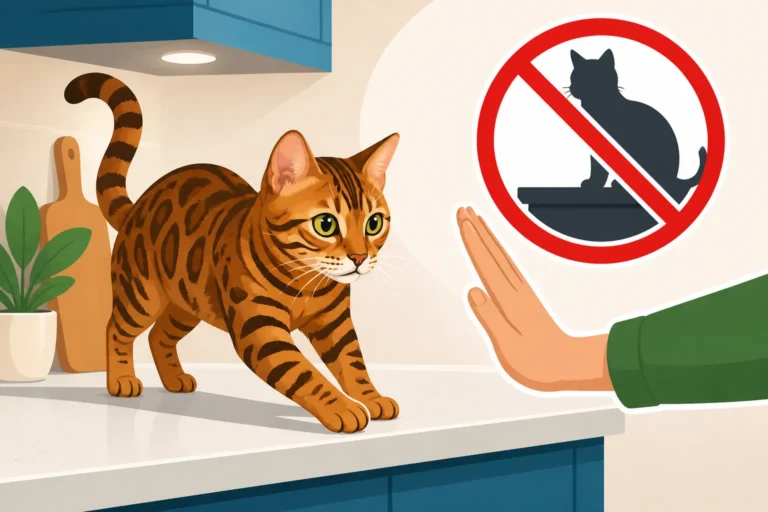
Bengals are known for being able to A Bengal Cat Opens Cabinets, Doors and Drawers. They'll open pantry doors, explore kitchen counters, and sometimes even figure out how to open refrigerators if you're not careful! This isn't out of malice, but pure, unadulterated curiosity and a need to investigate. A catio gives them a sanctioned space to explore, climb, and expend energy, significantly reducing the likelihood of them applying their formidable problem-solving skills to your household items. It allows them to fulfill their need for investigation and movement in an environment designed for it, rather than turning your home into their personal playground of destruction.
Creating a Harmonious Home Environment
By providing a dedicated catio, you effectively give your Bengal an "outdoor living room" where they can be their wild, energetic selves without causing chaos indoors. This separation allows them to decompress, explore, and simply be a cat, which, in turn, makes them calmer and more relaxed when they return inside. When their instinctual needs are met through outdoor access, they are less likely to exhibit unwanted behaviors inside the home. This leads to a more peaceful coexistence between you and your feline companion.
Imagine coming home to a house where your Bengal is contentedly napping after a vigorous catio session, rather than tearing through the house or yowling for attention. A catio facilitates this harmonious balance. It helps manage their energy levels, provides intellectual stimulation, and allows them to perform natural behaviors like climbing, observing, and "hunting" in a designated safe space. This leads to less stress for both the cat and the owner, fostering a stronger bond built on mutual understanding and respect for their unique needs. It can even positively impact How Long a Bengal Cat Can Be Left Alone without getting into trouble.
Types of Catios and What to Consider
Deciding to get a catio is one thing; choosing and installing the right one is another. The market offers a wide variety of options, from small window boxes to elaborate custom-built enclosures. Understanding the different types and what features are essential for a Bengal cat will help you make an informed decision that suits both your cat's needs and your living situation.
From DIY to Pre-Built: Finding the Right Catio for Your Home
When it comes to catios, you've got a spectrum of choices, each with its own benefits and considerations.
DIY Catios: For the handy homeowner, building a catio from scratch can be a rewarding project. It offers the ultimate flexibility in terms of size, shape, and features, allowing you to perfectly integrate it into your home's architecture and your Bengal's specific preferences. You can source materials from local hardware stores or even use recycled items. However, a DIY approach requires significant time, skill, and careful planning to ensure it's secure, safe, and durable enough to withstand an energetic Bengal. You'll need to consider everything from the framing materials to the type of mesh, and how it attaches securely to your house or stands independently.
Modular Catios: These are fantastic mid-range options. Modular catio kits come with pre-cut panels, connectors, and instructions, making assembly much easier than a full DIY build. They offer some flexibility in configuration, allowing you to expand or modify them as needed. You can often find a variety of sizes and shapes, from simple balcony enclosures to multi-level structures. Many manufacturers design these with safety and durability in mind. You can often find excellent modular kits on platforms like Amazon, offering a good balance between customization and ease of installation.
Custom-Built Catios: If your budget allows, a professional builder specializing in catios can create a truly bespoke outdoor haven for your Bengal. This option offers maximum integration with your home, often appearing as a seamless extension of your living space. Experts can advise on materials, design for specific environmental challenges (like sun exposure or wind), and incorporate unique features tailored to your cat. While the most expensive option, it guarantees a high-quality, long-lasting, and aesthetically pleasing solution.
| Catio Type | Pros | Cons | Best For |
|---|---|---|---|
| DIY | Fully customizable, potentially cost-effective | Requires skill, time, planning, potential for errors | Handy owners, unique spaces, tight budgets |
| Modular Kit | Easier assembly, expandable, good design | Less customization than DIY, pre-set sizes | Most homeowners, good balance of cost/effort |
| Custom Built | Perfect integration, professional quality | Most expensive, relies on builder's expertise | High budgets, seamless aesthetic integration |
Regardless of the type you choose, ensure the materials are robust. Bengals are strong, agile, and persistent. Cheap mesh or flimsy frames won't hold up to their antics for long, potentially leading to escapes or damage.
Essential Features for a Bengal-Friendly Catio
Designing a catio for a Bengal cat isn't just about putting up a fence; it's about creating an engaging, stimulating environment that caters to their specific needs. Here are some essential features to consider:
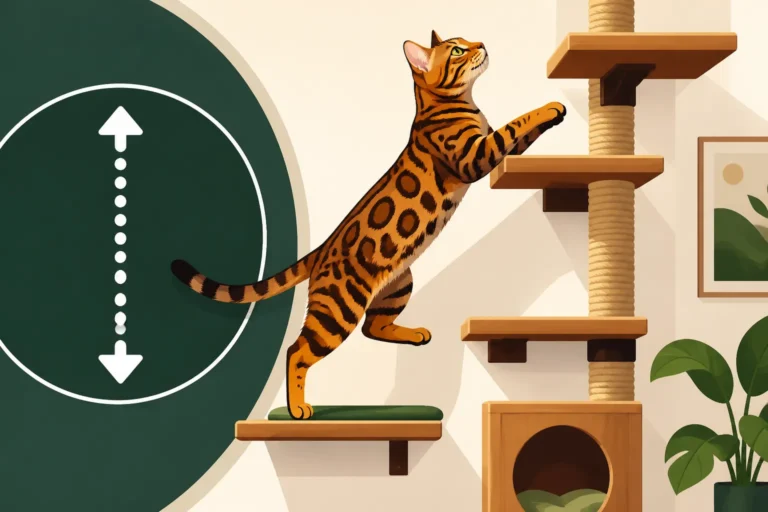
- Vertical Space and Climbing Opportunities: This is non-negotiable for a Bengal. Include multiple shelves, ramps, and even tree branches for climbing. They love to survey their domain from high vantage points. Consider incorporating a cat tree or two within the catio itself to add even more climbing options. Remember, Bengals How High a Bengal Cat Climbs and will use every inch of vertical space available.
- Secure Enclosure: The mesh or wiring must be strong and securely fastened to prevent escapes. Think heavy-gauge, chew-proof material. Double-check all seams and attachment points. Bengals are clever and will test every weakness. Small gaps can become large escape routes.
- Weather Protection: While they love the outdoors, Bengals still need protection from extreme weather. Include a sheltered area with a roof or awning to provide shade from the sun and cover from rain. A cozy cat bed or cubby within this area will also be appreciated for naps.
- Water Access: Offer fresh water in a sturdy bowl. Bengals are known for their love of water, so a small, secure water feature or a flowing fountain can be a fantastic addition, though ensure it's safe and doesn't create a drowning hazard.
- Enrichment Items: Don't just build an empty box! Add scratching posts, puzzle feeders, sturdy toys, and even some cat-safe plants (like catnip or cat grass). Rotate these items to keep things fresh and interesting. You can find a vast array of enrichment toys suitable for catios on sites like Amazon.
- Escape-Proof Doors/Access Points: If your catio has a door for human access, ensure it's secure and self-latching. If it connects directly to your house via a window or pet door, make sure that entry point is also secure and can be closed when needed.
- Easy to Clean: Catios will collect leaves, dirt, and inevitably, cat waste. Design it with materials that are easy to hose down or wipe clean. Removable shelves or platforms can make deep cleaning much simpler.
Remember to consider the What Size Catio a Bengal Cat Needs based on how many cats you have and how much time they'll spend in it. A larger catio offers more room for movement and exploration, which is always a plus for an active breed like the Bengal. Also, think about What to Put in a Bengal Cat's Catio to maximize their enjoyment and well-being.
Disclaimer
This article is for general informational purposes only and does not constitute professional advice. Laws, prices and regulations vary by location and change over time. Consult a qualified professional for guidance on your specific situation.