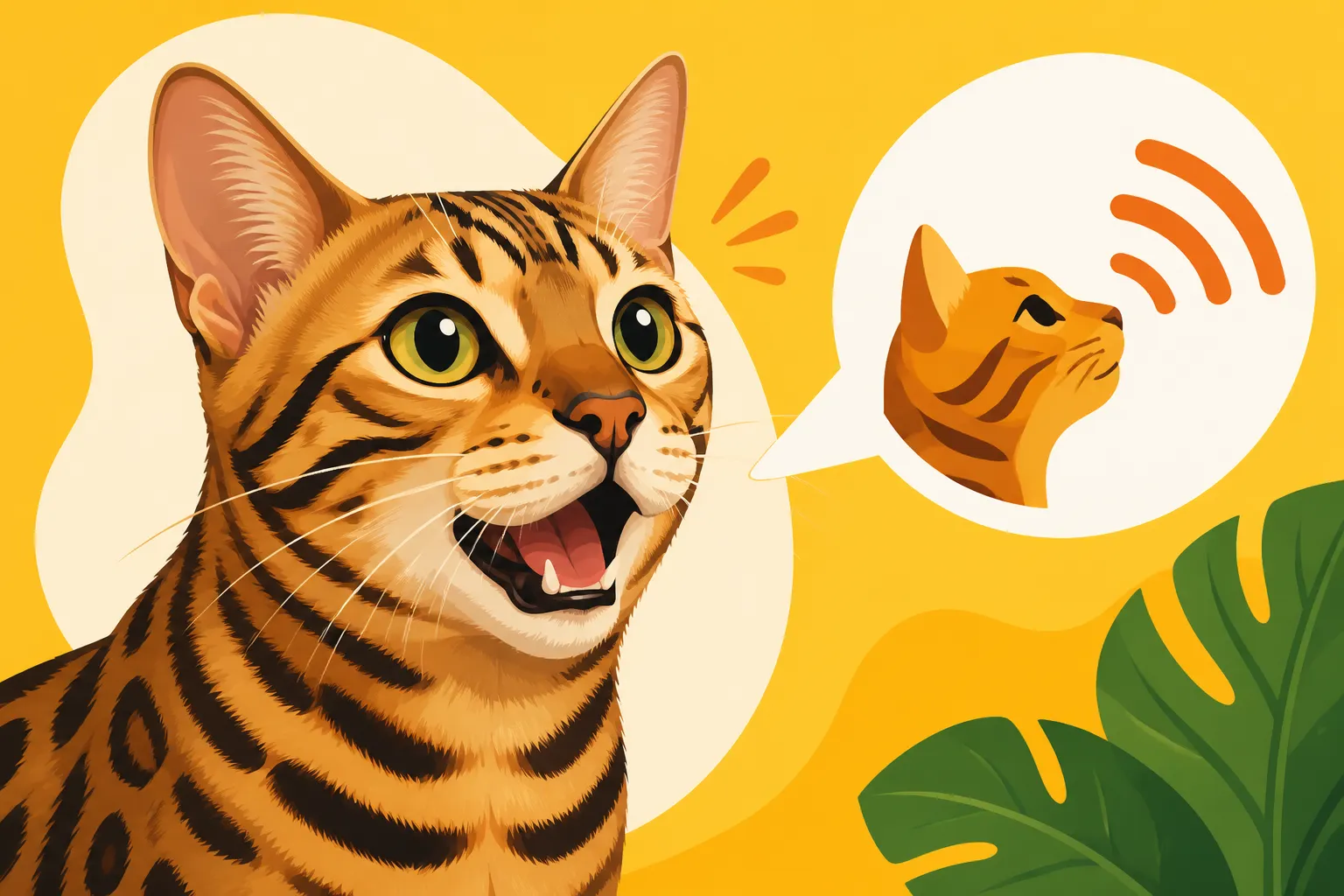
What a Bengal Cat’s Chirp Means
One of the most charming, yet sometimes confusing, aspects of living with a Bengal cat is their incredibly diverse and often unexpected vocal repertoire. If you've ever heard a sound that wasn't quite a meow, not exactly a purr, but something distinctly… bird-like, you've likely experienced the Bengal cat's unique "chirp." This guide will help you understand what your Bengal is trying to tell you with this peculiar and captivating vocalization, delving into its origins and implications.
The Bengal's Diverse Vocal Spectrum
Bengal cats aren't your typical quiet housecats; they have a reputation for being quite vocal, and for good reason! Their voices are a fascinating blend of domestic feline sounds and whispers of their wild heritage. It's not just a simple "meow" you'll get from a Bengal; you'll hear everything from demanding yowls to trills and, of course, that distinctive chirp. Understanding this broad range is key to interpreting their needs and moods.
The Bengal's Diverse Sound Repertoire
If you've spent any time around a Bengal, you know they're not shy about expressing themselves. Many owners describe their Bengals as having a conversation, often responding to their human's words with a variety of sounds. This isn't just a quirk; it's a fundamental part of their communication style. From soft, rumbling purrs that vibrate through you to piercing yelps when they step on your foot, their emotional spectrum is laid bare through their vocalizations. They'll use a specific set of sounds to communicate hunger, another for play, and yet another when they simply want to tell you about their day. This expressiveness is part of what makes them such engaging companions, even if it sometimes means being "told off" for not opening the door fast enough. You might even find yourself recognizing certain patterns, almost like a secret language between you and your feline friend.
Why Vocalizations Are So Pronounced in Bengals
The sheer volume and variety of sounds a Bengal makes can often be traced back to their Asian Leopard Cat (ALC) ancestry. While several generations removed, these wild instincts still peek through. Wild cats, unlike many domesticated breeds, rely less on constant meows and more on distinct sounds for specific purposes – warning, calling to their young, or expressing distress. Bengals have retained some of this primal linguistic diversity, which makes their vocalizations incredibly rich and nuanced. Domesticated cats primarily meow to humans, a sound they largely develop for us, but Bengals seem to carry a broader dictionary. This isn't just about making noise; it’s about conveying complex messages. Their pronouncements are often direct and intentional, leaving little room for misinterpretation once you learn to speak "Bengal." Their vocal nature is simply another facet of their highly intelligent and communicative personalities, often making The Bengal Cat Voice Is a Demand, Not a Demand, Not a Greeting a very apt description.
The Anatomy of a Bengal Chirp
So, what exactly is a chirp in the context of a Bengal cat? It's not a standard meow, nor is it a purr. It's a distinct sound that often catches new Bengal owners off guard. Think of it as a conversational bridge, a vocal shorthand that communicates excitement, focus, or even a specific kind of beckoning.
What Does a Chirp Sound Like?
Imagine a sound somewhere between a bird's soft call and a rapid, trilling purr. A Bengal chirp is often a short, high-pitched, staccato burst of sound, sometimes repeated in quick succession. It's less drawn out than a meow and has a softer, almost questioning or inviting tone. Some people describe it as a "chatter" or a "trill," while others feel it genuinely mimics a bird's song. It's usually quiet enough not to be alarming but distinct enough to grab your attention. It's a sound that suggests immediate engagement rather than a general complaint or request. When you hear it, it's almost like your Bengal is making a focused, direct comment, perhaps about something they've just noticed or are intensely interested in. This unique vocalization is a hallmark of the breed, contributing to the mystique of their wild appearance.
How a Bengal Cat Produces a Chirp
The production of a chirp is quite different from a standard meow. A meow typically involves a full opening and closing of the mouth, allowing for varied pitch and length. A chirp, however, often involves a more constricted vocalization, almost like a rapid vibration of the vocal cords while the mouth is only slightly open or even mostly closed. This is why it has that distinct, trilling quality. It's thought to be a more primitive or instinctual sound, a sort of half-vocalization that can be made quickly without breaking concentration on an object of interest. The air flow is often interrupted or controlled in a way that gives it that staccato, bird-like quality. It requires a specific muscular contraction in the larynx that allows for that unique rapid, vibrating sound. It's a testament to the versatility of their vocal anatomy and their capacity for complex communication beyond simple meows.
Variations in Chirp Intensity and Tone
Just like human speech, a Bengal's chirp isn't always the same. You'll notice variations in intensity, pitch, and repetition, each conveying a slightly different nuance. A soft, almost whispered chirp might be a gentle invitation to play or a quiet greeting. A more urgent, louder, and rapidly repeated chirp could indicate high excitement, frustration at an unreachable bird outside the window, or a determined call for your immediate attention. The tone can also shift – a "happy" chirp sounds light and airy, while a slightly deeper, more guttural chirp might hint at a mild annoyance or a deeper focus on prey. Learning these subtle shifts in their chirping patterns is like learning a dialect of their language. For instance, a Bengal might give a short, sharp chirp as a warning to a playful paw that's gotten too close, versus a long, drawn-out trill when they see a squirrel. These variations are important cues for you, the observant owner, to truly understand What a Bengal Cat's Chirrup Means in any given moment.
Common Meanings of the Bengal Chirp
The chirp is not a one-size-fits-all vocalization; its meaning is heavily dependent on the context in which it occurs. From expressing joy to communicating specific desires, the chirp is a versatile tool in your Bengal's communication arsenal.
Excitement and Anticipation
One of the most frequent reasons a Bengal cat chirps is out of excitement and anticipation. Imagine your Bengal perched on a windowsill, eyes locked onto a bird or squirrel just out of reach. That rapid, chattering chirp isn't just noise; it's an expression of intense, almost primal excitement. It’s the sound of their hunting instincts revving up, a combination of thrill and perhaps a touch of frustration at being separated from their "prey." You might also hear it when you're preparing their favorite meal, or when they see you reach for their beloved wand toy. This type of chirp is usually accompanied by dilated pupils, a twitching tail, and a laser-like focus. It's their internal wild cat showing through, eager to engage with the world, whether through hunting or through an exciting play session with you.
Hunting and Play Instincts
Closely tied to excitement, the chirp is a prime indicator of your Bengal's strong hunting and play drives. When they're "stalking" a dust bunny under the sofa or watching a laser pointer dot dance across the wall, you might hear a low, focused chirp. This isn't just random noise; it's often theorized to be an instinctual sound that mimics the calls of potential prey, or perhaps a way for them to "practice" their hunting vocalizations. For them, play is hunting, and they take it very seriously. A Bengal might chirp at a toy mouse they've just "caught" or as they pounce on a crinkly ball. It’s part of their innate predatory sequence, a vocalization that prepares them for the chase and the capture. This intense focus during play is why you'll find them using Which Wand Toy a Bengal Cat Destroys Fastest or chasing How a Bengal Cat Reacts to a Laser with such fervor, often accompanied by these unique vocalizations.
Seeking Attention or Interaction
Beyond hunting, the Bengal chirp is often a clear call for attention or an invitation to interact. If your Bengal chirps at you from across the room, it could be their way of saying, "Hey, human, look at me!" or "Come over here and play!" This might be a soft, gentle chirp when they want a cuddle, or a more persistent, slightly louder series of chirps if they feel ignored. They're incredibly intelligent and social creatures, and they understand that certain sounds elicit specific responses from you. A well-placed chirp can be far more effective than a standard meow in getting you to pause your activities and engage with them. They might even chirp as they bring you a toy, clearly signaling, "It's playtime, let's go!" This interaction-seeking chirp is a sign of their strong bond with you and their desire to be a central part of your daily life. They truly want to be involved in whatever you're doing, and their chirp is often the first step in initiating that connection.
Greeting and Communication
Finally, the chirp can simply be a form of greeting or general communication. When you walk into a room, your Bengal might offer a polite, welcoming chirp, much like a casual "hello." This is different from a demanding meow; it's often softer, more relaxed, and implies contentment and recognition. They might chirp at other pets in the household as a non-threatening acknowledgment or even a play invitation. It's a friendly sound, often accompanied by a soft head-butt or a gentle rub against your legs. In a multi-cat household, you might observe two Bengals chirping back and forth, almost like a brief conversation before they settle down together for a nap or embark on a shared adventure. This use of the chirp highlights their social nature and their sophisticated ability to communicate affection and acknowledgment without resorting to louder, more insistent vocalizations. It’s a subtle nod, a quiet check-in, or a warm welcome home after a long day.
Distinguishing Chirps from Other Sounds
Given the Bengal's wide array of vocalizations, it's easy to confuse a chirp with other sounds. However, understanding the subtle differences is crucial for correctly interpreting your cat's message. While they might occasionally use sounds that blend, most Bengal vocalizations have distinct characteristics and intentions.
Chirp vs. Meow
The most fundamental distinction is between a chirp and a meow. A meow is typically a longer, more drawn-out vocalization, often used to express a general need: hunger, a desire to go outside, or simply a complaint. It varies widely in pitch and volume, from a tiny kitten's peep to a full-blown adult caterwaul. The mouth usually opens fully during a meow. A chirp, on the other hand, is short, staccato, and often sounds more like a trill or a rapid series of clicks. The mouth movement is minimal, if any, and the sound itself has a lighter, more focused quality. Think of a meow as a broad statement and a chirp as a pointed comment. If your Bengal meows, they're likely expressing a general feeling or request. If they chirp, they're likely focusing intensely on something specific, or offering a quick, friendly acknowledgment. While a Bengal certainly uses a standard meow to communicate, especially when they really want your attention, the chirp is reserved for different contexts.
Chirp vs. Growl or Hiss
It’s unlikely you'd confuse a chirp with a growl or a hiss, but it's important to understand the emotional spectrum. A growl is a low, guttural rumble signaling warning, fear, or aggression. A hiss is a sharp, expelled breath, clearly indicating defensive or offensive threat. Both are unmistakable signs of distress or anger. A chirp, by contrast, is almost always a positive or neutral vocalization, indicating excitement, curiosity, greeting, or an invitation to play. There's no aggression or fear implied in a chirp. If you hear a chirp, you can generally be assured your Bengal is in a good mood or at least not feeling threatened. The body language accompanying these sounds will also be vastly different. A growling or hissing Bengal will have flattened ears, a puffed-up tail, and an arched back, ready to defend itself. A chirping Bengal will usually appear alert and engaged, but relaxed, with an inquisitive gaze and often a twitching tail, eager for interaction.
The Chirrup: A Close Relative
Sometimes, the line between a chirp and a "chirrup" can seem blurry, but there's a subtle difference. A chirrup, as you might learn in What a Bengal Cat's Chirrup Means, is often a slightly softer, more drawn-out, and often rising inflection sound. It’s typically a greeting, a way for a cat to communicate with its kittens, or a friendly acknowledgment to another cat or human. It’s often used as an invitation to approach or a gentle question. A chirp, while sometimes used for greeting, is often more focused and rapid, specifically tied to heightened awareness, often related to hunting instincts or intense observation. Think of a chirrup as a welcoming, inquisitive sound, and a chirp as a more energized, almost internal "gotcha!" or "look!" sound. While both are positive and charming vocalizations, the chirrup leans more towards social bonding, while the chirp leans more towards interaction with the environment or play.
| Vocalization | Typical Sound Quality | Primary Contexts | Mouth Position | Emotional Tone |
|---|---|---|---|---|
| Chirp | Short, sharp, staccato, bird-like trill | Excitement, hunting, focused attention, mild greeting, play invitation | Slightly open or mostly closed | Curious, excited, engaged |
| Meow | Longer, drawn-out, varied pitch and volume | General request (food, attention), complaint, greeting | Fully open | Wide range (demanding, plaintive, happy) |
| Chirrup | Soft, rising inflection, gentle trill | Friendly greeting, calling kittens, invitation to approach | Slightly open | Affectionate, welcoming, inquisitive |
| Growl | Low, rumbling, guttural | Warning, fear, aggression, territorial defense | Open, showing teeth | Threatening, angry, scared |
| Hiss | Sharp, expelled breath | Fear, threat, defensive warning | Open, showing teeth, ears flattened | Defensive, aggressive, terrified |
Responding to Your Bengal's Chirp
Now that you understand what a chirp is and why your Bengal might be doing it, the next step is knowing how to respond appropriately. Your reaction can reinforce their communication and strengthen your bond.
Deciphering the Context
The first rule of responding to any cat vocalization is to observe the context. A chirp when your Bengal is staring intently at a bird outside requires a different response than a chirp when they're sitting by an empty food bowl. Look at their body language: Are their pupils dilated? Is their tail twitching? Are they looking directly at you, or at an object? For example, if they're chirping at a bird, a good response might be to join them by the window, point out the bird, or even offer a Which Puzzle Feeder a Bengal Cat Cannot Solve to redirect their hunting energy. If they're chirping at you from the doorway, perhaps they want to go into another room or are inviting you to play. Pay attention to the direction of their gaze, the posture of their body, and the specific tone of the chirp to get the full picture. Understanding the context helps you tailor your response, which is crucial for building trust and clear communication with your intelligent companion.
Appropriate Owner Responses
Once you've deciphered the context, your response can range from verbal affirmation to direct interaction. For an excitement chirp aimed at prey, a simple "Oh, look at that birdy!" can acknowledge their feeling. For an attention-seeking chirp, responding with a soft voice, gentle pets, or initiating a play session is often ideal. If they're chirping an invitation to play, grabbing a wand toy or even a simple crumpled paper ball found on your desk (which you can easily find on sites like Amazon if you're out of ideas!) can be a perfect response. If they chirp as a greeting, a return "hello" or a head scratch is usually all they're looking for. The key is to respond in a way that aligns with their perceived need. Ignoring a chirp consistently, especially an attention-seeking one, can lead to your Bengal escalating their vocalizations or finding less desirable ways to get your focus. They are highly communicative creatures, and a consistent, positive response reinforces their efforts to talk to you.
When a Chirp Might Indicate an Issue
While most chirps are positive or neutral, it's essential to be aware of rare instances where a change in vocalization could signal an underlying issue. If your Bengal suddenly starts chirping incessantly, particularly in unusual contexts, or if the chirp sounds strained or distressed, it might be worth a closer look. For instance, if a chirp is accompanied by signs of pain, discomfort, or unusual behavior, a vet visit might be warranted. This is generally rare for chirps, which are usually associated with positive arousal. However, any sudden, drastic change in vocal habits should always prompt a check-in. Perhaps they're chirping because they're stuck somewhere, or they've lost a favorite toy and are genuinely distressed. Just like with any shift in behavior, it’s about noticing what’s different from their normal patterns. For the most part, a Bengal's chirp is a joyful and engaging sound, but as responsible pet parents, we always keep an ear out for anything out of the ordinary.
Evolutionary Roots of the Chirp
The Bengal cat's wild ancestry isn't just visible in their stunning rosetted coats; it also echoes in their vocalizations. The chirp, in particular, has strong ties to their wild relatives, offering a glimpse into the communication strategies of their ancestors.
Connecting to the Asian Leopard Cat
The very existence of the Bengal cat is owed to the Asian Leopard Cat (ALC), and with that wild lineage comes a host of unique traits, including their diverse vocalizations. While domestic cats have largely evolved to meow primarily to humans, the ALC, like many wild felines, communicates with a broader and often more subtle range of sounds. Chirping is a common vocalization among smaller wild cats, used in various contexts from communication between mother and cubs to expressions of focus during hunting. It's a less attention-grabbing sound than a full-throated roar or even a demanding yowl, making it ideal for maintaining stealth while still communicating intent. The Bengal's chirp is a direct link to this ancestral heritage, a natural part of their genetic programming that helps them express excitement and hunting prowess. It's fascinating to consider that when your Bengal chirps, they are, in a small way, channeling the wild cat that roamed the forests of Asia.
Chirping in Wild Felines
Many wild felines, especially smaller species like the Asian Leopard Cat, servals, and even cheetahs, utilize a form of chirping or chattering. This isn't just a charming sound; it serves practical purposes in the wild. Mothers might chirp to call their cubs without alerting larger predators, a soft, reassuring sound that keeps the family together. During hunting, a low chatter or chirp can be an involuntary expression of intense focus and excitement, a sound of anticipation as they lock onto prey. It can also act as a form of communication within a hunting party, a subtle signal that doesn't betray their presence to the target. This behavior suggests that the Bengal's chirp is not merely a cute habit but a deeply ingrained, instinctual vocalization passed down through generations. When you see your Bengal intensely focused on a dust bunny or a toy, chirping away, you're witnessing a behavior that has helped wild cats survive and thrive for millennia. It's a reminder of the powerful, untamed spirit that still lies within your beautiful, spotted companion, making them so much more than just a housecat. This strong connection to their wild side is why they display How Much Exercise a Bengal Cat Needs a Day and have How Much a Bengal Cat Enjoys a Bath, behaviors often less common in other domestic breeds.
Disclaimer
This article is for general informational purposes only and does not constitute professional advice. Laws, prices and regulations vary by location and change over time. Consult a qualified professional for guidance on your specific situation.