Which Wand Toy a Bengal Cat Destroys Fastest
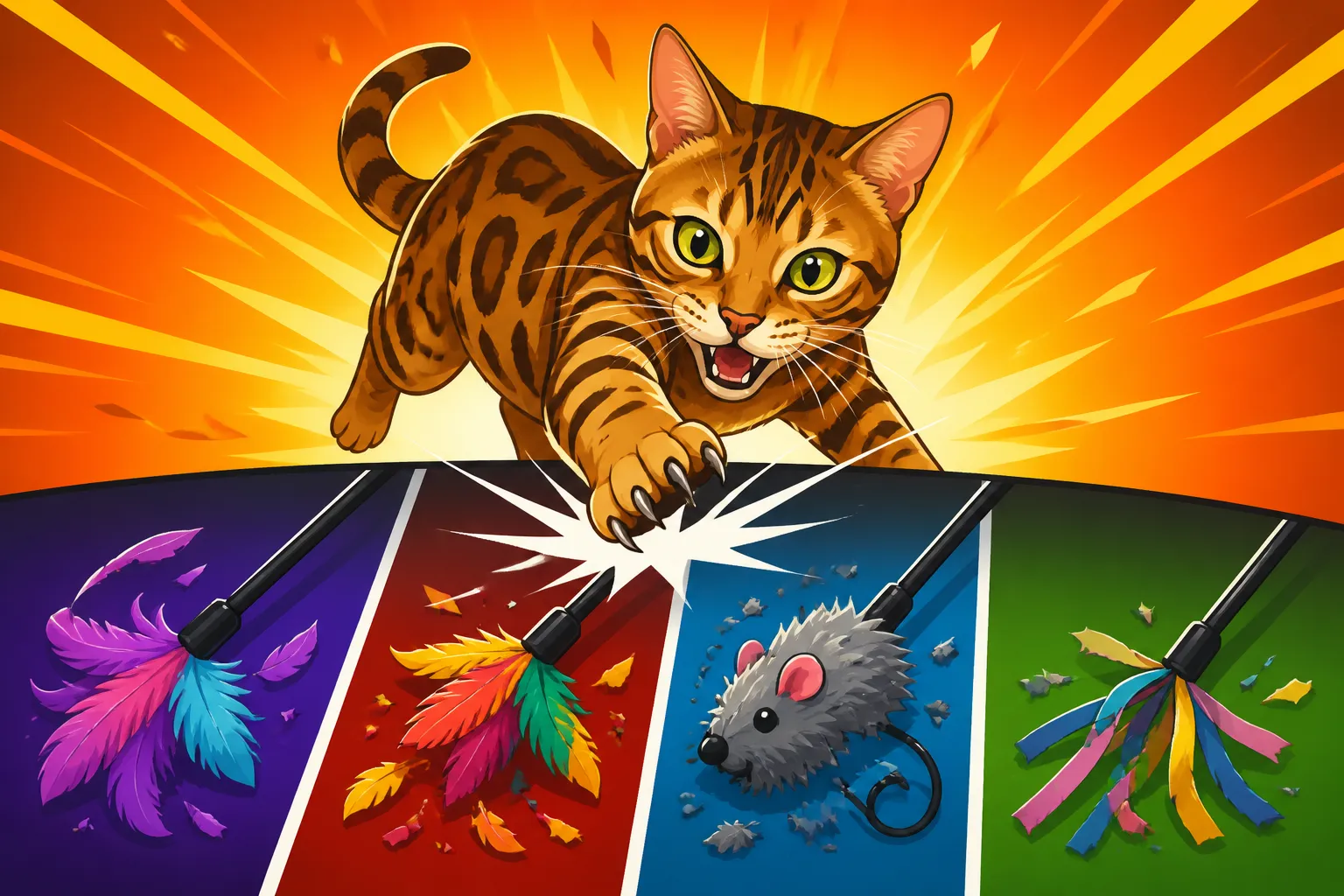
It's a familiar scene for any Bengal cat owner: you unbox a shiny new wand toy, your majestic leopard-spotted friend pounces with glee, and within what feels like mere minutes, it's reduced to a pile of feathers, string, and existential cat-parent dread. We've all been there, staring at the remnants of what was supposed to be a fun afternoon, wondering if there's any toy on Earth that can withstand the sheer force and ingenuity of a Bengal. This guide is here to walk you through why your Bengal turns toys into confetti, and what features to look for in wand toys that might actually stand a chance.
Why Bengal Cats Are Such Toy Destroyers
Let's face it, Bengal cats aren't your average couch potato kitties. They are a breed apart, brimming with energy, intelligence, and an intense predatory drive that makes playtime a full-contact sport. It’s not that they mean to destroy their toys; it's simply a natural consequence of their powerful instincts and physical capabilities. Understanding these underlying traits is the first step to finding toys that can keep up.
The High Prey Drive Factor
At the heart of every Bengal is a wild ancestor: the Asian Leopard Cat. This isn't just a pretty pattern; it's a deep-seated instinct for hunting, stalking, and "killing" prey. When your Bengal engages with a wand toy, they're not just batting at a feather; they are executing a full-on hunt. They'll stalk, pounce, bite, rip, and "kill" that toy with a ferocity that can surprise even experienced cat owners. This isn't a gentle play session; it's a simulated struggle for survival, and the toy is the unfortunate victim. The more realistic the "prey" feels, the more intensely they'll engage, and the quicker it will meet its demise. They want to feel like they've truly conquered their catch, and that often means dismembering it. This strong drive is why you might find your Bengal playing How Many Hours a Day a Bengal Cat Plays longer and harder than other breeds.
Unmatched Energy and Physicality
Have you ever watched your Bengal launch itself across a room, scale a cat tree in seconds, or wrestle with a toy with all four paws? Their athletic prowess is truly remarkable. These cats possess incredible strength, agility, and stamina. A flimsy plastic wand or a few delicate feathers are simply no match for a Bengal in full play mode. They jump incredibly high, twisting and turning in mid-air to catch their target. When they land, they often bring the full force of their body weight to bear on the toy, shaking it violently as if to break its neck. This isn't just about their sharp claws or teeth; it's about the sheer power behind every movement. They are The Bengal Cat Is the Most Active Cat You Can Own, and their bodies are built for vigorous activity, which translates directly into how they interact with their toys. This boundless energy is part of Why a Bengal Cat Never Seems to Tire.
Intelligence and Problem-Solving
Bengals aren't just athletic; they're incredibly smart. They quickly figure out how things work, and unfortunately, that includes figuring out the weak points in their toys. If a toy has a knot, they'll untie it. If a feather is glued on, they'll pull until the glue gives way. They're like little feline engineers, constantly testing the structural integrity of their playthings. They'll use their paws to hold down the "body" of the prey while meticulously dismantling the "head" or "wings." This intellectual engagement means they're not just blindly attacking; they're systematically breaking down the toy. This combination of mental prowess and physical strength is a huge factor in What a Bored Bengal Cat Destroys – they crave stimulation and will find ways to create it, even if it means deconstructing their entertainment. How Intelligent a Bengal Cat Is is truly something to behold, especially when it comes to toy destruction.
Common Weaknesses in Wand Toys Bengals Exploit
Knowing why your Bengal is a toy terminator is one thing, but pinpointing the how can help you make better purchasing decisions. Most wand toys, even those marketed for "active cats," often fall short because they haven't accounted for the unique destructive talents of a Bengal.
Flimsy Attachments and Feather Fails
This is probably the number one offender. The "lure" part of the wand toy – usually feathers, fabric strips, or small stuffed animals – is almost always the first to go. Why? Because it's designed to simulate prey, and your Bengal's instinct is to "kill" it.
- Weak Glue or Thread: Many feather attachments are simply glued onto a string or a small piece of plastic. A few good tugs, a vigorous shake, and those feathers are flying across the room, leaving a bald, stringy core. It's frustrating to watch a brand-new toy shed its plumage after just one play session.
- Delicate Materials: Real feathers, while appealing, are inherently fragile. Your Bengal's powerful jaws and sharp teeth will shred them in no time. Synthetic feathers or flimsy fabric strips fare little better, often tearing into smaller, less satisfying pieces that your cat might even ingest.
- Poorly Sewn Seams: For toys with stuffed animal lures, the seams are often the weakest link. Your Bengal will find that seam, work it open with their teeth, and gleefully pull out all the stuffing, leaving a sad, empty skin. It's a testament to their dedication to destruction, but not so great for your wallet.
Rod Material and Durability
While the lure gets the most attention, the rod itself isn't immune to a Bengal's destructive power.
- Brittle Plastic Rods: Many wand toys come with hollow, lightweight plastic rods. These are excellent for flicking and enticing, but a Bengal's strength can easily snap them. A particularly enthusiastic pounce, a sudden twist, or even just stepping on it in the heat of the moment can render it useless. Imagine your Bengal leaping for a toy, missing slightly, and then snapping the rod with a frustrated paw or a clumsy landing – it happens.
- Thin Metal Wires: Some wand toys use thin, flexible metal wires instead of rigid rods. While these offer great spring and bounce, they can kink, bend permanently, or even break if your Bengal gets a good grip on them and starts tugging or thrashing. A bent wire can become sharp or just lose its enticing "springiness."
String or Wire Vulnerabilities
The connection between the rod and the lure is another critical failure point. This is the "umbilical cord" of the toy, and Bengals are experts at severing it.
- Thin String or Elastic: Many toys use thin cotton string or elastic cord. While elastic provides a fun bounce, it's often not durable enough. Your Bengal will chew through it, fray it, or snap it during intense play. A simple string can be bitten through remarkably quickly, leaving your cat with the "kill" and you with a useless stick.
- Weak Crimps or Knots: Where the string or wire attaches to the rod, or to the lure, is often a point of vulnerability. Cheap crimps can pull apart, and loose knots can unravel. Your Bengal will explore these weak points with their teeth and paws, determined to free their prize. Finding a wand toy on Amazon with robust connections can be a game-changer.
| Wand Toy Component | Common Weaknesses for Bengals | Why it Fails |
|---|---|---|
| Lure (Feathers/Fabric) | Weak glue, delicate material, poor stitching | High prey drive, shredding, biting, "killing" instinct |
| Rod (Plastic/Wire) | Brittle plastic, thin metal that kinks | Powerful jumps, wrestling, accidental breakage during play |
| Connecting String/Wire | Thin string, elastic, weak crimps/knots | Chewing, tugging, deliberate severance to "free" prey |
What to Look For in a Durable Wand Toy for Your Bengal
So, armed with the knowledge of why and how your Bengal demolishes toys, what should you look for when you're trying to find something that lasts longer than five minutes? It's about seeking out specific features and materials that can withstand their unique brand of play.
Materials Built to Last
Durability starts with the right materials. Don't settle for flimsy; think robust.
- Heavy-Duty Rods: Look for wands made from solid, flexible fiberglass, thick, sturdy plastic, or even a flexible metal rod designed for serious use. These types of rods can bend and flex without snapping, absorbing the impact of your Bengal's powerful pounces and tugs. A good rod will feel substantial in your hand, not light and brittle. Remember, your Bengal needs How Much Exercise a Bengal Cat Needs a Day, and a robust wand can facilitate those intense play sessions.
- Reinforced Lure Materials: For the "prey" part, seek out lures made from tough, natural materials like leather, suede, or durable synthetic fabrics. Some companies offer lures made from thick felt or multiple layers of strong, tightly woven fabric that are much harder to tear. While real feathers are enticing, consider those that are densely packed or securely attached. Look for toys where feathers are encased in a stronger material or sewn onto a thick base rather than just glued. Some brands even offer lures made of small, tightly woven braided cords, which are much more resistant to shredding than individual feathers.
- Strong Connecting Line: The string or wire connecting the lure to the rod should be thick, braided, and made from a material like steel cable covered in nylon, or a heavy-duty fishing line equivalent. Avoid thin elastic or single strands of cotton string. A durable connection is crucial because your Bengal will tug, bite, and attempt to sever it. If it's a wire, ensure it's thick and has a good amount of recoil without kinking. Many excellent options can be found browsing through cat toys on Amazon, paying close attention to product descriptions and reviews mentioning durability.
Secure Connections and Smart Design
Beyond just the materials, how those materials are put together makes a huge difference. A toy made of strong stuff but with a weak link will still fall apart.
- Crimp-Free or Solid Attachment Points: Examine how the string attaches to both the rod and the lure. Look for designs where the string is woven through the rod or lure, or securely crimped with a heavy-duty, reinforced sleeve rather than a simple, thin metal crimp. Knots should be substantial, tightly tied, and ideally, reinforced with glue or heat-shrinking.
- Interchangeable Lures with Strong Clasps: This is a fantastic feature for Bengal owners. Many high-quality wands come with a small, strong swivel clasp (like a tiny fishing swivel) at the end of the string, allowing you to easily swap out lures. This means when your Bengal inevitably destroys a lure, you don't have to throw away the whole wand. You just replace the "prey." Look for clasps that are securely attached to the string and feel robust enough to withstand a strong tug. This also allows you to offer variety, which is great for keeping your Bengal engaged and helps How to Tire a Bengal Cat Before Bed.
- Streamlined Design: Sometimes, less is more. Toys with fewer small, fiddly bits or intricate embellishments tend to last longer because there are fewer points of failure for your Bengal to exploit. A simple, well-constructed lure of durable material often outperforms a highly detailed but fragile one.
The Importance of Rotation and Supervision
Even the toughest toy won't last forever with a Bengal. That's just a fact of life. But you can extend their lifespan and keep your Bengal happier with smart management.
- Toy Rotation: Don't leave all your best wand toys out all the time. Keep a selection of toys in rotation. When one or two are out, the others are "fresh" and exciting when reintroduced. This prevents your Bengal from getting bored of a single toy and focuses their destructive energy on fewer items at once.
- Supervised Play: Wand toys are interactive by nature, and they're best used under supervision. Not only does this allow you to actively engage with your cat, making playtime more stimulating, but it also means you can intervene if they start to chew excessively on a part that could break off and be ingested. If a toy starts to fray or break, you can remove it immediately before it becomes a hazard. This is particularly important because What a Bengal Cat's Gut Is So Sensitive, and ingesting foreign objects can cause serious problems.
- Know When to Retire a Toy: It's tough to say goodbye to a favorite toy, but once a wand toy starts showing significant wear and tear – exposed sharp edges on the rod, frayed string, or small pieces detaching from the lure – it's time to replace it. A partially destroyed toy can become a choking hazard or cause internal injury if ingested. Prioritizing your Bengal's safety is always paramount.
Top Contenders for Bengal Cat Durability
While no toy is truly Bengal-proof, some types of wand toys consistently prove more resilient than others. When you're browsing for new playthings, keep these categories in mind.
Feather Toys with Reinforced Attachments
Feather toys are irresistible to Bengals; it's the closest thing to catching a bird. The trick is finding ones where the feathers are attached with extreme prejudice.
- Dense, Multi-Layered Feather Clusters: Look for lures where the feathers are bundled together tightly, often with a sturdy core that's difficult to rip apart. Some designs use a thick, natural leather base where the feathers are deeply embedded or tied, rather than just glued to a thin string. These types stand up better to biting and tugging.
- Synthetic Feathers or Streamers: While not as authentic as real feathers, high-quality synthetic feathers or fabric streamers can be incredibly durable. Look for sturdy, rip-stop nylon, strong fleece, or even tough ribbons that are difficult for teeth to penetrate. The key is that they're securely fastened. You'll often find these types of robust feather replacements when searching for durable cat toys on Amazon.
Critter-Style Toys on Strong Wires
These toys often feature a small, stuffed animal-like lure, resembling a mouse, bug, or other small creature. The wire connection is crucial here.
- Durable Faux Fur or Felt Lures: The "critter" itself should be made of tough, tightly stitched fabric or faux fur that resists tearing. Think dense felt or a robust, short-pile faux fur. Avoid anything with easily detachable plastic eyes or noses; embroidered features are much safer and more durable.
- Thick, Coiled Wire Rods: Instead of a thin string, many of these toys utilize a thick, flexible coiled wire that connects the lure to the handle. This wire provides incredible spring and bounce, mimicking erratic prey movement, but it's much harder for a Bengal to bite through than string. The thick coil also distributes tension better, preventing kinks or snapping. Just be sure the wire is securely attached at both ends.
Interchangeable Head Systems
These are a Bengal owner's best friend. The rod is durable and designed to last, while the "fun" part (the lure) is meant to be replaced.
- High-Quality, Long Rods with Swivel Clasps: Invest in a sturdy wand with a comfortable handle and a strong, smooth-operating swivel clasp at the end of the line. Look for wands made from carbon fiber or fiberglass that are long enough to give your Bengal plenty of room to leap and chase without you having to get too close to the "kill zone."
- Variety of Tough Lures: Once you have a good base wand, you can purchase a range of interchangeable lures. Look for individual lures made from tough materials like braided leather, sturdy fabric strips, natural cork, or even small, densely packed yarn balls. Many brands offer "refill packs" of their most durable lures, which can be a cost-effective way to keep your Bengal entertained. This system is perfect for providing endless variety for a cat that What a Bengal Cat Weighs and plays hard. It also reduces waste, as you're not constantly replacing the entire wand.
Remember, the goal isn't necessarily to find an indestructible toy (because, let's be honest, that's a myth when it comes to Bengals!), but rather to find toys that offer a longer, more satisfying play experience before they inevitably succumb to the Bengal force. With a bit of strategic shopping and smart play habits, you can keep your energetic companion happily engaged and minimize the rate of toy destruction in your home.
Disclaimer
This article is for general informational purposes only and does not constitute professional advice. Laws, prices and regulations vary by location and change over time. Consult a qualified professional for guidance on your specific situation.