How to Keep a Bengal Cat Off the Counter
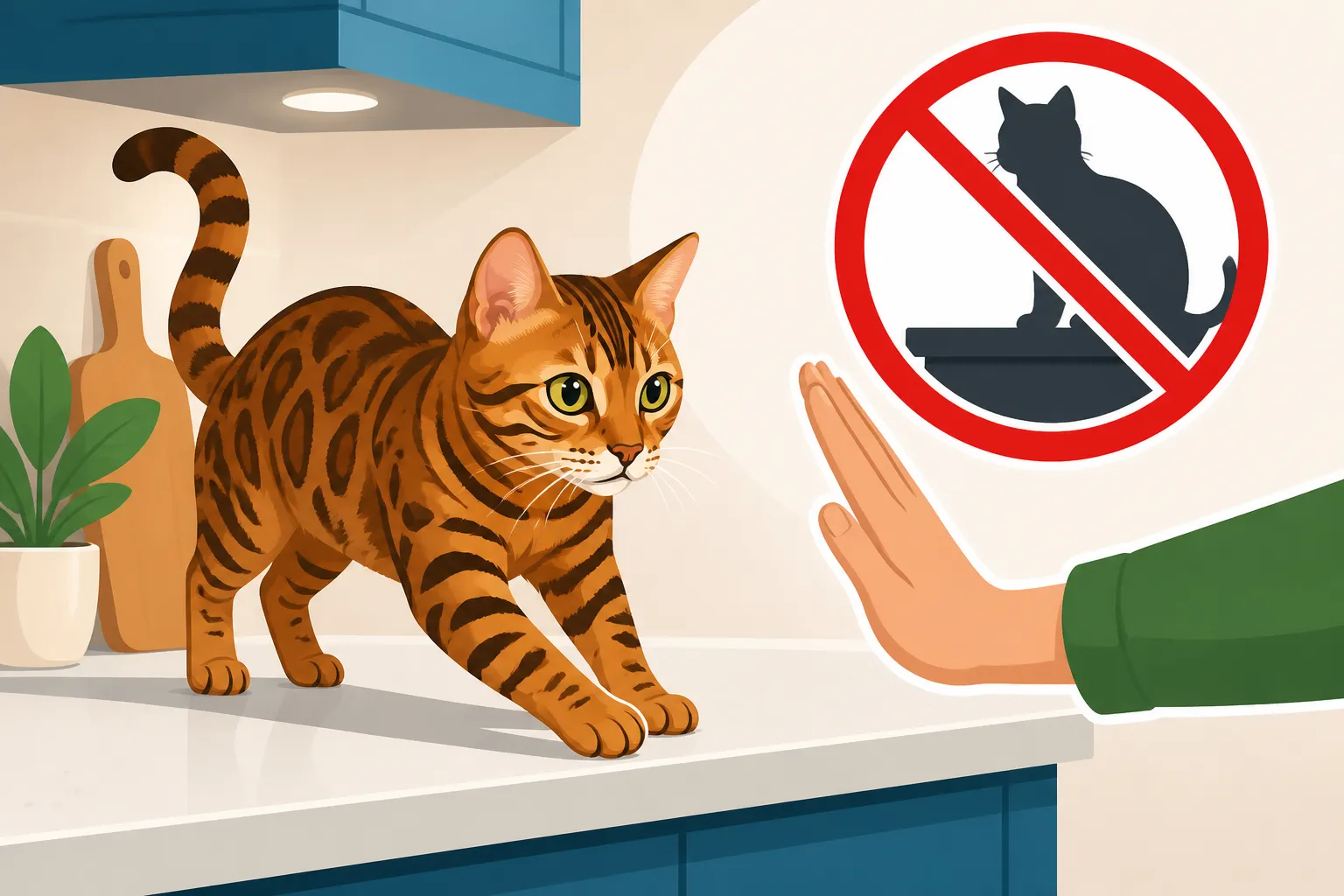
Bringing a Bengal cat into your life is an adventure, isn't it? Their striking patterns, endless energy, and sharp minds make them truly captivating companions. But let's be honest, that same adventurous spirit and athletic prowess often lead them to places we'd rather they didn't go – like our kitchen counters. It's a common struggle, and if you're pulling your hair out wondering how to keep your leopard-spotted friend grounded, you're absolutely not alone. This comprehensive guide is here to offer practical, empathetic advice to help you manage your Bengal's counter-surfing habits, keeping both your kitchen clean and your feline friend safe.
Understanding the Bengal Cat's Counter-Surfing Instinct
It’s easy to feel like your Bengal is just being naughty when they leap onto the counter. We often interpret it as defiance or a deliberate act of mischief. But for a Bengal, and indeed for many cats, jumping to high places is a deeply ingrained behavior, rooted in their evolutionary history and amplified by their unique breed characteristics. Understanding why they do it is the first step toward finding a solution that works for both of you.
The Natural Drive to Climb and Explore
Think about their wild ancestry, even if it's several generations back. The Asian Leopard Cat, from which Bengals descend, is a creature of the wild. In their natural habitat, high vantage points offer safety from predators, a superior hunting position, and a prime spot for surveying their territory. Your kitchen counter, to a Bengal, represents that same desirable high ground. It's a safe perch, an observation deck, and a place from which to watch the fascinating activity of their human "pride."
Bengals are incredibly agile and powerful jumpers. They can effortlessly clear astonishing heights, often much higher than a typical domestic shorthair. What might seem like an impossible leap for another cat is just another Tuesday for a Bengal. Their muscular build and powerful hind legs are designed for explosive vertical movement. For them, a countertop isn't a challenge; it's simply another surface to conquer. We have a whole article dedicated to just How High a Bengal Cat Can Jump, and it really highlights what we're up against!
This isn't about being disobedient; it’s about instinct. They aren’t thinking, "I shouldn't be here." They’re thinking, "This is a great spot!" Their innate curiosity also drives them to investigate every nook and cranny of their environment. If there's an unexplored surface, you can bet your Bengal will want to explore it.
Curiosity, Food, and Attention-Seeking
Beyond instinctual climbing, Bengals are incredibly intelligent and observant creatures. They watch you. They learn. They understand routines and consequences, often in ways that surprise their owners. They see you preparing food on the counter, they see you placing items there, and they connect that elevated surface with interesting activities and delicious smells. How a Bengal Cat Learns From Watching You is truly astounding; they're constantly absorbing information about their environment and the people in it.
Food, of course, is a massive motivator. Even if you're meticulously cleaning up, a lingering scent or a tiny crumb can be an irresistible lure. Bengals have a keen sense of smell, and the residual aroma of that chicken you cooked for dinner, or even the coffee grounds in the machine, can be enough to draw them up. If they’ve ever managed to snag a morsel, even once, they've been positively reinforced, and they'll try again and again.
Then there's the attention factor. Bengals are social and demanding cats. If jumping on the counter elicits a reaction from you – whether it's a startled gasp, a firm "No!", or even you physically moving them – they've achieved their goal of getting your focus. For some Bengals, any attention is good attention, and they'll quickly learn to associate counter-surfing with engaging with you. This is especially true if they're feeling a bit under-stimulated. A bored Bengal is a creative Bengal, and that creativity often manifests in behaviors we find undesirable. We've certainly seen plenty of stories about What a Bored Bengal Cat Destroys when their needs aren't met, and counters can easily become part of that destructive exploration.
Prevention is Key: Setting Up Your Home for Success
When it comes to keeping your Bengal off the counters, proactive measures are often far more effective than reactive ones. It's about setting up your home environment in a way that discourages counter-surfing while still fulfilling your cat's natural instincts. We want to make the counters less appealing and acceptable climbing spaces more appealing.
Providing Ample Vertical Space
Since we know Bengals love to climb and survey their territory from above, the most effective strategy is to give them approved, even better, alternatives to your countertops. Think of it as redirecting their wild energy into acceptable channels.
- Tall Cat Trees: Invest in cat trees that are truly tall, sturdy, and multi-level. A flimsy, short tree won't cut it for a Bengal's athleticism and need for height. Look for models that reach near the ceiling, offering multiple platforms and cozy perches. Place these strategically in areas where your Bengal likes to observe, perhaps near a window or in a room where the family gathers. This gives them their desired elevation without infringing on your space. For more on this, you might find our article What a Tall Cat Tree for a Bengal Cat Costs helpful, as quality makes a big difference here.
- Wall-Mounted Shelves and Cat Superhighways: This is often the ultimate solution for Bengal owners. Creating a network of sturdy shelves or a dedicated "cat superhighway" along your walls provides an incredible amount of vertical territory that's just for them. It allows them to climb, jump, and traverse their environment without ever touching your human surfaces. Ensure these are securely mounted and can withstand a Bengal's powerful leaps and vigorous play. Consider consulting our guide on How to Build Shelves for a Bengal Cat for practical tips on creating these enriching spaces. They will naturally use these spaces if they are engaging enough. How Much Vertical Space a Bengal Cat Needs is often underestimated by new owners.
The key here is making these approved vertical spaces more enticing than your counters. You can achieve this by placing favorite toys on them, offering treats on the highest perches, or ensuring they have a good view of outdoor activity.
Eliminating Temptations and Making Counters Undesirable
While providing alternatives is crucial, you also need to make the counters themselves as unappealing as possible. This involves both removing allurements and introducing deterrents.
-
Food Security: Leave No Trace: This might seem obvious, but it's astonishing how often we inadvertently leave temptations. Never leave food unattended on the counter, even for a moment. Wipe down surfaces thoroughly after cooking or eating to remove crumbs, spills, and lingering food scents. Dirty dishes should go straight into the dishwasher or be washed immediately. Don't leave pet food bowls on counters. If your Bengal manages to get a reward from the counter, they'll learn that it's a source of delicious finds.
-
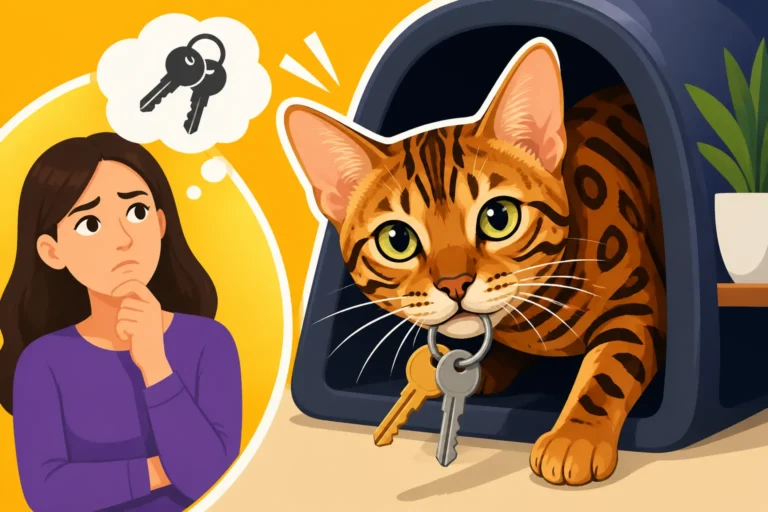
Clear Surfaces: Remove anything that your Bengal might find interesting to bat at, chew on, or knock over. Small appliances, decorative items, even pens and paper can become impromptu toys for a curious Bengal. A clear, boring counter is far less appealing than one cluttered with potential playthings. Remember, What a Bengal Cat Steals Most Often can be anything from your hair ties to your car keys, so assume anything left out is fair game!
-
Tactile/Surface Deterrents: Cats generally dislike unstable or unpleasant surfaces.
- Aluminum Foil: Covering your counters with crinkly aluminum foil can be a surprisingly effective short-term deterrent. Most cats dislike the feel and sound of walking on foil.
- Double-Sided Sticky Tape: Cats also dislike sticky surfaces on their paws. Applying strips of double-sided sticky tape (like the specific cat training tapes you can find on Amazon) to counter edges can create a very effective, harmless deterrent. Your cat will jump up, encounter the unpleasant stickiness, and quickly learn to avoid that particular surface.
- Clear Plastic Mats with Nubs: These mats, often used for desk chairs, can be cut to size and placed on counters with the spiky side up. They're uncomfortable to walk on but cause no harm. The clear material makes them less noticeable for humans.
-
Scent Deterrents: Some cats are repelled by certain scents. Citrus (lemon, orange) is a common one. You can use natural citrus sprays (avoid essential oils directly on your cat or surfaces they might lick, as some are toxic), or even place citrus peels on the counter. However, in my experience, the effectiveness of scent deterrents on determined Bengals can be limited; their curiosity often trumps a mild dislike of a smell. They tend to adapt or simply navigate around the scented areas.
Training and Deterrents: Gentle but Firm Approaches
While prevention and providing alternatives are foundational, there will be times when you need to actively train your Bengal and employ safe deterrents when they do attempt a counter leap. The goal is to make the act of jumping on the counter consistently unpleasant or unrewarding, without causing fear or resentment towards you.
Positive Reinforcement and Redirection
Training a Bengal is absolutely possible, but it requires patience, consistency, and a deep understanding of their intelligence. They respond best to positive reinforcement.
- Teach "Off": Start by teaching a verbal cue like "off." When your Bengal is on a low, acceptable surface (like a chair or a footstool), entice them off with a treat or a favorite toy held on the floor. As they jump down, say "off" and reward them immediately. Practice this many times a day in various contexts. The idea is for "off" to become synonymous with moving to the floor and receiving a reward, not with being scolded.
- Clicker Training: Bengals are fantastic candidates for clicker training, thanks to their high intelligence and eagerness to learn. The clicker marks the exact moment they perform the desired behavior (like jumping off the counter or staying on an approved cat tree). Pair the click with a high-value treat. You can use clicker training to teach them to jump to their cat tree on command, or even simply to sit patiently on the floor while you're in the kitchen. For more advanced techniques, check out How to Clicker Train a Bengal Cat.
- Redirect to Approved Spaces: Whenever you see your Bengal eyeing the counter, or if they've just jumped up, redirect their attention immediately to an approved climbing structure or a stimulating toy. Say "off" and then lead them to their cat tree, rewarding them when they are on it. The more positive experiences they have with their own spaces, the less appealing the forbidden counter becomes.
- Consistency is Crucial: This cannot be stressed enough. Every single person in the household must be on the same page. If one person allows the cat on the counter "just this once," it undermines all the training and confusion the cat. Bengals are smart enough to learn who lets them get away with what!
Safe and Humane Deterrents
Sometimes, your Bengal needs a little extra persuasion that the counter is not a fun place to be. The best deterrents are those that deliver a consequence without you being the source of it. This helps the cat associate the unpleasantness with the counter itself, not with you, which prevents them from becoming wary of you.
- Motion-Activated Air Cans (Ssscat-type devices): These are often a Bengal owner's best friend. Devices like Ssscat (available on Amazon and other pet retailers) emit a harmless, startling hiss of compressed air when their motion sensor is triggered. Place one on the counter in an area your Bengal frequents. When they jump up, the sudden hiss will startle them, making them jump off. Because you're not present when it happens, they don't associate you with the unpleasant surprise. They learn that the counter causes a scary noise, and will typically avoid it. These are highly effective for breaking the habit.
- Loud, Falling Objects (DIY Deterrents): A classic trick involves stacking empty soda cans or a few lightweight cookie sheets near the edge of the counter. When your Bengal jumps up, they knock the items over, creating a sudden, loud noise that startles them. Again, the cat attributes the noise to their own action on the counter, not to you. This needs to be set up fresh each time you leave the kitchen, which can be a bit of a hassle, but it's a cheap and effective method.
- Water Spray Bottles (Use with Caution): A quick spritz of water can sometimes deter a cat. However, this method is often less effective with Bengals than with other breeds. Many Bengals are fascinated by water and even enjoy playing in it (Why a Bengal Cat Loves Water), making a water spray more of a game than a deterrent for some! Furthermore, if you are the one doing the spraying, your cat learns to avoid the counter only when you are around, or worse, they may begin to fear or resent you. Use this only as a last resort, if at all, and be mindful of your specific Bengal's reaction.
- Avoid Physical Punishment or Yelling: Never, ever hit, push, or yell at your Bengal. This creates fear and damages your bond, and it's ultimately ineffective. They won't understand why you're punishing them, only that you are. This can lead to them becoming secretive about their counter-surfing (doing it when you're not around) or developing other behavioral issues, like aggression or hiding. The goal is to modify behavior, not to instill fear.
Managing the Inevitable: What to Do When They Jump
Even with the best preventative measures and training, you might still catch your Bengal on the counter occasionally. They're intelligent, persistent, and curious creatures. The key is how you respond in these moments and your long-term commitment to managing their environment and needs.
Consistent Reinforcement and Patience
Keeping a Bengal off the counter isn't usually a quick fix; it's a process. Think of it as a marathon, not a sprint. There will be good days and bad days, and moments of frustration.
- Don't Give Up: Every time you see them on the counter, gently but firmly remove them. Say "off" as you do so. Immediately place them on an approved climbing surface (like their cat tree) or on the floor, and reward them with praise or a small treat for being in the correct spot. The consistency of this action is what teaches them. If you let it slide "just this once," you're effectively undoing days or weeks of training.
- Re-evaluate Your Deterrents: If your Bengal is still consistently jumping on the counter, it might be time to reassess your deterrents. Are the motion-activated cans working? Is the sticky tape still in place? Are you changing the foil regularly? Bengals are clever; they might figure out how to navigate around or disarm certain deterrents. Which Puzzle Feeder Beats a Bengal Cat demonstrates that sometimes you need to get more creative than your cat!
- Increase Enrichment: Often, counter-surfing is a symptom of boredom or insufficient mental and physical stimulation. Are you playing with your Bengal enough? They need intense, interactive play sessions at least twice a day, mimicking hunting behavior with wand toys or laser pointers. Consider increasing the frequency or duration of these playtimes. Explore puzzle feeders that make them work for their food, which taps into their natural foraging instincts.
The Long Game: Lifestyle Adjustments
Successfully managing a Bengal cat's counter-surfing behavior often requires more than just direct intervention; it demands a holistic approach to their environment and lifestyle.
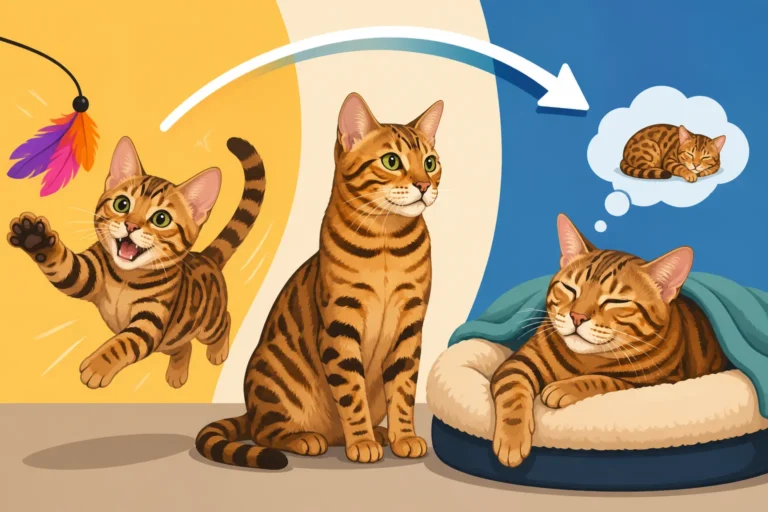
- Ensure Sufficient Play and Exercise: Bengals are incredibly active and need outlets for their energy. If they're not getting enough vigorous exercise, that pent-up energy will find an outlet, and often that means climbing where they shouldn't or engaging in destructive behaviors. Plan regular, interactive play sessions where you engage them with toys that mimic prey. This helps tire them out both physically and mentally.
- Consider a Companion (Carefully!): Sometimes, a bored or lonely Bengal will seek stimulation wherever they can find it. If you have an only cat and your lifestyle limits your interaction time, considering a compatible companion (ideally another energetic, playful cat like another Bengal or a similarly active breed) might help. Two Bengals can often entertain each other for hours, reducing their reliance on you for constant amusement. However, this is a significant commitment and should only be pursued if you're prepared for the needs of two highly active cats.
- Establish a Predictable Routine: Cats thrive on routine, and Bengals are no exception. Consistent feeding times, play sessions, and cuddle times help create a sense of security and predictability. When they know when to expect interaction and food, they may be less likely to seek attention or food on the counters out of boredom or anxiety.
- Address Underlying Behavioral Issues: Sometimes, counter-surfing is just one manifestation of a broader behavioral issue. Are they also being overly vocal (How Vocal a Bengal Cat Is) or engaging in other unwanted behaviors? It's worth considering whether there's a deeper reason for their actions, such as stress, anxiety, or a lack of appropriate outlets for their instincts. If you're consistently struggling, a consultation with a feline behaviorist might provide tailored strategies.
- Embrace the "Bengal Life": Ultimately, owning a Bengal means embracing their unique characteristics. They are highly intelligent, incredibly active, and endlessly curious. While you can train and deter them from specific behaviors, you'll never completely extinguish their innate drives. Finding a balance between managing their behavior and providing an enriching environment that caters to their natural instincts is the key to a happy home for both you and your magnificent Bengal.
Here's a quick overview of common deterrents and their general effectiveness for Bengal cats:
| Deterrent Method | Pros | Cons | Effectiveness for Bengals |
|---|---|---|---|
| Double-Sided Sticky Tape | Non-harmful, unpleasant texture for paws | Can leave residue on counters, needs regular replacement | Moderate to High |
| Motion-Activated Air Cans | Immediate, startling, cat associates counter, not owner | Can be expensive, requires refills, may not cover entire area | High |
| Loud Falling Objects (DIY) | Inexpensive, immediate, startling | Can create a mess, cat may learn to avoid only specific spots | Moderate |
| Citrus Sprays/Peels | Natural, pleasant smell for humans | Scent fades quickly, limited effect on determined cats | Low |
| Aluminum Foil | Inexpensive, crinkly texture and sound | Visually unappealing, can be noisy, cat may learn to move it | Moderate |
| Clear Plastic Mats with Nubs | Uncomfortable to walk on, discreet | Can be costly for large areas, may not adhere well | Moderate |
| Water Spray Bottle (from owner) | Immediate, direct (if you're present) | Cat associates you with punishment, some Bengals like water | Low to Moderate |
Remember, every Bengal is an individual. What works perfectly for one might be completely ignored by another. The secret is to observe your cat, understand their motivations, and be persistent and creative in your approach.
Disclaimer
This article is for general informational purposes only and does not constitute professional advice. Laws, prices and regulations vary by location and change over time. Consult a qualified professional for guidance on your specific situation.