How to Clicker Train a Bengal Cat
If you've ever felt like your Bengal cat is a furry little genius constantly plotting their next adventure – whether it's scaling your tallest bookshelf or figuring out how to open the pantry door – you're not alone. Their boundless energy and incredible intelligence can be a challenge, leading to boredom and destructive behaviors if not properly channeled. This guide will walk you through the rewarding world of clicker training, transforming that mischievous energy into a powerful tool for learning and bonding with your wild at heart companion.
Understanding the Bengal Cat Mindset for Training
Training a Bengal cat isn't quite like training your average house cat. These felines are a special breed, packed with energy, intelligence, and a drive that often surprises first-time owners. It's crucial to approach their training with an understanding of what makes them tick, setting both of you up for success rather than frustration.
Why Bengals Thrive on Mental Challenges
The very essence of a Bengal cat screams "activity!" Descended from the Asian Leopard Cat, they retain many of the instincts and traits of their wild ancestors. This isn't just about physical prowess; it's about a keen, active mind that needs constant engagement. If you've got a Bengal, you've likely seen them observing, problem-solving, and figuring things out with a speed that can be astonishing. They aren't content to simply nap all day; their brains are wired for exploration, hunting, and intellectual stimulation. Without sufficient mental challenges, this incredible intelligence can quickly turn into boredom, leading to undesirable behaviors like excessive vocalization, destructive scratching, or raiding cabinets. Clicker training taps directly into this innate desire to learn and engage, providing a structured yet fun outlet for their mental energy. It's a way to speak their language, giving them a "job" to do that satisfies their intelligent minds.
The Patience and Consistency Needed
Let's be real: training any animal requires patience, but with a Bengal cat, it's paramount. Their intelligence means they pick things up quickly, but their independent nature also means they decide when and if they want to perform. You might have a session where your Bengal performs every trick perfectly, only for them to give you a blank stare the next day as if they've never seen a clicker in their life. Don't take it personally! This isn't a sign of defiance; it's just a cat being a cat, especially a Bengal. Consistency is your secret weapon. Short, frequent training sessions are far more effective than long, drawn-out ones. Think five to ten minutes, a few times a day. Ending on a high note, even if it's just one successful "sit," reinforces the positive association. Remember, you're building habits and communication, and that takes time and a gentle, unwavering hand.
Building Trust and a Positive Relationship
Clicker training isn't about dominance or forcing your Bengal to do tricks. Quite the opposite! It's a method built entirely on positive reinforcement, fostering trust and strengthening the bond between you and your feline companion. When your Bengal associates the clicker and the training sessions with good things – tasty treats, praise, and enjoyable interaction – they learn that engaging with you is rewarding. This process enhances communication, as they learn to understand what you're asking, and you learn to read their cues. It validates their intelligence and gives them a sense of accomplishment, which is incredibly important for such a clever breed. A Bengal cat that trusts you and enjoys spending time with you is a happy, well-adjusted cat, and clicker training is a fantastic way to achieve that deeper connection. This positive approach is key to understanding What a Bengal Cat's Temperament Is Really Like.
Getting Started: Your Clicker Training Toolkit
Before you dive headfirst into teaching your Bengal cat to high-five, you'll need a few essential tools. Don't worry, it's not a complicated setup, but having the right equipment can make all the difference in your training success.
Choosing the Right Clicker
A clicker is a small device that makes a distinct, consistent sound – the "click" that tells your cat precisely when they've done something right. There are a few variations out there, and what works best for you and your Bengal is often a matter of personal preference. You might find a simple box clicker, which makes a sharp, distinct sound, or a clicker with a wrist band that keeps it handy during sessions. Some clickers even have a softer volume option for more sensitive cats. Whichever you choose, consistency in the sound is key. You can easily find a variety of options on platforms like Amazon, allowing you to pick one that fits comfortably in your hand and produces a sound that isn't startling but is still clear to your cat. The important thing is that it creates a unique marker sound that your Bengal will learn to associate with a reward.
Selecting High-Value Treats
This might be the most crucial element in your clicker training arsenal! Bengals are often highly food-motivated, but not all treats are created equal. For training, you need something truly irresistible, something your cat rarely gets, making it a "high-value" reward. Think tiny pieces of cooked chicken or turkey, freeze-dried salmon, or small, soft commercial cat treats that can be easily broken into pea-sized portions. The treats should be small enough that your cat can swallow them quickly without needing to chew extensively, so they don't get distracted or lose focus. Avoid crunchy kibble, as it takes too long to eat and isn't usually exciting enough to motivate a Bengal to perform. Experiment a bit to see what your Bengal goes absolutely wild for. Having these special treats reserved only for training sessions will supercharge their motivation.
Finding a Quiet, Distraction-Free Space
When you're first introducing your Bengal to clicker training, minimize all potential distractions. This means choosing a quiet room where there aren't other pets, loud noises, or interesting sights (like a bird outside the window). Turn off the TV, silence your phone, and make sure you won't be interrupted. A Bengal cat is incredibly curious and easily diverted, and trying to train them in a bustling environment will only lead to frustration for both of you. A small, enclosed space, like a bedroom or bathroom, can be ideal initially. As your cat becomes more proficient and understands the game, you can gradually introduce more distractions. But for those foundational sessions, peace and quiet are your best friends. This helps your Bengal focus solely on you and the task at hand, making the learning process much smoother.
The Foundation: Charging the Clicker
Before you can teach your Bengal cat any specific tricks, you need to teach them what the clicker means. This process, often called "charging the clicker" or "loading the clicker," is essentially creating a powerful positive association between the click sound and a reward.
The "Click = Treat" Association
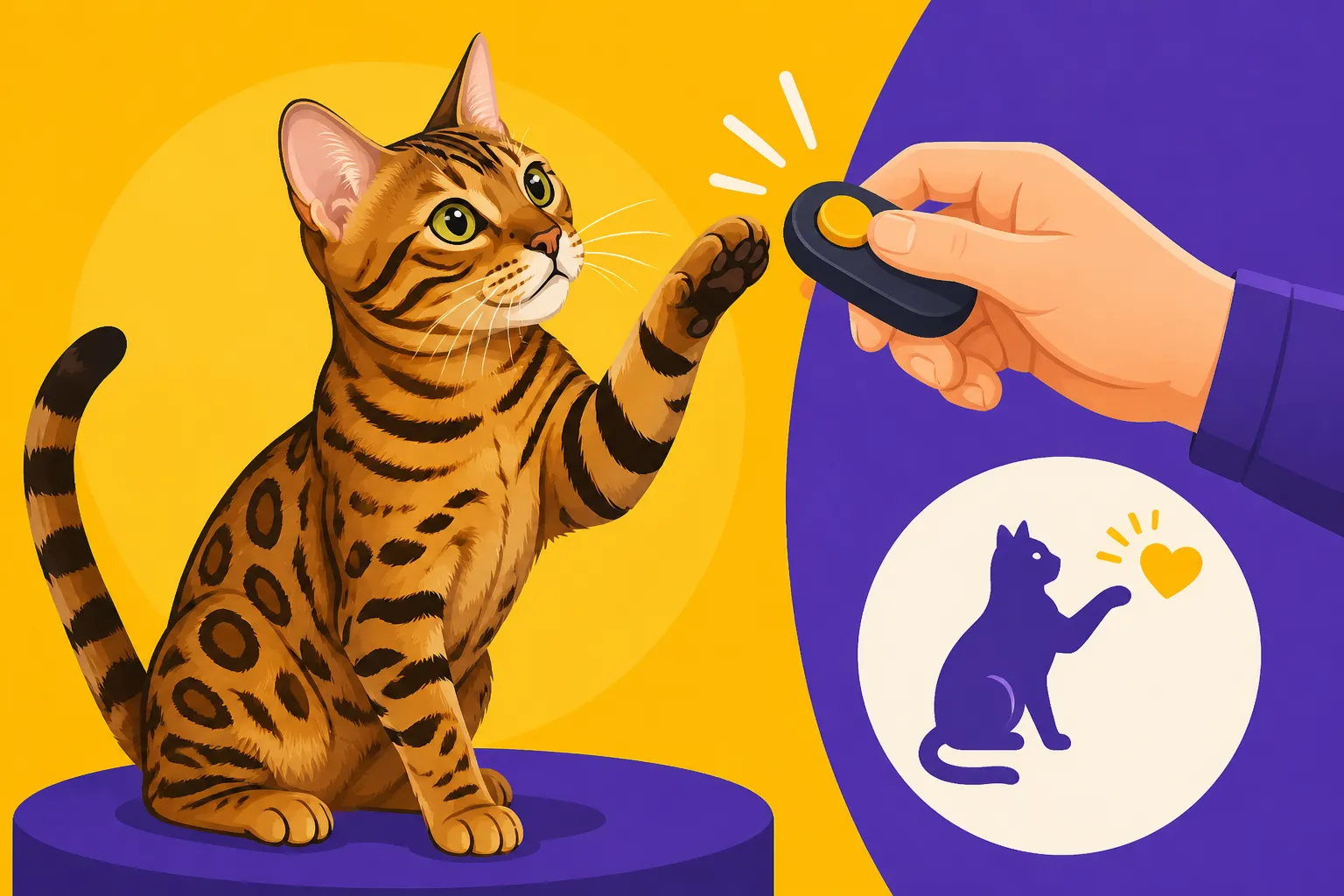
This is the golden rule of clicker training. Your Bengal needs to understand that click always equals treat. It's a simple, instantaneous communication tool. To establish this, sit in your quiet training space with your clicker and your high-value treats. With your cat nearby, click the clicker, and immediately (within 1-2 seconds) offer a treat. Don't wait for them to do anything specific; just click, then treat. Repeat this about 10-20 times in a session. You'll likely see a shift in your cat's behavior after a few sessions – they might start looking at you expectantly after the click, or even at the clicker itself, understanding that the sound predicts something good. This isn't about them doing a behavior yet; it's purely about creating that Pavlovian response. The click becomes a precise marker for success, telling them "YES! That's exactly what I wanted!"
Short, Frequent Sessions
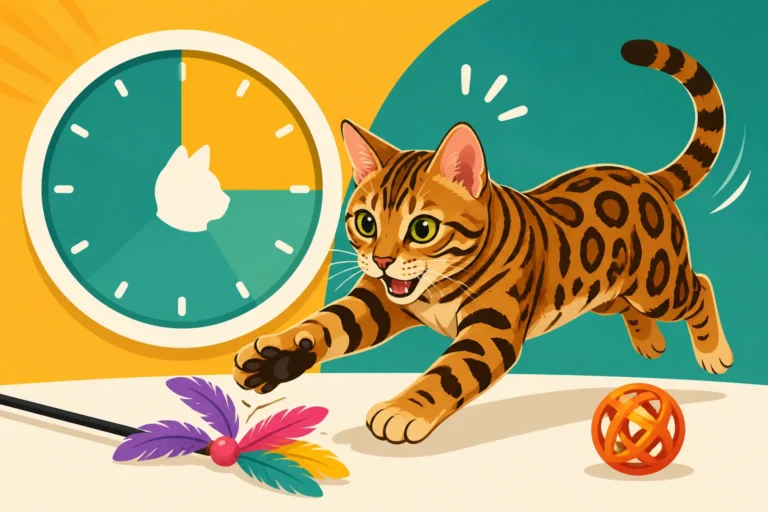
Bengal cats have incredible energy, but their attention spans, especially for formal training, can be surprisingly short. Trying to force a long session will quickly lead to disinterest, frustration, and a cat who decides training isn't much fun. The key is short, frequent bursts. Aim for sessions of 3 to 5 minutes, perhaps two or three times a day. You want to leave your Bengal wanting more, still engaged and eager for the next session. If you notice signs of boredom – their gaze wandering, walking away, or showing disinterest in the treats – end the session immediately. Always try to conclude on a positive note, even if it means just clicking and treating for simply looking at you. This keeps the experience positive and reinforces their enthusiasm for learning. Remember, How Many Play Sessions a Bengal Cat Needs will give you a better idea of how to structure their enrichment, and training can be part of that.
Avoiding Common Charging Mistakes
While charging the clicker seems straightforward, a few common pitfalls can hinder your progress. First, don't try to lure or entice your cat into a position during this initial phase. This stage is purely about associating the click with the treat, not about getting them to do anything. Second, ensure the treat immediately follows the click. A delay can confuse your cat, as they won't know exactly what action the click was marking. Third, don't use the clicker to get your cat's attention. The clicker is a reward marker, not a summoning call. If your cat isn't paying attention, wait for a moment of focus, then click and treat. Fourth, never use the clicker for punishment or to interrupt undesirable behavior. This will quickly undo all the positive association you're building. The clicker should always signal something good, always, without exception. Finally, ensure the treats are truly high-value. If your Bengal isn't excited by the treats, the "click = treat" association won't be strong.
| Mistake | What It Looks Like | How to Fix It |
|---|---|---|
| Delayed Treat | Click, then fumble for the treat, cat looks confused. | Have treats ready in hand. Click, then immediately deliver the treat. |
| Click for Attention | Clicking to get cat to look at you or come closer. | The click is a reward marker. Wait for natural attention, then click/treat. |
| Low-Value Treats | Cat sniffs treat, walks away, or eats slowly. | Find truly irresistible, pea-sized, soft treats (e.g., cooked chicken). |
| Too Long Sessions | Cat gets bored, walks off, or ignores you. | Keep sessions 3-5 minutes, end on a good note, several times a day. |
| Forcing Interaction | Physically moving cat, trying to make them stay. | Let your Bengal choose to engage. If they leave, end the session and try later. |
Moving Beyond Basics: Teaching First Tricks
Once your Bengal cat understands that a click means a treat is coming, you're ready to start shaping specific behaviors. This is where the real fun begins, and you'll be amazed at how quickly your clever cat picks up new skills.
Target Training (Nose Touch)
Target training is a fantastic first trick because it's simple, builds confidence, and forms the basis for many other behaviors. You'll need a "target" – this could be a chopstick, a pencil, or even just your finger.
- Introduce the Target: Hold the target a few inches from your Bengal's nose. The moment their nose touches the target, even accidentally, click and immediately give a treat.
- Repeat and Reinforce: Do this several times. Your Bengal will start to understand that touching the target with their nose is what earns the click and treat.
- Increase Difficulty: Once they reliably touch the target when it's still, start moving it slightly. Hold it a bit further away, to the side, or even up high. When they follow and touch it, click and treat.
- Practice: Practice in short sessions, moving the target to different spots. This teaches your cat to follow the target, which is incredibly useful for guiding them into positions for other tricks or even guiding them onto a scale at the vet! You'll find that their natural curiosity makes them a quick study for this.
Teaching "Sit"
"Sit" is a classic for a reason – it's useful for everything from politely waiting for dinner to getting a good photo.
- Lure the Sit: Hold a high-value treat just above your Bengal's nose, then slowly move it back towards their head. As their nose follows the treat, their rear end will naturally lower into a sit. The instant their bottom touches the ground, click and give the treat.
- Repeat and Refine: Practice this lure a few times. Don't worry if they don't sit perfectly at first; any approximation of a sit warrants a click and treat. The goal is to catch the behavior as it happens.
- No Pressure: If your cat stands up or tries to jump for the treat, simply reset and try again. Never push them down into a sit. The idea is for them to offer the behavior voluntarily. Your Bengal's natural intelligence means they'll quickly connect the treat's movement to the desired body posture.
Fading the Lure and Adding Verbal Cues
Once your Bengal reliably performs the "sit" with the lure, it's time to make it more independent.
- Phase Out the Lure: Start making the lure motion smaller and less obvious. Instead of moving the treat all the way back, just make a tiny motion with your hand. When they sit, click and treat. Gradually, you should be able to do just the hand motion without a treat in it.
- Introduce the Verbal Cue: Once your Bengal is consistently sitting with just your hand motion, add the verbal cue. Just before you make the hand motion, say "Sit." Then, make the hand motion, and when they sit, click and treat.
- Verbal Only: After several repetitions with both the verbal and hand cue, try just the verbal cue ("Sit!"). If they sit, click and treat! If they don't, go back to using the hand motion along with the verbal cue a few more times before trying verbal-only again. This process teaches your Bengal to respond to the spoken word, not just the visual cue. Your Bengal's memory is impressive, and with patience, they'll soon be performing tricks on command. This is part of how you can teach your Bengal Which Tricks a Bengal Cat Can Learn.
Advanced Tricks and Problem Solving with the Clicker
Clicker training isn't just for basic obedience; it's a powerful tool for teaching complex behaviors, solving common household challenges, and providing incredible mental stimulation for your The Bengal Cat Is the Most Active Cat You Can Own.
Teaching Fetch and Other Complex Behaviors
Bengals are known for their dog-like affinity for fetching. It's often an instinct, but clicker training can refine it into a reliable trick.
- Retrieve an Object: Start with a toy your Bengal already enjoys. When they pick up the toy, click and treat. Repeat this.
- Carry and Bring: Once they reliably pick it up, wait for them to take a step towards you with it. Click and treat. Gradually increase the distance they carry the toy before you click and treat.
- Drop It: When they bring the toy close, hold a treat to their nose. As they open their mouth to take the treat, they'll drop the toy. Click and say "Drop it!" as they release it, then give the treat.
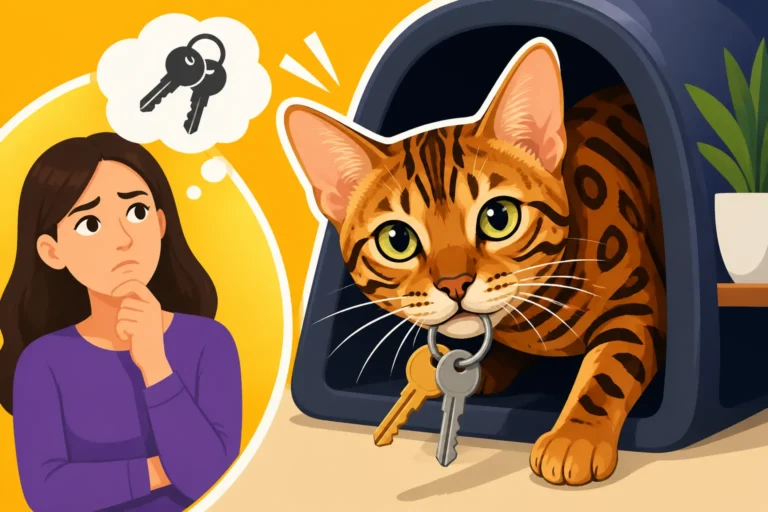
- Putting it Together: Now, throw the toy a short distance. When they pick it up, carry it to you, and drop it, give a click and a big jackpot of treats. This can also be applied to teaching more elaborate sequences, like jumping through a hoop or going into a carrier on command, by breaking the behavior down into tiny, achievable steps and clicking each successful approximation.
Using Clicker Training for Desired Behaviors
Clicker training isn't just for impressive stunts; it's incredibly effective for shaping everyday manners and solving common behavioral issues.
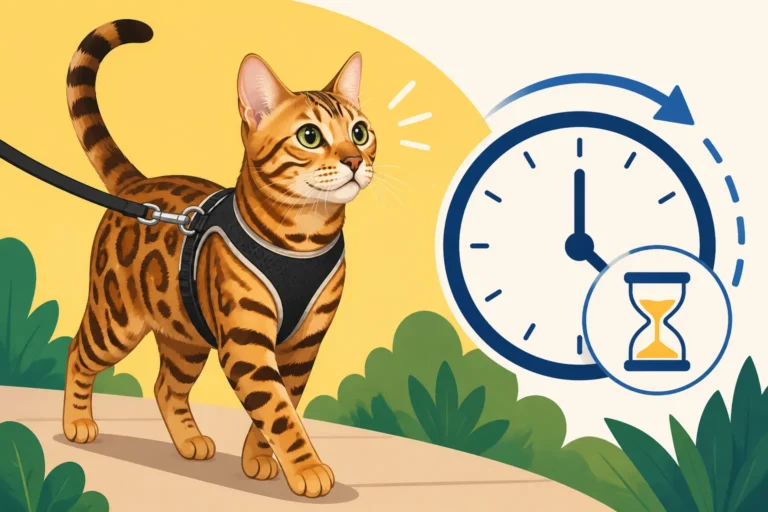
- Leash Training: For example, when How to Leash Train a Bengal Cat, you can click and treat every time your Bengal calmly accepts the harness, then every time they walk politely by your side without pulling, marking the exact moment of desired slack in the leash. This makes the experience positive and rewarding.
- Staying Off Counters: Instead of just saying "no," you can click and treat your Bengal when all four paws are on the floor as you're preparing food. This reinforces the desired alternative behavior. When they choose to stay off the counter, they get a reward, rather than just being told not to do something.
- Reducing Door Dashing: Click and treat your Bengal for sitting calmly a few feet away from an open door, reinforcing that being polite around the exit earns good things. This focuses on teaching them what to do instead of punishing what you don't want. It provides How Much Enrichment a Bengal Cat Actually Needs and helps redirect their intelligent minds.
Troubleshooting Common Training Plateaus
Even the most dedicated trainer will encounter moments where progress seems to stall. This is perfectly normal, especially with a clever creature like a Bengal.
- Re-evaluate Motivation: Are your treats still high-value? Sometimes a cat gets bored with the same old reward. Switch it up! Also, ensure your Bengal isn't too full to be motivated by food. You can strategically time sessions before mealtime. If they aren't food motivated, explore toy rewards or extra playtime.
- Break It Down Further: If your Bengal isn't getting a particular step, you might be asking for too much too soon. Go back to an easier step they can succeed at, and then break the current challenging step into even smaller micro-steps. For example, if they won't put a paw on a target, click for just looking at the target, then for nudging it, then for touching it with a paw.
- Change the Environment: Is there a new distraction in the room? Try a different, quieter location. Sometimes a change of scenery can re-engage a bored cat. A Bengal cat needs variety, so don't be afraid to mix things up.
- Take a Break: Sometimes a few days away from a specific trick can do wonders. Come back to it with a fresh perspective, and your Bengal might surprise you with renewed enthusiasm. Remember that sometimes, a Bengal needs a break to process information, and returning to it can yield surprising results. If you notice Signs a Bengal Cat Is Bored, it's definitely time to change tactics or take a breather.
Integrating Clicker Training into Daily Life
Clicker training isn't just about structured sessions; it's a philosophy that can enrich your entire relationship with your Bengal cat. By weaving its principles into your daily routine, you can foster a happier, more engaged companion.
Keeping Sessions Fun and Engaging
The moment clicker training stops being fun for your Bengal, it stops being effective. These are intelligent, playful creatures, and they thrive on variety and challenge. Don't fall into the trap of doing the same few tricks over and over. Introduce new behaviors regularly. Consider incorporating puzzle toys that require problem-solving to get a treat, which reinforces their natural hunting instincts. Think about rotating toys, so familiar objects feel novel again. Amazon has a wide selection of puzzle feeders and interactive toys that can keep things fresh. Keep sessions short, enthusiastic, and end before your cat loses interest. If your Bengal is having an off day, don't push it; simply end the session and try again later. Remember, for a Bengal, the process of learning and problem-solving is often as rewarding as the treat itself.
Benefits Beyond Tricks: Strengthening Your Bond, Mental Enrichment
While teaching your Bengal to high-five is certainly impressive, the real magic of clicker training lies in the deeper benefits it offers. It creates a clearer line of communication between you, as your Bengal learns to understand your cues and you become more attuned to their responses. This mutual understanding strengthens your bond, turning you into a true team. Beyond that, clicker training provides invaluable mental enrichment. Bengal cats are incredibly smart, and without outlets for their intelligence, they can become bored and, frankly, destructive. Training taps into their cognitive abilities, providing a "job" that satisfies their active minds. This mental stimulation can lead to a calmer, more contented cat overall, reducing instances of unwanted behaviors and creating a more harmonious household. It's a key component of their overall What a Bengal Cat Does All Day to stay happy.
When to Seek Professional Help
While clicker training is highly effective for most Bengals and most owners, there are times when seeking guidance from a professional cat behaviorist or certified positive reinforcement trainer is a wise choice. If you're encountering persistent behavioral issues that don't seem to respond to training, such as aggression, severe anxiety, or litter box aversion that isn't medically explained, a professional can offer tailored strategies. Similarly, if you feel completely stuck, overwhelmed, or simply aren't seeing progress despite consistent effort, a trainer can provide hands-on guidance, help troubleshoot your technique, and identify potential underlying issues you might be missing. They can also assist with more complex training goals or help you understand specific nuances of your Bengal's unique personality. There's no shame in asking for help; it shows you're committed to your Bengal's well-being and want to provide the best possible life for them.
Disclaimer
This article is for general informational purposes only and does not constitute professional advice. Laws, prices and regulations vary by location and change over time. Consult a qualified professional for guidance on your specific situation.