How to Keep a Bengal Cat Out of the Trash
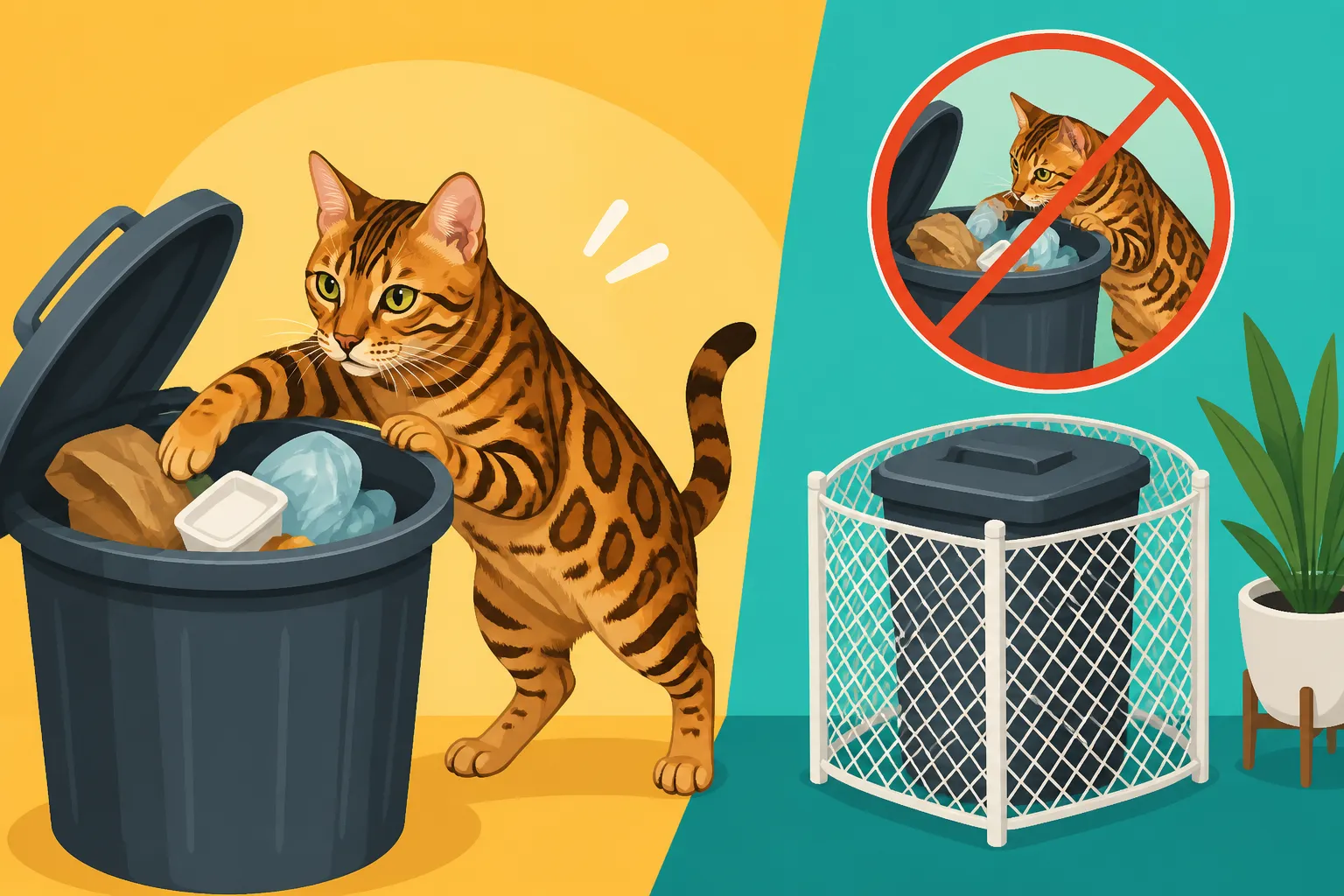
You walk into the kitchen, a sense of calm washing over you, only to find it shattered by the sight of your magnificent Bengal cat, nose deep in last night's chicken bones, surrounded by an impressive perimeter of scattered coffee grounds and crumpled paper. It’s a scene familiar to many Bengal owners – their incredible intelligence and boundless curiosity often lead them to believe that what's in the bin is fair game. This guide is here to help you understand why your Bengal is so drawn to the forbidden treasure trove and, more importantly, equip you with actionable strategies to keep them out of the trash for good.
Understanding the Bengal Cat's Fascination with Forbidden Food and Fun
Let's face it, your Bengal isn't just a regular housecat. They come with a unique blend of wild instinct and domestic charm, which often translates into highly intelligent, incredibly curious, and perpetually active creatures. When it comes to the trash can, it's not just about being "naughty"; it's often a combination of powerful natural drives and sheer ingenuity.
The Irresistible Allure of Novelty and Scent
To a Bengal cat, a trash can isn't just a receptacle for waste; it's a sensory wonderland. Think about it: a bin holds a constantly changing array of intriguing smells, textures, and potential "prey." Leftover food scraps, wrappers that once held delicious treats, even things like paper towels used to wipe up cooking messes – these all emit scents that are incredibly enticing to a cat with a strong hunting drive. They're drawn to the novel, the unexpected, and anything that smells remotely like a potential meal or an interesting object to investigate.
It's this primal curiosity that drives them. They hear the crinkle of a bag, they smell that tantalizing whiff of something discarded, and their natural instincts kick in. It's like a puzzle to be solved, a secret garden to explore. Even if they're not truly hungry, the thrill of the hunt for something new and different in the trash can be a powerful motivator. This isn't a cat that's easily deterred by a simple lid; they see it as a challenge.
High Intelligence and Problem-Solving Skills
One of the most defining characteristics of a Bengal cat is their remarkable intelligence. They aren't content to simply stare at a closed door; they'll figure out how to open it. The same goes for your trash can. A standard flip-top or even a light pedal bin is often no match for a determined Bengal. They quickly learn cause and effect. They might bat at the lid, realize it moves, and then escalate their efforts. They observe you opening it, they learn the mechanism, and then they apply their formidable problem-solving skills to replicate your actions.
We’ve all seen videos of Bengals opening cabinets or even turning on faucets; getting into a trash can is often just another item on their "things to conquer" list. Their paws are incredibly dexterous, and they can manipulate levers, push buttons, or simply apply enough force to dislodge a lid that seems secure to us. They truly are masters of their domain, and if the trash bin is part of that domain, they feel entitled to explore it. This is why a simple "no" won't work in the long run; you need to outsmart their clever minds.
Boredom and a Lack of Appropriate Enrichment
Perhaps one of the biggest, yet often overlooked, reasons for a Bengal's trash-diving tendencies is boredom. These cats are incredibly active and require a significant amount of mental and physical stimulation. A Bengal cat that isn't getting enough playtime, isn't challenged with puzzle toys, or doesn't have ample vertical space to climb and explore can quickly become destructive. And what's more exciting than a giant, forbidden toy box full of interesting smells and textures?
If your Bengal is routinely getting into the trash, it's worth taking a hard look at their daily enrichment routine. Are they truly getting enough dedicated playtime? Are there enough appropriate scratching posts and climbing structures? A bored Bengal will seek out their own entertainment, and often, that leads to behaviors we find undesirable. Providing ample opportunities for them to express their natural hunting and exploring behaviors in an acceptable way is key to reducing their interest in the bin. Consider whether your cat has enough to do, especially if you're out of the house for long periods. How Much Enrichment a Bengal Cat Actually Needs is a vital read for every Bengal owner.
Fortifying Your Home: Trash Can Security Measures
Since your Bengal is likely outsmarting your current setup, it’s time to upgrade your trash containment strategy. Relying on their good behavior won't work; you need physical barriers that are truly cat-proof.
Invest in a Truly Cat-Proof Trash Can
This is often the first and most crucial step. Forget the pretty stainless steel bins with easy-to-lift lids or flimsy pedal mechanisms. For a Bengal, you need something that presents a genuine challenge. Look for trash cans that feature robust locking mechanisms, heavy-duty lids, or even hands-free options that your cat can't easily manipulate.
Consider options with a secure latch or clip that fastens the lid to the base. Some models designed for outdoor use or for keeping pets out have these built-in. Alternatively, you might look for bins with motion-sensor lids, though some clever Bengals might learn to trigger these themselves if the sensor is too sensitive or at paw-level. The key is to find something heavy, stable, and with a lid that doesn't just rest on top but actively secures. Searching on platforms like Amazon for "pet proof trash can" or "child lock trash can" will often yield suitable, heavy-duty results that can withstand a Bengal's investigative efforts.
| Feature Type | Description | Bengal Cat Suitability |
|---|---|---|
| Foot Pedal Bins | Lid opens with a foot pedal. | Poor. Bengals quickly learn to step on the pedal, or even just push the lid open with their nose or paw if it doesn't seal tightly. Very easy for them to conquer. |
| Swing Top Bins | Lid swings inward when pushed. | Poor. Extremely easy for a Bengal to bat open, often seen as an inviting game. Provides minimal barrier to entry. |
| Sensor Bins | Lid opens automatically with motion. | Moderate. Some Bengals learn to trigger the sensor. If the sensor is at a height they can reach or can be activated by a jump, it's not truly cat-proof. A good seal when closed is essential. |
| Latching Bins | Lid has a manual latch, clasp, or lock that needs to be actively engaged to open. | Good. These are much harder for Bengals to bypass. Look for robust latches that require a human hand to operate. This is often the most effective type of bin for a determined cat. |
| Cabinet Bins | Trash can is fully enclosed within a kitchen cabinet. | Excellent. If the cabinet itself can be secured with child locks, this is an ideal solution. It completely removes access to the bin. You might want to refer to How to Cat Proof Cabinets From a Bengal Cat for specific locking strategies. |
| Heavy-Duty Lids | Lids that are very heavy, sometimes with added weights, making them difficult to lift even if not latched. | Good. Combined with a tight seal, a heavy lid can deter a Bengal. However, a clever cat might still manage to bat it off the counter if it's placed there. Stability is key. |
Securing Existing Bins with Child Locks and Other Gadgets
If investing in a brand-new trash can isn't immediately feasible, you can try to reinforce your existing one. Child safety locks are your best friend here. Those flexible straps or magnetic locks designed for cabinets can often be adapted to secure a trash can lid to its base. You might need a bit of creativity to ensure they fit snugly and can withstand a Bengal's persistent tugging.
Another trick is to place heavy objects on top of the lid, but this only works if the bin isn't easily knocked over. A bag of rice, a heavy cookbook, or a small dumbbell can add enough weight to deter them, at least initially. However, remember that a Bengal will likely see this as another puzzle. If they can knock it off, they will. For a true fix, you need something more permanent. Consider heavy-duty bungee cords wrapped around the bin and lid, securing them tightly. These can be cumbersome for human use, but they are effective at keeping tenacious paws out.
Strategically Placing Your Trash Can
Sometimes, the simplest solution is to remove the temptation altogether. If possible, relocate your trash can to a place your Bengal cannot access. This could be inside a pantry with a door that closes securely, inside a cabinet with child-proof latches, or even in a utility room that the cat isn't allowed into. This might mean a minor inconvenience for you, but it’s often far less frustrating than constantly cleaning up scattered refuse.
If you have a kitchen island, perhaps placing the bin on the inside, away from easy jumping access, can help. The goal is to make it as inconvenient as possible for your cat to reach. Think about their jumping abilities – How High a Bengal Cat Can Jump is truly impressive – and plan accordingly. If they can jump onto a counter and then down into the bin, that spot is not secure enough. Don't underestimate their agility.
Redirection and Reinforcement: Training Your Bengal Cat Away From the Bin
While physical barriers are crucial, addressing the underlying behavioral motivations can lead to more lasting success. Training and redirection play a huge role in teaching your Bengal that the trash is a no-go zone.
Consistent "No" and Immediate Redirection
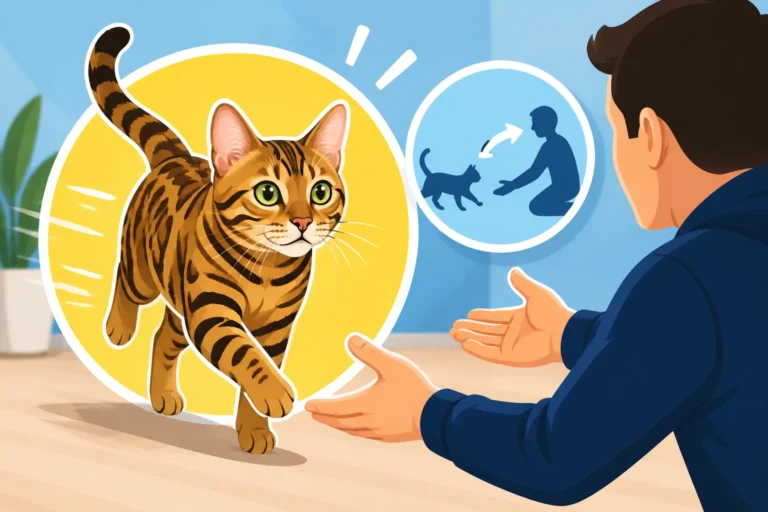
When you catch your Bengal attempting to get into the trash, a firm, consistent "no" is important, but it must be followed immediately by redirection. Simply scolding them without offering an alternative won't teach them what to do. Instead, pick them up (if they allow it), say "no," and then immediately take them to an appropriate toy, a scratching post, or a designated play area. Engage them in an activity they enjoy that fulfills their hunting or exploring instincts.
This helps them associate leaving the trash alone with getting positive attention and an enjoyable alternative. Be consistent every single time. Bengals are smart and they learn patterns quickly. If sometimes they get a reaction and other times they're ignored, the mixed signals will confuse them and prolong the behavior. Remember, patience is key. It's a marathon, not a sprint, when it comes to changing ingrained behaviors in such intelligent animals.
Providing Ample and Engaging Enrichment
As mentioned earlier, boredom is a huge driver for undesirable Bengal behaviors. Make sure your cat has a rich and stimulating environment. This means:
- Interactive Toys: Toys that move, crinkle, or dispense treats can keep them occupied. Look for high-quality wand toys that mimic prey, and durable puzzle feeders that challenge their minds. Amazon offers a wide variety of interactive cat toys that can keep even the most energetic Bengal engaged for extended periods.
- Vertical Space: Bengals love to climb. Install cat shelves, provide tall cat trees, or give them access to high perches where they can survey their territory. This satisfies their natural inclination to be up high and provides an outlet for their energy.
- Regular Play Sessions: Schedule dedicated playtimes with your Bengal every day. These should be vigorous and mimic hunting sequences – stalking, pouncing, and a "kill" at the end. Two to three 15-minute sessions are often more effective than one long, desultory session. A tired Bengal is a well-behaved Bengal! If you want to dive deeper into how much physical and mental activity your cat needs, check out How Much Exercise a Bengal Cat Needs a Day.
By channeling their energy and intelligence into appropriate activities, you reduce their motivation to create their own fun with the trash.
The Power of Positive Reinforcement
Positive reinforcement is far more effective than punishment when training a Bengal cat. When you see your cat ignoring the trash can, or simply walking past it without interest, offer praise, a gentle pat, or a small, healthy treat. You want them to associate not getting into the trash with positive outcomes.
Avoid yelling or physical punishment. Bengals are sensitive and can become fearful or anxious, which can lead to other behavioral issues. Instead, focus on rewarding the behaviors you want to see. If your Bengal is consistently leaving the trash alone, consider setting up a "booby trap" of sorts – a motion-activated air sprayer near the trash can that makes a startling hiss when they approach. This creates a negative association with the trash itself, rather than with you, their owner. The key is to make the trash can the "bad guy," not you.
Beyond the Bin: Holistic Home Management for an Adventurous Cat
Dealing with trash diving is often a symptom of a larger need: managing the boundless energy and curiosity of a Bengal cat within a home environment. It's about looking at your home through their eyes.
General House-Proofing for a Clever Cat
Your trash can isn't the only thing a Bengal might find interesting. Their intelligence and agility mean that anything left unsecured can become a target. Consider:
- Cabinets and Drawers: Invest in child-proof locks for any cabinets containing food, cleaning supplies, or items you don't want them getting into. Your Bengal will learn How a Bengal Cat Learns to Open a Cabinet faster than you think.
- Counters: Bengals are notorious counter-surfers. Keep food put away, wipe down surfaces, and consider deterrents like double-sided tape or motion-activated alarms on counters if they are persistent. How to Keep a Bengal Cat Off the Counter offers more detailed strategies.
- Small Objects: Bengals are known to "steal" small, shiny, or interesting objects and hide them. Keep keys, jewelry, and other trinkets in closed drawers or containers. Why a Bengal Cat Steals Small Objects delves into this fascinating behavior.
The more you "Bengal-proof" your home, the less opportunity they'll have to get into mischief, and the less stress you'll experience. It's about setting them up for success by removing temptation.
Diet and Food Security
Sometimes, a Bengal's relentless pursuit of food scraps from the trash might stem from feeling unsatisfied with their own meals. While this is less common with a good quality, high-protein diet, it's worth considering. Ensure your Bengal is on a diet appropriate for their activity level and nutritional needs. A high-quality wet food or a carefully balanced raw diet can sometimes help with satiety. You can learn more about their dietary needs in The High Protein Argument for a Bengal Cat.
Make sure their food is offered regularly throughout the day if possible, or consider a timed feeder for dry food portions if you're away. The goal is to remove any perceived need to forage for food elsewhere. Always put away human food immediately after meals, and wipe down cooking surfaces. Leaving food out, even crumbs, can inadvertently reinforce their scavenging behavior.
Understanding Their Natural Instincts and Providing Outlets
Ultimately, a Bengal cat's desire to explore, hunt, and solve puzzles is an intrinsic part of who they are. Instead of fighting against these instincts, provide acceptable outlets for them. A "catio" (enclosed outdoor space) can be a fantastic way to give them safe outdoor exploration and sensory stimulation, reducing their need to find excitement indoors. Why a Catio Is the Answer to a Bengal Cat offers compelling reasons to consider one.
Leash training is another excellent way to provide mental and physical exercise, allowing them to explore the world safely under your supervision. A Bengal Cat Walks on a Leash can turn daily walks into exciting adventures, tiring them out in a positive way. By understanding and embracing their wilder side, and providing appropriate avenues for those instincts, you'll find a happier, better-behaved Bengal who is less interested in the household trash.
Disclaimer
This article is for general informational purposes only and does not constitute professional advice. Laws, prices and regulations vary by location and change over time. Consult a qualified professional for guidance on your specific situation.