Whether a Bengal Cat Learns a Wheel on Its Own
Many Bengal cat owners find themselves utterly exhausted by their feline companions' boundless energy, constantly searching for new ways to channel that incredible drive. You've heard about cat wheels, seen the videos, and now you're wondering if your clever Bengal will just hop on and start running like a miniature cheetah, or if it's another piece of expensive cat equipment destined to gather dust. This guide is here to shed light on whether a Bengal cat learns a wheel on its own, and how you can encourage them to embrace this fantastic enrichment tool.
Understanding the Bengal Cat's Innate Drive
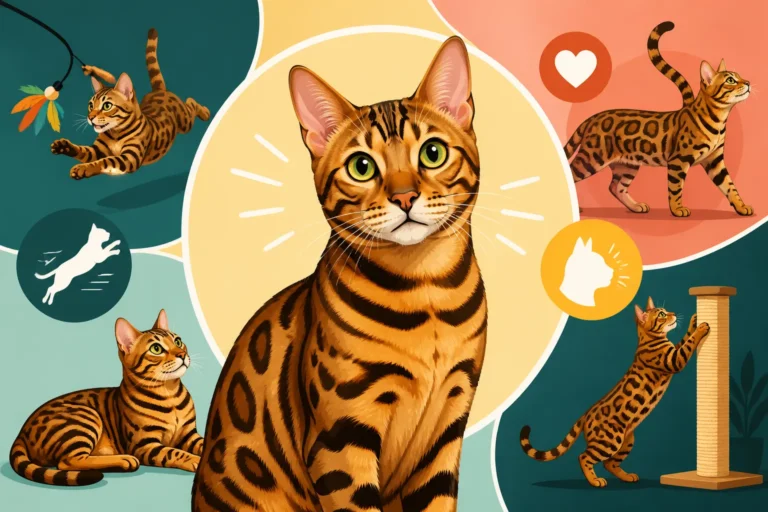
If you own a Bengal, you already know they aren't your average couch potato cat. They have an intensity and curiosity that can be both exhilarating and, let's be honest, a little bit demanding. This isn't a flaw; it's a feature, directly inherited from their wild ancestors.
The Bengal's Wild Ancestry and Energy Levels
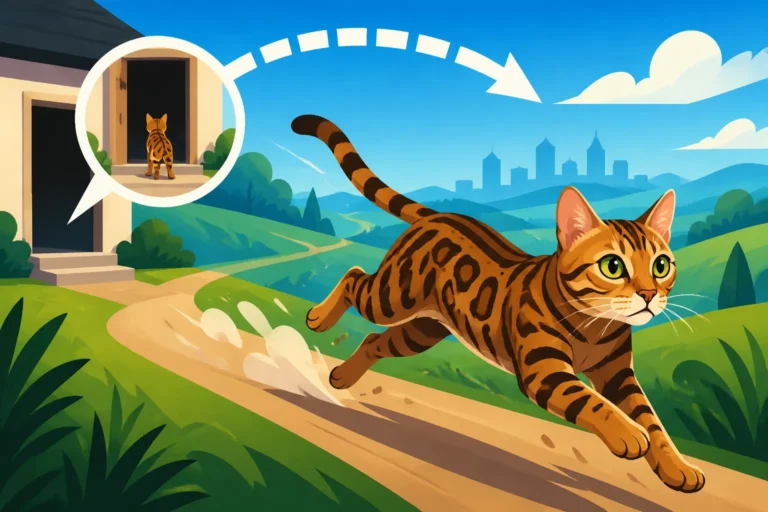
The Bengal cat's striking looks and dynamic personality come from their heritage, specifically the Asian Leopard Cat (ALC). These aren't just pretty spots; they signify a lineage built for activity, hunting, and exploring vast territories. When you bring a Bengal into your home, you're essentially welcoming a tiny, domesticated version of a wild explorer. This means they possess an incredible amount of energy, far surpassing that of many traditional domestic breeds. They're not just active; they are relentlessly active, often needing multiple intense play sessions throughout the day. If you've ever wondered How Much Exercise a Bengal Cat Needs a Day, you'll quickly learn it's a lot more than you might expect!
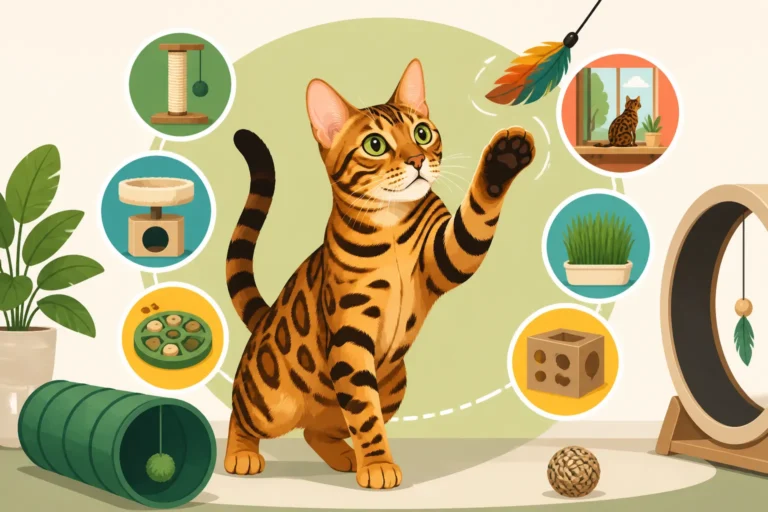
This inherent drive means they are constantly seeking engagement. They stalk, they pounce, they climb, and they investigate. A bored Bengal isn't just a slightly mischievous cat; they can become destructive, inventing their own "games" that might involve opening cabinets, unraveling toilet paper rolls, or even scaling curtains. It's not out of malice, but pure, unadulterated need to exert themselves mentally and physically. This is why tools like cat wheels are so often recommended for them, providing an outlet for that powerful energy in a safe, controlled way.
Why a Regular Cat Tree Isn't Enough
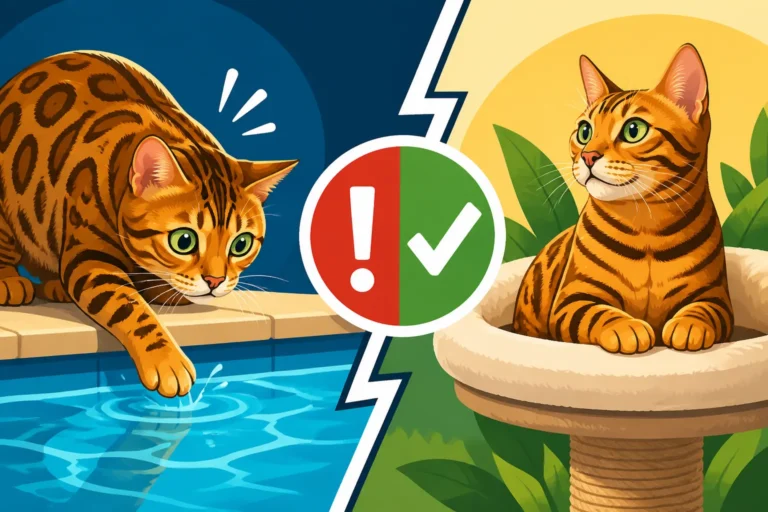
While a good, sturdy cat tree is an absolute must-have for any Bengal home, it often isn't enough to fully satiate their activity requirements. Most cat trees, even the tall ones, offer static climbing opportunities. A Bengal cat, with its powerful hind legs and incredible agility, will scale even the tallest cat tree in mere seconds. They'll survey their domain from the highest perch, perhaps swat at a hanging toy a few times, and then they're ready for the next challenge. For many Bengals, a cat tree becomes more of a resting or observation point rather than an intense workout station.
Consider their intelligence, too. How Intelligent a Bengal Cat Is means they quickly master and become bored with repetitive, predictable toys or structures. A simple cat tree offers vertical space, which is vital, but it doesn't provide the sustained cardio workout or the mental challenge of a moving target or a puzzle. If you've noticed your Bengal still pacing, vocalizing, or getting into mischief even after a vigorous play session with a wand toy and a climb up the cat tree, it's a clear sign they need more. This is where the continuous, self-propelled movement of a cat wheel can truly shine, offering an almost endless opportunity to burn off that excess energy. They thrive on challenges and continuous motion.
Introducing the Cat Wheel to Your Bengal
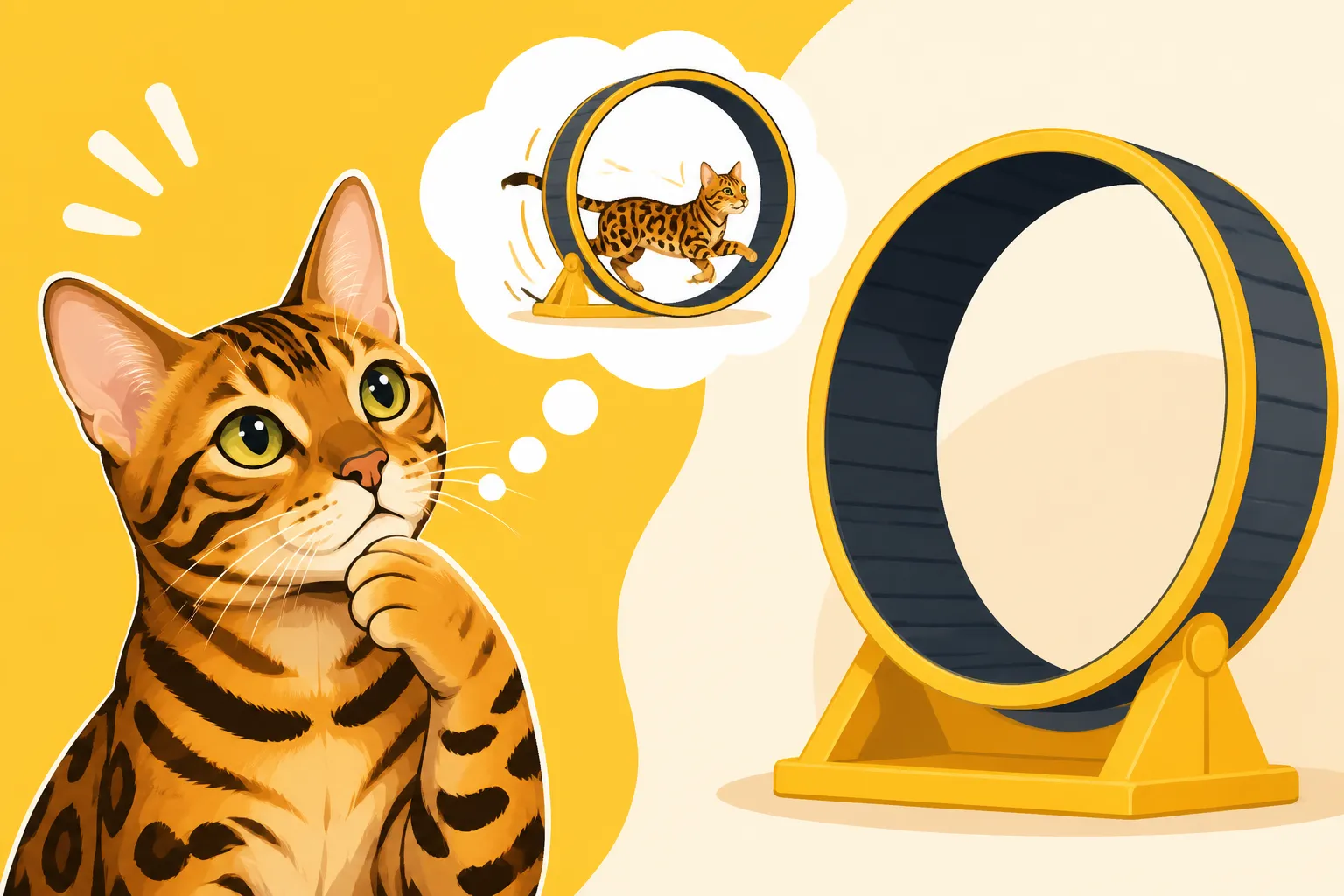
So, you've decided to invest in a cat wheel, hoping it will be the answer to your Bengal's boundless energy. The big question remains: will they just know what to do, or will it be a process? More often than not, it's a bit of both, but with a leaning towards needing your guidance.
Initial Curiosity vs. Active Participation
When a new cat wheel arrives, your Bengal will likely be intensely curious. They’ll sniff it, maybe bat at the moving parts, or even tentatively step onto the track. Their natural inquisitiveness, a hallmark of the breed, means they won't ignore it. This initial investigation is a great sign! However, curiosity alone doesn't automatically translate into understanding how to run on it. Many Bengals might jump on, take a few experimental steps, and then quickly hop off when the wheel moves in an unexpected way. They need to understand that this strange, large object is actually a fun, rewarding activity.
Think of it like a human getting on a treadmill for the first time. You wouldn't just jump on and start sprinting without a little guidance, right? Your Bengal needs to learn the mechanics and, crucially, associate the wheel with positive experiences. Don't be discouraged if they don't immediately take to it. Patience is key. Some Bengals are more adventurous and might figure it out faster, but most will benefit greatly from your active participation in teaching them. This initial phase is crucial; rushing it can create a negative association, making them avoid the wheel altogether.
The Role of Positive Reinforcement and Lure Training
To encourage your Bengal to use the cat wheel effectively and independently, positive reinforcement and lure training are your best friends. This isn't about forcing them; it's about making the wheel the most exciting thing in the room.
Here’s a simple step-by-step approach:
- Introduce Gradually: Place the wheel in a quiet, accessible area of your home. Allow your Bengal to explore it on their own terms for a few days without any pressure. Let them sniff, rub against it, and get comfortable with its presence.
- Lure with a Favorite Toy: Once they're comfortable, use a favorite wand toy or laser pointer to tempt them onto the wheel. Start with the cat standing next to the wheel, then lure them with the toy to take a single step onto the track. Reward immediately with praise and a small, high-value treat. Repeat this several times, gradually encouraging more steps.
- Encourage Movement: Once they're stepping on consistently, use the toy to draw them forward, causing the wheel to move slowly. The trick is to keep the toy just out of reach, making them "chase" it. As they take more steps and the wheel turns, gradually increase the duration. Always end on a positive note, with a treat and praise. Many Bengals respond incredibly well to chasing a laser pointer or a feather wand, and this can be the perfect motivator. You might find great training wands on platforms like Amazon.
- Associate with Rewards: Every time your Bengal engages with the wheel, even for a few steps, provide verbal praise, petting, and a delicious treat. This creates a strong positive association. They'll begin to understand that the wheel isn't just a fun place to chase, but also a place where good things happen.
- Build Endurance: Over several sessions, gradually increase the time they spend on the wheel. Don't push them too hard initially, as this can lead to frustration. Short, frequent sessions are more effective than one long, taxing session. You'll be amazed at How Long a Bengal Cat Runs on a Wheel once they get the hang of it and realize how much fun it is! Consistency is key; make it a part of their daily routine.
Remember, every Bengal is an individual. Some will pick it up in a few days, while others might take weeks. The goal is to make it a positive, self-driven activity.
Factors Influencing Independent Wheel Learning
While Bengals are highly intelligent and often quick learners, whether they take to a cat wheel on their own can depend on several individual and environmental factors. It's not a one-size-fits-all situation, and understanding these nuances can help you tailor your approach.
Personality and Age
Just like people, every Bengal cat has a unique personality. Some are naturally bold, curious, and fearless, eager to try new things the moment they appear. These are the Bengals who might indeed hop on a wheel with minimal prompting and quickly figure out the mechanics. Their inherent confidence and high prey drive make them excellent candidates for self-initiated wheel use. They see a new object, an opportunity for movement, and they go for it. How Many Play Sessions a Bengal Cat Needs often depends on their individual drive, and more driven cats might gravitate to the wheel faster.
On the other hand, some Bengals, while still energetic, might be a bit more cautious, preferring to observe new items from a distance before engaging. They might be wary of the moving parts or the sensation of the spinning wheel under their paws. For these cats, a more patient, gentle introduction is necessary. Forcing them could create a negative association. Age also plays a role. Kittens and younger Bengals, typically under two years old, are often more adaptable and eager to learn new tricks. Their minds are sponges, and they're bursting with energy, making them ideal students for wheel training. Older Bengals can certainly learn, but it might take a bit more time and consistent encouragement, as they may be more set in their ways and less inclined to try completely novel activities without a strong incentive.
The Environment and Other Enrichment
The overall enrichment level of your home can significantly impact how quickly your Bengal embraces a cat wheel. If your Bengal already has a rich environment with plenty of vertical space, interactive toys, puzzle feeders, and regular outdoor excursions (like A Bengal Cat Walks on a Leash), they might simply view the wheel as another exciting addition to their already stimulating world. In such cases, they may experiment with it more readily, as they're accustomed to engaging with various forms of enrichment. A home that understands How Much Enrichment a Bengal Cat Actually Needs will always see a happier, more adaptable cat.
Conversely, if the cat wheel is the only new or significant enrichment item introduced into an otherwise static environment, your Bengal might approach it with more skepticism or less enthusiasm. They might not understand its purpose as readily if they haven't been exposed to a variety of interactive play. The location of the wheel within your home matters too. Placing it in a high-traffic area where they feel secure and can see family activity, but also have enough space to use it, can encourage engagement. If it's tucked away in a lonely corner, they might be less inclined to interact with it independently. The noise level, surrounding distractions, and even the presence of other pets can all subtly influence whether your Bengal decides to investigate and ultimately adopt the wheel as a regular activity.
Maximizing Wheel Engagement and Safety
Getting your Bengal to use a cat wheel is one thing; ensuring they use it safely and consistently is another. A few strategic considerations regarding placement, the type of wheel, and ongoing safety can make all the difference in turning a novel toy into a beloved, daily workout machine.
Placement and Accessibility
Where you place the cat wheel in your home is more critical than you might think. Bengals are social creatures and often prefer to be where the action is, or at least within sight of their human companions. Placing the wheel in a common area, like a living room or a spacious hallway, can encourage them to use it more frequently. If it's in a room where they rarely go, or where they feel isolated, they'll be less likely to engage with it, no matter how exciting it is. The wheel should also be placed on a level, sturdy surface to prevent wobbling, which could deter a cautious cat or even pose a safety risk.
Ensure there's enough clear space around the wheel, particularly at the entrance and exit points. Bengals often leap on and off these wheels with gusto, and you don't want them colliding with furniture or walls. Easy access is paramount; don't block the wheel with other pet supplies or household items. If your Bengal has to navigate an obstacle course just to get to it, they'll probably choose to nap instead. Consider the natural flow of your home and where your Bengal tends to zoom through. Placing the wheel along one of their established "race tracks" can naturally encourage them to hop on for a spontaneous sprint. This also connects to their need for plenty of Vertical space a Bengal Cat Needs elsewhere in the home, ensuring they have climbing options too.
Choosing the Right Wheel
The market offers a variety of cat wheels, and selecting the right one can impact your Bengal's willingness to use it. While I can't name specific brands or models, I can tell you what features to look for. The primary consideration is size. Bengals are typically larger, longer, and more muscular than average domestic cats. A wheel that is too small can be uncomfortable, making them feel cramped or forcing them into an unnatural running posture. Look for wheels with a generous diameter and a wide running surface. Which Cat Wheel Size a Bengal Cat Needs is crucial for their comfort and safety.
The stability of the wheel is also key. A wobbly or flimsy wheel will not only be off-putting but potentially dangerous. Look for a sturdy construction with a solid base that won't tip over during an enthusiastic run. The running surface itself should offer good grip without being abrasive, to protect their paws. Some wheels come with a soft, durable material for comfortable traction. Finally, consider the noise level. A squeaky or excessively loud wheel can be irritating for both you and your Bengal. Reviews on sites like Amazon often give insights into these practical considerations, helping you find a high-quality, quiet option that will last through countless Bengal sprints.
| Feature | Importance for Bengals | Why It Matters |
|---|---|---|
| Size | High (Large diameter, wide running surface) | Prevents cramping, promotes natural running posture, accommodates muscular build. |
| Stability | Critical (Solid base, robust construction) | Ensures safety, builds confidence, prevents wobbling during high-speed runs. |
| Running Surface | High (Good grip, durable, non-abrasive) | Protects paws, provides traction for powerful acceleration, comfortable for use. |
| Noise Level | Moderate to High (Smooth, quiet bearings) | Prevents startling the cat, tolerable for household environment. |
| Material | Moderate (Easy to clean, durable plastic/wood) | Longevity, hygiene, can withstand vigorous use by an active breed. |
Safety Considerations
Once your Bengal is enthusiastically running on the wheel, maintaining safety becomes paramount. Regularly inspect the wheel for any signs of wear and tear, loose parts, or sharp edges that could injure your cat. Pay particular attention to the running surface and the axle mechanism. While well-made wheels are designed for active use, a highly energetic Bengal can put a lot of stress on the equipment.
Supervision, especially in the early stages, is important. While many Bengals will learn to use the wheel independently, it's good to be present to ensure they're using it correctly and not getting into any precarious situations. If you have multiple pets, ensure they have their turn and don't interfere with each other on the wheel. An enthusiastic Bengal might not notice another cat or dog getting too close. Also, remember that while a cat wheel provides excellent physical exercise, it doesn't replace interactive play with you. Your Bengal still thrives on your attention and the mental stimulation that comes from chasing a wand toy or solving a puzzle. The wheel is a fantastic supplement, but it's part of a broader enrichment strategy to keep your Bengal happy, healthy, and safe. After all, ensuring your The Twelve to Sixteen Years a Bengal Cat Gets are filled with joy and health is every owner's goal.
Disclaimer
This article is for general informational purposes only and does not constitute professional advice. Laws, prices and regulations vary by location and change over time. Consult a qualified professional for guidance on your specific situation.