How Long Leash Training a Bengal Cat Takes
Many Bengal cat owners dream of taking their adventurous feline companions out for walks, only to quickly realize that "leash training" isn't a simple, one-size-fits-all endeavor. The truth is, getting a Bengal cat comfortable on a harness and leash can be a journey filled with fits and starts, varying wildly from one cat to the next. This guide will help you understand the realistic timeline for leash training your energetic Bengal, detailing the process, the factors that will speed it up or slow it down, and what true success might look like for you and your unique cat.
Setting Realistic Expectations: How Long Leash Training Truly Takes
Let's be honest, the internet is full of adorable videos of Bengal cats trotting confidently on a leash, making it look effortless. What those videos rarely show is the weeks, or even months, of patient, consistent work that went into achieving that level of comfort. Unlike dogs, who often have an innate desire to please and a long history of being walked on a leash, cats, especially independent and opinionated Bengals, operate on their own terms. There's no magic number of days or weeks that guarantees a leash-trained Bengal, and anyone who tells you otherwise is likely selling you a fantasy.
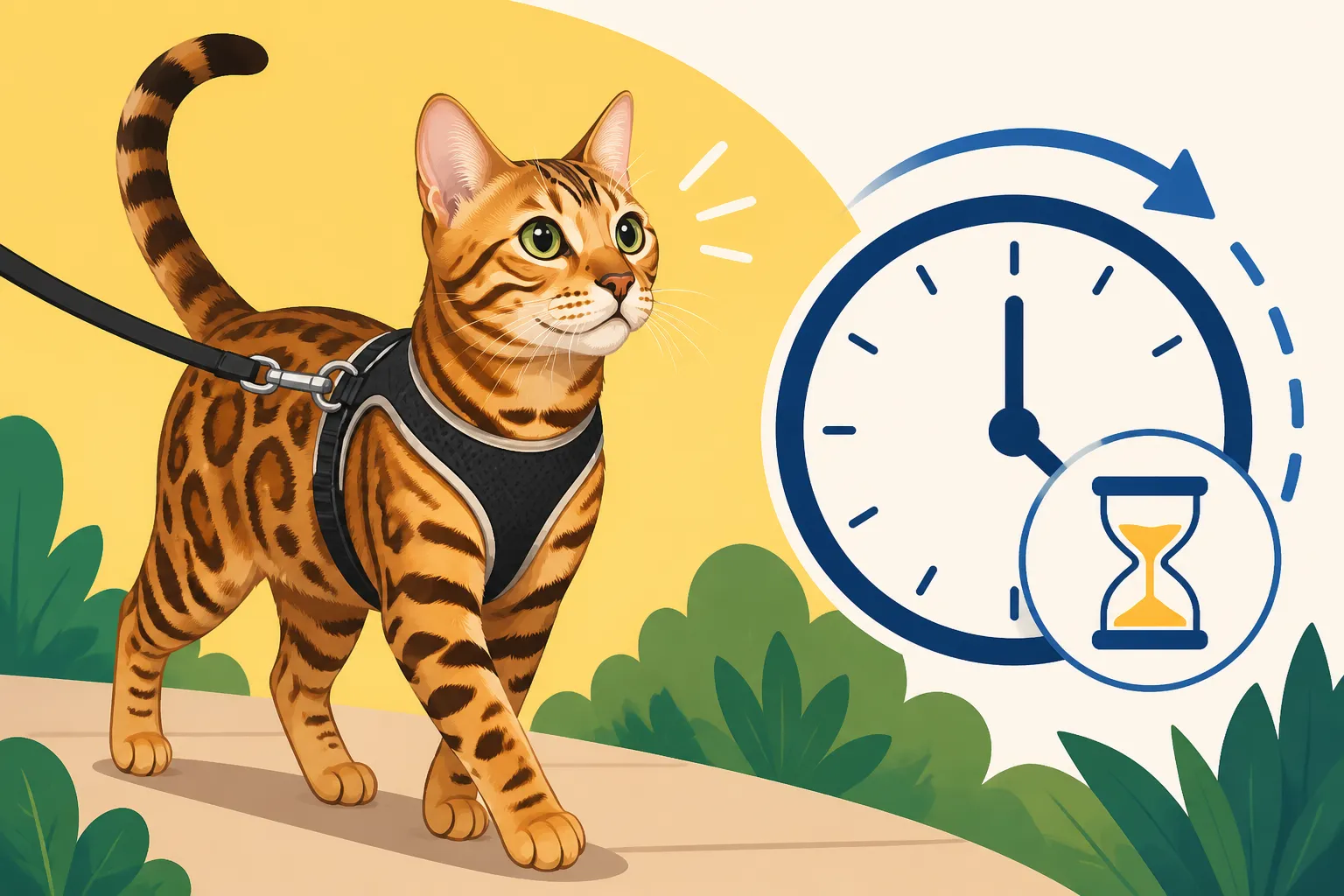
For some incredibly adaptable Bengal kittens, the process might take a few weeks of daily, short sessions to get them tolerating a harness and leash around the house. They might even take to outdoor exploration within a month or two. However, this is the exception, not the rule. More typically, you're looking at a commitment of several months before your Bengal is genuinely comfortable walking purposefully on a leash outside your home, navigating new sounds and sights with confidence rather than fear or extreme distraction. Some cats may never truly enjoy it, content only to stand or sit outdoors in their harness, soaking up the fresh air. The key is to celebrate every small victory and adjust your expectations based on your individual cat's personality and comfort level, rather than trying to force a schedule that simply doesn't fit them.
The younger you start, generally, the easier it can be. A Bengal kitten is typically more open to new experiences and conditioning than an adult cat who has established routines and preferences. Starting with a kitten allows you to integrate the harness and leash into their normal play and socialization, making it feel less like a foreign object and more like part of their exciting world. However, even with a kitten, patience is paramount. Rushing the process can create negative associations, making it even harder to achieve your goal down the line.
The Step-by-Step Journey to Leash Training Success
Leash training a Bengal cat is less about strict commands and more about gradual desensitization and positive reinforcement. It's a series of small, manageable steps that build confidence and positive associations.
Introducing the Harness Indoors
The very first step, and arguably the most crucial, is getting your Bengal comfortable with wearing a harness. Forget the leash for now; just focus on the harness. Start by simply letting the harness sit near their food bowl or favorite sleeping spot so they can sniff and get used to its presence. After a day or two, try placing it on them for just a few seconds, immediately followed by a high-value treat or a favorite toy. We're talking seconds – literally putting it on, giving the treat, and taking it off. Repeat this several times a day, gradually increasing the duration. The goal here is for them to associate the harness with good things, like delicious treats or playtime. You might find a good, escape-proof harness on Amazon that fits snugly without being uncomfortable.
Many Bengals will flop over, walk backward, or freeze when they first wear a harness. This is completely normal! Do not force it or scold them. Just take it off, offer a treat, and try again later. Once they can wear the harness for a few minutes without protest, let them walk around the house in it under supervision. This allows them to get used to the feel of it on their body. This stage alone can take anywhere from a few days for a very confident kitten to several weeks for a more hesitant adult cat. Remember the goal is comfort, not compliance. For more details, you can check out Which Harness Fits a Bengal Cat.
Attaching the Leash and Indoor Practice
Once your Bengal is completely unfazed by the harness, it's time to introduce the leash. Indoors, simply attach the leash to the harness and let it drag behind them for short periods. Again, supervise them to ensure they don't get tangled or chew on it. This helps them get used to the weight and feel of the leash. Once they ignore the dragging leash, pick it up and let them wander around the house while you hold it loosely. Don't pull or guide them yet; just follow their lead. Reward them with treats and praise for calm behavior.
The next step is gentle guidance. With the leash in hand, try to encourage them to follow you a short distance using treats or a favorite wand toy. If they pull or resist, stop, wait for them to relax, and then try again. Never drag or yank on the leash, as this can create fear and resistance. The idea is to make walking on the leash feel like a fun game where they get rewards for moving with you. This indoor practice can easily take another few weeks to a month before your Bengal feels confident and responsive. It's all about building that positive association that being on the leash means good things happen, like a tasty snack or a play session.
Venturing Outdoors: Short, Supervised Explorations
This is where the real fun, and sometimes the real challenge, begins. Start with very short excursions just outside your door. Pick a quiet time of day with minimal distractions. Carry your Bengal outside, put them down, and let them explore a very small, safe area. Don't expect them to walk in a straight line or go far. They will likely want to sniff every blade of grass, investigate every leaf, and simply sit and observe their new surroundings. The first few times might literally be just a few minutes of standing or sitting, taking it all in. Reward their curiosity and calm behavior.
As they become more comfortable, gradually increase the duration and distance of these outdoor adventures. Always let your Bengal set the pace. If they seem overwhelmed or scared, gently pick them up and take them back inside. The goal is positive experiences, not covering ground. Always ensure their harness is secure and escape-proof; a spooked Bengal can slip out of a loose harness in a flash. How Far a Bengal Cat Will Walk will often surprise you once they get going, but it takes time to build up to that.
Consistency and Patience: The Long Haul
Leash training isn't a one-and-done event. Consistency is key. Short, daily sessions are far more effective than infrequent, long ones. Some days your Bengal might be enthusiastic, while others they might be completely disinterested. Respect their boundaries and don't push too hard. If you encounter a setback, simply go back to an earlier, more comfortable stage. For instance, if a new outdoor sound spooks them, spend more time practicing in quieter areas or even back inside for a bit.
Always end on a positive note. Even if it was a challenging session, a final treat, a snuggle, or a quick play session after removing the harness helps reinforce the overall positive experience. Remember, you're building a bond and a new skill, and that takes time, understanding, and a whole lot of patience.
| Training Stage | Typical Timeframe (Highly Variable) | Key Focus |
|---|---|---|
| Harness Introduction (Indoors) | 1-4 weeks | Positive association with harness, wearing it comfortably for short periods. |
| Leash Introduction (Indoors) | 2-6 weeks | Accepting leash attachment, tolerating dragging, gentle guidance. |
| First Outdoor Ventures | 2-8 weeks | Short, quiet explorations, observing surroundings, building confidence. |
| Consistent Outdoor Walks | 3-6 months + | Purposeful walking, responding to gentle guidance, enjoying varied environments. |
Key Factors That Influence Your Bengal Cat's Training Timeline
Several elements play a significant role in how quickly or slowly your Bengal cat takes to leash training. Understanding these can help you tailor your approach and manage your expectations.
Age and Temperament of Your Bengal
As mentioned, age is a big one. Kittens, particularly those from a reputable breeder who handled them frequently and exposed them to various stimuli, tend to be more pliable and adventurous. They haven't formed as many ingrained habits and are generally more open to new experiences. An adult Bengal, especially one who hasn't been exposed to harnesses or outdoor environments before, will naturally take longer. They have established comfort zones and routines, and new experiences can be more unsettling.
Beyond age, individual temperament is paramount. Even within the Bengal breed, there's a spectrum. Some Bengals are naturally bold, curious, and fearless explorers. They're the ones who might pick it up in weeks. Others are more reserved, sensitive to new sounds, or easily spooked. These cats will require extra patience, a slower pace, and a greater emphasis on building trust and security. Don't compare your cat to the "super star" Bengals you see online; focus on their individual progress. You'll want to ensure they're getting plenty of enrichment indoors too, as a naturally active breed. Consider The Bengal Cat Is the Most Active Cat You Can Own for more ideas.
Your Consistency and Patience
This isn't just about your Bengal; it's about you too. If you only attempt leash training once a week for five minutes, progress will be painfully slow. Short, consistent daily sessions (even 5-10 minutes) yield much better results. Life gets busy, we all know that, but try to carve out dedicated time each day, especially in the initial stages.
Your emotional state also impacts the process. If you're frustrated, impatient, or stressed, your Bengal will pick up on that energy. Cats are incredibly perceptive. Approach each session with a calm, positive, and understanding mindset. If you're having a bad day, it might be better to skip the training session or keep it extra short and focused on pure positive reinforcement. Remember, this should be a bonding experience, not a chore for either of you.
The Training Environment
Where you choose to practice makes a huge difference. Starting in a bustling city park with loud noises and passing dogs is a recipe for disaster. Begin in a very quiet, controlled outdoor space – your backyard, a secluded patio, or a very calm, unpopulated green space during off-peak hours. Gradually introduce new stimuli as your Bengal gains confidence. For example, if you want to eventually walk your Bengal in a more active area, start by just sitting in a quiet corner of that area for a few minutes, allowing them to observe from a safe distance before asking them to walk. Understanding How Well a Bengal Cat Hikes involves gradually exposing them to varied terrains and sounds.
Weather conditions also play a role. A Bengal's coat is designed more for warmth than extreme cold, and they are generally comfortable in temperate climates. However, extremely hot pavement can hurt their paws, and heavy rain or strong winds can make any cat miserable. Choose pleasant weather for your outdoor excursions to keep the experience positive.
Quality of Harness and Leash
Using the right equipment is non-negotiable. A flimsy, ill-fitting harness is not only uncomfortable but also a major escape risk. A dedicated cat harness (often H-style or vest-style) that is snug but not restrictive is essential. Avoid dog harnesses, which often don't fit a cat's unique body shape well. You want something secure that they can't easily back out of. For leashes, a lightweight, standard four-to-six-foot leash is usually best. Retractable leashes are generally not recommended for cat training as they offer less control and can be startling. Searching for "cat harness" on Amazon will show you many options.
A cheap harness that chafes or allows your cat to slip out will quickly sour the experience for both of you. Invest in quality.
Maintaining Progress and Enjoying Your Leash-Trained Bengal
Once your Bengal is confidently walking on a leash, the journey isn't over. It's about maintaining that skill and ensuring these adventures remain positive experiences.
Continued Exploration and Enrichment
Bengals thrive on mental and physical stimulation. Leash walks are an incredible way to provide this, offering new sights, smells, and sounds that an indoor-only environment can't replicate. Continue to explore different, safe locations, always keeping your cat's comfort in mind. A short walk around the block one day, a trip to a quiet nature trail the next – variety is the spice of life for an active Bengal.
Even a leash-trained Bengal may not enjoy every single walk, every single day. Some days they might prefer a vigorous indoor play session with their favorite wand toy. That's perfectly fine! The goal is to provide enrichment, not to force a routine. Consider how much exercise your Bengal cat actually needs; How Much Exercise a Bengal Cat Needs a Day can be substantial.
Safety First: Always Vigilant
No matter how well-trained your Bengal is, outdoor environments present risks. Always be aware of your surroundings:
- Dogs and Other Animals: Not all dogs are cat-friendly, and a sudden encounter can be terrifying for your Bengal. Be prepared to pick up your cat if a dog approaches.
- Traffic: Even on a leash, proximity to busy roads is risky. Stick to sidewalks or parks away from traffic.
- Poisons and Hazards: Keep an eye out for discarded food, toxic plants, or other dangers your curious Bengal might try to investigate.
- Escape Risk: Even with the best harness, accidents can happen. Always double-check the harness fit before heading out. Make sure your Bengal is microchipped and wears an ID tag with your contact information.
For those dreaming of even bigger adventures, consider How a Bengal Cat Rides in a Car to get them to more distant walking spots safely.
Knowing When to Let Them Lead (Within Reason)
One of the beautiful things about walking a Bengal cat is that it's often more about their journey than yours. They might want to spend five minutes sniffing one particular bush, or sit silently observing a bird in a tree. While you can gently encourage them to move along, allowing them some agency in their exploration fosters a more positive experience. This isn't a power walk for your fitness goals; it's an adventure for your cat's senses.
That said, you are ultimately responsible for their safety. If they try to go into an unsafe area, you must gently but firmly redirect them. It's a balance between letting them explore and ensuring their well-being. Sometimes, this might mean a walk is shorter than you anticipated because they found a particularly interesting patch of grass to roll in. Embrace these moments; they're what make Bengal cat walks so unique and rewarding.
Disclaimer
This article is for general informational purposes only and does not constitute professional advice. Laws, prices and regulations vary by location and change over time. Consult a qualified professional for guidance on your specific situation.