How Well a Bengal Cat Hikes
It’s a common misconception that all cats are content to simply laze on a sunny windowsill all day. While many certainly enjoy that lifestyle, if you’re the proud parent of a Bengal cat, you know they’re an entirely different breed of feline. Their boundless energy and insatiable curiosity often leave owners wondering how to truly tire them out and fulfill their adventurous spirit. This guide will explore whether hiking is a suitable activity for your energetic Bengal and how to safely introduce them to the trails.
Understanding the Bengal Cat's Natural Inclination for Adventure
Bengals aren't your average couch potato cat. Their lineage is deeply rooted in the wild, which explains their distinctive appearance and, more importantly, their vibrant personality. If you've ever tried to keep up with one, you know exactly what I mean! This innate wildness translates into a powerful drive for exploration and physical activity, making them uniquely suited for experiences beyond the typical backyard.
Their Wild Ancestry and Energy Levels
The Bengal cat descends from the Asian Leopard Cat, a small, wild feline known for its agility, intelligence, and active lifestyle. This isn't just a fun fact; it's a fundamental aspect of your Bengal's genetic makeup that dictates much of their behavior. Unlike many domestic breeds selectively bred for centuries to be lap companions, Bengals carry a strong echo of their wild ancestors. They possess an incredible amount of energy, often zooming around the house, scaling furniture, and engaging in intense play sessions that would exhaust most other cats – and humans! This high energy isn't just a quirk; it's a deep-seated need that must be addressed for their well-being. A bored Bengal is often a mischievous Bengal, and you might find them getting into places you never thought possible or creating their own 'fun' in ways you'd rather they didn't. How Much Exercise a Bengal Cat Needs a Day can give you an idea of the sheer volume of activity these cats demand.
This incredible athleticism and stamina mean that simply tossing a toy mouse around might not cut it for long. They thrive on challenges, on using their keen senses, and on exploring new environments. Their powerful hindquarters are built for jumping and climbing, and their quick minds are constantly observing and learning. When you think about hiking, you're tapping into these very primal instincts. It's an opportunity for them to engage their body and mind in a way that truly satisfies their wilder side, offering varied terrain, new scents, and visual stimulation that a static home environment simply cannot provide. It’s about channeling that intense energy into something positive and enriching for both of you.
The Bengal Cat's Love for Exploration
If you've spent any time with a Bengal, you've probably noticed their relentless curiosity. They're not content to just see a new object; they need to sniff it, paw at it, and often try to bat it off the counter. This exploratory drive is what makes them such fascinating, albeit sometimes challenging, companions. This translates beautifully to the outdoors. A Bengal loves to investigate every rustle in the leaves, every interesting smell, and every new texture under their paws. They’re like tiny, furry detectives, constantly gathering information about their surroundings.
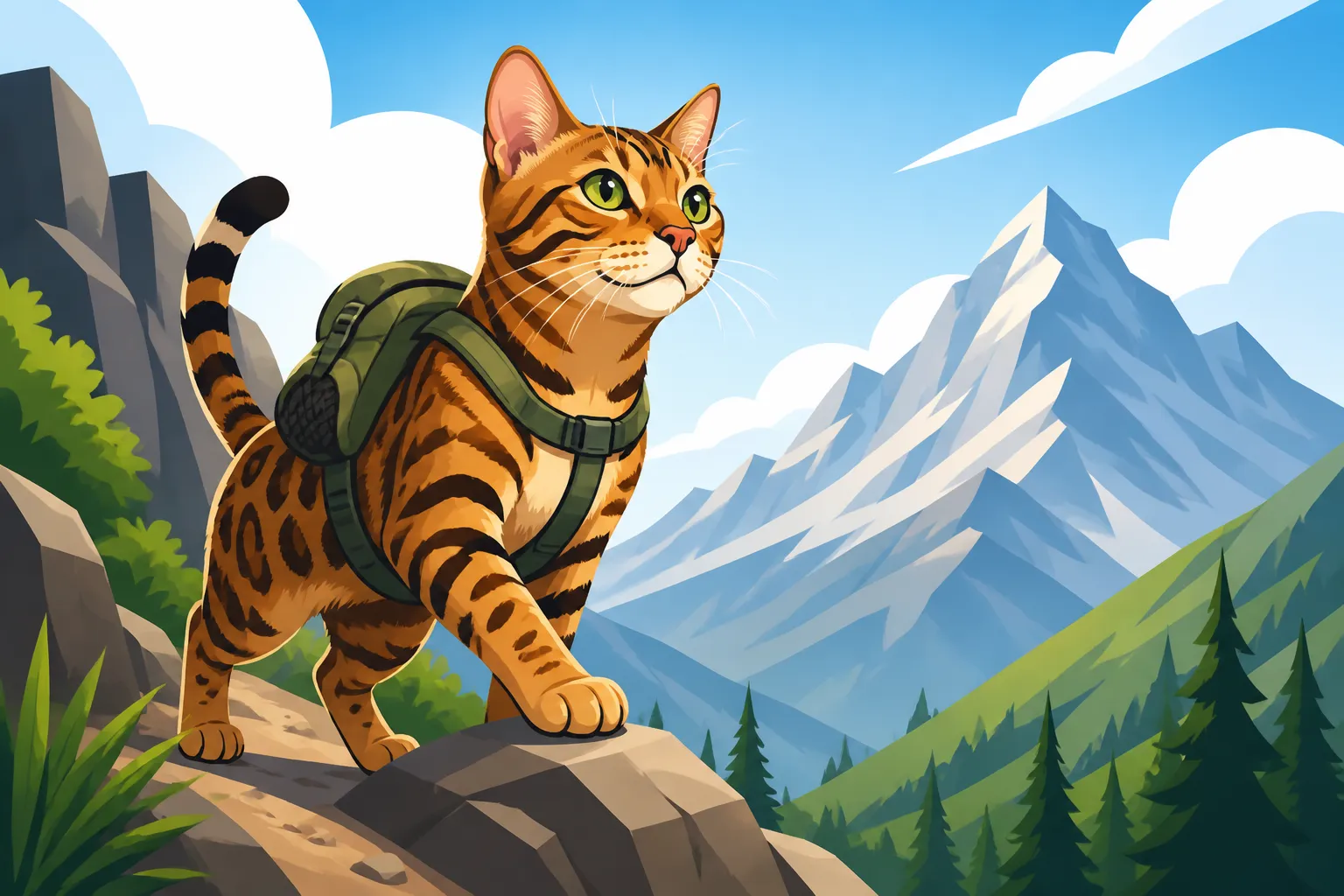
Taking them on a hike allows them to fully indulge this innate desire to explore in a controlled and safe manner. Instead of being confined to the same four walls, they get to experience a world teeming with sensory input. The feeling of grass, dirt, and rocks under their paws, the sounds of birds and rustling trees, the smells of damp earth and wildflowers – these are all incredibly stimulating for a Bengal. They'll likely lead the way, nose to the ground, pulling you gently towards the next intriguing spot. This isn't just a walk; it's an adventure for them, a chance to truly be a cat in a rich, stimulating environment.
Preparing Your Bengal Cat for Hiking Success
Jumping straight from the living room to a mountain trail isn't a recipe for success, no matter how adventurous your Bengal seems. Just like you wouldn't run a marathon without training, your cat needs proper preparation, the right gear, and a gradual introduction to the hiking experience. Patience and consistency are your best friends here.
Essential Gear for Safe Trail Adventures
Before you even think about hitting the trails, you need to invest in the right equipment to ensure your Bengal's safety and comfort. This isn't a task to be taken lightly; the wrong gear can lead to an escape or injury. First and foremost, a well-fitting harness is absolutely critical. Forget flimsy collars; a Bengal's agility means they can slip out of almost anything with enough motivation. You need a harness that is snug but not restrictive, ideally one that covers a good portion of their chest and back to distribute pressure evenly. Many owners find H-style or vest-style harnesses effective for Bengals, as they are harder to back out of. You can find a wide variety of durable and secure options on Amazon, often with adjustable straps to get that perfect fit. For specific advice, you might want to look into Which Harness Fits a Bengal Cat.
Secondly, a sturdy leash is essential. A standard 6-foot leash is usually sufficient, allowing your cat some room to explore while keeping them close. Retractable leashes are generally discouraged for cats, as they offer less control and can lead to sudden jerks or tangles. Beyond the harness and leash, consider a comfortable pet carrier or backpack. This provides a safe haven for your Bengal if they get tired, overwhelmed, or if you encounter situations where it's safer for them to be contained (like passing other hikers with dogs). Water and a portable bowl are non-negotiable, especially on warmer days. Bengals are active, and just like humans, they can dehydrate quickly. Small, collapsible silicone bowls are excellent for this purpose, and again, Amazon has plenty of choices. Don't forget a few favorite treats to reward good behavior and provide positive reinforcement along the way!
Gradual Introduction and Training
Introducing your Bengal to hiking needs to be a slow and positive process. Don't expect them to be a seasoned trail cat overnight. Start with harness training indoors, letting them wear the harness for short periods, gradually increasing the time. Offer treats and praise to create positive associations. Once they're comfortable with the harness, attach the leash and let them drag it around the house under supervision. Then, begin short walks in a very safe, enclosed outdoor area, like your backyard. The goal here is to get them used to the feeling of the leash and the sensations of the outdoors without too many overwhelming stimuli. For a deep dive into this, check out How to Leash Train a Bengal Cat.
As they gain confidence, expand to quieter areas near your home, perhaps a local park during off-peak hours. Keep these initial excursions brief – even just 5-10 minutes is a great start. Watch your cat's body language closely. Are they curious and exploring, or are they crouched, tail tucked, looking for an escape? If they seem stressed, it’s time to head home. Slowly increase the duration and vary the environment. The more positive experiences they have in different settings, the more confident they'll become. Remember, every cat is an individual, and some Bengals will take to it faster than others. Don't push them beyond their comfort zone. Consistency is key, and celebrating small victories will build their confidence over time.
What to Expect on the Trail with Your Bengal Cat
Hiking with a Bengal is a unique experience, unlike walking a dog or even hiking with another type of cat. Their natural curiosity and athleticism mean they’ll likely be eager, but you also need to be prepared for their specific needs and potential challenges. It's a dance between allowing them to explore and ensuring their safety.
Navigating Different Terrains and Environments
One of the great joys of hiking with a Bengal is watching them interact with varied terrain. Their agile bodies are perfectly adapted for it. You’ll find they often prefer to walk through tall grass rather than on a paved path, enjoying the sensory input. They can scramble up small inclines with surprising ease, often choosing a slightly more challenging route than you might expect. Their strong claws, accustomed to climbing cat trees, provide excellent grip on rough surfaces, and they'll happily navigate rocky patches or fallen logs. You might even find them pausing to sniff deeply at interesting plants or rub against a tree. This is their way of interacting with the environment, scent-marking and gathering information.
However, be mindful of their limitations. While they are athletic, extreme terrain like very steep, rocky ascents or dense thorny underbrush might be too much for them, or even dangerous. Observe their willingness to proceed. If they hesitate or seem uncomfortable, it's a sign to find an easier path or pick them up and carry them for a stretch in their carrier. Snow Bengals, for instance, might be more sensitive to bright sunlight on snow, requiring extra shade. Always be aware of slippery surfaces, loose gravel, or any potential hazards like broken glass on popular trails. Their small size makes them more vulnerable to these ground-level dangers.
Safety Considerations and Potential Challenges
Outdoor adventures, while enriching, come with inherent risks. Your Bengal cat's safety must always be the top priority. One of the biggest concerns is wildlife. Even a domesticated Bengal retains a strong prey drive, and encountering birds, squirrels, or even larger animals like rabbits can trigger their hunting instincts. While fascinating to watch, it's crucial to keep them on a secure leash to prevent them from chasing after prey and potentially getting lost or injured. On the flip side, larger predators like coyotes or birds of prey pose a significant threat to your small companion. Always be vigilant, especially in areas known for such wildlife, and consider keeping your cat in their carrier if you're in a high-risk zone. Why a Bengal Cat Should Be Microchipped is also an absolute must for any outdoor-adventure cat.
Environmental factors are another key consideration. Weather conditions can change rapidly on trails. Bengals generally handle moderate temperatures well, but extreme heat can lead to overheating, and extreme cold can cause hypothermia, particularly if they get wet. Whether a Bengal Cat Copes With Cold is a good read for understanding their tolerance. Always carry enough water for both of you, and plan your hikes for cooler parts of the day during summer months. Be aware of poisonous plants, especially if your cat tends to nibble on greenery. Finally, other trail users, especially dogs, can be a challenge. Not all dogs are cat-friendly, and a surprise encounter can be stressful or even dangerous for your Bengal. Always be ready to pick up your cat or move them into their carrier when approaching other hikers or dogs. Always remember, the goal is a safe and enjoyable experience, not pushing limits.
Here’s a quick overview of hiking essentials:
| Category | Item | Purpose | Notes |
|---|---|---|---|
| Safety | Secure Harness | Prevents escape, distributes pressure | Avoid flimsy collars; vest-style or H-style recommended. |
| Sturdy Leash | Maintains control, allows exploration | 6-foot standard leash, no retractables. | |
| Microchip | Essential for identification if lost | Update registration with current contact info. | |
| Pet Carrier/Backpack | Safe retreat, transport over difficult terrain | Ventilated, comfortable, easy to carry. | |
| Pet First Aid Kit | Address minor injuries, emergencies | Include paw balm, antiseptic wipes, bandages. | |
| Comfort | Water Bottle & Bowl | Hydration is crucial | Collapsible silicone bowls are great. |
| High-Value Treats | Positive reinforcement, energy boost | Keep them motivated and happy. | |
| Waste Bags | Leave No Trace principle | Essential for responsible pet ownership. | |
| Navigation | GPS/Map | Prevent getting lost | Know your route and potential bail-out points. |
| Whistle (for you) | Alert others, signal for help | For emergencies. | |
| Clothing | Reflective Gear | Visibility in low light, especially for dusk | For both you and your cat if applicable. |
Maximizing the Enjoyment of Hiking with Your Bengal Cat
Hiking with your Bengal isn't just about exercise; it's about building a stronger bond, offering them a rich sensory experience, and enriching their lives in profound ways. It's a shared adventure that can bring immense joy to both of you, provided you approach it with understanding and respect for your cat's unique nature.
Bonding Through Shared Experiences
There's something incredibly special about experiencing the world alongside your Bengal cat. When you embark on a hike together, you're not just a provider of food and shelter; you become a partner in adventure. This shared experience deepens the bond between you in ways that indoor play, however intense, simply cannot replicate. As your Bengal learns to trust you in new and sometimes challenging environments, their confidence in you grows exponentially. You become their protector, their guide, and their source of comfort when faced with the unknown. They learn to rely on your cues, and you, in turn, become more attuned to their subtle signals and needs.
Think about the quiet moments on the trail: your Bengal perched on your shoulder, taking in a panoramic view, or rubbing against your leg after a particularly exciting sniff. These are powerful moments of connection. The sights, sounds, and smells you encounter together create a unique tapestry of memories. It’s a chance to truly engage with their wild spirit, seeing the world through their hyper-aware senses. It reinforces their place as a cherished member of your family, not just a pet, but a companion on life's grand adventures. This kind of interaction provides mental stimulation that goes far beyond what a puzzle feeder beats a Bengal cat might offer, though those are great for indoor enrichment!
Recognizing Your Cat's Limits and Needs
While Bengals are incredibly athletic and adventurous, they are still cats, and they have their limits. It’s crucial to be a good observer and understand when your cat needs a break, when they've had enough, or when a particular trail is simply too much. Signs of fatigue might include lagging behind, panting (which is rare for cats and usually a sign of significant stress or overheating), seeking shade, or trying to hide in their carrier. If you notice any of these, it's time for a rest, a drink of water, or to head back home. Don't push them to keep going just because you want to cover more ground. The joy is in the journey, not the distance. How Far a Bengal Cat Will Walk varies wildly by individual.
Similarly, pay attention to signs of stress or fear. A puffed-up tail, flattened ears, dilated pupils, excessive vocalization (beyond their usual chirps and meows), or trying to escape are all red flags. If they encounter something truly frightening, like a barking dog or a loud noise, gently scoop them up and place them in their carrier to give them a sense of security. Always respect their comfort zone. If they're not enjoying it, the experience isn't beneficial for anyone. Hiking should be a positive experience, not a source of anxiety. It's about letting them explore at their own pace, following their lead much of the time. Sometimes, a short, gentle stroll is all they need, while other times they might surprise you with their endurance. Being flexible and putting their well-being first will ensure that hiking remains a cherished activity for both of you.
Disclaimer
This article is for general informational purposes only and does not constitute professional advice. Laws, prices and regulations vary by location and change over time. Consult a qualified professional for guidance on your specific situation.