What a Bengal Cat Steals Most Often
Bengal cat thievery targets hair ties, jewelry, and small objects driven by wild ancestry, high intelligence, and hunting instincts.
Change the room, not the cat.
Litter box avoidance, scratching and furniture, multi-cat tension and night activity — and the vertical space, play routines and feeding puzzles that solve more than correction does.
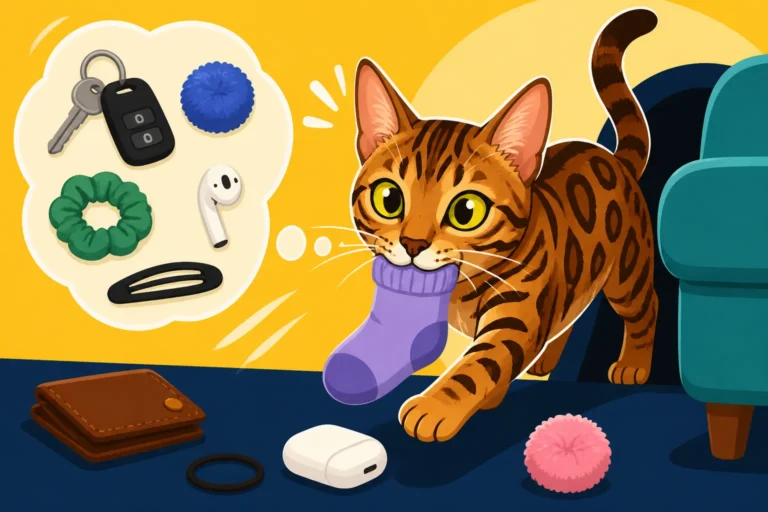
Bengal cat thievery targets hair ties, jewelry, and small objects driven by wild ancestry, high intelligence, and hunting instincts.
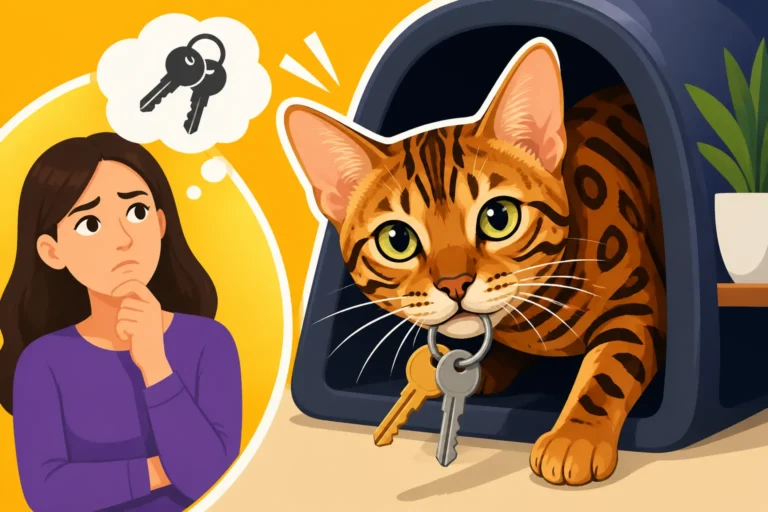
Bengal cat behavior and wild ancestry explain why these intelligent pets steal keys, driven by strong hunting instincts and boredom.
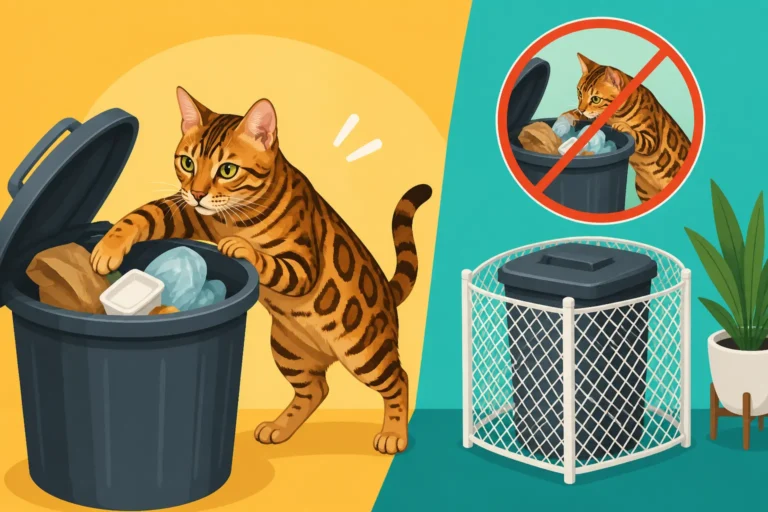
Bengal cat behavior and intelligence explain why these pets raid trash cans, offering practical strategies to stop them.

Bengal cat intelligence and wild Asian Leopard Cat ancestry explain refrigerator raiding behavior and how to stop them.
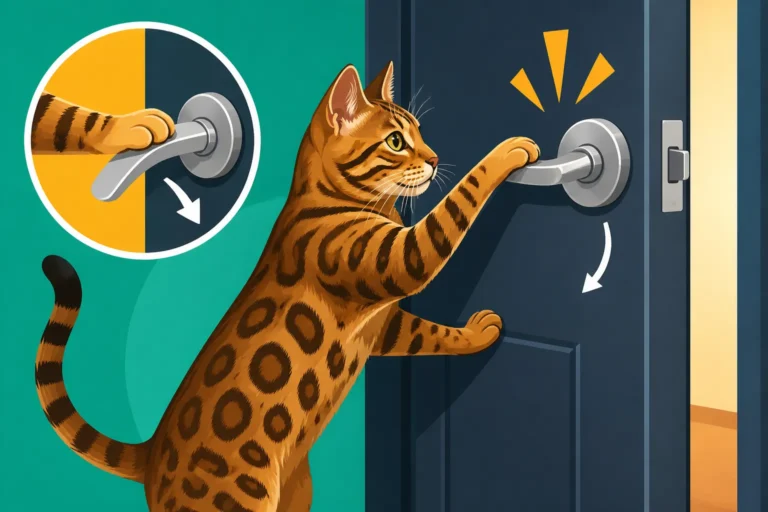
Bengal cat door opening behavior explains why intelligent cats use strong paws and observational learning to operate lever handles.
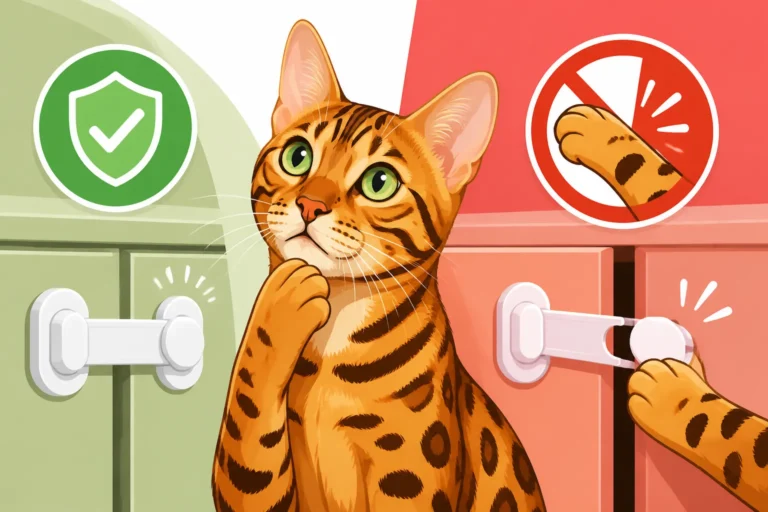
Bengal cat intelligence and agile paws determine whether standard child locks successfully secure household cabinets and drawers.
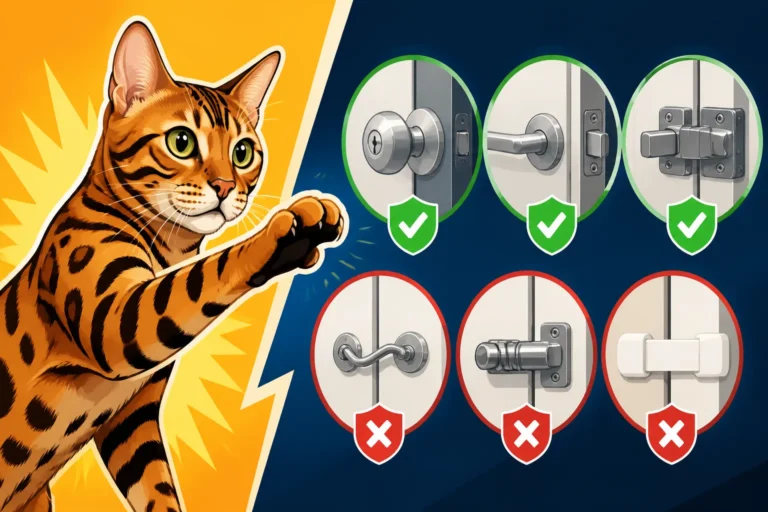
Robust child-proofing locks and strategies for cabinets and drawers keep clever Bengal cats safely out of dangerous cleaning supplies.
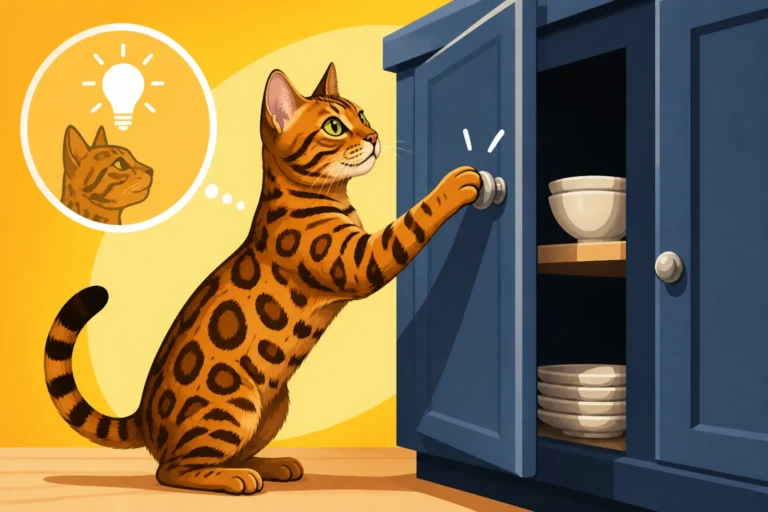
Bengal cats learn to open kitchen cabinets using high intelligence and observation to solve physical household obstacles.

Bengal cats and water play, where a short, dense pelt with little undercoat may not trap warmth when wet, and how owners can keep the cat comfortable afterward.
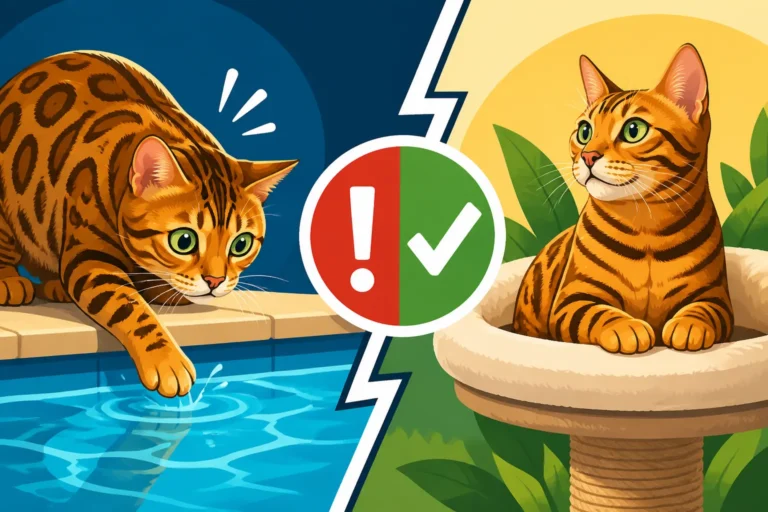
Swimming pool risks for Bengal cats include chemical exposure and drowning hazards due to their genetic water fascination.