How a Bengal Cat Opens a Lever Handle Door
It’s a scene many a Bengal cat parent knows all too well: you secure a room, turn your back for a moment, and then hear the tell-tale click as your furry escape artist saunters out, tail held high. Those clever paws and relentless curiosity make traditional lever handle doors a mere suggestion, not a barrier, and it can be incredibly frustrating when you just want to keep them out of a particular space. This guide will dive deep into why your Bengal cat is so adept at this Houdini act and, more importantly, how you can finally keep those doors closed and your home secured.
Why Your Bengal Cat Sees a Lever Handle as an Invitation, Not a Barrier
Bengal cats aren't just pretty faces; they're intelligent, athletic, and perpetually curious creatures, a unique blend that makes them exceptional problem-solvers. When they encounter a lever handle, they don't see a complex mechanism; they see a challenge, a puzzle to be solved, or a portal to a new adventure. This isn't just a quirk; it's deeply ingrained in their nature, stemming from their wild ancestry.
Their Remarkable Intelligence and Innate Curiosity
Bengal cats possess an almost dog-like intelligence, which means they are constantly observing, learning, and experimenting with their environment. They watch you. Oh, do they watch you! Every time you grab that lever handle, push it down, and pull the door open, your Bengal is likely taking mental notes. They connect the action of your hand to the satisfying outcome of the door swinging open, and then they try to replicate it. It’s pure observational learning, and our Bengals are masters of it. Their curiosity fuels this drive; they always want to know what’s behind that closed door, what new smells or sights await them, or what mischief they can get into. It’s why they constantly explore every nook and cranny of your home. If you've ever wondered How Clever a Bengal Cat Is, you're witnessing it firsthand when they outwit your door.
Dexterity and the Prowess of Their Paws
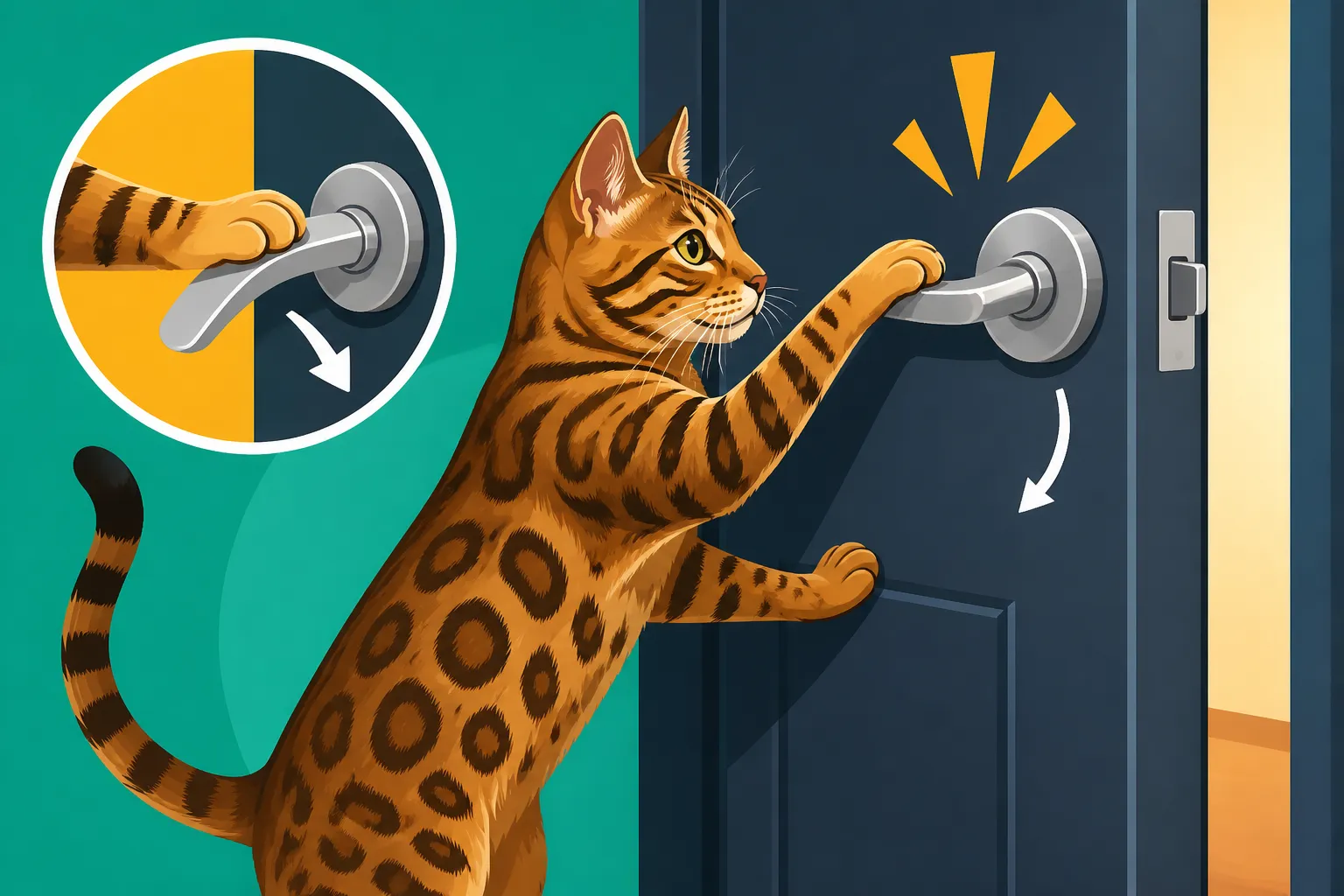
Unlike some breeds with more delicate or less agile paws, Bengal cats have incredibly strong, nimble, and almost hand-like paws. They use their paws not just for walking or scratching but as tools. They can manipulate objects with surprising precision, whether it's batting a toy, figuring out a puzzle feeder, or, in this case, grabbing a lever handle. The elongated shape of a lever handle provides the perfect surface for their paws to hook onto, providing ample leverage. They can grasp, pull, and push with significant force, far more than you might expect from a domestic cat. It’s this combination of intelligence and physical capability that makes them such formidable door-openers. It’s similar to how they learn to open cabinets; their paws are just that good, and you might want to read How a Bengal Cat Learns to Open a Cabinet for more tales of their dexterity.
The Motivation to Explore and Access
Ultimately, the driving force behind their door-opening antics is motivation. Whether it's wanting to join you in the bathroom, explore a forbidden room, escape a playful sibling, or simply seeking a new vantage point, they are highly motivated. Bengals thrive on enrichment and stimulation; a closed door represents a barrier to that. They don't just idly try to open doors; they do it with purpose. If they’re left alone for too long or not getting enough mental and physical exercise, that motivation to find "something to do" becomes even stronger. A bored Bengal is a resourceful Bengal, and they'll use their talents to get wherever they want to go. This ties directly into What a Bored Bengal Cat Destroys – if they can't get through the door, they might find other things to occupy their time.
Decoding the Mechanics: How Your Bengal Cat Exploits Lever Handles
Understanding why they do it is one thing, but figuring out how they do it offers crucial insights into cat-proofing. Lever handles, by their very design, are often easier for Bengals to operate than traditional doorknobs. It's all about physics and feline ingenuity.
Grip, Leverage, and the Perfect Angle
A standard round doorknob requires a twisting motion, which is difficult for most cats unless they develop a highly specific, complex technique. A lever handle, however, only requires a downward push. A Bengal can easily jump up, place its paw or even its full weight on the handle, and push it down. The handle’s length provides excellent leverage, requiring less actual strength than one might imagine. Imagine your cat jumping up, wrapping a paw around the handle, and using its body weight to press down. It's a surprisingly efficient movement. Some even learn to push down with one paw while simultaneously pulling the door towards them or pushing it away with the other paw, or their head.
The "Push Down and Pull" or "Push Down and Lean" Technique
Bengals are incredibly adept at a two-part motion: depressing the lever and then either pulling the door towards them or pushing it away. If the door swings inward, they might push the lever down, then lean their body weight against the door or hook a claw into a gap and pull. If it swings outward, they’ll push the lever down and then often nudge the door open with their head, a shoulder, or even just continue to push their entire body against it until it gives way. They quickly learn which way a door swings and adapt their technique. It's a testament to their problem-solving skills, and they don't give up easily.
The Role of Door Swing Direction and Clearance
The direction a door swings plays a significant role in how easily a Bengal can open it. An inward-swinging door is often easier because they can push the handle down and then pull the door open, using their claws or a hook of their paw. An outward-swinging door requires them to push the handle down and then push the door open, which might be slightly harder but still very achievable. Even subtle details like the clearance around the door frame can be exploited. If there’s a small gap, a clever Bengal might wedge a paw in there to get additional leverage. They learn the nuances of each door in your home, which is why some doors might remain sealed while others become regular thoroughfares.
Practical Strategies to Cat-Proof Lever Handle Doors
So, what’s a frustrated Bengal cat parent to do? The good news is there are several effective strategies, ranging from simple fixes to more robust solutions, to keep your feline genius contained when necessary.
Physical Locks and Barriers for Peace of Mind
The most direct approach is to install physical barriers that prevent your Bengal from manipulating the lever.
- Child Safety Lever Locks: These are your first line of defense and are widely available, often found on Amazon. They typically consist of a plastic cover or a mechanism that prevents the lever from being pushed down. Some models involve a U-shaped guard that fits over the handle, requiring a human hand to squeeze and push, an action impossible for a cat. Others have a swivel mechanism that blocks the handle unless a specific button is pressed. They are usually easy to install, often with adhesive, and don't require drilling. This is generally the easiest and most common fix.
- Vertical Door Locks: For particularly determined Bengals, a child safety lock might not be enough if they figure out how to work around it. Consider a vertical door lock, sometimes called a door guardian or flip lock, installed high up on the door frame, out of your cat's jumping reach. These are typically metal latches that pivot across the gap between the door and the frame. While they require drilling and are more permanent, they offer a very secure solution. They’re excellent for areas like utility rooms, pantries, or bedrooms where you absolutely need to restrict access. These are often the types of "Which Locks Stop a Bengal Cat" solutions that really work.
- Door Wedges or Stops: For a temporary solution, a simple door wedge placed firmly under the door can prevent it from opening, even if your Bengal manages to depress the handle. This is useful if you just need to keep them out of a room for a short period, such as while you're cleaning or having guests over. However, determined cats can sometimes nudge or paw these out of place, so it’s not a foolproof long-term answer.
- Sliding Door Latches: If you have interior sliding doors with lever-style handles (less common but they exist), you'll need a different approach. Child-proof sliding door locks are available and can effectively secure these.
Redirection, Enrichment, and Positive Reinforcement
While physical locks are effective, addressing the underlying motivation for door-opening can also be beneficial. A Bengal cat that is sufficiently stimulated and engaged is less likely to obsess over opening closed doors.
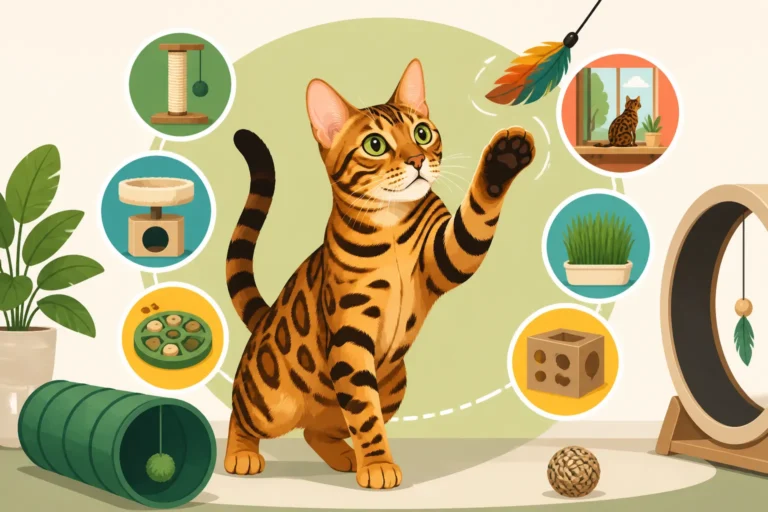
- Increase Vertical Space and Enrichment: Bengals are arboreal by nature; they love to climb and observe from high places. Provide plenty of cat trees, wall-mounted shelves, and cat superhighways. These give them acceptable outlets for their climbing instincts and observation needs. A Tall Cat Tree for a Bengal Cat Costs a bit, but it's an investment in their happiness and your sanity. The more stimulating their environment, the less they'll feel the need to seek novelty behind closed doors.
- Interactive Play Sessions: Engage your Bengal in regular, vigorous play sessions using wand toys, laser pointers (with a physical 'kill' toy at the end to prevent frustration), and toys that mimic prey. Aim for at least 30-60 minutes a day, broken into several sessions. This helps burn off their immense energy and satisfies their hunting instincts. A Bengal Cat Destroys Cheap Cat Furniture and toys quickly, so invest in durable, engaging ones.
- Puzzle Feeders and Food Toys: Instead of just putting food in a bowl, make mealtime a mental challenge. Puzzle feeders force your Bengal to "work" for their food, engaging their intelligence and natural foraging behaviors. This can significantly reduce boredom and redirect their problem-solving energy. You can find many options on Amazon that cater to different difficulty levels.
- Leash Training and Catios: For some Bengals, indoor enrichment simply isn't enough. Leash training can offer safe outdoor adventures, allowing them to explore the world beyond your home under supervision. A catio – a secure outdoor enclosure – is another fantastic option, providing fresh air and new sensory experiences without the risks of free-roaming. A well-designed catio can be a game-changer for a highly active Bengal. A Catio Is the Answer to a Bengal Cat if you want to give them safe outdoor access.
Training Your Bengal Cat (Yes, It's Possible!)
While you might not "train" them not to open a door in the traditional sense, you can certainly manage their behavior and teach them what is acceptable.
- Discourage Undesired Behavior: When your Bengal attempts to open a door you want to keep closed, immediately distract them or redirect their attention to an appropriate activity. A firm "No" followed by guiding them to a toy or a scratch post can work. The key is consistency; every time they try to open that door, redirect.
- Clicker Training for Alternative Behaviors: Clicker training can be incredibly effective for Bengals due to their intelligence. You can teach them to sit, stay, or come when called. For instance, if they approach a forbidden door, you could use a clicker to reward them for turning away or for engaging with a designated toy instead. It sounds elaborate, but How to Clicker Train a Bengal Cat is a skill worth learning for managing these clever felines.
- Positive Reinforcement for Staying Out: Reward your Bengal heavily when they choose to stay out of a room you’ve secured, especially if they’ve previously shown interest in it. If they sit patiently outside a closed door or simply walk past it without attempting to open it, offer praise and a treat. This helps them associate good things with leaving the door alone.
What to Do If Your Bengal Has Already Mastered the Art
If your Bengal cat is already a seasoned pro at opening lever handle doors, you're not alone, and it's definitely not too late to implement these strategies. The challenge will be greater, but with patience and consistency, you can reclaim your door-related peace of mind.
The Power of Consistency and Advanced Deterrents
When dealing with a cat that has already "learned" a behavior, consistency is paramount. Every time they attempt to open a door you want closed, you must reinforce the boundary.
- Immediate and Consistent Redirection: If you walk into a room and find them successfully opening a door, don't just sigh and let it be. Immediately and calmly close the door and redirect them away. The more consistent you are, the faster they will understand the new rules. If you're struggling to keep them out of specific areas like the pantry, How to Keep a Bengal Cat Out of the Trash has some applicable principles about deterring them from forbidden zones.
- Layered Solutions: For the truly advanced door-opener, you might need more than one deterrent. Combine a physical child lock with increased enrichment. Perhaps a horizontal door barrier (like a baby gate that spans the lower portion of the doorway) and a child lock on the lever handle. The more layers of discouragement, the higher your chances of success.
- Motion-Activated Deterrents (with caution): Some owners have found success with motion-activated air blasters or alarms near off-limits doors. These are not for every cat and must be used with extreme caution to avoid causing fear or anxiety. The goal is to startle them away from the door, not to traumatize them. Always observe your cat's reaction and discontinue use if it causes excessive stress. These are more extreme measures and should be considered only after gentler methods have been exhausted.
Embracing the Challenge and Adapting Your Home
Sometimes, despite your best efforts, your Bengal will continue to challenge every boundary. In these cases, it might be about adapting your home and your expectations, rather than fighting an unwinnable battle.
- Accepting Certain Open Doors: If there are non-critical rooms where your Bengal's presence isn't an issue, you might just let them have those doors. Pick your battles. If they love the spare bedroom closet for naps, and it’s safe, maybe that’s a door you don't need to fight over.
- Installing Round Doorknobs: This is a more drastic but highly effective solution. Replacing lever handles with traditional round doorknobs will significantly reduce your Bengal's ability to open doors. While it's an investment of time and money, it's often the ultimate fix for persistent door-openers. Most cats, even clever Bengals, struggle immensely with the twisting motion required for a round knob.
- Understanding Their Needs: Ultimately, their drive to open doors comes from their natural instincts. Ensuring they have ample mental and physical stimulation, enough attention, and a rich environment can often reduce the intensity of this particular behavior. Think about How Much Enrichment a Bengal Cat Actually Needs and strive to meet those requirements. A tired, happy Bengal is less likely to be a destructive or mischievous one.
Here’s a quick overview of common door-securing options:
| Door Lock Type | Description | Pros | Cons | Typical Placement |
|---|---|---|---|---|
| Child Safety Lever Lock | Plastic cover or swivel mechanism over the handle | Easy to install (often adhesive), no drilling, inexpensive, reversible | Some determined cats can still outsmart, aesthetics | Door handle |
| Vertical Door Guardian | Metal latch installed high on the door frame | Very secure, out of cat's reach, highly effective for persistent cats | Requires drilling, more permanent, visible | High on door frame |
| Door Wedge/Stop | Rubber or wooden wedge placed under the door | Portable, inexpensive, no installation | Temporary, can be dislodged, less secure, tripping hazard | Under the door |
| Sliding Door Locks | Various types, often adhesive, to prevent sliding | Effective for specific door types | Only works on sliding doors | Sliding door |
| Round Doorknob Conversion | Replacing lever handle with a traditional round knob | Highly effective, most cats cannot operate | Requires door hardware replacement, more expensive, permanent | Door handle |
Choosing the right solution depends on your Bengal's determination, the specific door, and your tolerance for intervention. Many owners find a combination of strategies works best – a physical lock for critical areas, coupled with increased enrichment and consistent redirection.
Disclaimer
This article is for general informational purposes only and does not constitute professional advice. Laws, prices and regulations vary by location and change over time. Consult a qualified professional for guidance on your specific situation.