How Many Calories a Bengal Cat Runs Off in a Day
You’ve brought a Bengal cat into your home, and suddenly, you feel like you’re living with a tiny, spotted perpetual motion machine. They’re leaping, climbing, chasing, and demanding play with an intensity that leaves other cat owners scratching their heads. This boundless energy naturally leads to a big question: how many calories does such an active cat truly burn in a day, and are you actually feeding them enough to keep up with their wild ways? This guide will dive deep into the unique metabolic demands of your Bengal, helping you understand their caloric needs to keep them healthy, happy, and appropriately fueled for all their adventures.
The Bengal Cat's Metabolism: A Whirlwind of Energy
Owning a Bengal cat is an experience unlike any other. They aren't just "active" in the way a typical house cat might be. Bengals operate on another level entirely, a constant hum of energy that seems to defy the laws of feline physics. If you've ever watched your Bengal race up a cat tree, scale a bookshelf, or chase a wand toy with relentless vigor for what feels like hours, you know exactly what I mean. This incredible dynamism isn't just a quirk of personality; it's deeply ingrained in their genetics, directly impacting their caloric requirements.
Why Bengal Cats Are Different
At the heart of every Bengal cat's spirited nature lies their fascinating ancestry: the wild Asian Leopard Cat. While many generations removed for most pet Bengals, that wild heritage imbues them with certain characteristics that set them apart from traditional domestic breeds. We're talking about an innate drive for exploration, a powerful athleticism, and an insatiable curiosity that demands physical and mental engagement. They aren't content to simply nap for eighteen hours a day; they want to do things. This translates to a significantly higher energy expenditure than your average tabby.
Think about it this way: a typical domestic shorthair might expend energy primarily through short bursts of play, followed by long periods of rest. A Bengal, however, is often on the go, moving with a fluid grace that suggests a constant state of readiness. They patrol their territory, investigate new smells, and maintain a constant awareness of their surroundings. This continuous low-level activity, punctuated by intense play sessions, adds up. Their muscular build and lean physique are a testament to their active lifestyle, and it all requires fuel. Many owners wonder How active a Bengal Cat Is, and the answer is truly, very active!
Beyond Just "Active": What Activity Really Means for Calories
When we talk about a Bengal's activity, it's more nuanced than simply saying they "play a lot." Their physical exertion covers a broad spectrum of behaviors, each contributing to their daily calorie burn. It's not just the obvious, high-octane play sessions; it's also the subtle, yet consistent, expenditure of energy throughout their day. This can be frustrating for owners trying to gauge if they're feeding appropriately, because it's hard to quantify how much energy that constant "patrol" really takes.
Consider these aspects: First, there are the high-intensity bursts: the vertical jumps that defy gravity, the lightning-fast sprints across the living room, and the powerful pounces on toys. These are akin to interval training for us and burn a substantial amount of calories in a short time. Second, there's the sustained activity, like a long session on a cat wheel or an extended game of fetch. Some Bengals will even fetch toys tirelessly, much like a dog, which is a rare trait in the feline world. Then, there's the constant exploration and climbing: scaling cat trees, balancing on shelves, and investigating high vantage points are all part of their daily routine, utilizing various muscle groups and requiring sustained effort. Finally, even their more "relaxed" states often involve a heightened level of alertness and muscle tension, ready to spring into action at a moment's notice. It’s no wonder they need so much fuel! These cats truly benefit from How many play sessions a Bengal Cat Needs throughout the day.
Calculating Your Bengal Cat's Caloric Needs: More Than Just a Number
Determining the exact number of calories your individual Bengal needs can feel a bit like trying to hit a moving target. While there are general formulas and guidelines for cats, Bengals often defy these averages due to their unique metabolism and activity levels. This can be a source of real frustration for dedicated owners who want to ensure their beloved companion is receiving optimal nutrition. It’s not as simple as reading a chart meant for a less active feline.
Basal Metabolic Rate vs. Resting Energy Requirement
To understand your Bengal's caloric needs, it helps to distinguish between a few key terms. The Basal Metabolic Rate (BMR) is the absolute minimum amount of energy your cat needs to sustain vital bodily functions at rest, like breathing, circulation, and cell production. It's what they'd burn if they were completely inactive and fasting. The Resting Energy Requirement (RER) is slightly higher, representing the calories needed by a healthy, adult, awake cat at rest, in a comfortable environment, after a 12-hour fast. This is often calculated using a formula like: RER (kcal/day) = 70 * (body weight in kg)^0.75.
However, here's where the Bengal factor comes in: while these formulas provide a baseline, they don't fully account for the breed's inherently higher metabolic rate and activity drive. For a typical house cat, you might multiply their RER by a factor of 1.0 to 1.2 for maintenance. For a Bengal, especially a young, active one, that multiplier might need to be significantly higher, perhaps 1.4, 1.6, or even 1.8 times their RER, depending on their individual activity. Trying to apply generic RER calculations directly to a Bengal can easily lead to underfeeding, leaving them perpetually hungry or not adequately fueled. This discrepancy is a common frustration for new Bengal owners who find their cat constantly asking for more food even after being fed "recommended" amounts.
Factors Influencing a Bengal Cat's Daily Calorie Burn
While an exact formula is elusive, several factors consistently influence how many calories your Bengal cat burns each day. Understanding these variables will help you make more informed decisions about their diet. It’s a dynamic process, not a one-time calculation.
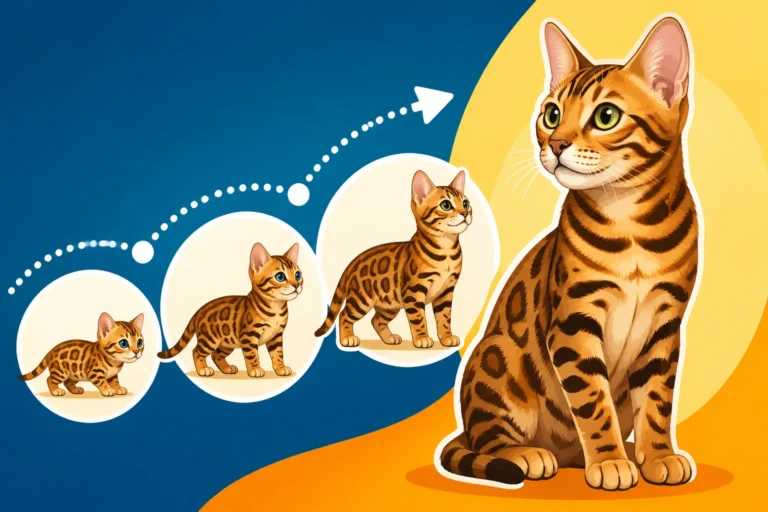
- Age: Kittens are growing rapidly and are usually even more active than adult Bengals, so they have incredibly high caloric needs relative to their size. As Bengals enter their senior years, typically after the age of ten, their metabolism might slow down, and their activity levels may decrease, leading to a reduction in calorie requirements. The Age a Bengal Cat Is Considered Senior
- Weight and Body Condition: An underweight Bengal will need more calories to gain healthy weight, while an overweight Bengal will need fewer to slim down. It's crucial to assess their body condition regularly – you should be able to feel their ribs easily without seeing them, and they should have a discernible waist when viewed from above.
- Activity Level (Individual Variation): This is perhaps the most significant factor for Bengals. Even within the breed, there's a spectrum. Some are absolute maniacs, constantly playing and exploring, while others, though still active, might have slightly calmer moments. An indoor Bengal with access to a catio, a cat wheel, and daily interactive play will burn significantly more calories than one who primarily sits on the windowsill.
- Spay/Neuter Status: Intact (unspayed/unneutered) cats generally have a higher metabolic rate than spayed or neutered cats due to hormonal influences. Once spayed or neutered, their caloric needs typically drop, and overfeeding can quickly lead to weight gain.
- Environmental Temperature: Cats living in colder environments might burn slightly more calories to maintain their body temperature. However, since most Bengals are indoor cats, this factor is usually less impactful than the others.
- Health Status: Illnesses, infections, or injuries can significantly alter a cat's metabolic demands. Some conditions increase caloric needs (e.g., healing from surgery), while others decrease them (e.g., reduced appetite due to illness). Always consult your vet if your Bengal's appetite or weight changes unexpectedly.
- Diet Type and Nutrient Density: The quality and type of food you offer also play a role. A highly digestible, nutrient-dense diet means your Bengal is extracting more usable energy from each bite. Wet food generally has a lower calorie density per volume than dry kibble, meaning a cat might eat a larger volume of wet food for the same caloric intake.
Here’s a quick overview of how these factors might shift calorie needs:
| Factor | Tendency for Caloric Needs | Explanation |
|---|---|---|
| Kittenhood | Higher | Rapid growth and immense activity. |
| Adult (Active) | High | Sustained energy expenditure, play, climbing. |
| Senior (10+ yrs) | Lower | Metabolism slows, activity often decreases. |
| Underweight | Higher | Needs to gain healthy mass. |
| Overweight | Lower | Needs to lose excess fat. |
| Intact | Slightly Higher | Hormonal influence on metabolism. |
| Spayed/Neutered | Slightly Lower | Metabolism often slows post-procedure. |
| Illness/Injury | Variable | Depends on condition; vet guidance is crucial. |
| Diet Quality | Higher (low quality) | Less nutrient absorption, more food needed to compensate. |
| Diet Quality | Lower (high quality) | More efficient nutrient absorption, less food needed. |
Practical Approaches to Feeding Your Energetic Bengal
Since a one-size-fits-all caloric number is impractical for a Bengal, adopting a practical, observant approach to their feeding is key. This involves understanding food labels, continuously monitoring your cat’s condition, and making adjustments as needed. It's about becoming an expert on your Bengal.
Decoding Food Labels and Calorie Density
The first step in managing your Bengal's caloric intake is to understand what's in their bowl. Pet food labels can be confusing, but the most important piece of information for calorie counting is the "metabolizable energy" (ME), often expressed as kilocalories per cup (kcal/cup) for dry food, or kilocalories per can/pouch (kcal/can) for wet food. This figure tells you how much energy your cat can actually derive from the food.
It’s tempting to just follow the feeding guidelines printed on the bag or can, but for an active Bengal, this can often be a trap. These guidelines are usually based on average, moderately active domestic cats and rarely account for the Bengal's intense energy expenditure. If you rely solely on these generic recommendations, you might find your Bengal constantly hungry, demanding more food, or, conversely, if your Bengal isn't quite as active, you could inadvertently overfeed them. This is where a little investigative work comes in. Many premium pet food brands, like those found on Chewy, provide detailed caloric information per serving, which is incredibly helpful. Some meal plans are also customized to your pet's specific breed and activity level, potentially taking some guesswork out of the equation.
Always compare the calorie density across different foods. A high-protein, low-carb wet food designed for active cats will have a different caloric profile than a generic kibble. Knowing this allows you to adjust portions intelligently. For example, if you switch from a food with 400 kcal/cup to one with 350 kcal/cup, your Bengal will need a slightly larger portion of the new food to receive the same caloric intake.
Monitoring and Adjusting for Optimal Weight
The most reliable way to ensure your Bengal is getting the right amount of calories is through consistent monitoring of their body condition. This isn't just about stepping on a scale, although that's a good start. It's about a holistic assessment of their physique. A healthy Bengal should be lean, muscular, and agile. What a Healthy Bengal Cat Weighs often falls within a range, but it's more about their build than a specific number.
Here's what to look for:
- Ribs: You should be able to easily feel their ribs when you gently run your hands along their sides, but you shouldn't see them protruding.
- Waistline: When viewed from above, your Bengal should have a noticeable "waist" where their body tapers in slightly behind the ribs.
- Abdominal Tuck: From the side, their belly should tuck up slightly, not hang low.
- Muscle Mass: They should have well-defined muscles, especially in their hindquarters, reflecting their athleticism.
Weighing your Bengal regularly (weekly for kittens, monthly for adults) can help you track trends. If they are consistently losing weight and you haven't changed their diet, they might need more calories. If they're gaining weight, it's time to reduce their intake slightly. When adjusting food, do it gradually – small increments of a tablespoon or two per day, then reassess after a week or two. Dramatic changes can upset their sensitive digestive system, which, as many Bengal owners know, can be prone to issues.
Incorporating puzzle feeders into their routine can also be a game-changer. These toys make your Bengal work for their food, slowing down their eating and providing mental stimulation. This can be particularly useful for Bengals who eat too quickly or always seem hungry. You can find a vast array of these on Amazon, from simple treat balls to complex multi-stage feeders. Some Bengals are so clever, they can easily solve simpler puzzles, so investing in Which Puzzle Feeder a Bengal Cat Cannot Solve might be a worthy endeavor!
Common Pitfalls and Expert Tips for Bengal Cat Nutrition
Navigating the unique nutritional needs of a Bengal cat can be tricky, and it's easy to fall into common traps that can impact their health and happiness. With their intense energy and often vocal demands, it’s not always straightforward to know if you're hitting the mark. Let’s address some of these challenges and offer practical advice.
The Danger of Underfeeding and Overfeeding
The tightrope walk of feeding a Bengal cat is all about avoiding the extremes of underfeeding and overfeeding. Both can lead to significant health problems.
Underfeeding: This is a common concern for owners of highly active Bengals. When a Bengal isn't consuming enough calories to fuel their high metabolism and activity level, you might notice several signs. They could become lethargic, despite their usual boundless energy, perhaps skipping play sessions or seeming less enthusiastic. You might also observe noticeable weight loss, a dull coat, or even behavioral changes like increased vocalization or anxiety as they constantly seek food. Persistent underfeeding can compromise their immune system, making them more susceptible to illness. For owners, the frustration often stems from feeling like they're feeding a lot, only to discover their cat still needs more. It's easy to worry that you're just not fueling their wild energy adequately.
Overfeeding: On the flip side, overfeeding can lead to obesity, even in active Bengals. While it might seem counterintuitive for such a busy cat, if their caloric intake consistently exceeds their expenditure, the extra energy is stored as fat. This can happen if owners misjudge portion sizes, offer too many treats, or feed a diet that's too calorie-dense without adjusting volume. An overweight Bengal can suffer from a host of issues, including joint problems (which are especially problematic for such agile cats), diabetes, heart disease, and a reduced quality of life. Even seemingly minor weight gain can strain their athletic frame. Whether a Bengal Cat Gets Fat is a real concern, especially as they age or if their activity levels dip. The common frustration here is that Bengals often act like they are starving, no matter how much they've just eaten, making it hard to resist giving them more.
Consulting Your Vet and Utilizing Resources
When in doubt, your veterinarian is your most invaluable resource. They can provide personalized guidance based on your Bengal's specific age, health status, and lifestyle. This is especially critical for kittens with their rapid growth, senior Bengals with changing metabolic needs, or any Bengal experiencing health issues. Your vet can help you determine an appropriate target weight, suggest specific dietary adjustments, and rule out any underlying medical conditions that might be affecting their appetite or weight. They can also recommend reputable brands or specific food formulations that are high in the protein and nutrients an active Bengal typically requires.
Beyond your vet, there's a wealth of information and support within the Bengal cat community. Online forums and social media groups dedicated to Bengal owners can be fantastic places to share experiences and learn from others who are navigating similar challenges. While always taking advice from non-professionals with a grain of salt, these communities can offer practical tips on everything from toy recommendations to feeding strategies. Many owners share their experiences with different foods, and you might discover new approaches to feeding or enrichment that work well for your cat. When looking for new food or enrichment items to keep your Bengal happy, Amazon, for instance, is a treasure trove of puzzle feeders, interactive toys, and high-quality cat food options, making it easy to experiment and find what suits your individual Bengal best. Remember, observation and flexibility are your best tools when it comes to feeding your magnificent Bengal cat.
Disclaimer
This article is for general informational purposes only and does not constitute professional advice. Laws, prices and regulations vary by location and change over time. Consult a qualified professional for guidance on your specific situation.