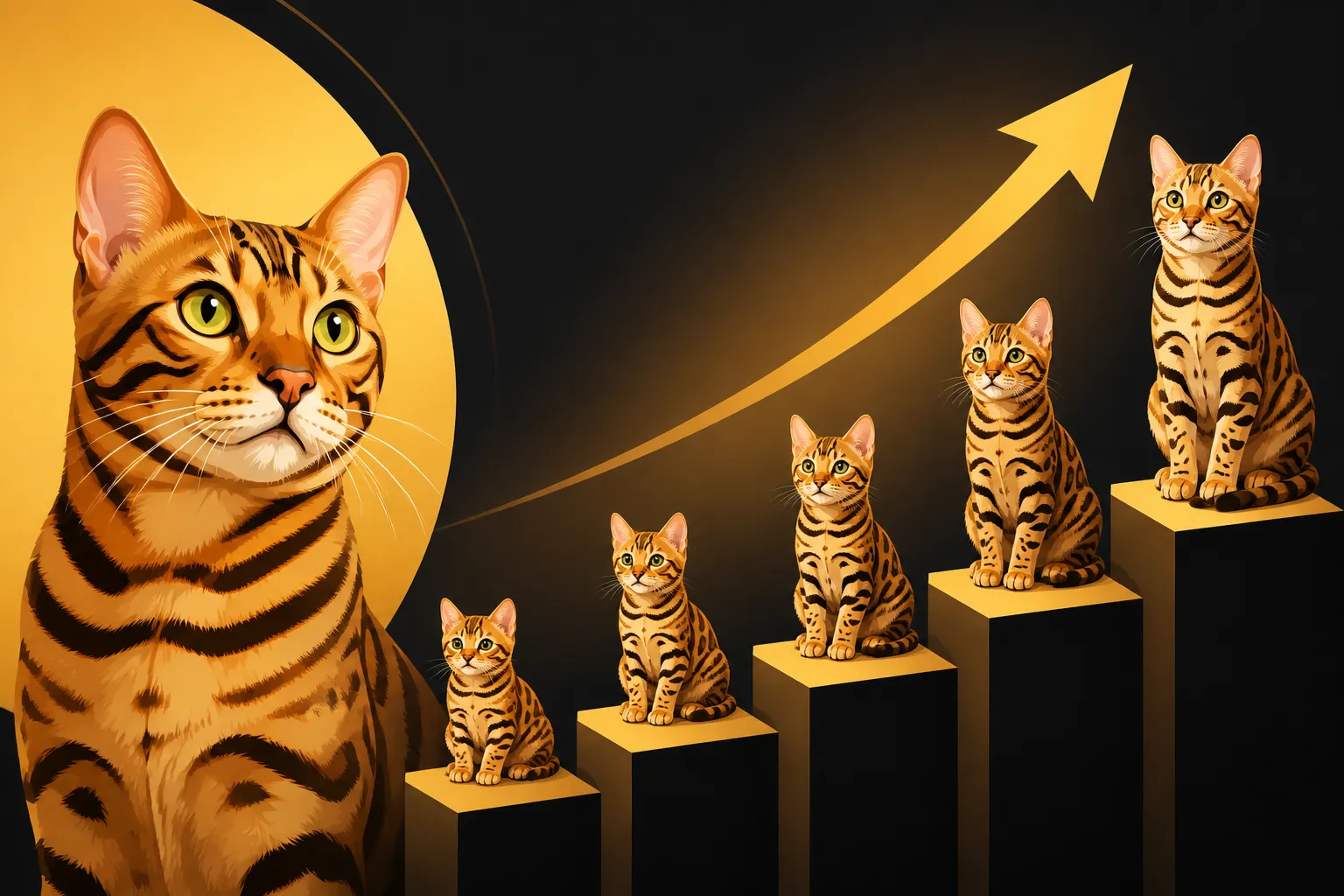
The F1 to F5 Price Ladder for a Bengal Cat
One of the biggest hurdles many aspiring Bengal cat owners face is the sheer confusion surrounding their price. It's not like buying a typical domestic shorthair where you might expect a standard adoption fee or a modest breeder price. Instead, you're hit with a dizzying array of numbers, often tied to something called a "generation" — F1, F2, F3, F4, and SBT. This can feel overwhelming, leaving you wondering if you're looking at a wild animal or a family pet, and how that translates to your wallet. This guide is here to untangle that knot for you, breaking down the Bengal cat price ladder by generation so you can understand what you're truly investing in.
Unpacking the "F" in Bengal Cat Generations: Why It Matters for Price
The "F" number, or filial generation, is absolutely crucial when discussing Bengal cat prices. It’s not just an arbitrary label; it’s a direct indicator of how closely related a specific Bengal cat is to its wild ancestor, the Asian Leopard Cat (ALC). This proximity to the wildcat influences everything from temperament and physical characteristics to, you guessed it, the price. Many people get confused, thinking a higher "F" number means more wild, but it's actually the opposite. The lower the number, the closer to the ALC, and generally, the higher the price.
What the Filial Generation Number Actually Means
Let's start with the basics. The "F" stands for filial, meaning "of a son or daughter." It designates how many generations separate a Bengal cat from its wild Asian Leopard Cat ancestor. An F1 Bengal cat, for example, is a first-generation hybrid, meaning one of its parents was an actual ALC and the other was a domestic cat, often a Bengal itself, or another domestic breed in the very early days of the breed. This direct link to the wild ancestry gives F1s a unique set of traits that profoundly impacts their value.
As you move up the ladder, the percentage of ALC DNA generally decreases. An F2 Bengal has an F1 parent and a domestic Bengal parent, making it two generations removed from the ALC. An F3 has an F2 parent, and an F4 has an F3 parent. Finally, an SBT (Stud Book Traditional) Bengal is typically F4 or later, meaning it has at least four generations of Bengal-to-Bengal breeding behind it, making it fully considered a domestic cat by most registries. Understanding this generational distance is the first step to decoding the pricing structure. This distinction is so important that it actually decides Why the Generation Number Decides Whether You Can Own a Bengal Cat.
The Legal and Ethical Implications of Early Generations
The generational number isn't just about price; it's deeply intertwined with legal and ethical considerations that directly affect availability and, by extension, cost. Many states, counties, and even cities have strict laws regarding the ownership of early-generation hybrid cats. For instance, an F1 or F2 Bengal might be outright banned in some areas, or require special permits, extensive caging, and hefty fees. This drastically limits the potential market for these cats, concentrating them in specific regions and among specialized owners.
Ethically, owning an early generation Bengal means taking on a significant responsibility. These cats retain more wild instincts and behaviors, demanding a more specialized environment and care regimen than a typical housecat. Breeders who work with early generations often invest more in their care, socialization, and ensuring they go to appropriate homes, all of which contribute to the higher price. It’s not just about getting a pet; it's about committing to a unique creature that requires more knowledge and dedication. This is part of the overall picture of What a Bengal Cat Costs to Buy in 2026.
The F1 Bengal Cat: The Apex of Expense and Wildness
When you first encounter the price of an F1 Bengal, it can be absolutely shocking. We're talking about figures that often dwarf the cost of a purebred dog, and certainly most other purebred cats. This isn't arbitrary; it reflects the immense effort, risk, and specialized care involved in breeding and raising these fascinating animals. An F1 Bengal is truly a marvel, embodying the raw beauty of its wild ancestor with a touch of domestic familiarity, but it's crucial to understand what you're signing up for.
Why F1s Command Such a High Price Tag
The primary reason F1 Bengal cats are so expensive boils down to their direct parentage: one parent is a true Asian Leopard Cat. Breeding an ALC with a domestic cat is not a straightforward process. ALCs are wild animals, and their instincts, reproductive cycles, and compatibility with domestic cats present numerous challenges. The success rate of these initial crosses can be lower, and the gestation and rearing of the kittens require specialized knowledge and facilities from the breeder. Furthermore, male F1, F2, and F3 Bengals are often sterile, meaning only the females can continue the breeding line, which adds to their rarity and therefore their value.
Beyond the challenges of breeding, the demand for F1s is relatively niche but passionate. Owners seeking an F1 are often looking for the closest possible connection to the wild aesthetic and energy. They're not just buying a cat; they're investing in a living piece of feline history. The intensive care from birth, including specialized diets, constant socialization, and often significant veterinary oversight, also contributes to the overhead for breeders. This makes the price tag for What an F1 Bengal Cat Costs truly reflect the uniqueness and effort involved.
The Realities of Owning an F1 Bengal Cat
It’s important to be incredibly realistic about what owning an F1 Bengal entails. These are not your average lap cats, though some can form strong bonds with their human companions. F1s retain a significant amount of their wild instincts. They are often larger, more powerful, and possess an incredible amount of energy and intelligence. Their vocalizations can be different, their litterbox habits might require more management, and their need for secure, stimulating environments is paramount. Many F1 owners opt for elaborate outdoor catios or even custom indoor enclosures to ensure their cat's safety and well-being, while preventing escapes.
Their temperament can be more unpredictable than later generations, requiring an experienced hand and a household prepared for a genuinely unique feline. This isn't to say they can't be wonderful companions, but prospective owners must be educated and committed to providing a life that respects their wild heritage. The high price tag is not just for the cat itself, but often for the implied commitment to a lifestyle that accommodates their specific needs, which can include significant ongoing costs for enrichment and specialized veterinary care.
F2 and F3 Bengal Cats: Bridging the Gap Between Wild and Domestic
Moving down the generational ladder, we arrive at F2 and F3 Bengal cats. These generations represent a crucial step in the domestication process, offering a blend of the exotic looks and spirited personality of their F1 ancestors, but with generally more predictable temperaments than an F1. The price reflects this transition, making them more accessible than F1s while still being a significant investment. For many, an F2 or F3 strikes a good balance between wild appeal and manageability.
The Price Point for F2 Bengals
An F2 Bengal cat is the offspring of an F1 Bengal and a domestic Bengal. While still very close to their wild roots, their price point typically drops from the F1 range. This is because the breeding process is generally less fraught with the challenges of directly breeding a wild cat. However, F2s still carry a substantial percentage of ALC genetics, making them highly prized for their striking appearance and active nature. The cost for What an F2 Bengal Cat Costs is still considerably higher than later generations due to their exotic allure and the continued efforts involved in their careful breeding and socialization.
Owners considering an F2 should still anticipate a cat with strong wild traits. They might be very vocal, incredibly agile, and possess a boundless curiosity. They often require extensive enrichment, tall climbing structures, and plenty of interactive play to keep them mentally and physically stimulated. The slightly lower price compared to an F1 doesn't negate the need for a dedicated owner who understands the nuances of owning a hybrid cat still very close to its wild ancestor.
F3 Bengals and the Path to Predictability
F3 Bengals are the result of breeding an F2 with a domestic Bengal. At this stage, the temperament generally becomes more predictable and closer to that of a high-energy domestic cat, though the wild beauty remains strong. The price for What an F3 Bengal Cat Costs is a further step down from the F2s, making them an attractive option for those who want that exotic look without quite the same level of intensity as their earlier generation cousins. They are still recognized for their unique characteristics and often carry those stunning rosetted patterns that draw so many to the breed.
While F3s are generally more amenable to typical household life than F1s or F2s, they are by no means docile couch potatoes. They still need significant engagement, plenty of play, and a stimulating environment. This generation often represents a sweet spot for owners who appreciate the distinctive Bengal traits – the energy, the intelligence, and the vocalizations – but are looking for a cat that integrates a bit more smoothly into a busy family home. They might still show some sensitivity to new situations or strangers, a remnant of their wild ancestry, but are generally more adaptable.
F4 Bengal Cats: The Entry Point to the Domestic World
The F4 generation marks a really significant turning point in the Bengal cat's journey towards domestication. For many, an F4 Bengal represents the true sweet spot: a cat that undeniably looks like a mini leopard, retaining much of the wild beauty, but with a temperament that is largely predictable and distinctly domestic. This is often the first generation that most people consider a "true" domestic cat in terms of personality, even if their appearance screams exotic.
Why F4 is a Significant Milestone
The F4 generation is important because it's the gateway to the SBT (Stud Book Traditional) classification. An SBT Bengal is an F4 or later generation Bengal that has been bred Bengal to Bengal for at least three consecutive generations. This means by the time you reach an F4, the cat is at least four generations removed from its wild Asian Leopard Cat ancestor. This consistent domestic breeding significantly dilutes the wild instincts, leading to a cat that is generally more social, less prone to wild behaviors, and much more adaptable to a typical home environment. This predictability is highly valued by prospective owners and, of course, reflected in the pricing.
For many regulatory bodies and even some insurance companies, F4 and later generations are treated as fully domestic cats, often removing the need for special permits or restrictions. This wider acceptance and easier integration into various living situations contribute to their popularity. While they still possess the high energy and intelligence characteristic of the breed, an F4 is generally easier to train, more accepting of new people and pets, and more likely to exhibit classic housecat behaviors, albeit with a Bengal twist.
The Typical Investment for an F4 Bengal
Given their blend of exotic looks and domestic temperament, F4 Bengals are a very popular choice. The typical investment for What an F4 Bengal Cat Costs is usually a bit lower than F3s, making them more accessible to a broader range of families. However, don't mistake "more accessible" for "cheap." These are still meticulously bred, often highly sought-after cats, and their prices reflect the breeder's dedication to health, temperament, and adherence to breed standards.
An F4 Bengal often offers the best of both worlds: the stunning rosetted or marbled coat, the confident and playful personality, and the ability to thrive in a well-equipped family home. You'll still need to provide plenty of enrichment, like interactive toys and climbing opportunities, and perhaps even a cat wheel to burn off their famous energy. But you'll find they are generally more cuddly, more tolerant, and easier to manage than their earlier generation relatives. This balance of traits makes them an excellent option for first-time Bengal owners who want an exotic-looking companion without the intense demands of an F1 or F2.
SBT Bengal Cats (F5 and Beyond): The Fully Domesticated Standard
Once you get to F5 and beyond, we enter the realm of the SBT (Stud Book Traditional) Bengal cat. This is where the breed truly solidifies its place as a domesticated feline, fully recognized by cat registries and largely free from the legal restrictions often placed on earlier generations. For most people seeking a Bengal cat as a companion, an SBT Bengal is the ideal choice, offering the breed's signature looks and engaging personality in a well-adjusted, predictable package.
Understanding SBT and Its Price Impact
An SBT Bengal is at least an F4 generation cat, with three consecutive generations of Bengal-to-Bengal breeding documented in its pedigree. This sustained breeding within the Bengal breed ensures that the cats consistently exhibit the desired physical and temperamental traits, while minimizing the direct influence of the Asian Leopard Cat. This stability and predictability are incredibly valuable, and while an SBT Bengal is typically the least expensive of the generations, their price still reflects their purebred status, the breeder's investment, and their distinct appeal.
The cost for What an SBT Bengal Cat Costs varies based on factors like lineage, pattern quality, and breeder reputation, but it's generally where you'll find the most "entry-level" prices for a well-bred Bengal. The removal of many of the legal and behavioral complexities associated with early generations makes SBTs more widely available and suitable for a broader range of homes. This doesn't mean they are less "Bengal" – they still have the playful, intelligent, and often vocal nature that makes the breed so captivating.
The Value Proposition of an SBT Bengal
The real value proposition of an SBT Bengal lies in their combination of exotic aesthetics and a reliably domestic temperament. These are cats that thrive in active family homes, enjoying interaction with their humans, playing fetch, and exploring their environment with boundless energy. They are intelligent, can be leash-trained, and often enjoy water, just like their earlier generation cousins. However, they are generally less prone to extreme shyness, territoriality, or the intense wild instincts that can make F1s and F2s challenging for the average pet owner.
For someone looking for that stunning, spotted companion who will engage with them, play for hours, and then curl up for a cuddle, an SBT Bengal is often the perfect fit. Their relative ease of integration into a busy household, combined with their striking beauty, makes them incredibly popular. You get the iconic look of the Bengal, the glitter gene, the energetic personality, all wrapped up in a pet that understands and adapts to domestic life. This makes them a fantastic choice for those who desire the unique Bengal experience without venturing into the complexities of early generations.
Factors Beyond Generation That Influence Bengal Cat Price
While the filial generation is undoubtedly the primary driver of a Bengal cat's price, it's far from the only factor. Many other elements come into play, influencing the final cost you'll see from a reputable breeder. Understanding these additional considerations can help you navigate the pricing landscape and appreciate why certain cats command a higher investment, even within the same generation.
Pattern, Color, and Quality: Visual Appeal vs. Cost
Within each generation, the specific pattern and color of a Bengal cat can significantly impact its price. Rosetted patterns, especially those with distinct, well-defined rosettes (like donut or arrowhead rosettes), are often more sought after and therefore more expensive than marbled patterns. The clarity and contrast of the pattern, meaning how sharply the spots stand out against the background color, also play a huge role. A cat with "high contrast" is generally considered more desirable and will cost more.
Certain colors, while beautiful, might also influence price. While traditional brown spotted or marbled Bengals are common, "snow" Bengals (which can be Seal Lynx, Seal Mink, or Seal Sepia points) or "silver" Bengals often carry a premium due to their unique appearance and sometimes more complex genetics. Even the presence of "glitter," the translucent hair shafts that give a Bengal's coat a shimmering effect, can add to its value. Breeders often categorize kittens as "pet quality," "breeder quality," or "show quality," with show-quality cats, possessing near-perfect conformation to the breed standard and exceptional patterns, fetching the highest prices. For more detail, you can check out What Rosettes and Glitter Add to a Bengal Cat's Price.
Breeder Reputation, Health Testing, and Guarantees
A breeder's reputation and the care they put into their cats are massive factors in pricing. Reputable breeders invest heavily in their breeding program. This includes:
- Health Testing: Performing extensive genetic health testing for conditions common in Bengals, such as PRA-b (Progressive Retinal Atrophy) and PK Deficiency (Pyruvate Kinase Deficiency), and regular cardiac screening for HCM (Hypertrophic Cardiomyopathy). The cost for What the DNA Panel a Bengal Cat Breeder Runs Costs is substantial, and these expenses are naturally factored into the kitten's price.
- Quality Care: Providing high-quality nutrition, proper veterinary care for breeding cats and kittens, and meticulous socialization from birth.
- Guarantees: Offering health guarantees, spay/neuter contracts, and ongoing support to new owners.
These ethical practices add to the overall cost but are absolutely essential for ensuring you receive a healthy, well-adjusted kitten. A cheap Bengal is often a red flag, indicating a breeder who might be cutting corners on health testing, proper nutrition, or socialization, which can lead to heartbreaking and expensive problems down the line. A breeder who proudly displays test results and offers clear contracts is worth the investment. It's important to ask for proof; understanding How to Prove Your Bengal Cat's Generation is also part of finding a reputable breeder.
The Regional Price Divide and Market Demand
Just like real estate, the price of a Bengal cat can fluctuate significantly based on geographic location and local market demand. In areas where the Bengal cat is particularly popular or where there are fewer reputable breeders, prices tend to be higher. Conversely, in regions with more breeders or less intense demand, prices might be slightly lower. However, it's crucial not to let regional differences be the sole determinant. Traveling a bit further to find a truly exceptional breeder with healthy, well-socialized kittens is always a better option than settling for a local, less reputable source.
Economic conditions, the time of year, and even specific litter sizes can also play a role. A smaller litter might mean higher individual kitten prices due to the breeder's fixed costs being spread across fewer animals. Ultimately, while regional variations exist, the core drivers of price remain the generation, quality, and the breeder's dedication to the health and welfare of their cats.
Navigating the Purchase: What to Expect and How to Budget
Deciding to bring a Bengal cat into your home is an exciting step, but it's crucial to approach the purchase with a clear understanding of all the costs involved, not just the initial adoption fee. Bengl cats, especially given their energy and intelligence, have specific needs that translate to ongoing expenses. Proper budgeting from the start will ensure a happy and healthy life for your new companion.
Initial Costs Beyond the Purchase Price
Many first-time Bengal owners focus solely on the sticker price of the kitten, only to be surprised by the immediate "startup" costs. These can quickly add up. Consider:
- Veterinary Care: Your kitten will need initial check-ups, vaccinations (if not already completed by the breeder), deworming, and potentially microchipping.
- Spay/Neuter: Most reputable breeders sell pet kittens with a spay/neuter contract, meaning you'll be responsible for this procedure at the appropriate age.
- Supplies: This is where the fun (and expense) begins! You'll need:
- High-Quality Food: Bengals thrive on high-protein, often grain-free diets. Premium high-protein foods can be more expensive but are vital for their health and energy levels.
- Litter Boxes and Litter: Bengals are often large and dig vigorously, so you'll need robust, large litter boxes and plenty of high-quality litter.
- Scratching Posts & Trees: Forget the flimsy cardboard posts. Bengals need tall, sturdy scratching posts and robust cat trees that can withstand their athletic prowess and satisfy their climbing instincts.
- Toys and Enrichment: A bored Bengal is a destructive Bengal. Invest in a variety of durable toys, puzzle feeders, and perhaps even a cat wheel to keep them entertained.
- Carrier: A secure and comfortable carrier for vet visits and travel.
It's wise to budget an additional substantial amount beyond the kitten's purchase price for these immediate needs. Many breeders will send kittens home with a starter pack of food and some toys, but the bulk of these items will be your responsibility. This is just the beginning of What the First Year With a Bengal Cat Costs.
Long-Term Expenses for Your Bengal Companion
Owning a Bengal cat is a long-term commitment, and their lifespan often extends beyond a decade, bringing with it ongoing financial responsibilities. Regular annual vet check-ups, booster vaccinations, and parasite prevention are standard for any cat, but for a Bengal, you might consider specialized items. Their high activity levels mean they burn a lot of calories, so expect consistent spending on quality food. Premium food or fresh, customized meals can become a significant monthly expense.
Then there's the unexpected. Bengals, like all purebreds, can be prone to certain health issues such as HCM or chronic diarrhea. Having pet insurance from providers like Healthy Paws can be an absolute lifesaver, helping to cover unexpected veterinary bills that can quickly escalate into thousands. Don't forget grooming supplies (though they are low maintenance, they still need basic care), replacement toys, and potentially upgrades to their environment like an outdoor catio for safe exploration. Over the course of their life, these costs can truly add up, as discussed in Fifteen Years of a Bengal Cat, Priced Out. A responsible owner plans for these eventualities, ensuring their beloved Bengal receives the best care throughout its vibrant life.
| Generation | Description | Typical Price Range (General Shape) | Temperament Notes (General) | Legal Considerations (General) |
|---|---|---|---|---|
| F1 | Direct cross between an Asian Leopard Cat (ALC) and a domestic cat. | Very high; commands the highest prices due to rarity and direct ALC parentage. | Strongest wild instincts, can be shy, highly energetic, needs specialized care and environment. | Often heavily restricted or banned in many locations; may require permits. |
| F2 | Offspring of an F1 Bengal and a domestic Bengal. | High; still commands a significant price, though less than F1. | Retains strong wild traits, energetic, intelligent, often more social than F1 but still demanding. | Restricted in some areas, may require permits. |
| F3 | Offspring of an F2 Bengal and a domestic Bengal. | Mid-to-high; a noticeable drop from F2, making them more accessible. | Increasingly domestic temperament, very active and playful, exotic looks still prominent. | Fewer restrictions than F1/F2, but still good to check local laws. |
| F4 | Offspring of an F3 Bengal and a domestic Bengal. | Mid-range; popular choice for exotic looks with domestic temperament. | Largely domestic temperament, energetic, intelligent, good for active families. Often the first SBT. | Generally treated as domestic cats by law; always verify local ordinances. |
| SBT (F5+) | At least F4 generation, with 3+ generations of Bengal-to-Bengal breeding. Fully registered. | Mid-range; most accessible prices for a purebred Bengal. | Fully domestic temperament, playful, affectionate, confident, great family pets. | Recognized as a domestic breed by cat registries and most jurisdictions. |
Disclaimer
This article is for general informational purposes only and does not constitute professional advice. Laws, prices and regulations vary by location and change over time. Consult a qualified professional for guidance on your specific situation.