Whether Iowa Allows an Early Generation Bengal Cat
It can be incredibly confusing and frustrating trying to navigate the complex world of exotic pet laws, especially when you're dreaming of bringing a beautiful Bengal cat into your Iowa home. Many potential owners find themselves utterly lost trying to figure out if their desired F1, F2, or F3 Bengal is even allowed, let alone what hoops they might have to jump through. This guide is here to shed some light on Iowa's regulations regarding early generation Bengal cats, helping you understand the legal landscape so you can make informed decisions.
Understanding Bengal Cat Generations and Their Legal Implications
Before we dive into Iowa's specifics, it's really important to grasp what we mean by "early generation" when we talk about Bengal cats. This isn't just breeder jargon; it's the very foundation of legal restrictions across the country. The "F" number, or filial generation, tells you how many generations removed a Bengal cat is from its wild ancestor, the Asian Leopard Cat (ALC). The closer to the ALC, the more 'wild' traits and instincts they are perceived to have, which is where the legal challenges often arise.
Decoding the Filial Generations
When you hear terms like F1, F2, and F3, it refers to the direct lineage from the Asian Leopard Cat. An F1 Bengal is a direct cross between an ALC and a domestic cat. That means it has one parent who was a true wild cat. You can imagine the impact that has on temperament and behavior! An F2 Bengal has an F1 parent and a domestic cat parent, making it two generations removed from the wild. An F3 has an F2 parent and a domestic cat parent, and so on.
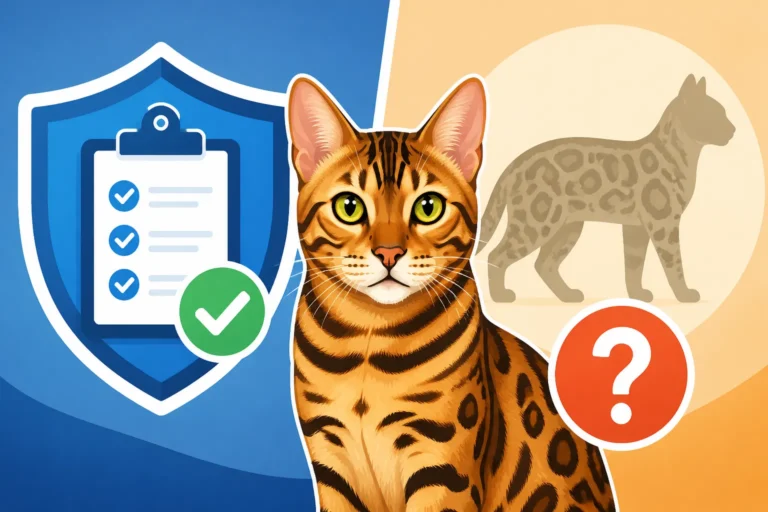
The general rule of thumb, and what many states and cities base their laws on, is that the first three generations (F1, F2, F3) are considered "early generations" or sometimes even "hybrid wild cats" because they retain a significant percentage of their wild ancestor's genetics. This percentage dictates not just their looks, but also their energy levels, their vocalizations, and their general approach to life. What an F Number on a Bengal Cat Means Legally really unpacks this in more detail.
Why Generations Matter Legally
The reason this generation counting is so critical is that many jurisdictions categorize these early generations differently from fully domestic cats. They might view an F1, F2, or F3 Bengal as a wild animal or a dangerous hybrid, rather than simply a domestic pet. This isn't usually due to any proven aggression, but rather the perception of their wild lineage and the potential for exhibiting more unpredictable or destructive behaviors that require specialized care and containment. This is why it's vital to understand How a Bengal Cat's Generation Is Counted and what implications that carries. For example, How Much Wild DNA an F1 Bengal Cat Has will certainly make a difference in how authorities view the animal.
Iowa's Specific Regulations for Bengal Cats
Navigating animal laws in Iowa, much like in other states, can feel like you're trying to read a map written in invisible ink. The biggest challenge often isn't just the state law, but understanding that local ordinances—at the county and city level—can add further restrictions or even outright bans that supersede or build upon state guidelines. This patchwork of rules is precisely why so many people get tripped up when trying to bring a Bengal into their home.
State-Level Overview
In Iowa, the general approach to Bengal cats, especially the early generations, tends to fall under regulations regarding "dangerous animals" or "wild animals." While Iowa doesn't have a blanket state-wide ban on all Bengal cats, it certainly doesn't give a free pass to the early generations (F1, F2, F3). These cats are often considered "hybrid" or "exotic" and may fall under different classifications than a typical domestic cat. This means you can't just assume they're legal without doing your homework.
Many states, Iowa included, look at the generation number as a key factor in determining legality. Generally, the further removed from the Asian Leopard Cat (ALC) the Bengal is, the more likely it is to be considered a domestic animal. Conversely, F1, F2, and F3 Bengal cats are usually subject to stricter rules, permits, or even outright prohibitions. This is why Why the Generation Number Decides Whether You Can Own a Bengal Cat is such an important read.
The Critical Role of Local Ordinances
Here’s where it gets even more complicated: even if Iowa's state laws seem permissive, your specific city or county might have its own rules that are far more restrictive. It's a common scenario where Where Bengal Cat Law Is Set, the State or the City creates layers of bureaucracy. For example, one city might allow F4 and later generations without issue, while a neighboring city could require special permits for anything earlier than an SBT (Stud Book Traditional, typically F4 and beyond), or even ban F1-F3 outright.
These local ordinances often deal with "exotic animals," "wildlife," or "dangerous animals" and may define an F1, F2, or F3 Bengal as such. This could mean:
- Permit requirements: You might need to apply for a special permit, which could involve inspections of your property, fees, and proof of adequate containment.
- Zoning restrictions: Some areas might not allow these types of animals at all, regardless of a permit, based on local zoning laws.
- Outright bans: In the most restrictive areas, owning an early generation Bengal could be completely illegal, leading to confiscation and penalties.
It is absolutely crucial to check with your local animal control, city clerk's office, or county sheriff's department. Simply looking at state law isn't enough to guarantee legality.
What to Do If You Own or Plan to Own an Early Generation Bengal in Iowa
The path to responsible ownership of any Bengal cat, especially an early generation one in a state like Iowa, requires diligence and a proactive approach. It's not about cutting corners or hoping for the best; it's about making sure you're fully compliant and prepared for the unique needs these magnificent felines have.
Research and Verification: Your First Steps
Your absolute first step is to thoroughly investigate the laws that apply to your specific address. This means looking beyond general state information and drilling down to your county and city ordinances.
- Contact Local Authorities: Reach out to your city's animal control, the county sheriff's department, and potentially your local Department of Natural Resources (DNR). Explain clearly that you are inquiring about a Bengal cat and specify the generation (F1, F2, F3, or SBT). Ask if permits are required, what the definitions are for "hybrid" or "exotic" animals, and if there are any outright bans. Get names and official titles of the people you speak with.
- Consult Legal Counsel (If Necessary): If the laws seem ambiguous or you're getting conflicting information, it might be worth consulting with an attorney who specializes in animal law. This might seem extreme, but the consequences of unintentional non-compliance can be severe, including fines and the confiscation of your beloved pet. How to Check Your State's Bengal Cat Law provides a good framework for this kind of research.
Ethical Sourcing and Breeder Verification
If you decide to proceed with acquiring a Bengal cat, particularly an early generation, ensure you are working with a highly reputable breeder. A responsible breeder will:
- Be Knowledgeable about Laws: They should be fully aware of the laws in both their state and yours regarding Bengal cat ownership, especially for early generations.
- Provide Documentation: They should provide clear registration papers, pedigree information, and health testing results for the parents and kitten. These documents are vital to prove the cat's generation.
- Focus on Temperament: Early generation Bengals can have more pronounced wild traits. A good breeder will prioritize socializing their kittens and selecting for temperament, especially if they are placing them in pet homes.
When bringing a new cat home, especially one that might have specific needs, you'll want to ensure you have the best supplies. Places like Chewy offer a vast selection of high-quality food, robust toys, and sturdy litter boxes that can withstand the energy of a Bengal.
The Risks of Non-Compliance
It's tempting to think you can just fly under the radar, but the risks associated with owning an illegal or unregistered early generation Bengal cat are significant.
- Confiscation: If discovered, your cat could be seized by animal control. What Happens to a Confiscated Bengal Cat is a truly heartbreaking read, and something no owner wants to experience.
- Fines and Penalties: You could face substantial fines, and possibly even criminal charges depending on the severity and local laws.
- Lack of Veterinary Care: Some veterinarians might be hesitant to treat an animal that is illegally owned, or they might be obligated to report it to authorities.
- Insurance Issues: Pet insurance providers, like Healthy Paws, may have exclusions for certain breeds or types of animals, especially those classified as "exotic" or "hybrid," or if the animal is not legally owned. Always check their policies carefully before making assumptions.
The Reality of Living with an Early Generation Bengal Cat
Beyond the legal hurdles, it's crucial to understand the practicalities and responsibilities that come with owning an early generation Bengal cat. These are not your average house cats; they are intelligent, intensely active, and often possess unique behavioral traits that require a dedicated owner. Many people are drawn to their stunning looks but aren't fully prepared for their personality.
Heightened Energy and Instinctual Behaviors
An F1, F2, or F3 Bengal is going to have a significantly higher energy level and more pronounced wild instincts than an SBT Bengal or a typical domestic cat. They need a tremendous amount of mental and physical stimulation to thrive. We're talking about cats that love to climb, explore, and "hunt" anything that moves.
- Vocalization: They can be incredibly vocal, often with chirps, growls, and calls that sound more like their wild ancestors than a gentle meow.
- Water Affinity: Many Bengals, especially early generations, have a fascination with water. This can mean playing in sinks, bowls, or even joining you in the shower.
- Destructive Tendencies: A bored early generation Bengal will find ways to entertain itself, and those ways often involve shredding furniture, opening cabinets, or generally redecorating your home in a way you didn't approve of. How an Early Generation Bengal Cat Behaves Differently delves into these traits extensively.
Essential Enrichment and Containment
To keep an early generation Bengal happy and prevent destructive behaviors, you need to provide a rich environment:
- Vertical Space: Tall cat trees, wall shelves, and cat superhighways are not luxuries; they are necessities. These cats need to climb and survey their territory from above.
- Interactive Play: Multiple daily play sessions with wand toys that mimic hunting are critical. Puzzle feeders and rotational toys can keep their clever minds engaged.
- Secure Outdoor Access: Allowing an early generation Bengal to roam freely outdoors is risky both for the cat and local wildlife, and often illegal. A secure catio is truly the ideal solution. Why a Catio Is the Answer to a Bengal Cat cannot be stressed enough; it provides safe outdoor stimulation without the dangers of free-roaming.
- Leash Training: Many Bengal owners successfully leash train their cats, which can be another great way to provide safe outdoor adventures.
When it comes to feeding, early generation Bengals often thrive on high-quality, high-protein diets. High-quality, high-protein food helps ensure they get the nutrition needed to fuel their active lifestyle. This is especially important as Whether an Early Generation Bengal Cat Is Housetrained might be a concern for some, and a good diet often contributes to overall well-being.
Remember, bringing an early generation Bengal into your life is a huge commitment. It's about providing an environment that meets their complex needs, not just enjoying their stunning looks. While these cats are undeniably magnificent, they require a level of dedication and understanding that goes beyond typical pet ownership. Ultimately, the question of Whether a Bengal Cat Is Worth the Money isn't just about initial cost, but the investment of time, resources, and love throughout their lifespan.
| Generation | Definition | Typical Legality (Iowa & general) | Key Behavioral Notes |
|---|---|---|---|
| F1 | Direct cross: Asian Leopard Cat x Domestic Cat | Often restricted or outright banned without specific permits/licensing; requires extensive research | Highest wild instincts, very high energy, vocal, requires experienced owner & secure containment |
| F2 | F1 Bengal x Domestic Cat | Frequently restricted or requires permits; local ordinances vary widely | Strong wild instincts, high energy, vocal, needs significant enrichment |
| F3 | F2 Bengal x Domestic Cat | May be restricted or require permits in some areas; check local laws thoroughly | Still retains noticeable wild traits, very active, intelligent, needs robust enrichment |
| F4+ (SBT) | F3 Bengal x Domestic Cat (and subsequent generations) | Generally considered domestic, fewer restrictions, but always check local laws | More domesticated temperament, still very active & intelligent, often legal as a domestic pet |
Disclaimer
This article is for general informational purposes only and does not constitute professional advice. Laws, prices and regulations vary by location and change over time. Consult a qualified professional for guidance on your specific situation.