Why New York City Bans Every Bengal Cat
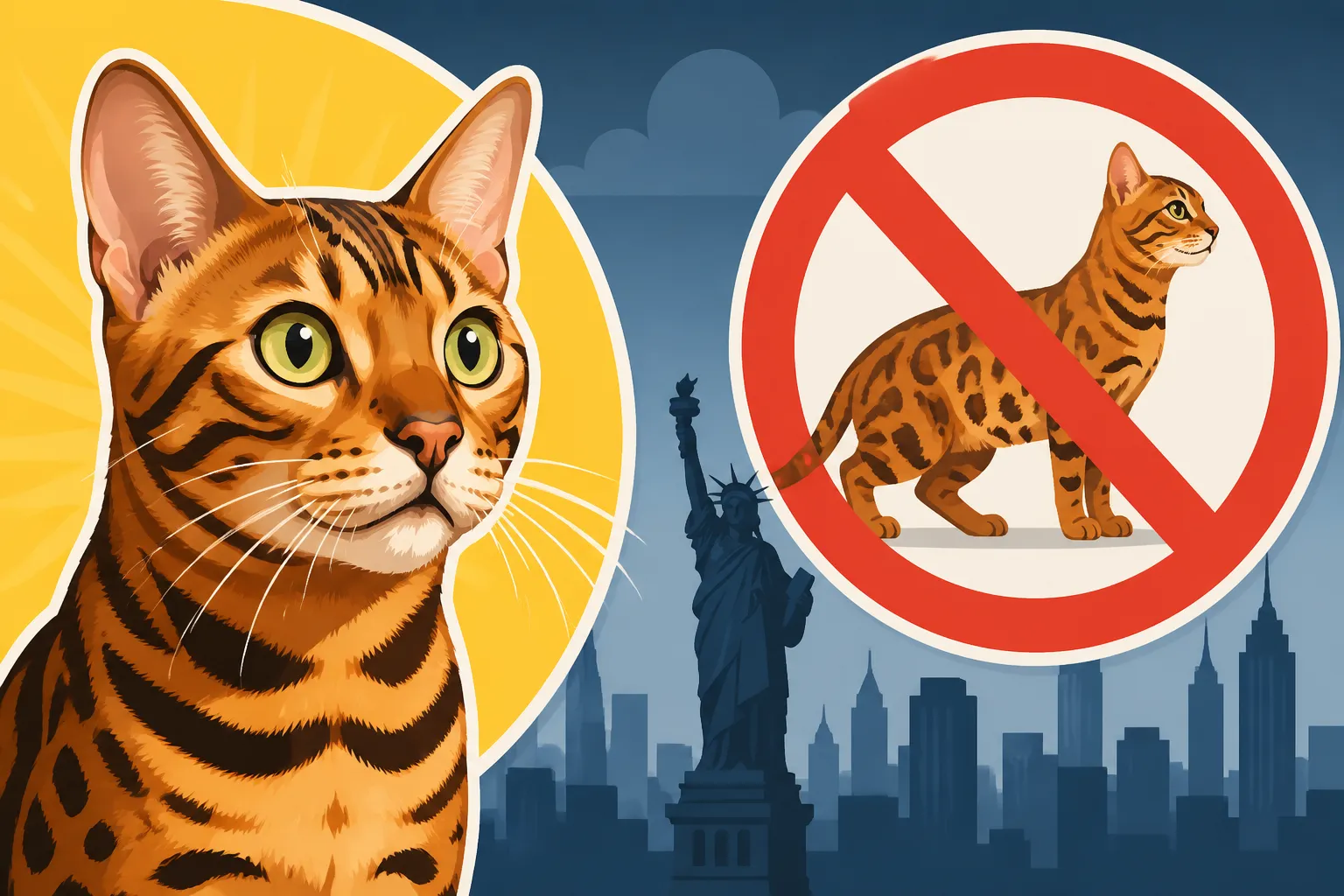
Many aspiring Bengal cat parents dream of bringing one of these magnificent, energetic felines into their home, only to hit a brick wall if they reside in New York City. It's incredibly frustrating to discover that while New York State has certain allowances, the five boroughs have a strict, absolute prohibition on any Bengal cat, regardless of its generation. This guide will unravel the specific reasons behind New York City's blanket ban, clarify the difference between state and city regulations, and explain what this means for current and prospective Bengal owners.
The Stark Reality: New York City's Blanket Ban
It's a common misconception that if a Bengal cat is, say, an SBT (Stud Book Tradition) or F4 generation and further removed from its wild ancestor, it's generally considered a domestic cat and therefore legal everywhere. Not so in New York City. The city operates under its own distinct set of rules that completely override state-level allowances, creating a unique and often bewildering challenge for anyone living within its boundaries who loves these striking felines. This isn't just about early generations; we're talking about a complete prohibition on the entire breed. For someone who has fallen in love with the Bengal's stunning looks and captivating personality, this blanket ban can feel incredibly unfair and restrictive. You might have your heart set on a specific generation, only to learn your ZIP code makes it impossible to legally own one.
Understanding NYC's Specific Regulations
New York City's Health Code takes a very broad, no-exceptions approach to what it considers a "wild animal" that is prohibited from possession. Unlike some other jurisdictions that differentiate between generations, drawing a line at F4 or F5, NYC simply doesn't make that distinction for Bengals. The Department of Health and Mental Hygiene enforces this code rigorously, lumping all Bengal cats into a category of animals deemed unsuitable and potentially dangerous for urban living. This can be a real shock, especially if you're coming from another state or even another part of New York where Bengals are perfectly legal to own under certain conditions. The city is very clear: if it has any wild cat ancestry, no matter how many generations removed, it's a no-go. This includes even the most domesticated SBT Bengal, which is recognized as a domestic cat by major cat registries like TICA.
The reasoning behind such a stringent rule often boils down to public safety and the perception of these cats as inherently wild or unpredictable, despite decades of careful breeding to produce a domestic companion. They look wild, and for many city legislators, that's enough to classify them as such. This strict interpretation means that many animals considered perfectly acceptable pets elsewhere are simply not allowed within the five boroughs. It's a bureaucratic hurdle that can feel insurmountable, turning a dream of Bengal ownership into a legal minefield. It's a stark reminder that pet ownership isn't just about what you want, but what your local laws permit. Knowing How to Read Your City Code for a Bengal Cat can be a bewildering task when dealing with such absolute prohibitions.
The "Wild Cat Hybrid" Designation
The core of New York City's ban lies in its classification of the Bengal cat as a "wild cat hybrid." This designation immediately places them alongside other exotic animals that are unequivocally prohibited. To the city, any animal with recent wild lineage, even if several generations separated, is still viewed through the lens of its wild ancestor, the Asian Leopard Cat (ALC). They don't seem to acknowledge the extensive breeding work done by responsible breeders to domesticate the Bengal cat, leading to a cat that, by the SBT generation, behaves much like any other domestic feline. It's a legal label that completely overlooks the reality of the breed.
This label completely ignores the efforts of breeders who have spent decades developing the Bengal cat into a loving and manageable companion. When you consider What SBT Means in a Bengal Cat, you understand that these are cats many generations removed from their wild ancestors, fully litter trained, and integrated into domestic life. Yet, for NYC, that wild heritage, however distant, is enough to warrant a ban. This creates a deeply frustrating situation for those who understand the breed and know that a well-socialized Bengal is far from a wild animal. It's this blanket categorization, rather than a nuanced understanding of the breed's development and temperament, that underpins the city's prohibitive stance. It's a far cry from a wild Asian Leopard Cat, yet for legal purposes, it's treated the same.
Navigating the Legal Landscape: State vs. City Rules
The complexity of Bengal cat ownership in New York is significantly compounded by the discrepancy between state and city laws. You might do your initial research and find that New York State allows certain generations of Bengal cats, leading you to believe that you're in the clear. However, New York City operates under its own municipal code, which, in this instance, is far more restrictive. This creates a confusing and often misleading situation for potential owners, where what's permissible just outside the city limits becomes illegal mere miles away. It’s a classic case of navigating overlapping jurisdictions, and for pet owners, it can feel like a bureaucratic labyrinth.
New York State's More Lenient Stance
New York State law, under the Department of Environmental Conservation (DEC), takes a more graduated approach to hybrid cats. Generally, the state permits the ownership of Bengal cats that are five or more generations removed from their Asian Leopard Cat ancestor (F5 or later, including SBTs), without requiring a special permit. This is the same stance adopted by many other states across the country, recognizing that these later generations are essentially domestic animals. An individual looking to purchase a Bengal might check the state regulations, see this allowance, and assume that it applies to their home in Brooklyn or Manhattan. Understanding Which Bengal Cat Generation New York State Allows is key for residents outside the five boroughs.
However, this is where the critical distinction lies: local ordinances can be, and often are, more restrictive than state laws. While the state might say an F5 Bengal is fine, New York City has exercised its right to impose stricter regulations within its own boundaries. This means that even if you have a perfectly legal F5 or SBT Bengal by state standards, bringing it into New York City makes you non-compliant with local law. It's crucial to understand that state law sets a baseline, but cities and counties often have the authority to add further prohibitions, especially regarding animals considered exotic or potentially dangerous. Where Bengal Cat Law Is Set, the State or the City is paramount before making any commitments.
The Frustration of Overlapping Jurisdictions
The conflict between New York State and New York City laws is a huge source of frustration for Bengal cat enthusiasts. Imagine living in a suburb just outside the city, where your SBT Bengal cat, acquired from a reputable breeder, is a beloved and legal member of your family. You might take your cat to a local park or enjoy its playful antics at home, perhaps even ordering its specialized high-protein food from Chewy without a second thought. But if you were to move across the city line into one of the five boroughs, your perfectly legal pet would instantly become illegal. This kind of jurisdictional overlap creates confusion and anxiety, forcing pet owners into a precarious legal position.
This isn't just an academic distinction; it has real, tangible consequences. If city authorities discover a prohibited animal, they have the power to confiscate it, and owners can face fines or other penalties. This can lead to heartbreaking situations for families who genuinely didn't realize the extent of the local ban, or for those who inherited a Bengal without full knowledge of its lineage or local laws. It underscores the critical need for anyone considering a Bengal cat in any part of New York to not only check state laws but to delve deep into their specific city, town, and even homeowner association rules before bringing one home. Always double-check your exact address against local ordinances. It truly highlights Why New York City Bans Every Bengal Cat while the state does not.
The Practical Implications for Bengal Owners
Understanding that New York City has a blanket ban on all Bengal cats is one thing, but knowing what that truly means for current and prospective owners is another entirely. The consequences of violating this law are serious and can lead to emotional distress and financial burdens. It's not just about avoiding a fine; it's about the welfare of your beloved pet and your legal standing within the city. Many people just don't realize the severity until they are faced with a difficult situation, highlighting the need for absolute clarity on this issue.
What Happens If You Own a Bengal in NYC
If you are currently living in New York City and own a Bengal cat, even an F5 or SBT that would be legal elsewhere, you are technically in violation of city ordinances. The Department of Health and Mental Hygiene has the authority to respond to complaints or discover prohibited animals during other inspections. Should your Bengal be identified as a "wild cat hybrid," the most immediate and devastating consequence is the potential for confiscation. This isn't a scenario where you simply pay a fine and keep your cat; the city's goal is to remove prohibited animals from its jurisdiction. Imagine the heartbreak of having your companion taken away, often with little recourse, simply because of its breed.
Beyond confiscation, owners can face significant penalties, including fines for illegal possession of a wild animal. The emotional toll of such an event is immense, not only for the owner but for the cat, which would undergo the trauma of displacement and uncertainty. It also highlights why responsible pet ownership in a city like New York demands thorough research. Many people assume a purebred cat from a reputable breeder must be legal, especially when they register with organizations like TICA, but local laws can and do supersede these assumptions. This also impacts access to services; some vets might be hesitant to treat a known illegal animal, and finding pet insurance like Healthy Paws might become complicated if the breed is deemed prohibited.
Moving to or Through NYC with a Bengal
The ban also creates logistical nightmares for Bengal owners contemplating a move to New York City or even just passing through. If you're relocating to one of the five boroughs from an area where your Bengal is perfectly legal, you face a difficult choice: leave your cat behind, find it a new home outside the city, or risk breaking the law. Transporting an illegal animal into the city, even temporarily, can put you in a vulnerable position. Imagine pulling up to your new apartment with your cherished Bengal in a carrier, only to realize you're now a lawbreaker. What Happens If You Move With an Illegal Bengal Cat can be a truly harrowing experience, leading to immense stress during an already hectic time.
This isn't just about permanent residents. Even if you're merely traveling through New York City with your Bengal—perhaps for a connecting flight or a short visit—you could potentially run into issues if your cat's presence is discovered. While enforcement for transient situations might be less common, the risk remains. It's a sobering thought that a beloved family member could cause legal trouble simply by being in the wrong place. Therefore, planning any travel that intersects with New York City with a Bengal cat requires extreme caution and ideally, an alternative route or boarding solution outside the city limits. This is particularly true if you are concerned about What Happens to a Confiscated Bengal Cat.
Beyond the Ban: Finding a Legal Feline Companion
While the news about New York City's Bengal ban can be disheartening for enthusiasts, it doesn't mean you can't have a wonderful, engaging feline companion. The key is to channel that passion into finding a cat that is both legal for your specific location and a good match for your lifestyle. There are many fantastic breeds and mixes that share some of the Bengal's desirable traits, like intelligence, energy, and even a striking appearance, without the legal complications. Healthy food and enriching toys are available for any cat, regardless of breed, ensuring a happy life within legal boundaries.
The Importance of Verifying Your Cat's Generation
For those living outside of New York City but still within New York State, or in other jurisdictions where Bengal cats are permitted with generation restrictions, verifying your cat's generation is absolutely non-negotiable. Reputable breeders will provide clear documentation, often including a pedigree that traces the cat's lineage and officially states its filial (F) generation or SBT status. This paperwork is your best defense against inadvertently violating local laws and helps ensure you're getting a cat that meets legal requirements. Never assume; always ask for proof. How to Prove Your Bengal Cat's Generation is a vital piece of knowledge for any prospective owner.
Furthermore, a responsible breeder will be transparent about the health testing of their breeding cats, ensuring you're getting a healthy kitten. They should also be well-versed in the laws of various jurisdictions and will refuse to sell an F4 or earlier generation Bengal to someone in an area where only F5 or SBTs are permitted. They certainly wouldn't sell any Bengal to someone residing in New York City. This is where choosing a reputable breeder truly makes a difference, as they prioritize both the welfare of their animals and the legal compliance of their buyers. You might also ask Whether a DNA Test Confirms a Bengal Cat if you are ever in doubt.
Why Researching Local Laws is Non-Negotiable
This entire situation with New York City serves as a powerful reminder: never, ever assume you know the law when it comes to exotic or hybrid pets. Before you even start looking at kittens, before you fall in love with pictures online, you must thoroughly research the specific ordinances in your exact municipality. State laws are just one piece of the puzzle; city, county, and even homeowner association rules can add layers of complexity. What's legal in one neighborhood could be prohibited just a few blocks away.
A simple call to your local animal control or city clerk's office can save you immense heartbreak and legal trouble down the line. Many cities have specific codes regarding "wild animals," "hybrid cats," or "dangerous animals" that will apply to Bengals. Don't rely solely on online forums or anecdotal advice. Get official clarification in writing if possible. Understanding Which City Ordinances Catch a Bengal Cat Owner Out is critical to being a responsible pet parent and ensuring that your chosen feline friend can legally and safely live with you for its entire lifespan. The joy of Bengal ownership is immense, but only if it's within the bounds of the law, and that includes considering Whether a Bengal Cat Is Worth the Money given these legal challenges.
Table: New York State vs. New York City Bengal Cat Regulations
| Feature | New York State Law (DEC) | New York City Law (DOHMH) |
|---|---|---|
| Generation Allowed | F5 and later generations (including SBT) generally allowed without permit. | All Bengal Cats (F1 through SBT) are prohibited. |
| Classification Basis | Differentiates based on generations, considering F5+ as domestic. | Classifies all Bengals as "wild animal hybrids" regardless of generation. |
| Permit Requirement | No permit generally required for F5+ generations. | No permits issued; outright ban. |
| Enforcement Body | Department of Environmental Conservation (DEC). | Department of Health and Mental Hygiene (DOHMH). |
| Consequences of Violation | Varies by generation and specific circumstances; potential fines or confiscation for early generations. | Confiscation, fines, and other penalties for any Bengal cat. |
| Legal Status in NYC | Does not supersede NYC's local ban. | The overriding local law within the five boroughs. |
Disclaimer
This article is for general informational purposes only and does not constitute professional advice. Laws, prices and regulations vary by location and change over time. Consult a qualified professional for guidance on your specific situation.