Whether an SBT Bengal Cat Is Legal Everywhere
It's completely understandable to feel a swirl of confusion and even anxiety when researching the legalities of owning a Bengal cat. You might hear conflicting information from different sources, or even realize that what's perfectly fine in one town could land you in hot water just a few miles down the road. This guide is here to untangle the complexities of Bengal cat legality, particularly for those wonderful SBT (Studbook Tradition) Bengals, and help you understand why "legal everywhere" isn't always the straightforward answer we wish it was.
Understanding Bengal Cat Generations and Legality
One of the biggest hurdles for prospective Bengal cat owners is navigating the maze of laws and regulations. It’s not as simple as owning a regular domestic cat, because the Bengal cat carries a lineage that links directly back to a wild ancestor, the Asian Leopard Cat (ALC). Even though an SBT Bengal feels and acts like any cherished house cat, that wild heritage can trigger very specific rules.
What "SBT" Actually Means for a Bengal Cat
When you see "SBT" attached to a Bengal cat's name, it stands for "Studbook Tradition." This designation is incredibly important because it means your Bengal is at least four generations removed from its wild Asian Leopard Cat ancestor. The generation system works like this:
- F1 (First Generation): A direct cross between an Asian Leopard Cat and a domestic cat.
- F2 (Second Generation): One parent is an F1 Bengal, making them two generations removed from the ALC.
- F3 (Third Generation): One parent is an F2 Bengal, making them three generations removed.
- F4 and beyond (SBT): An F4 Bengal has at least one F3 parent. Once a Bengal cat is F4 or further removed from the ALC and has been consistently bred Bengal-to-Bengal for at least three generations, it can be registered as an SBT. This means its pedigree is fully recorded in the studbook of a reputable registry like TICA (The International Cat Association).
The intention behind the SBT designation is to signify that these cats are considered fully domesticated. They behave, use litter boxes, and interact with humans much like any other domestic breed. You'd think, given this, that an SBT Bengal would be universally accepted without question. However, that's where the frustration often begins, because the legal landscape doesn't always align with the reality of the cat. Knowing How to Find a Bengal Cat's Generation on Its Pedigree is vital here, as this official documentation will be your primary proof of your cat's status.
The Variation in State and Local Laws
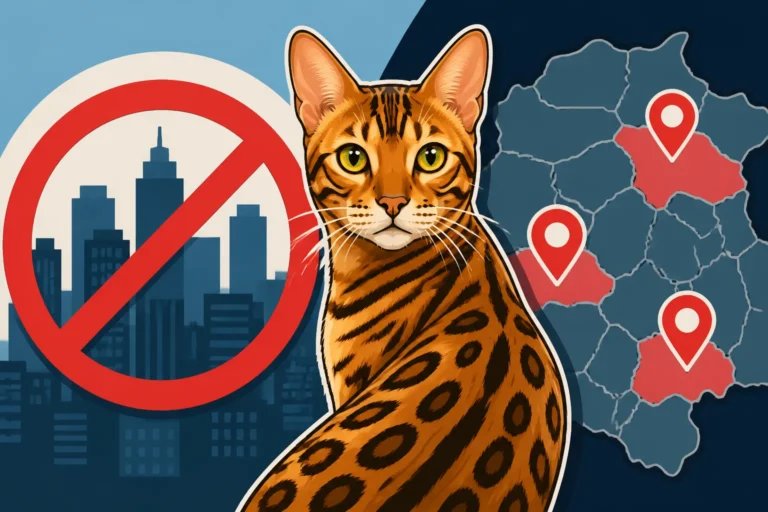
This is where the idea of "legal everywhere" really starts to fall apart. While many states and localities do recognize SBT Bengals as domestic cats and place no special restrictions on their ownership, a significant number have laws that are much less clear-cut, or even outright prohibitory.
Some states might have blanket bans on all hybrids, regardless of how many generations removed they are from their wild ancestor. Others might set their cut-off at F4, meaning an SBT Bengal should be legal, but then they delegate authority to individual counties or cities to set their own, often stricter, rules. This creates a deeply confusing patchwork. You could be living in a state where an SBT Bengal is completely legal, drive across a county line, and suddenly your beloved companion is considered an illegal exotic animal. It's a scenario that keeps many potential Bengal owners up at night, and for good reason—nobody wants to inadvertently break the law or put their pet at risk.
The problem isn't usually with the cat itself, but with how different legislative bodies choose to define "domestic" or "hybrid." Often, the laws were written without the specific nuances of breeds like the Bengal cat in mind, and updating them can be a slow, bureaucratic process. This means that a well-behaved, litter-trained SBT Bengal, which is practically indistinguishable in temperament from a typical tabby, can still be caught in the legal crosshairs simply because of its ancestral roots.
States and Cities with Specific Bengal Cat Regulations
It's a common misconception that once you're past the F3 generation, your Bengal cat is unequivocally considered a domestic animal by all governing bodies. While this is true in many places, it's far from universal. The legal definitions of "hybrid" and "domestic" vary wildly, leading to a frustrating lack of uniformity for Bengal cat owners across the country.
States with Broad Restrictions or Bans
Some states take a very conservative approach to hybrid cats, often due to concerns about wildlife conservation, potential public safety, or simply a lack of understanding about the breed's temperament. For example, Hawaii Bans Every Bengal Cat, Whatever the Generation. This isn't just a restriction on early generations; it’s an outright ban on all Bengals, regardless of how many generations removed they are from their wild ancestor. The reasons behind such a broad ban often stem from a desire to protect fragile ecosystems from non-native species, or to avoid introducing animals that could be mistaken for wild animals.
Other states may have permits required for F1-F3 Bengals, but then rely on local jurisdictions for SBTs. The language in state legislation can be incredibly broad, sometimes defining any animal with any percentage of wild animal DNA as a "wild animal hybrid," which would technically include even a distant SBT Bengal. This ambiguity forces owners into a position of needing to proactively research not just state laws, but also county and city ordinances, which can be a significant time commitment and a source of considerable stress. Imagine moving across state lines only to discover your cherished pet is now considered contraband; it’s a terrifying prospect. What Happens If You Move With an Illegal Bengal Cat can be a serious issue, potentially leading to confiscation.
Cities and Counties Imposing Their Own Rules
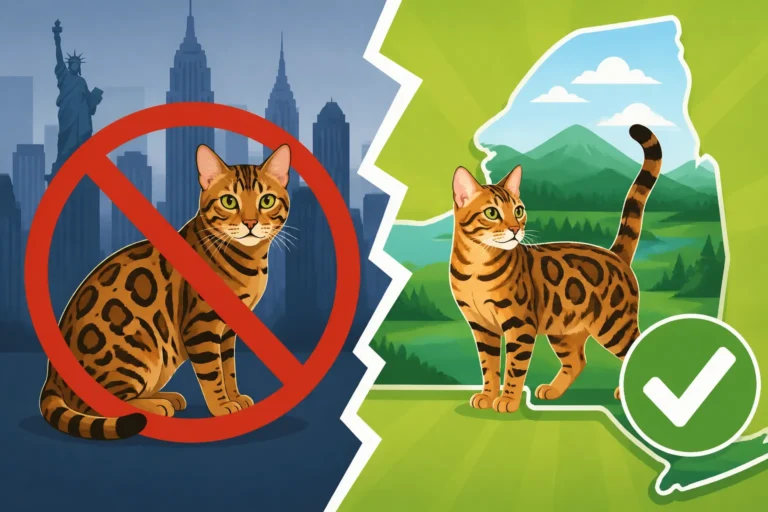
Even if your state appears to have a clear policy that allows SBT Bengals, you cannot breathe easy until you’ve checked your specific city and county ordinances. This is perhaps the most common trap for unsuspecting Bengal owners. A perfect example of this is when New York City Bans the Bengal Cat the State Allows. While New York State allows Bengal cats beyond the F4 generation, New York City has a stricter local ordinance that prohibits all generations of Bengal cats. This kind of discrepancy is not unique to New York; it plays out in various forms across the country.
Many city and county ordinances were drafted decades ago, often to regulate more obvious exotic pets like pythons or tigers, and they simply haven't been updated to reflect the reality of modern hybrid breeds. They might have a catch-all clause about "wild animal hybrids" or "any cat with wild ancestry" that sweeps up even SBT Bengals. These local rules can impose:
- Outright bans: No Bengal cats allowed, period.
- Permit requirements: Even for SBTs, you might need to register your cat, pay an annual fee, or even undergo a home inspection.
- Specific housing requirements: Though rare for SBTs, some draconian laws might theoretically impose enclosure rules.
- Insurance mandates: Requiring special liability insurance.
The frustration is palpable when you've done your due diligence at the state level, only to find a hyper-local rule that contradicts everything. It really highlights the importance of thorough investigation. It's not just about what's written, but how it's interpreted and enforced by local animal control agencies. How to Read Your City Code for a Bengal Cat can be an arduous task, but it’s absolutely essential for peace of mind.
Proving Your SBT Bengal Cat's Status and Ensuring Compliance
Once you have your Bengal, understanding the labyrinth of laws is only half the battle. You also need to be prepared to prove your cat's generation and ensure you're always on the right side of the rules. This isn't just about avoiding fines; it's about protecting your beloved pet from potential confiscation or legal issues.
The Importance of Official Documentation
Your Bengal cat's official registration papers are more than just fancy certificates; they are your primary defense in demonstrating your cat's legal status. A legitimate SBT Bengal will come with pedigree papers from a recognized cat registry, such as The International Cat Association (TICA). These papers meticulously trace your cat's lineage, showing exactly how many generations separate it from its Asian Leopard Cat ancestors.
Without these documents, even a clearly domesticated SBT Bengal can be mistaken for an early generation hybrid or even a wild cat by an uninformed authority. Imagine an animal control officer responding to a complaint about a "wild cat" in the neighborhood; without immediate proof, your cat's legal status could be questioned, leading to unnecessary stress and potentially even legal battles. This is why a breeder must be able to show Whether a Registration Paper Proves a Bengal Cat's Generation. It’s not just for bragging rights; it's a critical legal shield. Make sure your breeder provides these papers at the time of purchase, and keep them in a safe, accessible place, perhaps even a digital copy on your phone.
Navigating Permits, Registrations, and Housing
For many SBT Bengal owners, life is pretty straightforward. But in some areas, or for those considering early generation Bengals, the landscape shifts dramatically. Even if your SBT is explicitly legal, there might be local requirements to register your pet with the city or county. This usually involves a small fee and ensures the authorities have a record of your animal. While it might seem like an extra step, it’s a small price to pay for compliance.
A trickier area can be housing and insurance. Many landlords, HOAs, or even individual homeowner insurance providers might have blanket bans or higher premiums for certain breeds, including "exotic" or "hybrid" cats, even if your SBT Bengal is legally considered domestic by the state. This is where you might need to advocate for your cat, providing those TICA papers and explaining the SBT designation. Finding pet-friendly housing can be a nightmare anyway, and adding the "Bengal" label can sometimes complicate things further. When it comes to pet insurance, companies like Healthy Paws are usually focused on covering veterinary costs for accidents and illnesses, but even they might have specific clauses or exclusions for certain breeds or situations, so always read the fine print. Whether Insurance Covers a Bengal Cat is a crucial question to ask upfront.
You also need to consider how you present your Bengal cat to the world. Their striking, wild appearance can sometimes lead to misidentification or undue concern from neighbors. A secure catio, like those you might explore on Chewy, or careful leash training can help ensure your Bengal is safe and doesn't cause alarm. A Bengal Cat Walks on a Leash is a fantastic way to give them safe outdoor enrichment without letting them free-roam and potentially cause issues.
Resources for Checking Legality and Staying Informed
Given the complex and ever-changing nature of these laws, it's vital to know where to turn for accurate, up-to-date information. Don't rely solely on online forums or anecdotal advice from other owners. While those can be helpful for general information, they aren't official legal sources.
Your best first point of contact is your local animal control or county clerk's office. These departments are responsible for enforcing animal ordinances and should be able to provide clear information on local regulations. For state-level questions, contact your state's wildlife or fish and game department, or even your state veterinarian's office. When you call, be very specific: "I have an SBT Bengal cat, registered with TICA, that is an F4 generation. What are the regulations for owning such a cat in this city/county/state?"
Another excellent resource is The International Cat Association (TICA) itself, or reputable Bengal cat breed clubs. These organizations often have a deep understanding of the legal landscape and can point you to specific legislative texts or relevant contacts. They are invested in the responsible ownership of the breed and often keep abreast of changes in laws. Being prepared means knowing your cat's generation and having all documents ready, as well as understanding that feeding your pet high-quality food doesn't automatically grant legal exemption. You still need to follow the letter of the law.
Summary of Bengal Cat Legality Factors
| Factor | Early Generation (F1-F3) | SBT (F4+) Bengal Cat |
|---|---|---|
| State Laws | Often banned or require special permits/licensing. | Generally legal, but state-specific restrictions possible. |
| Local Ordinances | Almost always banned or heavily restricted. | Can be banned, restricted, or require permits at city/county level. |
| Definition of "Hybrid" | High chance of being classified as a "wild animal hybrid." | Usually classified as domestic, but broad definitions can still catch them. |
| Required Proof | Extensive documentation, potentially DNA tests. | TICA registration papers showing F4+ generation are critical. |
| Challenges | Very difficult to own legally; high permits/insurance. | May face landlord/insurance issues; requires careful local research. |
| Movement Between Areas | Highly problematic; almost certainly illegal somewhere. | Requires checking new jurisdiction's laws thoroughly. |
Remember, laws are subject to change, and what's true today might not be true tomorrow. So, commit to staying informed, especially if you plan to move. The effort is worth it for the joy and companionship an SBT Bengal cat brings.
Disclaimer
This article is for general informational purposes only and does not constitute professional advice. Laws, prices and regulations vary by location and change over time. Consult a qualified professional for guidance on your specific situation.