Which Protein Level a Bengal Cat Needs
One of the biggest head-scratchers for new Bengal cat parents, and even seasoned ones, is figuring out exactly what to feed these magnificent, energetic felines. You've heard they're "different," more "wild," and need something special, but wading through all the advice, contradictory opinions, and endless food labels can feel like trying to solve a puzzle while your Bengal is actively trying to help by knocking pieces off the table. This guide is here to demystify the protein levels your Bengal cat truly needs, helping you cut through the noise and make informed decisions for their health and boundless energy.
The Unique Dietary Demands of Your Athletic Bengal
It’s no secret that Bengal cats are not your average couch potatoes. Their lineage, tracing back to the Asian Leopard Cat, has gifted them with an incredibly active metabolism and a muscular, lithe physique that demands proper fueling. This isn't just about looking good; it's about maintaining their health, energy, and zest for life. Trying to feed a Bengal like a sedentary domestic shorthair is a recipe for frustration, both for you and for your dynamic companion.
Why Their Wild Ancestry Matters for Protein Intake
When we talk about the Bengal cat's wild ancestry, we're not just discussing pretty spots and boundless energy. We're talking about digestive systems finely tuned over millennia to process a specific type of diet: one rich in animal-based protein and fat, with minimal carbohydrates. Think of their wild counterparts, small hunters consuming whole prey. These animals thrive on diets where protein is king, essential for building and maintaining muscle, supporting organ function, and providing sustainable energy. While our Bengals are many generations removed from the true wild, their biological wiring for nutrient processing hasn't drastically changed. Understanding this fundamental aspect helps us appreciate why protein is so vital.
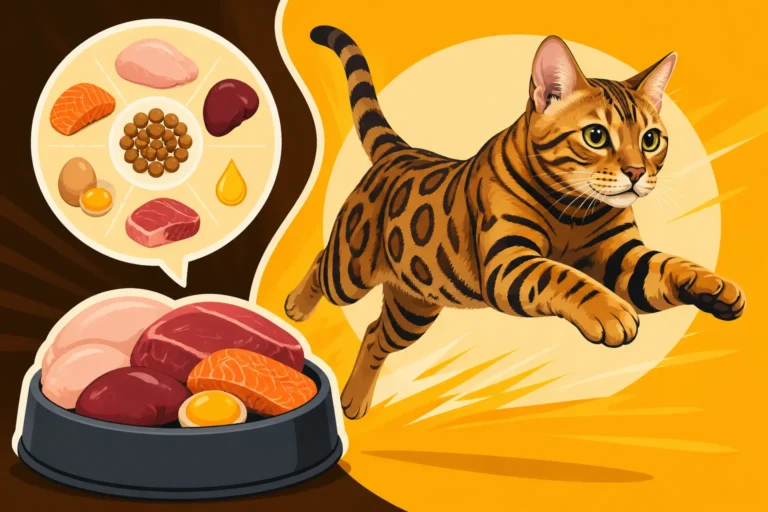
This high activity level means their bodies are constantly repairing, building, and converting nutrients into usable energy. If you've ever watched your Bengal cat leap effortlessly onto the highest shelf or zoom around the house like a furry rocket, you know they burn through calories and require robust building blocks. A diet lacking in sufficient, high-quality protein simply won't sustain this demanding lifestyle, potentially leading to a dull coat, lethargy, or even muscle mass loss over time. It’s about more than just calories; it’s about the source of those calories and their bioavailability.
Muscle Maintenance and Energy for Their Active Lifestyle
The Bengal cat is renowned for its sleek, athletic build and incredible agility. This isn't achieved on a diet of fillers and low-quality ingredients. Their muscles, which are key to their impressive jumps, intricate play, and powerful sprints, require a consistent supply of amino acids—the building blocks of protein. Without enough high-quality protein, their bodies would start to break down existing muscle tissue to meet these demands, leading to weakness and a decline in their characteristic vitality.
Beyond muscle, protein plays a crucial role in almost every bodily function, from enzyme production and hormone regulation to immune system support. For a cat that spends hours climbing, exploring, and engaging in intense play sessions, every system needs to be running optimally. Providing adequate protein ensures that their energy levels remain stable, their recovery after exertion is efficient, and their overall health is robust. You'll notice a huge difference in a Bengal that's properly fueled versus one that's not, often manifesting in their coat quality, energy output, and even their demeanor. Many Bengal owners find their cats thrive on a minimum of 40% protein in their dry food, and often higher in wet food options, a topic we'll explore more deeply in The High Protein Argument for a Bengal Cat.
Decoding Protein Levels on Cat Food Labels
Navigating the pet food aisle can feel like a labyrinth, especially when trying to pinpoint the ideal protein content for your Bengal. Labels can be tricky, displaying percentages that don't always tell the whole story, particularly when comparing dry kibble to wet food. It's crucial to understand what those numbers really mean and how to make an accurate comparison between different types of food.
Dry Matter Basis vs. As-Fed Basis
The first hurdle in label reading is distinguishing between "as-fed" and "dry matter" protein percentages. Most cat food labels list nutritional information on an "as-fed" basis, meaning the percentage includes the moisture content of the food. This is straightforward for dry kibble, which has low moisture. However, wet food, with its much higher moisture content (often 70-80%), will appear to have a much lower protein percentage when viewed on an as-fed basis.
To truly compare protein levels between a dry kibble and a wet food, you need to calculate the dry matter basis. This strips away the moisture, giving you the true concentration of nutrients. It's a simple calculation: subtract the moisture percentage from 100% to get the dry matter percentage. Then, divide the as-fed protein percentage by the dry matter percentage, and multiply by 100 to get the dry matter protein percentage. For example, a wet food with 10% protein and 80% moisture actually has 50% protein on a dry matter basis! (10 / (100-80)) * 100 = 50. This reveals that many wet foods, despite their lower "as-fed" numbers, are incredibly protein-dense once moisture is removed.
Optimal Protein Ranges for Bengal Cats
While there's no single "magic number" that applies to every Bengal, most experts and experienced Bengal owners agree that these cats thrive on a diet significantly higher in protein than many standard domestic cat foods. For dry kibble, aiming for a minimum of 35-40% protein on an as-fed basis is a good starting point, with many successful diets reaching 45% or even higher. Remember, this is after you've ensured the primary protein sources are high-quality animal proteins, not plant-based fillers.
When it comes to wet food, because of the higher moisture content, the "as-fed" percentage might look lower but will often translate to a much higher dry matter protein percentage. For example, a quality wet food with an "as-fed" protein content of 10-12% could easily be 40-50% protein on a dry matter basis. The key is to prioritize animal protein as the first few ingredients and ensure the overall carbohydrate content is low. Think about what a mouse, a cat's natural prey, is made of: mostly protein and fat, with very little carbs. Many owners find great selections, often focusing on brands like those found on Chewy or Amazon, that cater to these specific dietary needs.
Here's a quick comparison of protein levels you might see:
| Food Type | As-Fed Protein % (Typical Range) | Dry Matter Protein % (Approx. Equivalent) | Notes |
|---|---|---|---|
| Dry Kibble | 30-50% | 33-55%+ | Lower moisture content means as-fed is closer to dry matter. |
| Wet Food | 8-15% | 35-60%+ | High moisture makes as-fed look low, but dry matter is often higher. |
| Raw Diet | 15-20% | 60-80%+ | Very high protein on a dry matter basis due to minimal processing. |
The Ramifications of Imbalanced Protein for Your Bengal
Getting the protein balance right isn't just about maximizing performance; it's about preventing potential health issues. Both too little and, surprisingly, too much protein can have negative consequences for your Bengal cat over time. Understanding these risks helps underscore the importance of choosing a diet carefully tailored to their unique requirements.
Risks of Insufficient Protein Intake
One of the most common issues stemming from low protein diets in Bengals is a noticeable drop in their characteristic energy and a decline in muscle mass. Imagine your high-energy Bengal, usually a blur of motion, becoming more lethargic, sleeping more, and showing less interest in play. This can be a subtle change at first, but over time, it becomes evident that they simply don't have the fuel their bodies need. Their gorgeous, plush coat might also become dull, flaky, or shed excessively, as protein is vital for healthy skin and hair.
Beyond these external signs, insufficient protein can lead to more serious internal problems. The immune system, which relies on protein to produce antibodies and other protective compounds, can weaken, making your Bengal more susceptible to illness. Organ function, particularly kidney and liver health, can also be compromised, as these organs need protein to perform their detoxification and metabolic roles. For a breed as active as the Bengal, ensuring adequate, high-quality protein is not just a recommendation; it's a necessity for maintaining their vibrant health and longevity. It's why foods emphasizing fresh, whole ingredients can be so appealing to many owners.
Concerns with Excessively High Protein (and What to Watch For)
While it might seem counterintuitive, an excessively high protein diet, particularly if it's not balanced with other nutrients or if the protein source is poor, can also pose challenges. The primary concern often revolves around the kidneys and liver. These organs are responsible for processing and filtering the byproducts of protein metabolism. If a cat consumes an extreme amount of protein, especially if they have pre-existing, undiagnosed kidney issues, it can put a strain on these organs. However, it's important to note that healthy cats are generally very efficient at processing high protein diets, as their evolutionary biology dictates.
More commonly, issues arise not from the quantity of protein, but from its quality or the overall balance of the diet. For instance, if a high-protein diet is also very high in certain minerals or lacks appropriate fat and carbohydrate balance, it can lead to other problems. Some cats might experience digestive upset, such as loose stools or vomiting, if their system isn't accustomed to processing such a dense diet, or if the protein source is difficult to digest. Always monitor your Bengal for any changes in appetite, digestion, or energy levels when making dietary changes, and consult with your vet to rule out underlying health conditions like those discussed in What Most Bengal Cats Die Of or How Long a Bengal Cat Lives After an HCM Diagnosis.
Selecting the Best Food for Your Bengal's Protein Needs
Choosing the right food for your Bengal cat is one of the most impactful decisions you'll make for their health and happiness. It's not just about looking at a percentage on a label; it's about understanding the quality of the ingredients, the source of the protein, and how well it aligns with their natural dietary requirements.
Prioritizing Animal-Based Protein Sources
When you scan the ingredient list, the first few items are the most important. For a Bengal cat, you want to see animal-based protein sources dominating this list. This means real meat, poultry, or fish should be the first one, two, or even three ingredients. Look for specifics like "chicken," "turkey," "salmon," "beef," or "lamb." Avoid foods where the primary protein sources are plant-based, such as corn gluten meal, pea protein, or potato protein, even if they boast a high overall protein percentage. While plants contain protein, they don't offer the complete amino acid profile that a carnivorous feline like a Bengal cat needs.
The bioavailability of protein from animal sources is also superior. This means your Bengal's digestive system is designed to efficiently extract and utilize the nutrients from meat, providing them with the essential building blocks for their muscles, organs, and overall health. Think of it this way: your Bengal is a finely tuned carnivore, and their diet should reflect that. Investing in high-quality protein sources will pay dividends in their vitality, coat condition, and long-term well-being. This is particularly important for issues such as Why a Bengal Cat's Gut Is So Sensitive.
Understanding Different Food Formats: Dry, Wet, and Raw
Each food format—dry kibble, wet food, and raw diets—comes with its own set of advantages and considerations when it comes to protein delivery for your Bengal.
- Dry Kibble: Convenient and cost-effective, dry kibble can be a good component of a Bengal's diet, but it requires careful selection. Look for high-protein, low-carb formulas with animal protein as the leading ingredients. Remember to account for the lower moisture content and ensure your Bengal has access to plenty of fresh water, ideally from a fountain, as discussed in Why a Bengal Cat Needs a Water Fountain.
- Wet Food: Often considered closer to a cat's natural diet due to its high moisture content, wet food can be an excellent source of protein. It helps with hydration and can be easier on the kidneys. Many wet foods, despite appearing lower in protein "as-fed," are actually very high in protein on a dry matter basis. This format can be particularly beneficial for Bengals with sensitive digestion or those who don't drink enough water.
- Raw Diets: Raw feeding is a more controversial, but increasingly popular, approach among Bengal owners, arguing it most closely mimics the wild diet. These diets typically consist of raw muscle meat, organs, and bone, offering very high protein and moisture content. If considering a raw diet, extensive research and consultation with a veterinarian or a certified feline nutritionist are crucial to ensure it's nutritionally complete and safe. Options available from specialized pet food retailers, or even prepared fresh food services, are becoming more accessible. You might find insightful debates around this in Why Bengal Cat Breeders Argue About Raw.
Regardless of the format, always introduce new foods gradually to avoid upsetting your Bengal's sensitive digestive system. A sudden change can easily lead to problems like those detailed in Why a Bengal Cat Gets Chronic Diarrhea.
Monitoring and Adjusting Your Bengal's Diet
Finding the "perfect" protein level isn't a one-and-done deal. Your Bengal cat's needs can change over time due to age, activity level, or health status. Being observant and working with your veterinarian are key to ensuring their diet continues to support their optimal well-being throughout their life.
Signs Your Bengal is Thriving (or Struggling) on Their Diet
Your Bengal will give you plenty of clues about whether their diet is working for them. A thriving Bengal will have a beautiful, shiny coat that feels like velvet (true to A Bengal Cat's Coat Is a Pelt, Not Fur), bright, clear eyes, and an abundance of their characteristic energy. They should maintain a healthy, muscular weight, with a clearly defined waist when viewed from above, and their stools should be firm and well-formed. Good hydration, indicated by consistent water intake and moist gums, is also a positive sign.
Conversely, signs that your Bengal might be struggling on their current protein level or overall diet include:
- Lethargy or reduced playfulness: They might seem less interested in their usual activities, which is very un-Bengal-like.
- Dull, flaky coat or excessive shedding: A sign of nutritional deficiencies or poor absorption.
- Weight changes: Unexplained weight loss (or gain, if too many empty calories are consumed).
- Digestive upset: Frequent vomiting, diarrhea, or constipation. This is a common complaint, so knowing When a Bengal Cat Needs a Special Diet for Its Gut is important.
- Poor muscle tone: Less defined musculature than you'd expect for the breed.
- Changes in appetite: Either refusing food or exhibiting excessive hunger.
If you notice any of these signs, it's time to re-evaluate their diet and consult your vet.
When to Consult Your Veterinarian for Dietary Guidance
While you know your Bengal best, a veterinarian is your most trusted partner in making dietary decisions. You should definitely consult your vet:
- Before making significant dietary changes: Especially if you're switching to a completely different type of food (e.g., from kibble to raw) or introducing new protein sources.
- If your Bengal is showing any signs of illness or dietary distress: Persistent diarrhea, vomiting, or lethargy warrant immediate veterinary attention.
- As your Bengal ages: Senior cats, generally considered aged ten and above (as discussed in The Age a Bengal Cat Is Considered Senior), often have different protein and calorie requirements. Their metabolism slows, and they might have specific health concerns that impact their dietary needs. Your vet can advise on suitable senior formulas.
- If your Bengal has any diagnosed health conditions: Kidney disease, diabetes, allergies, or inflammatory bowel disease (IBD) will require a specially formulated therapeutic diet, and your vet will be crucial in guiding these choices.
- For kittens: Rapidly growing Bengal kittens have very high protein and calorie needs to support their development. Your vet can ensure they're on a diet that promotes healthy growth, as outlined in What a Bengal Cat Kitten Needs to Build Muscle.
Remember, your vet can also help interpret blood work and other diagnostics to give you the clearest picture of your Bengal's internal health, ensuring their diet is not just appropriate, but truly beneficial. Many vets can also recommend specific brands or formulations you might find on platforms like Chewy or Amazon, helping you navigate the vast options.
Dispelling Common Protein Myths for Bengal Cats
The world of pet nutrition is rife with myths, and Bengal cats, with their unique needs, are often subject to their own set of misconceptions. Let's clear up some of the most common ones so you can feed your magnificent feline with confidence.
"High Protein Diets Cause Kidney Disease"
This is perhaps one of the most persistent and worrying myths for cat owners. The truth is that there is no scientific evidence to suggest that high-protein diets cause kidney disease in healthy cats. This myth likely stems from the fact that cats with existing kidney disease often require a reduced protein diet to lessen the workload on their already compromised kidneys. For a healthy feline, especially an active, muscular breed like the Bengal, a high-protein diet is entirely natural and beneficial. Their bodies are designed to efficiently process protein.
The key here is "healthy." If your Bengal has undiagnosed kidney issues, then a high-protein diet could certainly exacerbate the problem. This is why regular veterinary check-ups are so important, especially as your cat ages, to catch any underlying conditions early. For a robust, active Bengal, however, providing ample high-quality animal protein is critical for maintaining their muscle mass, energy levels, and overall vitality, not a risk factor for kidney failure. Always discuss specific concerns with your vet, particularly if you're worried about conditions like What Most Bengal Cats Die Of.
"All Protein is Created Equal"
Another widespread misconception is that all protein sources offer the same nutritional value. This couldn't be further from the truth, especially for obligate carnivores like Bengal cats. As we've discussed, they require animal-based protein to obtain all the essential amino acids they need. Plant-based proteins, while offering some amino acids, typically lack the complete profile necessary for a cat's health and are much less bioavailable. This means a cat's body struggles to extract and utilize the nutrients from plant sources efficiently.
So, when you see a cat food proudly proclaiming a high protein percentage, delve deeper into the ingredient list. Is that protein coming primarily from chicken, salmon, or beef meal, or is it heavily reliant on ingredients like corn gluten, pea protein, or potato protein? For a Bengal cat, the quality and source of protein are far more important than just the raw percentage number. Choosing foods where real meat is the first ingredient is paramount. This ensures they're getting the readily digestible, complete protein they need to thrive, supporting everything from their powerful muscles to their immune system, as highlighted in How Many Calories a Cat as Active as a Bengal Burns.
Disclaimer
This article is for general informational purposes only and does not constitute professional advice. Laws, prices and regulations vary by location and change over time. Consult a qualified professional for guidance on your specific situation.