When a Bengal Cat Needs Wet Food
It's a common dilemma for Bengal cat owners: you want the best for your energetic, sleek companion, but navigating the world of cat nutrition can feel like a maze. Many of us started with dry kibble, assuming it was sufficient, only to find ourselves wondering if there’s something missing from our Bengal’s diet, especially when digestive issues or a lack of zest start to show. This guide will dive deep into when and why wet food isn't just a treat, but often a crucial component for the optimal health and vitality of your unique Bengal cat.
The Unique Hydration Needs of the Bengal Cat
One of the most overlooked aspects of feline health is hydration, and it's particularly pertinent when we talk about what goes into your Bengal cat's bowl. Our domestic cats, Bengals included, carry a physiological legacy from their desert-dwelling wild ancestors, and this history profoundly impacts their water intake habits.
Why Cats Don't Drink Enough Water and Bengals Are No Exception
Think about the Asian Leopard Cat, the wild ancestor of our beautiful Bengals. In their natural habitat, these cats obtained most of their necessary moisture directly from the fresh prey they hunted. A small rodent or bird is packed with water, providing a significant portion of a cat's daily hydration needs without them ever needing to seek out a separate water source. This means that, evolutionarily speaking, cats never developed a strong "thirst drive" like humans or even dogs. They aren't naturally inclined to drink large quantities of standing water because they didn't have to.
So, while your Bengal might be a fourth or fifth generation removed from its wild roots, that ancient programming is still very much present. They might lap at their water bowl occasionally, or even show a curious fascination with running water from a tap, but generally, they don't consume enough plain water to compensate for a diet lacking in moisture. Relying solely on a dry kibble diet can leave them in a state of chronic, low-grade dehydration, which can be silently detrimental over time, even for a seemingly healthy and active cat. You might find yourself observing your Bengal with a keen eye, wondering How Much Water a Bengal Cat Drinks a Day and if it's truly enough.
The Dangers of Chronic Dehydration for Feline Health
The consequences of insufficient hydration in cats are far-reaching and often insidious. One of the most common and serious issues is the strain it places on their kidneys. Kidneys are responsible for filtering waste products from the blood, and they need adequate fluid to do this efficiently. When a cat is chronically dehydrated, their urine becomes more concentrated. This highly concentrated urine increases the risk of urinary tract problems, such as the formation of painful crystals (like struvite or calcium oxalate) and even stones. These can lead to uncomfortable urinary tract infections (UTIs) or, in severe cases, life-threatening blockages, particularly in male cats.
Beyond the urinary system, chronic dehydration can impact overall organ function and contribute to a host of other health issues down the line. It can strain the liver, affect digestion, and even reduce the elasticity of the skin and coat over time. While your Bengal might be known for its stunning, sleek coat and boundless energy, these underlying issues can slowly chip away at their long-term well-being. Ensuring sufficient moisture intake through their diet is a proactive step in guarding against these silent health threats. That's why many owners go to great lengths to encourage water consumption, often wondering Why a Bengal Cat Needs a Water Fountain to stimulate their natural curiosity about moving water.
Understanding Your Bengal Cat's Dietary Requirements
Beyond just hydration, the very composition of wet food often aligns more closely with the specific macronutrient needs of a Bengal cat, reflecting their unique genetic blueprint. This isn't just about what they like to eat, but what their bodies are truly designed for.
The High Protein Argument for a Bengal Cat
When you consider the lineage of a Bengal cat, tracing back to the Asian Leopard Cat, it becomes clear why a diet rich in animal protein is not just a preference but a necessity. These are athletic, muscular felines with incredible energy levels, and their bodies are built to process and thrive on a meat-heavy diet. Protein is essential for building and maintaining muscle mass, supporting their high metabolism, and providing sustained energy for their famous antics – whether it’s scaling the highest cat tree or engaging in intense play sessions.
Dry kibble, while convenient, often contains a significant amount of plant-based fillers and carbohydrates to hold its shape and keep costs down. While some carbs are not inherently harmful, a diet dominated by them isn't ideal for an obligate carnivore like a Bengal. Wet food, by its very nature, tends to have a much higher proportion of animal-derived protein and fat, mimicking the natural prey diet that their ancestors (and indeed, all cats) would consume. This means less unnecessary "stuff" and more of the crucial building blocks their active bodies demand. You've likely heard the phrase, and it rings true for Bengals: The High Protein Argument for a Bengal Cat is compelling. When scrutinizing labels, you'll want to pay close attention to Which Protein Percentage Suits a Bengal Cat to ensure it meets their demanding needs.
The Role of Wet Food in Meeting Nutritional Needs
The nutritional profile of a high-quality wet food is often a better match for a Bengal cat's physiological requirements than an exclusively dry diet. Beyond just protein, wet foods tend to have a more appropriate fat content and are significantly lower in carbohydrates. Excessive carbohydrates can contribute to weight gain and blood sugar imbalances in cats, even in active breeds like Bengals, because their bodies are not efficiently designed to process large amounts of them. A diet heavy in carbs can also lead to more frequent hunger pangs because the energy isn't sustained from protein and fat.
Furthermore, wet food can introduce more variety in protein sources (chicken, turkey, beef, fish) and textures, which can be beneficial for enrichment and preventing pickiness. It allows you to rotate different formulations, ensuring a broader spectrum of nutrients. This increased moisture content not only aids hydration but also contributes to better digestion and softer, more comfortable stools, which can be a huge relief for a breed notoriously prone to digestive upset. If your Bengal has ever struggled with a sensitive tummy, you'll understand why many owners agree that Why Wet Food Suits a Bengal Cat's Gut is a critical piece of the puzzle.
Specific Health Conditions That Benefit from Wet Food
While a moisture-rich diet is beneficial for all cats, certain health conditions in Bengal cats can be significantly alleviated or even prevented by prioritizing wet food. It's often prescribed by veterinarians for these very reasons.
Supporting Urinary Tract Health
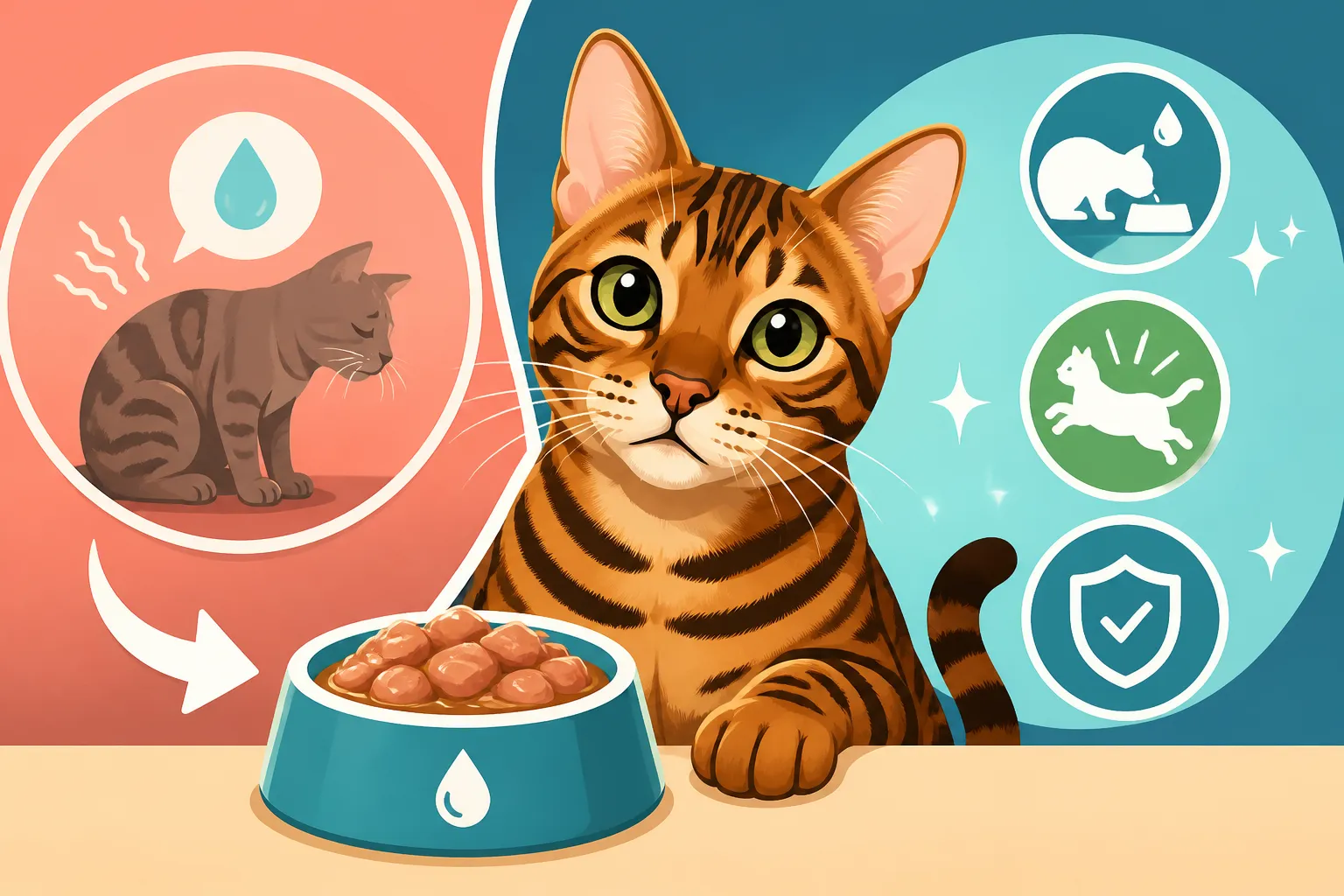
This is perhaps one of the most compelling arguments for incorporating wet food into your Bengal's diet. As discussed, cats are prone to developing concentrated urine, which sets the stage for urinary tract issues. The high moisture content in wet food helps to dilute the urine, making it less concentrated. This dilution is crucial because it reduces the concentration of minerals that can aggregate into crystals and stones. Think of it like a constantly flushed system: the more fluid moving through, the less chance for sediment to build up.
For Bengal cats, who might not be avid drinkers from a bowl, wet food becomes a silent, effortless way to ensure they are getting that vital hydration. Diluted urine not only discourages crystal formation but also makes the bladder environment less hospitable for bacteria, helping to ward off painful urinary tract infections. This proactive approach can save you and your Bengal from discomfort, costly vet visits, and potentially life-threatening emergencies. If you've ever dealt with issues like urinary crystals or bladder stones, you know the frustration and pain involved, and anything that helps prevent Bladder Problems in a Bengal Cat is a true game-changer.
Managing Weight and Promoting Satiety
Despite their high energy levels, Bengal cats can still become overweight, especially if they are primarily indoor cats and free-fed a calorie-dense dry kibble. It's a common misconception that highly active cats can eat whatever they want, but even a Bengal can pack on the pounds if their caloric intake consistently exceeds their output. Being overweight or obese can lead to a host of other health problems, including diabetes, joint issues, and a reduced lifespan.
Wet food, due to its high water content, is significantly less calorie-dense by volume than dry kibble. This means your Bengal can eat a larger, more satisfying portion of wet food for the same number of calories, or even fewer. This increased volume helps them feel fuller and more satisfied after a meal, reducing the likelihood of begging or overeating. It's a fantastic tool for weight management, allowing you to control caloric intake without making your cat feel deprived. If you've ever thought, "My Bengal never seems full!" when they're on an all-kibble diet, switching to wet food can make a noticeable difference in their eating habits and overall physique. It truly helps when trying to manage How Easily a Bengal Cat Becomes Overweight and implementing strategies on How to Slim an Overweight Bengal Cat.
Addressing Digestive Sensitivities and Chronic Diarrhea
Bengal cats are often notorious for their sensitive digestive systems. Many owners struggle with recurring bouts of loose stools or outright chronic diarrhea, which can be incredibly frustrating to manage. This sensitivity can stem from their wild heritage, where their digestive tracts were optimized for fresh, whole prey, not processed carbohydrates and plant matter. Common culprits include certain food additives, grains, or simply a diet that isn't easily digestible for their unique systems.
Wet food, particularly those with a limited number of ingredients or novel protein sources, can be much easier for a sensitive Bengal gut to process. The higher moisture content also helps with stool consistency, making them firmer and less prone to diarrhea. For Bengals with conditions like Irritable Bowel Disease (IBD) or chronic enteropathy, a vet might recommend a prescription wet food diet, or a carefully selected over-the-counter option, to help calm their inflamed digestive tract. The journey to a settled stomach for a Bengal cat can be long and trying, often requiring careful dietary adjustments, which is why Chronic Diarrhea Is the Bengal Cat Complaint Nobody Warns About and understanding Why a Bengal Cat's Gut Is So Sensitive are crucial for owners. Sometimes, it truly does come down to discovering When a Bengal Cat Needs a Special Diet for Its Gut.
Integrating Wet Food into Your Bengal's Diet
Okay, so you're convinced that wet food is a good idea. But how do you actually make the switch, especially if your Bengal is a creature of habit or seems to turn up their nose at anything new? It’s not always a straightforward process, but with patience and the right approach, it’s entirely doable.
Transitioning from Dry Kibble to Wet Food
Cats, and Bengals especially, can be notoriously picky eaters. They thrive on routine, and a sudden change in their food can lead to a hunger strike. The key to a successful transition is slow and steady. Start by introducing a tiny amount of wet food alongside their regular dry kibble. We're talking a teaspoon or so, just enough for them to sniff and perhaps taste. Mix it in if your cat tolerates it, or offer it in a separate small dish next to their usual meal.
Over a period of one to two weeks (or even longer for very finicky Bengals), gradually increase the proportion of wet food while decreasing the amount of dry kibble. Watch your cat's reaction closely. If they show any digestive upset (vomiting, diarrhea), slow down the transition. Don't be discouraged if they initially refuse it. You might need to experiment with different textures – some Bengals prefer a smooth pate, others love chunky gravy, and some enjoy shredded meat. Try different protein sources too; what one cat dislikes, another might adore. Consistency is key, and don't give in to their demands for their old food too quickly, as long as they are generally healthy and eating some of the new food.
Choosing the Right Wet Food for Your Bengal
Once your Bengal is open to the idea of wet food, the next step is selecting the best options. This can feel overwhelming with the sheer number of choices available, but there are a few golden rules. First and foremost, look for wet foods where meat is the first ingredient (and ideally, the first few ingredients). This ensures a high-quality animal protein source. Avoid foods with excessive fillers like corn, wheat, or soy, and minimize carbohydrate content. You want a product that reflects their carnivorous nature.
Consider “grain-free” options if your Bengal has sensitivities, though grain itself isn't inherently bad for all cats; it's the high concentration of carbs that can be problematic. Limited ingredient diets (LIDs) can be excellent for Bengals with known allergies or digestive issues, as they reduce the potential triggers. Always check the nutritional analysis to ensure it's a complete and balanced diet, meeting AAFCO standards. You can find a vast selection of high-quality wet foods, or explore fresh options for something a bit different. If your Bengal has specific health concerns, your vet might recommend a prescription diet. The goal is to find Which Food Firms Up a Bengal Cat's Stool while providing optimal nutrition.
Common Myths and Misconceptions About Wet Food
Despite its clear benefits, wet food sometimes gets a bad rap due to persistent myths. Let's debunk a couple of the most common ones that might make you hesitant to switch your Bengal.
"Wet Food Causes Dental Problems"
This is perhaps one of the most enduring myths in cat nutrition. The idea is that dry kibble "cleans" a cat's teeth by scraping off plaque as they chew. While some specially formulated dental kibbles can offer a minor abrasive effect, the reality is that most dry kibble shatters upon impact, offering minimal benefit to dental hygiene. Cats, by their nature, don't chew their kibble enough for it to truly clean their teeth effectively. Think about it: have you ever seen a cat brush its teeth by eating hard biscuits? It just doesn't work that way.
The best defense against dental problems for your Bengal cat, regardless of their food type, is regular home dental care, such as brushing their teeth, and professional dental cleanings by a veterinarian as needed. In fact, wet food may even be better for dental health in the long run because it contributes to overall better systemic health and hydration, which indirectly supports oral health. If you're concerned about your Bengal's teeth, focus on actual dental hygiene practices rather than relying on dry food to do the job. Understanding How Often a Bengal Cat Needs a Dental from your vet is far more important than what type of food they eat for tooth cleaning.
"Wet Food Is Too Expensive/Messy"
Yes, quality wet food can often appear more expensive per ounce or can than dry kibble. However, it's crucial to look at the bigger picture. Investing in a high-quality, moisture-rich diet can pay dividends in the long run by promoting better health and potentially reducing future veterinary bills related to dehydration, urinary tract issues, or chronic digestive problems. Consider the cost of treating a severe UTI or kidney disease; suddenly, a slightly higher food bill seems like a much better investment. When you compare the energy density, you might find that you actually feed less total volume of wet food because it's more nutrient-dense and satisfying.
As for mess, it's true that wet food can be a bit more challenging than dry kibble. It needs to be served fresh and not left out indefinitely, especially in warm weather, as it can spoil. However, simple strategies can mitigate this. Use shallow, wide bowls that don't irritate your Bengal's whiskers, and place a mat underneath to catch any dropped bits. Serve smaller, more frequent meals if your cat tends to leave food out. Leftovers can be covered and refrigerated for the next meal. The benefits of improved health, digestion, and hydration far outweigh these minor inconveniences for most Bengal owners who prioritize their cat's well-being.
Wet Food vs. Dry Kibble for Bengal Cats
To help you make an informed decision for your sleek, energetic companion, here’s a quick comparison of the key aspects of wet food and dry kibble when it comes to feeding a Bengal cat.
| Feature | Wet Food | Dry Kibble |
|---|---|---|
| Moisture Content | High (typically 70-80%) | Low (typically 5-10%) |
| Hydration Benefit | Excellent for promoting adequate hydration | Requires cat to drink more water independently |
| Protein Level | Often higher in animal-derived protein | Varies, can be lower with more plant fillers |
| Carbohydrate Level | Generally lower | Often higher due to binders and fillers |
| Satiety | Higher volume helps cats feel fuller longer | More calorie-dense, less filling by volume |
| Urinary Health | Promotes diluted urine, reduces crystal risk | Can lead to concentrated urine, higher risk |
| Weight Management | Aids in weight loss/maintenance due to less caloric density | Easy to overfeed, can contribute to weight gain |
| Digestive Sensitivity | Often easier to digest, good for sensitive guts | Can be harder to digest for some Bengals, more fillers |
| Dental Health | Neutral effect, requires separate dental care | Minor abrasive effect, often ineffective for cleaning |
| Cost & Convenience | Can be pricier, requires refrigeration, less 'free-feeding' friendly | Generally more affordable, easy to store, can be free-fed |
| Appeal to Cats | Often more palatable, varied textures/flavors | Less aromatic, uniform texture |
Ultimately, for a Bengal cat, the scales often tip in favor of wet food due to their unique physiological needs for high protein and substantial moisture. It’s about more than just food; it’s about providing a diet that genuinely supports their ancestral health.
In conclusion, for many Bengal cat owners, wet food isn't just an optional luxury; it's a fundamental pillar of their cat's health and well-being. From ensuring adequate hydration and supporting kidney and urinary tract health to providing the high-protein diet their muscular bodies crave, the benefits are numerous. While the transition might require a little patience and experimentation, the rewards of a healthier, happier, and more vibrant Bengal cat are well worth the effort.
Disclaimer
This article is for general informational purposes only and does not constitute professional advice. Laws, prices and regulations vary by location and change over time. Consult a qualified professional for guidance on your specific situation.