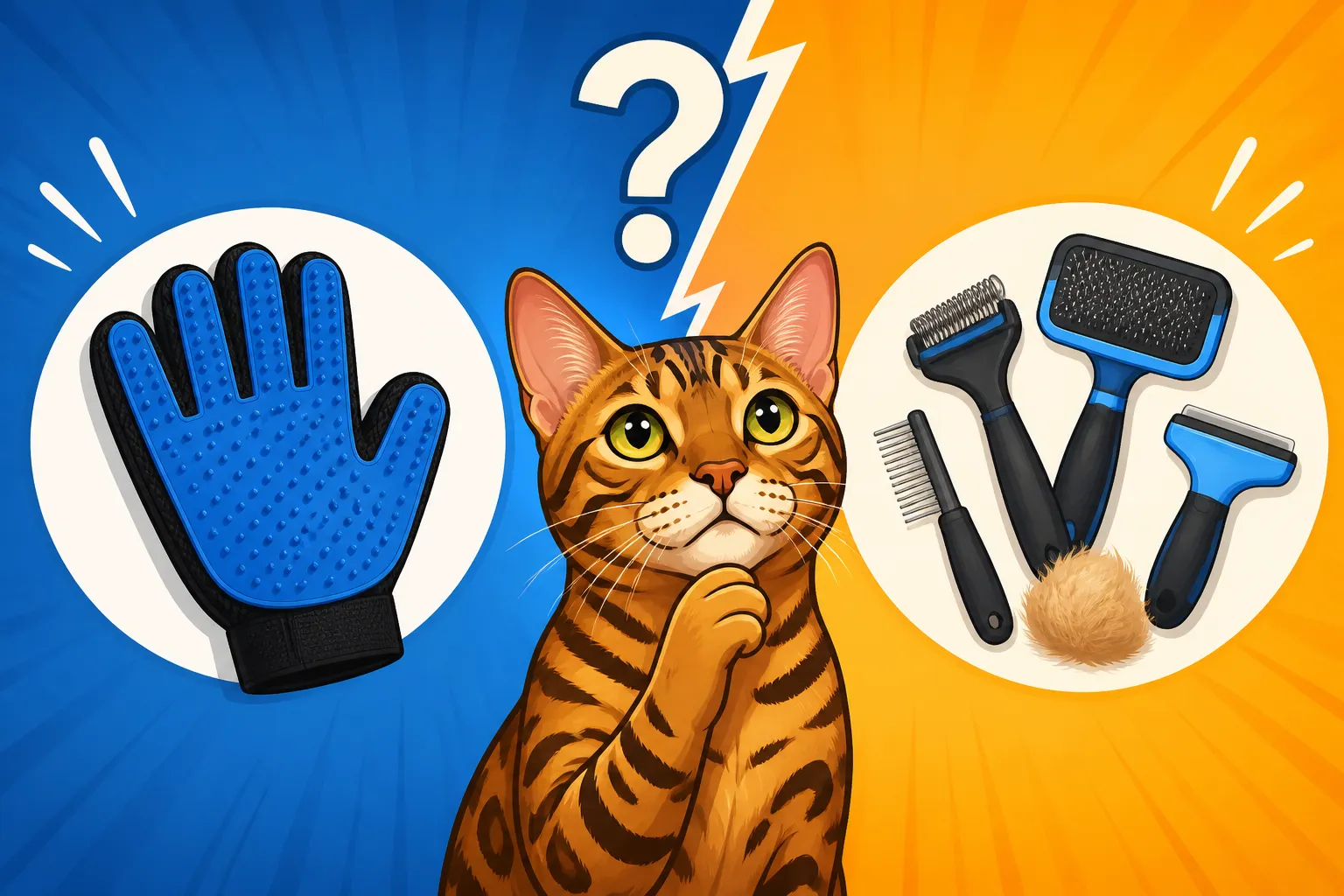
Whether a Grooming Glove Is Enough for a Bengal Cat
Many Bengal cat owners are drawn to these magnificent felines by their stunning, wild appearance and their reputation for being relatively low-maintenance when it comes to grooming. You might have heard that their unique, pelt-like coat doesn't shed much, leading you to wonder if a simple grooming glove is truly all you need to keep your spotted friend looking their best. It's a valid question, especially when balancing their high energy with practical care, and this guide will dive deep into the specific grooming needs of your Bengal and whether that glove in your hand is truly up to the task.
Understanding the Unique Bengal Cat Coat
Let's be honest, one of the first things that captivates anyone about a Bengal cat is their incredible coat. It doesn't feel like a regular housecat's fur; it's something truly special. This distinct texture and appearance also play a big role in how we approach their grooming.
The "Pelted" Texture and Why It Matters
Unlike many domestic cats with fluffy, thick fur, a Bengal's coat is often described as "pelted." This isn't just a fancy term; it truly feels different – dense, sleek, incredibly soft, and often silky to the touch. This comes directly from their wild Asian Leopard Cat ancestors. The individual hairs are typically shorter, lie very close to the body, and have minimal undercoat compared to, say, a Maine Coon or a Persian. Because of this unique structure, the hair doesn't easily trap dirt or debris in the same way a longer, fluffier coat might. This is fantastic news for you, the owner, as it means less matting and tangling. You won't be battling knots and dreadlocks with a Bengal as you might with other breeds. This pelted texture is a key reason why their grooming needs are often minimal. Why a Bengal Cat's Coat Feels Like Nothing Else goes into more detail about this fascinating characteristic.
The Low-Shedding Reality
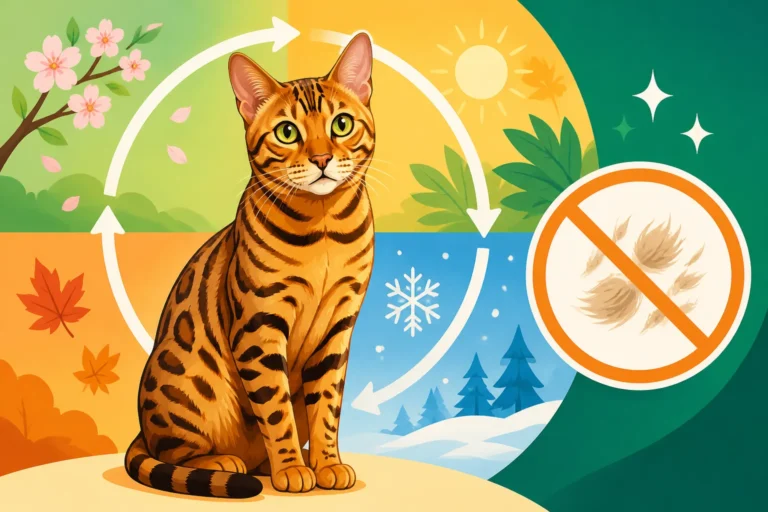
Another wonderful truth about Bengal cats is that they are generally low-shedders. Now, let's be realistic – every animal with hair sheds to some degree, and your Bengal is no exception. However, compared to many domestic breeds, the amount of hair you'll find around your home is usually significantly less. This is again due to that short, dense, pelted coat and minimal undercoat. You won't see tumbleweeds of cat hair rolling across your floors or find your clothes perpetually covered in a fine layer of fuzz. This low-shedding quality often leads owners to believe that daily brushing isn't necessary, and for the most part, they'd be right. This characteristic is often what leads owners to consider less intensive grooming tools like gloves. How Little a Bengal Cat Sheds for a Shorthair delves further into this topic.
What is "Glitter" and How Does it Affect Grooming?
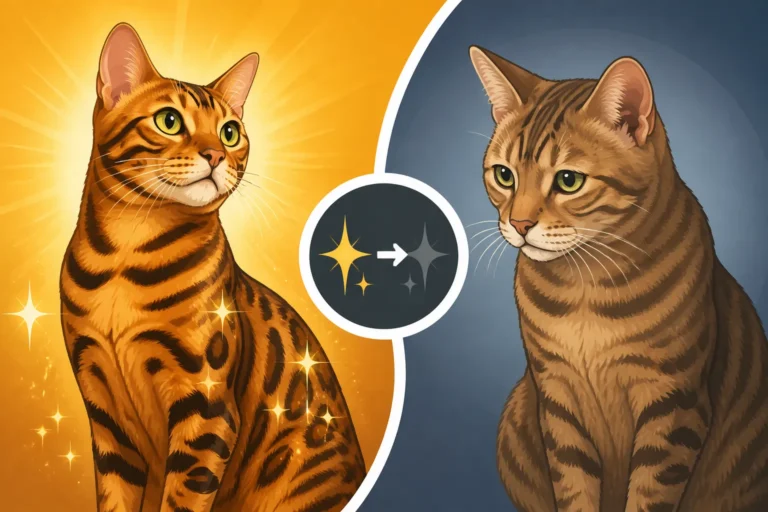
Many Bengal cats possess a genetic trait called "glitter." This isn't actual sparkle you can sprinkle on; rather, it refers to a shimmering, iridescent quality in their coat, especially noticeable in good light. It makes the tips of their guard hairs look like they've been dusted with gold or silver. While glitter is beautiful and highly sought after, it doesn't significantly impact the functional aspect of grooming. It's a visual trait, not a textural one that would require special brushes or techniques. The presence of glitter just adds to the overall lustrous appearance of an already striking coat, but your grooming routine won't change because of it. It simply enhances the shine you're already trying to maintain with a healthy diet and minimal care. You can learn more about this unique trait in The Glitter Gene and What It Does to a Bengal Cat's Coat.
The Real Grooming Needs of a Bengal Cat
While their coats might seem magically low-maintenance, a Bengal cat's overall grooming requirements extend beyond just brushing. Their active lifestyle and specific physical traits mean there are other areas that demand your attention to ensure they remain healthy and happy.
Minimal Brushing, Maximum Play
It's true that for general coat maintenance, your Bengal cat really doesn't need a rigorous daily brushing routine. In fact, many Bengals tolerate brushing for only short periods, if at all, because their coats typically don't tangle or mat. Instead of brushing, a Bengal's coat health often benefits more from their natural self-grooming and from their incredibly active lifestyle. When they're running, jumping, climbing, and exploring their environment (perhaps in a well-secured catio!), their natural oils are distributed, and loose hairs are often dislodged naturally.
For many Bengals, a quick once-a-week run-through with a soft brush or even just your hands is often sufficient to remove any truly loose hairs and to stimulate circulation. The key is to make it a positive experience, perhaps during a cuddle session or after a vigorous play. If you try to force it, you'll find yourself with a disgruntled, possibly even aggressive, Bengal who suddenly has "more important" things to do, like scaling the curtains. Their high energy means they'd much rather engage in a game of chase than sit patiently for a grooming session. So, while brushing is part of their care, it's certainly not the most demanding aspect. Why a Bengal Cat Barely Needs Brushing at All offers further insight into this.
Nail Care: A Constant Battle
Here's where the "low-maintenance" idea often takes a backseat: Bengal cat claws. These are not your average housecat's nails; they're strong, sharp, and grow at an impressive rate, thanks to their wild lineage and active habits. A Bengal loves to climb, scratch, and mark their territory, and their claws are essential tools for all these activities. This means regular nail trims are not just recommended, they are absolutely crucial for their well-being and for the survival of your furniture.
If left untrimmed, Bengal claws can become dangerously sharp, snag on carpets or furniture, and even grow into their paw pads, causing pain and infection. Imagine your Bengal launching themselves up a cat tree, only to get a nail painfully stuck. You need to keep those claws at a manageable length, typically requiring a trim every 2-4 weeks. This might seem frequent, but it prevents much bigger problems down the line. It's a hands-on task that no grooming glove can assist with, demanding dedicated time and the right tools. Why a Bengal Cat's Claws Outrun the Clippers provides more context on this particular challenge.
Oral Hygiene: Often Overlooked
While brushing their coat might be easy, brushing their teeth? That's a whole different ballgame for many cats, and Bengals are no exception. Dental health is one of the most overlooked aspects of feline care, yet it's incredibly important for their overall health and lifespan. Just like humans, cats can develop plaque, tartar, gingivitis, and periodontal disease, leading to pain, tooth loss, and even systemic health issues if bacteria from the mouth enter the bloodstream.
Trying to get a high-energy Bengal to cooperate with a toothbrush can feel like wrestling a miniature tiger. It requires patience, consistency, and often, starting when they are very young. While specialized dental treats and water additives can help, nothing replaces the mechanical action of brushing. This isn't an issue a grooming glove will ever address, and it's a critical part of their long-term health plan that needs dedicated attention. If you're serious about your Bengal's health, this area can't be ignored. Regular veterinary dental check-ups are also a must. You can find tips for this tricky task in How to Brush a Bengal Cat's Teeth Without a Fight.
Are Grooming Gloves Truly Effective for Bengals?
Given their unique coats and grooming needs, it’s natural to wonder if a simple grooming glove is sufficient. Let's explore when these popular tools shine and when they fall short for our energetic Bengal friends.
How Grooming Gloves Work (or Don't)
Grooming gloves are designed to mimic the petting action that most cats enjoy, making grooming a more pleasant experience. They typically feature rubber or silicone nubs on the palm that gently pull loose hair from the coat as you stroke your cat. For many cats, especially those with short to medium hair, they can be quite effective at removing surface shedding and distributing natural oils. The tactile sensation can also be soothing, turning a chore into a bonding moment.
However, the effectiveness of a grooming glove is limited by the depth and type of hair it can reach. For a Bengal cat's sleek, dense pelt, a glove can pick up the very loosest hairs that are already at the surface. It provides a nice massage, and some Bengals genuinely enjoy the sensation. But if your Bengal has any deeper, shed hairs caught in their minimal undercoat, or if you're trying to work through a particularly stubborn patch (uncommon but not impossible), a glove might simply glide over them without truly removing them. It’s more of a superficial tidying-up tool than a deep-cleaning one.
Pros and Cons for the Bengal Cat
Let's break down the advantages and disadvantages of relying solely on a grooming glove for your Bengal:
| Feature | Pros for Bengal Cats | Cons for Bengal Cats |
|---|---|---|
| Ease of Use | Simple, mimics petting, enjoyable for many cats. | Not effective for all grooming needs (nails, teeth). |
| Shedding Control | Good for surface loose hairs due to low-shedding coat. | Doesn't reach deeper shed hairs if present. |
| Coat Health | Distributes natural oils, adds shine to the pelt. | Limited ability to stimulate skin or remove dry skin flakes. |
| Bonding | Can enhance the human-cat bond through gentle touch. | Might not satisfy Bengals who prefer more vigorous interaction. |
| Cost | Generally inexpensive and readily available. | Requires additional tools for complete care. |
A grooming glove is fantastic for the bonding aspect and for light maintenance on their already sleek coat. It's a great "first step" tool, particularly for a Bengal who might be wary of traditional brushes. You can easily find options on platforms like Amazon or Chewy. However, its limitations mean it's unlikely to be your only grooming tool.
When a Glove Might Be Enough
For some Bengal cats, particularly those with exceptionally short, tight coats and minimal shedding, a grooming glove might be nearly enough for coat maintenance alone. If your Bengal absolutely adores the feeling of the glove and you consistently use it a few times a week, you'll likely pick up a decent amount of loose hair and keep their coat looking shiny. This is especially true for younger, healthy Bengals with excellent self-grooming habits.
However, even in these cases, it's critical to remember that "coat maintenance" is just one part of grooming. A grooming glove will do absolutely nothing for those rapidly growing claws or for their dental health. So, while it might fulfill the brushing aspect, it's far from a comprehensive solution for a Bengal cat's overall grooming needs. Think of it as a helpful supplement, or a good starting point for a Bengal who needs to get used to being handled, but not the be-all and end-all of their personal care. What the Grooming a Bengal Cat Will Actually Sit Still For explores how to best approach these interactions.
Beyond the Glove: Other Essential Grooming Tools for Your Bengal
While a grooming glove is a pleasant addition to your Bengal's care routine, it’s not a standalone solution. To ensure your wild-hearted companion is truly well-groomed and healthy, you’ll need a few other specialized tools in your arsenal.
Choosing the Right Brush for Deeper Grooming
Even with a low-shedding pelt, a dedicated brush can offer benefits a glove can't. Sometimes, a Bengal might have a slightly thicker coat, or during seasonal changes, they might shed a bit more than usual. This is when a more effective brush comes into play.
- Rubber Curry Brush: Similar in material to a grooming glove, but often with a more defined handle and shorter, stiffer nubs. These are excellent for massaging the skin, stimulating blood flow, and lifting loose hair from the short, dense coat without irritating the skin. They're often very well-tolerated by Bengals.
- Slicker Brush: While generally used for longer-haired breeds, a soft-bristled slicker brush can be effective for a Bengal, especially one with a slightly longer or denser coat, or if you want to reach a bit deeper than a rubber brush. Choose one with fine, bent wire bristles that are soft-tipped to avoid scratching their sensitive skin. Use with a very light touch.
- Fine-toothed comb: A simple, fine-toothed metal comb can be surprisingly effective for grabbing those last few loose hairs that other brushes might miss, especially around the face and tail where the hair can be a little different.
The goal isn't vigorous scrubbing, but gentle, effective hair removal and skin stimulation. Look for brushes designed for short-haired cats. You can find a wide variety of these grooming essentials on sites like Chewy or Amazon, allowing you to compare options and read reviews. Which Brush a Bengal Cat Will Tolerate offers specific recommendations.
Specialized Tools for Nails and Teeth
This is where the grooming glove truly cannot compete. These are non-negotiable items for any responsible Bengal owner.
- Nail Clippers: You absolutely need a good quality pair of cat-specific nail clippers. There are scissor-style and guillotine-style clippers; experiment to see which you find easier to use and which your Bengal tolerates better. Make sure they are sharp to ensure a clean cut and prevent splitting the nail. Regular trimming is paramount, typically every 2-4 weeks, to keep those formidable claws in check and prevent damage to your home and yourself. Trying to trim a Bengal's nails when they're overly long can be quite a wrestling match, so consistent, short trims are best.
- Cat Toothbrush and Toothpaste: Yes, it's a battle, but it's worth fighting. Invest in a cat-specific toothbrush (human toothbrushes are too large and stiff, and human toothpaste is toxic to cats) and an enzymatic toothpaste formulated for felines. Start slow, introduce it gradually, and reward heavily. Even just getting them used to the taste of the toothpaste can be a win. Building this habit early is key to preventing serious dental issues down the road. Remember, dental disease (Whether a Bengal Cat Gets Dental Disease) is a real concern, so proactive care is best.
Making Grooming a Positive Experience
No matter which tools you use, the most important "tool" in your grooming kit is patience and positive reinforcement. Bengal cats are intelligent, curious, and often have strong opinions. Forcing grooming sessions will only lead to a cat who associates grooming with stress and becomes increasingly difficult to handle.
- Start Young: If you have a Bengal kitten, start handling their paws, mouth, and ears from a very early age. Make it a game, associate it with treats and praise.
- Short and Sweet: Keep grooming sessions brief, especially initially. Even 30 seconds of gentle brushing or one nail trim is a victory. Gradually increase the duration as your Bengal becomes more comfortable.
- Treats and Praise: High-value treats and enthusiastic praise are your best friends. Reward cooperation, even if it's minimal.
- Timing is Everything: Try grooming when your Bengal is naturally sleepy or calm, perhaps after a big play session, rather than when they're in the middle of their zoomies.
- Safe Space: Choose a quiet, comfortable location where your Bengal feels secure. Avoid loud noises or distractions during grooming.
By approaching grooming with understanding and kindness, you can turn necessary care into another opportunity to bond with your extraordinary Bengal cat. Their needs are unique, and with the right approach and tools, you can ensure they live a healthy, well-cared-for life.
Disclaimer
This article is for general informational purposes only and does not constitute professional advice. Laws, prices and regulations vary by location and change over time. Consult a qualified professional for guidance on your specific situation.