Why a Bengal Cat Has No Real Shedding Season
It's a common struggle for cat owners: the endless battle against shedding. You sweep, you vacuum, you lint-roll, and still, the fur finds its way onto every surface, every piece of clothing. It often feels like a never-ending winter of cat hair, regardless of the actual season. But if you're a Bengal cat owner, or considering becoming one, you've likely heard whispers that these stunning felines are somehow different. This guide will dive deep into why your Bengal cat doesn't seem to follow the usual shedding rules, explaining the unique characteristics of their coat and what that means for your home and your grooming routine.
The Unique Construction of a Bengal Cat's Coat
When you run your hand over a Bengal cat's coat, you immediately notice something different. It’s not just soft; it’s incredibly sleek and feels almost like a silk pelt, a far cry from the fluffy, sometimes coarse fur of many other domestic breeds. This distinctive texture and composition are the primary reasons why Bengal cats don't experience the dramatic seasonal shedding cycles that can plague other felines. Their coat is truly a marvel of adaptation, a direct link back to their wild ancestors.
What Makes a Bengal Cat's Coat Special?
The secret lies in the structure of the individual hairs and the overall density of the coat. A Bengal cat's hair is typically much shorter, finer, and lies incredibly flat against their body compared to most domestic shorthairs. Think of it like a perfectly tailored suit – sleek and close-fitting. Many breeds have a dense undercoat, a layer of soft, downy hairs that provides insulation. It's this undercoat that's usually responsible for the bulk of shedding, especially as seasons change. However, Bengal cats, for the most part, have a significantly reduced undercoat, or in some cases, almost none at all. This lack of a thick, insulating layer means there's simply less hair to shed. It's one of the defining features that makes a Bengal's coat so extraordinary. A Bengal Cat's Coat Is a Pelt, Not Fur explores this in more detail.
This "pelted" quality isn't just a fancy term; it's a genetic trait that affects how the coat feels and functions. Instead of the somewhat unruly texture you might find on a typical housecat, a Bengal's coat has a plush, almost velvety feel. This density and sleekness mean that individual hairs are less likely to catch and clump together, and when they do shed, they're often so fine and short that they go relatively unnoticed. You won't find tumbleweeds of fur rolling across your floor in the same way you might with a Maine Coon or even a regular Domestic Shorthair.
The Role of the Asian Leopard Cat Ancestry
To truly understand why a Bengal cat's coat is so unique, we need to look back at its origins. The Bengal cat is a hybrid breed, created by crossing domestic cats with the wild Asian Leopard Cat (ALC). The ALC, native to the warmer climates of Asia, evolved with a coat perfectly suited to its environment. These wild ancestors didn't need a thick, heavy coat to survive harsh winters, as they lived in regions where extreme cold wasn't a constant threat. Their coats are typically short, dense, and sleek, designed for camouflage and protection in a subtropical or tropical habitat, not for insulation against snow.
When the ALC genes were introduced into the domestic cat lineage, these coat characteristics were largely retained. This is why the Bengal cat carries this distinct "wild" coat, optimized for less extreme temperatures and therefore less prone to significant seasonal changes. Why a Bengal Cat's Coat Came From the Asian Leopard Cat delves further into this fascinating genetic legacy. This ancestral trait means that the biological programming for a heavy, seasonal shed, common in many Northern-origin domestic cat breeds, simply isn't as pronounced in the Bengal.
The "Glitter" Effect and Hair Structure
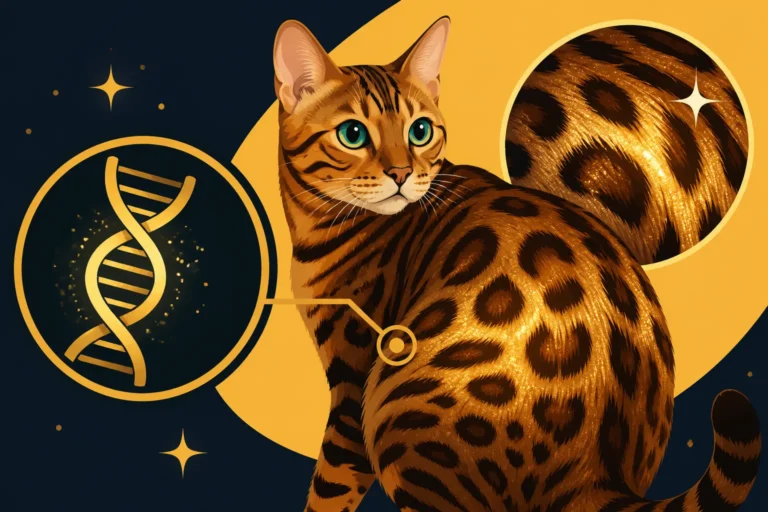
Beyond the pelted feel and reduced undercoat, many Bengal cats possess another enchanting trait: "glitter." This isn't actual glitter that you might sprinkle on crafts; it's a unique characteristic of their hair shafts that makes their coats shimmer and catch the light, especially in sunlight. This glitter comes from the translucent nature of the individual hair shafts, which allows light to penetrate and reflect off the hair's core. It creates a stunning, almost iridescent sheen that enhances the beauty of their spotted or marbled patterns. The Glitter Gene and What It Does to a Bengal Cat's Coat provides more insight into this gorgeous feature.
While primarily an aesthetic trait, the structure that creates this glitter also plays a subtle role in shedding. The individual hairs are typically quite strong and smooth. When the hairs are healthy and well-maintained (which, given their low-shed nature, is often the case), they are less prone to breakage and premature release from the follicle. This robust and sleek hair structure further contributes to the overall low shedding profile of the breed. It's a combination of genetics, ancestry, and hair quality that makes their coats a joy to behold and manage.
Understanding the Shedding Process in Cats
To appreciate the Bengal's minimal shedding, it helps to understand how shedding typically works for most other domestic cats. It's not just random; it's a complex biological process influenced by genetics, environment, and health.
The Typical Cat Shedding Cycle
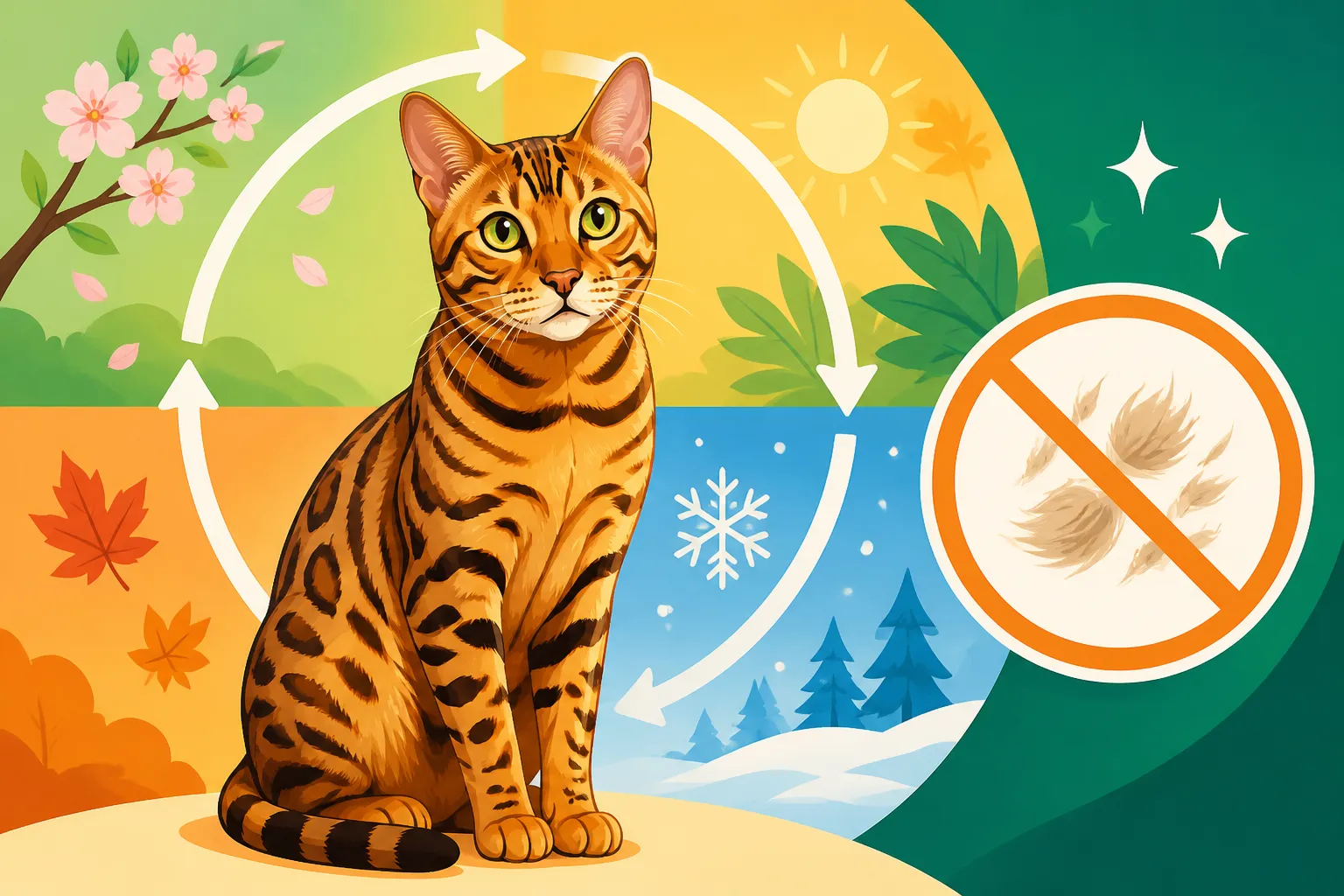
Most domestic cats, especially those with thicker or longer coats, go through a noticeable shedding cycle. This cycle is primarily governed by the hair follicles and their response to environmental cues, most notably light exposure. As the days lengthen in spring, a cat's body signals to shed the heavier winter coat to prepare for warmer weather. Conversely, as days shorten in autumn, they start shedding their lighter summer coat to make way for a thicker, more insulating winter coat. This is often referred to as "seasonal shedding" and can result in significant amounts of fur being released.
Beyond seasonal changes, individual hair follicles also have their own growth cycles, moving through anagen (growth), catagen (transition), and telogen (resting/shedding) phases. When a hair reaches the telogen phase, it's essentially dead and ready to be replaced by a new hair growing in its place. This continuous, though sometimes uneven, process means that some shedding is always occurring, regardless of the season. For many breeds, this background shedding combined with seasonal surges can make keeping a fur-free home a constant challenge.
Why Environmental Factors Impact Shedding
Environmental factors play a huge role in how much and when a cat sheds. For outdoor or indoor-outdoor cats, the natural changes in daylight hours and temperature are powerful triggers. A cold snap might prompt them to hold onto their winter coat longer, while an unusually warm spring day could accelerate shedding. However, even indoor cats are affected by these cues, albeit sometimes in a less pronounced or more erratic way. Artificial lighting, especially bright indoor lights that are on for many hours, can disrupt a cat's natural photoperiod, potentially causing them to shed more continuously year-round rather than in distinct seasons.
Humidity and diet also contribute to coat health and shedding. Dry air can lead to dry skin and a duller coat, potentially increasing shedding. A diet lacking essential fatty acids or adequate protein can also result in a poor coat that sheds more easily. For many cats, living indoors means a relatively stable temperature environment, which can sometimes blur the lines of "seasonal" shedding, leading to a more consistent, moderate shed throughout the year, rather than two heavy seasonal "blowouts."
How a Bengal Cat Deviates from the Norm
Now, here's where the Bengal cat truly shines. Because of their minimal undercoat and sleek hair structure, they simply don't have the same quantity or type of hair to shed as other breeds. While they still have hair follicles that go through growth cycles, the overall volume of hair that enters the shedding phase at any given time is significantly lower. This means those dramatic seasonal shifts in coat density that trigger heavy shedding in other cats are largely absent in Bengals. You won't typically see your Bengal "blowing its coat" in the spring or fall like a fluffy Persian or a dense-coated British Shorthair.
Their adaptation to warmer climates, passed down from the Asian Leopard Cat, means their bodies aren't programmed to produce and shed thick layers of insulation. Instead, their coat maintains a consistent, short, and dense texture year-round. This is why many Bengal owners report that they hardly notice any cat hair in their homes, even when compared to other shorthaired breeds. It's a true advantage for those who love cats but dread the constant battle with fur. How Little a Bengal Cat Sheds for a Shorthair further illustrates this pleasant reality.
Practical Implications for Bengal Cat Owners
Understanding a Bengal cat's unique shedding pattern has some wonderful practical implications for their owners, particularly when it comes to grooming and household cleanliness. It's not a "no-shed" miracle, but it's certainly a low-maintenance dream compared to many other breeds.
Minimal Grooming Requirements
One of the most obvious benefits of a Bengal cat's low-shedding coat is the minimal grooming it requires. Unlike long-haired breeds that need daily brushing to prevent mats and control shedding, or even some shorthairs that benefit from regular brushing to remove loose hair, a Bengal cat rarely needs extensive grooming. Their sleek, close-lying pelt is remarkably self-sufficient. Most Bengal owners find that a weekly, or even bi-weekly, quick brush with a soft rubber grooming mitt or a fine-toothed comb is more than sufficient. This light brushing helps to remove any stray hairs that are naturally shed, distribute natural oils, and simply acts as a pleasant bonding experience for you and your cat.
You can easily find appropriate grooming tools, like a soft rubber brush or a deshedding glove, on sites like Chewy or Amazon. These tools are often more for polishing their gorgeous coats and stimulating their skin than for removing vast quantities of fur. The fact that their pelt cannot easily mat or tangle means less stress for both the cat and the owner when it comes to coat care. Why a Bengal Cat Barely Needs Brushing at All dives deeper into the effortless nature of their grooming.
Managing the (Still Present) Shedding
It's crucial to remember that "no real shedding season" does not mean "no shedding at all." All cats shed. A Bengal cat is still a living creature with hair follicles, and old hairs will naturally fall out to be replaced by new ones. The difference is the amount and noticeability of the shed. You might still find a few stray hairs on your clothes or furniture, especially if your Bengal loves to snuggle. However, these hairs are typically fine, short, and less prone to sticking to fabrics or forming unsightly clumps.
To manage this minimal shedding, regular vacuuming and dusting are usually enough to keep your home tidy. If you have particularly sensitive allergies or just prefer an even cleaner environment, incorporating a sticky lint roller into your routine can be helpful for quick clean-ups of clothing or upholstery. The key takeaway is that the effort required to maintain a clean home with a Bengal cat is significantly less than with many other breeds, making them an excellent choice for those who value tidiness.
Addressing Shedding Concerns: Allergies and Health
While Bengal cats shed minimally, it's important to clarify a common misconception: they are not truly hypoallergenic. The term "hypoallergenic" implies a complete absence of allergens, which no cat can offer. Most cat allergies are triggered by dander (flakes of skin), saliva, and urine proteins, not just the hair itself. While a Bengal's low shedding means less dander distributed around the house via loose hair, they still produce these allergens. Individuals with severe cat allergies may still react to a Bengal cat. Whether the Bengal Cat Hypoallergenic Claim Holds Up provides a more in-depth look at this topic.
However, if your Bengal cat suddenly starts shedding more than usual, or you notice bald patches, dullness, or skin irritation, it's a red flag. Excessive shedding can be a symptom of underlying health issues such as parasites (fleas, mites), allergies, stress, poor nutrition, fungal infections, or even more serious internal conditions. Changes in diet can also impact coat health; ensuring your Bengal is on a high-quality, protein-rich diet is essential for skin and coat health. Many premium cat foods are designed to support a healthy coat and minimize issues. Always consult your veterinarian if you observe any significant or sudden changes in your cat's coat or skin, as it could indicate a need for medical attention. What a Bengal Cat's Yearly Bloodwork Should Cover outlines essential health checks that can often flag early issues impacting coat health.
Common Misconceptions and What to Watch For
The idea of a "non-shedding" cat is often romanticized, leading to some misunderstandings about what owning a Bengal cat truly entails. While their minimal shedding is a huge plus, setting realistic expectations and being aware of potential health indicators is key.
The Myth of the "No-Shed" Cat
Let's put this myth to rest once and for all: there is no such thing as a completely "no-shed" cat. Every mammal with hair will shed at least some of it, as part of the natural hair growth cycle. The difference with Bengal cats is the degree of shedding. They shed so little and so subtly that it often feels like they don't shed at all to their owners. This perception is fantastic, but it's important not to confuse it with zero shedding. A few individual hairs will always be replaced over time.
This distinction is important, especially for prospective owners who might be coming from experiences with heavy-shedding breeds. You're not getting a fur-free zone, but you are signing up for a significantly reduced amount of airborne hair and fur on your belongings. It's one of the many fantastic traits that endear Bengal cats to their human companions, making daily life just a little bit easier and cleaner.
When Excessive Shedding Is a Red Flag
While minimal shedding is characteristic of a Bengal, a sudden or excessive increase in shedding is cause for concern and warrants attention. Your Bengal's coat is a good indicator of their overall health. If you notice large amounts of hair coming off when you pet them, or if their coat appears dull, brittle, or sparse, it's time to investigate. Such changes could signal several issues:
- Nutritional Deficiencies: A diet lacking in essential nutrients, particularly high-quality protein and fatty acids like Omega-3s, can lead to a dry, unhealthy coat and increased shedding. Ensuring your Bengal is eating a balanced, appropriate diet is paramount.
- Stress: Cats are creatures of habit, and stress from changes in environment, routine, or even perceived threats can manifest physically, including excessive shedding.
- Parasites: Fleas, mites, and other external parasites can cause intense itching, leading to scratching and licking that damages the coat and increases hair loss.
- Allergies: Environmental or food allergies can cause skin irritation, redness, and itchiness, which in turn leads to excessive scratching and shedding.
- Underlying Medical Conditions: More serious issues like hormonal imbalances (e.g., thyroid problems), kidney disease, liver disease, or even certain types of cancer can impact skin and coat health, resulting in abnormal shedding. Regular veterinary check-ups are crucial for catching these issues early.
Never dismiss sudden excessive shedding as "just normal." It's your Bengal's way of telling you something might be amiss. A quick visit to the vet can help pinpoint the cause and get your beloved feline back to their usual sleek and healthy self.
How Age Can Affect Coat Changes
Just like humans, cats experience changes as they age, and their coat is no exception. While a Bengal's inherent low-shedding nature largely persists throughout their life, you might notice subtle shifts in their coat as they become seniors. The "glitter" might appear a little less prominent, and the overall density of the coat could slightly decrease. Their hair might also become a bit softer, and for some, the contrast of their patterns might soften as well. How an Old Bengal Cat's Pattern Changes discusses these aesthetic changes.
These age-related changes are usually gradual and mild, not a sudden onset of heavy shedding. An older Bengal might be less meticulous in their self-grooming, which can sometimes lead to a slightly less pristine coat, but this is different from actual excessive shedding due to health issues. Regular, gentle grooming can become even more important for senior Bengals to keep their skin and coat healthy and comfortable. It's all part of the natural journey of sharing your life with these magnificent creatures.
Disclaimer
This article is for general informational purposes only and does not constitute professional advice. Laws, prices and regulations vary by location and change over time. Consult a qualified professional for guidance on your specific situation.