How to Brush a Bengal Cat’s Teeth Without a Fight
Getting your Bengal cat to tolerate, let alone enjoy, having their teeth brushed can feel like trying to herd a flock of wild birds through a needle's eye. Many of us know the struggle: you approach with a toothbrush, and suddenly your sleek, intelligent companion transforms into a wriggling, indignant blur of spots and claws. This guide is here to walk you through a realistic approach to feline dental hygiene, helping you achieve cleaner teeth without a nightly wrestling match.
The Sneaky Importance of Brushing Your Bengal's Teeth
It’s easy to overlook dental care when your Bengal is bouncing off the walls, chasing laser pointers, or demanding attention with their distinctive voice. After all, cats groom themselves, right? But dental hygiene is a completely different ballgame, and its impact on your Bengal's overall health is far more significant than most people realize. We’re talking about more than just bad breath; we're talking about preventing serious, painful health issues that can significantly shorten their vibrant lives.
Why Dental Health Is More Than Just Good Breath
Many cat owners, myself included, have fallen into the trap of thinking a little bad breath is just "cat breath." But for our Bengals, bad breath is often the first whisper of a much louder problem: periodontal disease. This isn't just about the scent of their yawns; it's a progressive and often painful condition that affects the gums, the bone supporting the teeth, and eventually, the entire body. Without intervention, that mild gingivitis can escalate into severe periodontitis, leading to chronic pain, tooth loss, and a host of secondary health issues. Imagine living with a constant toothache you can't describe – that's often what our cats endure silently.
What often starts as plaque, a sticky film of bacteria, quickly hardens into tartar. This rough surface then acts like a magnet for more bacteria, creating a vicious cycle. The bacteria irritate the gums, leading to inflammation (gingivitis). If left unchecked, this inflammation spreads below the gum line, attacking the supporting structures of the teeth. At this stage, it becomes incredibly painful, and our active Bengals, known for hiding pain like their wild ancestors, might just seem a little less enthusiastic about play or a bit choosier with their food. It’s vital to catch these issues early, and daily brushing is your absolute best defense.
The Silent Dangers of Neglected Feline Dentistry
Beyond localized pain and tooth loss, untreated dental disease can have profound systemic effects on your Bengal cat. The bacteria thriving in their mouth don't stay confined to the oral cavity. They can enter the bloodstream through inflamed gums, traveling to vital organs like the heart, kidneys, and liver. This can lead to serious conditions such as endocarditis (inflammation of the heart lining), kidney disease, and liver problems, significantly impacting your Bengal's quality of life and lifespan. It’s a sobering thought, but that little bit of plaque can literally contribute to much larger, life-threatening issues down the line.
Furthermore, chronic oral pain can drastically change your Bengal's behavior. A cat suffering from dental issues might become withdrawn, aggressive when touched near their mouth, or simply lose their playful spark. They might stop eating certain foods, drop food from their mouth, or start favoring one side of their mouth. These subtle changes are often missed or attributed to other factors, but they can be clear indicators of excruciating pain. Regular brushing, by keeping these issues at bay, helps ensure your Bengal remains the vibrant, affectionate, and healthy companion you love. Many Bengal owners also worry about What Changes in a Bengal Cat After Ten, and good dental health is paramount to keeping them comfortable in their senior years.
Understanding Why Your Bengal Fights the Toothbrush
Let's be honest: cats are not naturally inclined to let us poke around in their mouths with a strange object. Bengals, with their intelligent, curious, and often independent nature, can be particularly resistant. Their wild ancestry means they're not always keen on restraint or unfamiliar sensations. Understanding these inherent feline traits, and specifically your Bengal's unique personality, is key to developing a strategy that minimizes stress for both of you. It's not about forcing them, but about slowly and patiently earning their trust in this rather invasive process.
The Natural Feline Instinct to Resist
Cats, by nature, are creatures of routine and control. They thrive on predictability and are wary of anything new or perceived as a threat. The moment you introduce a toothbrush, especially one that smells minty or strange, and try to manipulate their mouth, you're immediately going against several deep-seated feline instincts. First, they feel a loss of control. Being held still, having their mouth opened, and an object inserted is a highly vulnerable position for an animal that is both predator and prey in the wild.
Second, the sensation itself is entirely alien. Unlike us, they don't grow up with toothbrushes. The bristles can feel odd or even unpleasant on sensitive gums. The taste of enzymatic toothpaste, while usually appealing, can also be a foreign experience. Bengals, with their keen senses, might also pick up on your anxiety or determination, which can escalate their resistance. It's crucial to approach this with patience, understanding that their initial reactions are not personal defiance, but natural protective responses.
Your Bengal's Unique Personality: A Factor in Dental Care
While all cats share certain instincts, every Bengal has a unique personality that will influence their reaction to dental care. Some Bengals might be naturally more tolerant and laid-back, perhaps if they've been handled extensively as kittens. Others might be highly sensitive, easily startled, or possess an intense independent streak that makes any form of restraint a battle. An F1 or F2 Bengal, closer to their wild ancestors, might exhibit even stronger resistance and be less inclined to tolerate such procedures than an SBT Bengal.
Consider your Bengal's typical temperament. Are they generally playful and easily distracted, or do they become stressed by changes to their routine? Do they enjoy being held, or are they more of a "look but don't touch" kind of cat? Understanding these nuances will help you tailor your approach. For example, a highly energetic Bengal might benefit from a vigorous play session first to burn off some steam, making them more amenable to a short, calm brushing session afterwards. For a more timid Bengal, slow, gentle introductions over many days will be more effective than trying to rush the process. Building a positive association with handling, even just around their face, is a foundational step before you even think about introducing a brush.
Essential Tools for Brushing Success
Before you even think about getting near your Bengal's mouth, you need to assemble the right toolkit. This isn't just about having a toothbrush; it's about choosing instruments that are specifically designed for feline mouths, comfortable for your cat, and effective at cleaning. Using human toothbrushes or pastes is a big no-no, as these can be harmful to your beloved companion.
Choosing the Right Feline Toothbrush
The market offers a surprising variety of toothbrushes for cats, and finding the right one can make all the difference. The most common types are:
- Finger Brushes: These slip over your fingertip and have soft bristles. They are excellent for initial introductions because they allow you to maintain tactile contact with your cat, which can be reassuring. The sensation is often less intimidating than a rigid handle. They're also great for reaching those back molars if your finger is flexible enough. Many owners find these a good starting point for kittens or very wary adult Bengals.
- Pet Toothbrushes: These look like miniature human toothbrushes but feature a smaller head, softer bristles, and often an angled handle designed to reach all areas of a cat's mouth. Some even have a dual head, with one end larger and one smaller. These provide more thorough cleaning than a finger brush once your Bengal is accustomed to the process.
- Gauze Pads: While not a brush, a piece of sterile gauze wrapped around your finger can be used as a very gentle introduction to rubbing their teeth and gums. It's less abrasive than bristles and can help them get used to the sensation of something rubbing against their teeth. It's not as effective as a brush for removing plaque but serves as an excellent stepping stone.
Regardless of the type, always prioritize soft bristles to avoid irritating your Bengal's delicate gums. A good option can often be found at your local pet store or online retailers like Chewy or Amazon, offering a wide selection of shapes and sizes to experiment with.
The Importance of Enzymatic Pet Toothpaste
This is perhaps the most critical tool in your dental arsenal. Never use human toothpaste on your Bengal cat. Human toothpastes contain fluoride, xylitol, and detergents that are toxic to cats if ingested. Feline toothpaste, on the other hand, is specially formulated to be safe for ingestion and, crucially, often contains enzymes that help break down plaque even with minimal brushing. Many come in flavors irresistible to cats, like chicken, beef, or even fish, turning what could be a chore into a treat.
When selecting a toothpaste, opt for one that is enzymatic. These formulas contain enzymes that actively work to reduce bacteria and plaque build-up, even if your brushing technique isn't perfect. The palatable flavor also acts as a reward, helping to build positive associations with the brushing process. A pea-sized amount is usually all you need per brushing session.
| Dental Tool | Description | Pros | Cons | Ideal Use |
|---|---|---|---|---|
| Finger Brush | Soft bristles on a cap that fits over your finger. | Gentle, allows direct tactile contact, less intimidating. | Less thorough cleaning than a handled brush, can be awkward for back teeth. | Initial introduction, wary cats, getting accustomed to touch. |
| Pet Toothbrush | Small head, soft bristles, angled handle. | More effective cleaning, reaches all areas. | Can be more intimidating than a finger brush, requires more cooperation from cat. | Regular brushing once cat is accustomed, thorough cleaning. |
| Gauze Pad | Small piece of sterile gauze wrapped around your finger. | Very gentle, great for extreme sensitivity, precursor to brushing. | Least effective at plaque removal, not a substitute for a toothbrush and paste. | Desensitization, initial gum massage, getting used to mouth handling. |
| Enzymatic Toothpaste | Flavored, enzyme-activated paste, safe for ingestion. | Breaks down plaque, palatable flavors, safe for cats. | Some cats may dislike certain flavors, requires consistent use for best results. | Essential for all brushing, makes the process more appealing. |
The Gradual Introduction: A Marathon, Not a Sprint
The secret to brushing your Bengal's teeth "without a fight" isn't a magic trick; it's a slow, patient, and consistent process of desensitization and positive reinforcement. You can't expect to grab a toothbrush and go straight for their molars on day one. Think of it as a long-term training endeavor, broken down into tiny, manageable steps. Each step should be positive, short, and end on a good note.
Phase 1: Touch and Taste
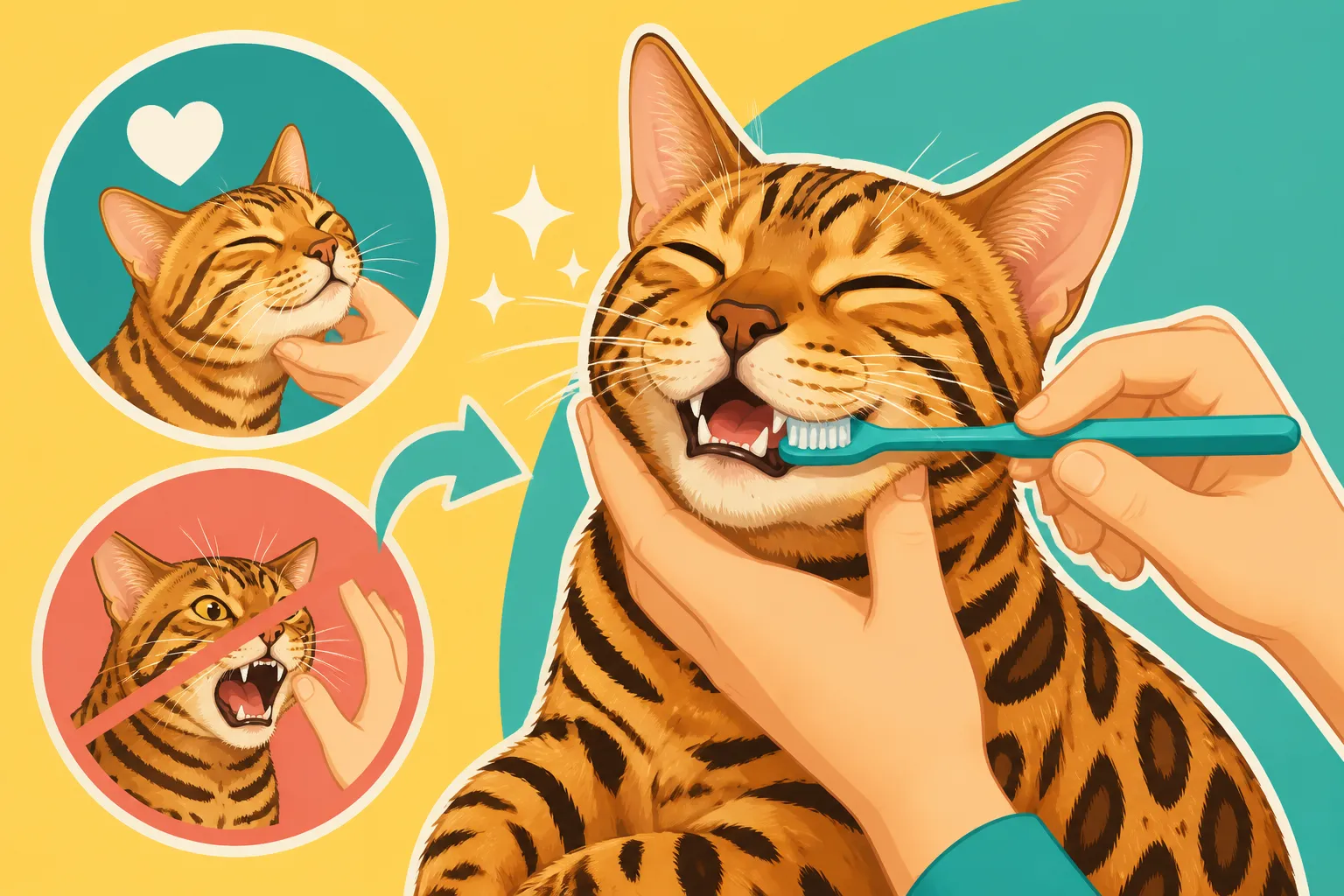
Before any bristles enter the picture, your goal is to make handling your Bengal's mouth a pleasant, or at least neutral, experience. Start by gently touching their face and around their muzzle. Do this when they are relaxed, perhaps during a petting session. Reward them immediately with praise, a small treat, or a favorite toy when they tolerate the touch. Slowly progress to gently lifting their lip for just a second, then immediately release and reward. Repeat this several times a day, for only a few seconds at a time. The key is to keep it brief and positive.
Next, introduce the enzymatic toothpaste. Let your Bengal lick a tiny dab of the delicious, cat-safe toothpaste off your finger. Many cats adore the taste of the chicken or fish-flavored paste. This creates a positive association with the taste itself. Once they're enthusiastic about licking the paste from your finger, you can start to gently rub a tiny amount onto their canine teeth or the outside of their gums with your finger. Again, keep it super short, just a few seconds, and follow with praise and a reward. You're building their acceptance of having something in or near their mouth, and associating it with a tasty outcome.
Phase 2: Introducing the Brush
Once your Bengal is comfortable with you touching their mouth and loves the taste of the toothpaste from your finger, it's time to introduce the actual toothbrush. Don't go straight for their mouth! First, let them inspect the brush. Let them sniff it, bat at it (if it's a finger brush), and get used to its presence. Put a tiny bit of toothpaste on it and let them lick it off. This helps them associate the brush with the yummy paste.
When they seem comfortable, gently lift their lip as you've been practicing, and for just a couple of seconds, briefly touch the toothpaste-laden brush to one or two teeth, ideally the canines first as they're easiest to access. Don't worry about actual brushing strokes yet; just the touch of the brush. Immediately remove the brush, praise profusely, and offer a special treat. Gradually, over days or weeks, increase the duration and the number of teeth you touch. The goal is small, incremental successes, building on each positive experience. This patience is often the toughest part, but it yields the best results.
Phase 3: The Brushing Action
Once your Bengal tolerates the brush touching their teeth, you can start incorporating gentle brushing motions. Focus on the outside surfaces of the teeth, as this is where plaque tends to accumulate most. Use small, circular motions, concentrating on the gum line. Again, start with just a few teeth, perhaps on one side of their mouth, for a very short duration – 10-15 seconds max.
Always end on a positive note. Even if you only get one or two teeth, consider it a victory and reward them. Slowly, over many sessions, work your way up to brushing more teeth and increasing the duration. The ideal goal is to brush for about 30 seconds to a minute on each side of the mouth, focusing on the molars and premolars at the back, where most chewing happens and plaque builds up. Remember, consistency is more important than perfection. Even brushing a few teeth daily is far better than nothing at all. If you find your Bengal is still too resistant, consider trying different brushes or toothpaste flavors, or consult your vet for further advice. The long-term benefits of preventing issues like dental disease (Whether a Bengal Cat Gets Dental Disease) far outweigh the effort in the short term.
Tips for a Stress-Free Brushing Experience
Even with the best intentions and the most gradual approach, brushing a Bengal's teeth can present challenges. Their intelligence and agility mean they can outmaneuver you quickly if they're not on board. Creating an environment that minimizes stress and maximizing positive reinforcement are crucial elements for turning dental care into a routine rather than a battle.
Choosing the Right Time and Place
Timing is everything when it comes to any form of training or handling with cats. Attempt to brush your Bengal's teeth when they are naturally relaxed and calm. This might be after a vigorous play session where they've expended some energy, or perhaps right before their favorite meal, making the toothpaste a tempting precursor to something even better. Avoid times when your cat is hyper, stressed, or trying to sleep. A sleepy cat might be less resistant, but a suddenly awakened cat could be more irritable.
The location also plays a significant role. Choose a quiet, familiar spot where your Bengal feels secure and can't easily escape or become distracted. This could be a favorite comfy chair, on your lap, or even on a stable counter if they are accustomed to being there. Avoid noisy or high-traffic areas. Having a consistent routine for time and place can also help your Bengal anticipate and accept the process. For example, brushing every evening after their last meal in the same spot can help them understand what's coming and minimize surprises.
Positive Reinforcement and Rewards
Positive reinforcement is your most powerful tool in making dental care a tolerable, even enjoyable, experience for your Bengal. Every step, no matter how small, should be followed immediately by a reward. This isn't just about treats; it can also include verbal praise in a soothing voice, gentle petting in their favorite spot, or a brief play session with a favorite toy. The key is immediacy – the reward must directly follow the desired behavior so your cat makes the connection.
Keep the sessions short and sweet. It’s better to have multiple very brief, positive interactions than one long, stressful one. If your Bengal shows signs of stress or resistance – flattened ears, tail twitching, growling, or attempting to get away – stop immediately. Pushing them through a stressful experience will only build negative associations and make future attempts harder. End the session, try again later or the next day, and go back a step if necessary. Over time, your Bengal will learn that cooperating (even a little) leads to good things. You can find a range of suitable treats on platforms like Chewy or Amazon that your Bengal might love.
Gentle Handling and Patience
Bengal cats are incredibly sensitive to touch and restraint. Avoid any rough handling, grabbing, or forcing their mouth open. Use a gentle, confident grip that makes them feel secure, not trapped. When lifting their lip, do so smoothly and calmly. Remember that your own demeanor greatly influences your cat's response. If you are stressed, tense, or frustrated, your Bengal will pick up on that energy and become more resistant.
Patience is truly a virtue here. Some Bengals might take weeks or even months to become truly comfortable with brushing. Don't get discouraged if progress feels slow or if you have setbacks. Every cat is an individual, and their comfort level will vary. Celebrate small victories, like getting them to lick the paste, or tolerating the brush for just a few seconds. Consistency over time will yield better results than sporadic, forceful attempts. If you're struggling to even start, talking to your vet about techniques for handling a Bengal cat can provide valuable personalized advice. The Grooming a Bengal Cat Will Actually Sit Still For often requires a similar gentle, patient approach.
When Professional Dental Care Is Needed
Even with the most diligent home brushing routine, professional veterinary dental care is often an unavoidable, and critical, part of maintaining your Bengal cat's oral health. Just like humans need regular dental cleanings, so do our feline friends. There are certain things that a toothbrush simply cannot do, and ignoring these needs can lead to painful and expensive problems down the road.
Recognizing Signs of Dental Disease
Your Bengal cat is a master at hiding pain and discomfort, a trait passed down from their wild ancestors. This means you need to be extra vigilant in observing subtle changes that might indicate dental disease.
Signs to watch for:
- Bad breath (halitosis): While some "cat breath" is normal, a truly foul odor is often a primary indicator of bacterial overgrowth and infection.
- Red, swollen, or bleeding gums: These are classic signs of gingivitis.
- Visible tartar: Yellow or brown deposits on the tooth surface, especially near the gum line, indicate plaque has hardened.
- Pawing at the mouth or rubbing face: This can be a sign of discomfort or pain.
- Difficulty eating: Reluctance to eat hard food, dropping food, chewing on one side of the mouth, or a sudden preference for wet food can all point to oral pain.
- Drooling: Excessive drooling, sometimes with blood, is a significant warning sign.
- Weight loss or decreased appetite: Painful teeth can make eating difficult, leading to reduced food intake.
- Changes in behavior: A previously playful Bengal might become withdrawn, irritable, or less active due to chronic pain.
If you notice any of these signs, it's crucial to schedule a veterinary check-up immediately. Don't wait, as early intervention can prevent more severe complications and suffering. Remember, your vet can identify issues that are impossible for you to see at home. Many Bengal cats are predisposed to issues like Why a Bengal Cat's Gut Is So Sensitive, and dental pain can exacerbate other health conditions.
The Role of Veterinary Dental Cleanings
A professional dental cleaning performed by a veterinarian is far more comprehensive than anything you can do at home. These cleanings are performed under anesthesia, which is essential for several reasons. Firstly, it allows the vet to thoroughly examine every tooth surface, including those below the gum line where most periodontal disease occurs, and to take dental X-rays. These X-rays are critical for identifying problems like fractured roots, abscesses, or bone loss that are completely invisible to the naked eye.
Secondly, anesthesia ensures the procedure is pain-free and stress-free for your Bengal. It also allows for a deep scaling, removing all plaque and tartar from above and below the gum line, which is impossible on a conscious cat. The teeth are then polished to create a smooth surface that is less prone to future plaque accumulation. If any diseased teeth are found, the vet can perform extractions, relieving your cat of chronic pain.
Many owners worry about anesthesia for their cats, and rightfully so. However, modern veterinary anesthesia protocols are very safe, especially with pre-anesthetic blood work and careful monitoring. The benefits of a healthy, pain-free mouth far outweigh the risks of untreated dental disease. Your vet will discuss the risks and benefits with you, ensuring you're comfortable with the procedure. It's often recommended that Bengal cats have their first dental check-up by age one, and regular cleanings every one to three years, depending on their individual needs and your home care routine. This is an important part of What a Bengal Cat's Yearly Bloodwork Should Cover during routine check-ups.
Considering Dental Chews and Additives
While brushing is the gold standard for home dental care, some additional products can support your efforts, though they are not substitutes for brushing or professional cleanings.
Dental Chews: There are various dental treats and chews specifically designed for cats. Look for products that have a Veterinary Oral Health Council (VOHC) seal of approval, which indicates they have met specific standards for plaque and/or tartar reduction. These chews work by mechanically scraping plaque off the teeth as your cat chews, or by containing ingredients that help reduce bacterial growth. However, many Bengals are powerful chewers and might consume these quickly, limiting their effectiveness. Always supervise your cat with chews to prevent choking.
Water Additives and Oral Rinses: Some products can be added to your cat's drinking water or applied directly to their gums to help reduce bacteria and freshen breath. Again, look for VOHC-approved products. These can be helpful in reducing the bacterial load in the mouth, but they do not remove existing plaque or tartar and are not a substitute for brushing.
Dental Diets: Prescription dental diets feature specially designed kibble that encourages mechanical scrubbing of the teeth as the cat eats. The larger, fibrous kibble pieces don't crumble easily, so they clean the tooth surface more effectively. These can be a great option for Bengals who are highly resistant to brushing. Discuss with your vet if a dental-specific diet might be appropriate for your cat, especially if you're battling persistent plaque or tartar build-up. These supplementary tools can be found at pet supply stores or online from retailers like Chewy.
Long-Term Dental Health for Your Bengal
Maintaining your Bengal's dental health is an ongoing commitment, much like their dietary needs or enrichment requirements. It's not a one-time fix but a consistent effort that contributes significantly to their overall well-being and longevity. By embedding dental care into your routine, you're investing in years of happy, healthy purrs and playful antics.
Creating a Sustainable Routine
The key to long-term dental health is consistency. Aim to brush your Bengal's teeth daily. If daily is truly impossible due to your schedule or their resistance, every other day is a good second best. Sporadic brushing won't yield the same protective benefits. Integrate it into an existing routine, such as after their last meal of the day, or as part of their evening cuddle time. Over time, your Bengal will come to expect it, and while they may never love it, they will likely tolerate it much better.
Don't be afraid to adjust your approach as your Bengal ages or their temperament changes. What worked when they were a kitten might need tweaking for an adult, or even an elderly cat who might be less tolerant of restraint or more prone to joint stiffness. Be flexible, but remain persistent. A sustainable routine is one that works for both of you, minimizing stress and maximizing the health benefits.
Monitoring and Regular Vet Check-ups
Your home dental care efforts should always be complemented by regular veterinary check-ups. During these annual visits, your vet will perform an oral examination and assess your Bengal's dental health. They can spot early signs of disease, recommend professional cleanings, or suggest further diagnostics like dental X-rays if needed. Never underestimate the importance of these professional eyes and hands.
As your Bengal ages, these check-ups become even more crucial. Senior cats are more prone to dental issues, and conditions like resorptive lesions (painful erosions of the tooth structure) become more common. Your vet can advise you on Caring for a Bengal Cat Past Ten and how to adapt your dental care routine to their changing needs. Remember, good dental health contributes directly to their ability to eat, digest food, and maintain a healthy body weight, all of which are fundamental to a long and happy life.
Disclaimer
This article is for general informational purposes only and does not constitute professional advice. Laws, prices and regulations vary by location and change over time. Consult a qualified professional for guidance on your specific situation.