Why a Bengal Cat’s Pelt Cannot Mat
Many cat owners dread the endless battle against matted fur, a frustrating and often painful problem that can turn grooming into a wrestling match for both pet and human. If you're a Bengal cat parent, or considering becoming one, you might wonder if this active and sleek feline shares the same fate with tangles and knots. The good news is that the unique genetic makeup and physical characteristics of a Bengal's coat mean matting is an incredibly rare occurrence, offering a refreshing break from typical grooming woes. This guide will explore exactly why your Bengal's luxurious "pelt" is almost entirely mat-proof.
The Distinctive Makeup of a Bengal Cat's Coat
To truly understand why a Bengal cat's coat resists matting, we need to dive into what makes their fur so special. It’s not just "fur"; it’s often described as a "pelt" for a very good reason. This unique texture and structure are directly inherited from their wild ancestor, the Asian Leopard Cat, giving them characteristics rarely seen in other domestic breeds.
A Scarcity of Undercoat Density
The most significant factor preventing matting in Bengal cats is the near absence of a dense, woolly undercoat. Most domestic cats, especially long-haired breeds or those adapted to colder climates, possess a thick layer of fine, soft undercoat hairs beneath their coarser guard hairs. This undercoat is fantastic for insulation, but it's also a prime culprit for matting. When these fine hairs shed, they tend to get trapped within the remaining undercoat, intertwining and forming tight knots, particularly in areas of friction like behind the ears, under the legs, or around the collar.
Bengal cats, however, don't have this problem. Their lineage from a tropical wild cat means they never evolved the need for heavy insulation. Consequently, their undercoat is extremely sparse, almost non-existent in many individuals. This lack of a voluminous inner layer means there's simply nothing for loose hairs to cling to and tangle in. It's like trying to make a knot with only a few strands of silk – it just doesn't happen easily. This is a key reason why A Bengal Cat's Coat Is a Pelt, Not Fur.
Short, Fine, and Close-Lying Guard Hairs
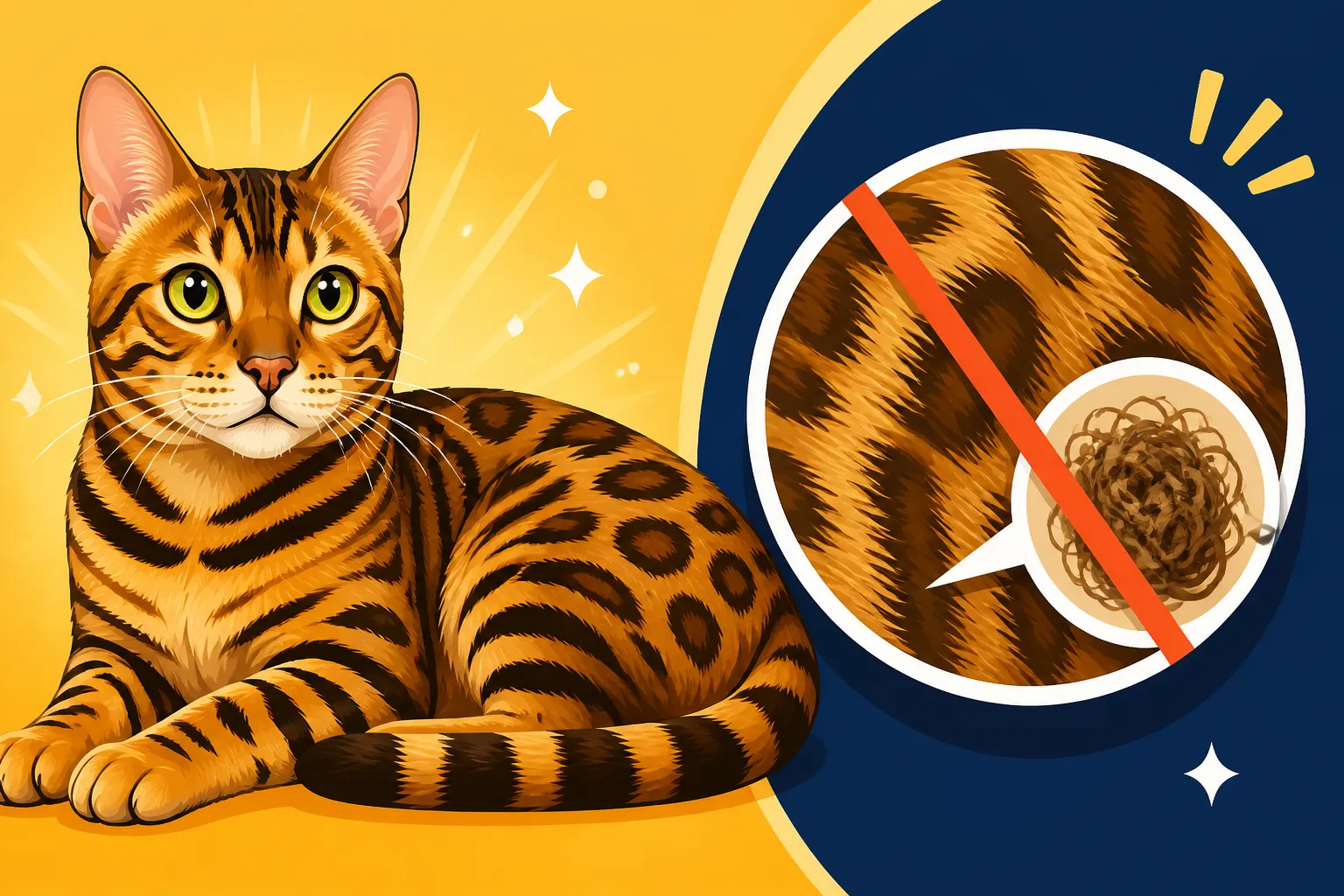
Beyond the minimal undercoat, the primary layer of a Bengal's coat, known as the guard hairs, also plays a crucial role in preventing mats. These hairs are remarkably short, fine, and lie incredibly close to the body. Unlike the longer, often softer guard hairs of many other breeds that can easily become disheveled and tangled, a Bengal's coat has a sleek, almost "painted-on" appearance. Think of it like comparing a tightly-woven silk scarf to a loosely knitted wool sweater; one is far less prone to snags and knots than the other.
This smooth, short texture means there's less surface area for individual hairs to catch on each other. When a Bengal moves, the hairs simply glide over one another rather than interlocking. Even during shedding, the loose hairs fall out easily rather than getting snagged in a dense web of other hairs. This contributes to Why a Bengal Cat's Coat Feels Like Nothing Else and significantly reduces the chance of any mat formation.
The "Glitter" Effect and Its Contribution
Many Bengal cats possess a genetic trait known as "glitter," which makes their individual hair shafts translucent, giving their coat a shimmering, iridescent quality, especially in sunlight. While primarily an aesthetic trait that enhances their wild appearance, this unique hair structure might also indirectly contribute to the coat's mat-resistant properties. Hair with such a fine, smooth, and distinct structure is inherently less likely to snag and clump together than coarser, more porous hair. The characteristic sparkle of their coat is a visible indicator of the quality of each individual hair strand, which, when combined with the overall lack of undercoat, forms a truly non-matting surface. You can learn more about The Glitter Gene and What It Does to a Bengal Cat's Coat.
Why Most Domestic Cats Mat and Bengals Don't
Understanding the difference between a Bengal's coat and that of a typical domestic cat really highlights why matting is such a non-issue for our leopard-spotted friends. It comes down to the fundamental design of their fur, driven by genetics and evolutionary purpose.
The Mechanics of Matting in Other Breeds
For many cats, matting is an unavoidable consequence of their coat type, especially those with long, fluffy, or very dense fur. Picture a Persian, a Maine Coon, or even a typical domestic longhair. These breeds have a significant undercoat, often soft and cotton-like, designed to provide warmth. When these cats shed, the loose undercoat hairs don't always fall out cleanly. Instead, they get caught in the surrounding undercoat and the longer guard hairs. As the cat moves, plays, and self-grooms, these trapped hairs start to twist and felt together.
Humidity, static electricity, and even friction from collars or harnesses can accelerate this process. What starts as a small tangle can quickly become a tight, painful mat that pulls at the skin. If left untended, these mats can grow into large, solid clumps, restricting movement, causing skin irritation, and even leading to infections. This is why regular brushing is absolutely essential for these breeds, often on a daily basis, to remove loose hair before it has a chance to bind together.
How Bengal Anatomy Naturally Prevents Tangling
Now, consider the Bengal. With their sparse undercoat and short, sleek guard hairs, the fundamental ingredients for matting simply aren't present. When a Bengal sheds, the loose hairs largely fall away from the body or are easily removed during the cat's natural self-grooming process. There's no dense, fluffy layer to trap them. Imagine a single hair strand falling from a smooth, polished surface versus falling into a tangled ball of yarn. The outcome is entirely different.
This design makes the Bengal's coat incredibly low maintenance in terms of tangles. You might find a stray hair here and there on your furniture, but you won't find tight, painful clumps of fur on your cat. This inherent resistance to matting is a huge relief for owners who have previously dealt with high-maintenance coats and the stress of professional grooming appointments to de-mat their pets. It truly underpins A Bengal Cat Needs Almost No Grooming.
The Effectiveness of Bengal Self-Grooming
All cats are fastidious groomers, but the effectiveness of a cat's self-grooming routine is heavily influenced by its coat type. A long-haired cat might spend hours licking and preening, only to still develop mats because its tongue can't penetrate the dense undercoat or smooth out deep tangles.
A Bengal cat, on the other hand, is supremely efficient at keeping its short, sleek coat in pristine condition. Their barbed tongues easily run through the fine, close-lying hairs, effectively removing any loose fur before it has a chance to knot. This natural process, combined with their active lifestyle which often involves rubbing against surfaces, helps to continually 'polish' their coat and prevent any accumulation of shedding hairs. This enhanced self-grooming efficiency is yet another reason why a Bengal cat's coat remains so smooth and mat-free with minimal intervention from their human companions.
Grooming Your Bengal Cat: What You Do Need to Do
While your Bengal cat's pelt is wonderfully resistant to matting, this doesn't mean you can completely neglect their grooming. There are still essential care routines that ensure their overall health and well-being, even if daily brushing isn't high on the list.
Minimal Brushing for Health and Bonding
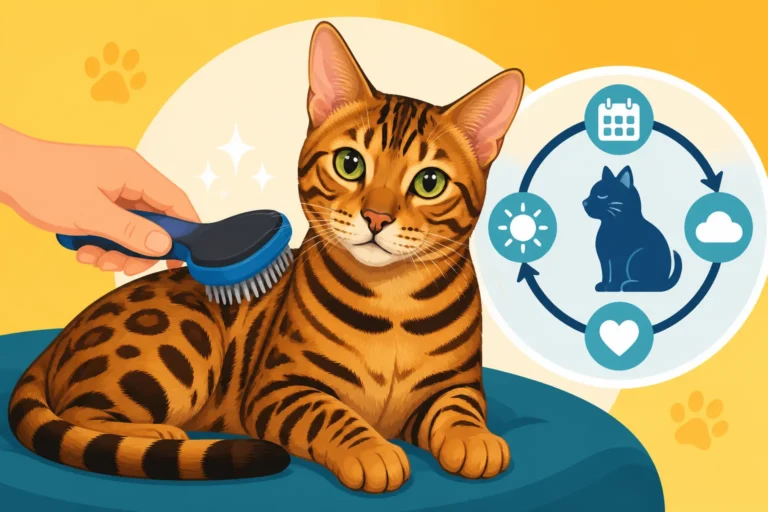
You won't need to brush your Bengal daily to prevent mats, which is a huge win! However, occasional brushing can still be beneficial. A weekly or bi-weekly session with a soft brush or a grooming mitt can help remove any stray loose hairs, distribute natural skin oils for a healthier sheen, and simply be a wonderful bonding experience. It's a chance to check their skin for any issues, feel for any bumps, and just enjoy some quiet time together.
When you do brush, you'll notice how little hair actually comes off, especially compared to other breeds. This minimal shedding is often a pleasant surprise for new Bengal owners. You might consider tools like a rubber curry brush or a fine-toothed comb to gently go over their short coat. Brands like Chewy or Amazon offer a wide array of grooming mitts and soft brushes that are perfect for a Bengal's delicate pelt. This explains Why a Bengal Cat Barely Needs Brushing at All.
Nail Care: An Ever-Present Need
While their coat is low-maintenance, a Bengal's claws are definitely not! These active, climbing, and playful cats have incredibly strong, fast-growing claws that need regular attention. Left untrimmed, they can become sharp enough to damage furniture, snag on carpets, or even cause discomfort for your cat if they grow too long and curl back into their paw pads.
Aim to trim your Bengal's claws every 2-4 weeks. Start early when they are kittens to get them accustomed to the process. Make it a positive experience with treats and praise. If you're unsure how to do it safely, your veterinarian or a professional groomer can show you the ropes. Providing plenty of appropriate scratching surfaces, like tall, sturdy scratching posts or cat trees, also helps them maintain their claws naturally between trims. You'll find that Why a Bengal Cat's Claws Outrun the Clippers is a common Bengal parent observation!
Dental Hygiene and Ear Checks
Just like any other cat, Bengal cats need regular dental care to prevent plaque buildup, gum disease, and other oral health issues. Brushing their teeth a few times a week with cat-specific toothpaste is ideal. If that's not feasible, dental treats or water additives can offer some benefit. Regular veterinary check-ups will also include an assessment of their dental health.
Their ears, while often larger than those of other domestic cats, are generally self-cleaning. However, it's always a good idea to visually check them periodically for any signs of redness, unusual odor, or excessive wax buildup. If you notice anything concerning, a trip to the vet is in order. You won't typically need to clean them unless directed by your vet, but knowing what's normal for your cat is always important.
Here's a quick comparison of Bengal coat characteristics versus a typical dense-coated cat:
| Feature | Bengal Cat Coat | Typical Dense-Coated Cat (e.g., Persian, Maine Coon) |
|---|---|---|
| Undercoat | Minimal to non-existent; very sparse | Thick, dense, woolly; excellent insulation |
| Guard Hairs | Short, fine, sleek, close-lying | Can be long, medium, or short; varying textures |
| Texture | Soft, silky, "pelt-like"; often with "glitter" | Soft, fluffy, sometimes coarse |
| Matting Risk | Extremely low; virtually mat-proof | High, especially without regular grooming |
| Shedding | Minimal shedding; hairs fall out easily | Moderate to heavy shedding; hairs get trapped |
| Grooming Need | Occasional brushing for bonding/health checks | Daily or frequent brushing is crucial |
Dispelling Common Coat Misconceptions
Despite their distinct coat, there are still a few misunderstandings about Bengal cat fur that are worth clarifying. These often stem from common beliefs about cats in general or exaggerated claims about the Bengal breed itself.
Not Truly Hypoallergenic, Despite Less Shedding
One of the most persistent myths about Bengal cats is that they are hypoallergenic. While it's true that they shed significantly less than many other cat breeds due to their sparse undercoat and fine hair, they are not truly hypoallergenic. The primary allergen in cats isn't fur itself, but a protein called Fel d 1, found in their saliva, urine, and dander. While less shedding can mean less dander distributed around the home, all cats produce this protein.
Some individuals with mild cat allergies might find they react less to a Bengal, but there's no guarantee. It's crucial for anyone with allergies considering a Bengal to spend time with the cat before committing to adoption to gauge their reaction. Don't fall for the "hypoallergenic" label; it sets unrealistic expectations. For a deeper dive, read Why People Think a Bengal Cat Is Easier on Allergies.
Not Completely Maintenance-Free
While their coat is remarkably low-maintenance, describing a Bengal cat as entirely "maintenance-free" is misleading. As discussed, they still need regular nail trims, dental care, and general health checks. Their high energy levels also mean they require significant mental and physical enrichment, which is a form of maintenance in itself! Providing an engaging environment, ample playtime, and healthy food is crucial.
Their active nature might mean you need durable toys, a robust cat tree, or even a cat wheel. Many pet retailers carry high-quality, durable toys that can stand up to a Bengal's enthusiastic play. So, while you're not battling mats, you'll be investing your time in other important aspects of their care.
Shed Hair Does Not Indicate a Problem
Because Bengal cats shed so little, some new owners become concerned if they find any loose hair at all. It's important to remember that all cats shed. It's a natural part of their hair growth cycle. The difference with Bengals is the amount of shedding and how easily the hair detaches. You'll likely notice minimal shedding during seasonal changes, but even then, it's typically far less than what you'd see from a domestic shorthair.
If you suddenly notice a dramatic increase in shedding, bald patches, or any skin irritation, that would be a cause for concern and warrants a veterinary visit. This could indicate an underlying health issue, dietary deficiency, or even parasites. However, a few stray hairs on your clothing or furniture are perfectly normal and simply a sign that your Bengal is a healthy, normal cat. This minimal hair loss is a testament to How Little a Bengal Cat Sheds for a Shorthair.
In conclusion, the Bengal cat's coat is a marvel of natural selection and selective breeding. Its sleek, "pelt-like" quality, minimal undercoat, and fine, close-lying guard hairs work in harmony to create a surface that is virtually impervious to matting. This makes grooming a breeze and allows owners to focus on enjoying their active and affectionate companions without the constant worry of painful tangles.
Disclaimer
This article is for general informational purposes only and does not constitute professional advice. Laws, prices and regulations vary by location and change over time. Consult a qualified professional for guidance on your specific situation.