How to Protect Furniture From a Bengal Cat
It's a familiar, gut-wrenching sight for many Bengal cat guardians: you walk into the living room, only to find a fresh set of claw marks marring your beautiful sofa or an antique wooden chair. These magnificent, energetic cats, with their wild ancestry, have unique needs that, if not met, can quickly lead to your furniture becoming their personal scratching posts. This guide is here to help you understand why your Bengal does this and, more importantly, how to protect your cherished belongings while keeping your adventurous feline happy and stimulated.
Understanding Your Bengal's Instinctive Need to Scratch
Before we can even think about protecting your furniture, we need to get into the mind of your Bengal. Scratching isn't a malicious act; it's a deeply ingrained, essential part of being a cat, amplified by their wild heritage. Trying to stop it without providing alternatives is like asking a bird not to fly.
Why Bengal Cats Scratch
At its core, scratching is a multi-purpose behavior for cats, and for Bengals, these instincts are often stronger. Firstly, it's about claw maintenance. Think of it as their natural manicure. Cats scratch to shed the outer layer of their claws, revealing the sharp, new claw underneath. This keeps their hunting tools honed and ready, even if their "prey" is just a favorite toy.
Secondly, scratching is a form of communication. Your Bengal has scent glands in their paws, and when they scratch, they leave behind their unique scent. It's like leaving a tiny "I was here" note for any other cats (or even just for themselves) in the household. This scent marking, combined with the visible claw marks, establishes their territory. This deep-seated instinct comes straight from their Asian Leopard Cat ancestors, who used scratching to mark trees in their natural habitats.
Lastly, it's a fantastic full-body stretch. Bengals are incredibly athletic creatures, known for their powerful leaps and runs. A good scratch allows them to stretch out their back, shoulders, and leg muscles, keeping them limber and strong. Imagine waking up in the morning and not being able to fully stretch—that's how a cat feels without proper scratching outlets.
The Damage They Can Inflict
While all cats scratch, a Bengal's strength and enthusiasm can lead to particularly significant damage. Their muscular build and natural agility mean they can really dig in, tearing through upholstery with impressive efficiency. I've heard stories from countless Bengal owners about seemingly indestructible furniture falling victim to their determined claws.
A common scenario involves the armrests or corners of sofas becoming shredded, looking like they've been attacked by a tiny, furry Wolverine. Leather furniture, while initially appearing robust, can quickly accumulate deep gouges and punctures. Wooden furniture isn isn't safe either, as they'll often scratch table legs or chair spindles, leaving unsightly marks that are difficult to repair. Curtains, too, can become a target, especially if they offer an enticing climbing surface. It’s not just about aesthetics; repeated scratching can compromise the structural integrity of fabric, leading to holes and unraveling.
The frustration is real when you've invested in nice pieces for your home, only to have them systematically dismantled by your beloved pet. It can feel like a losing battle, but understanding the motivation behind the behavior is the first step toward a peaceful coexistence between your Bengal and your furniture.
Debunking Declawing Myths
Before we delve into solutions, it's absolutely crucial to address a "solution" that is not a solution at all: declawing. Many people, out of desperation or misinformation, consider declawing their cat to protect their furniture. However, declawing is a severe and often inhumane surgical procedure that involves amputating the last bone of each toe. It's not merely removing the nail; it's akin to removing the tip of a human finger at the first knuckle.
This procedure can lead to chronic pain, arthritis, litter box aversion (because walking on litter can be painful), and behavioral issues like biting as a defense mechanism since their primary defense (claws) has been removed. A declawed cat is a disabled cat, stripped of a fundamental part of their natural anatomy and behavior. It goes against everything we want for our active, agile Bengals.
There are many humane and effective alternatives to declawing that will protect your furniture without causing your cat unnecessary suffering. Focusing on providing appropriate scratching outlets and making furniture less appealing is always the best and most ethical approach. If you want to learn more about this, you can look up resources on Why a Bengal Cat Should Never Be Declawed.
Strategic Placement and Selection of Scratching Solutions
The key to protecting your furniture isn't to stop your Bengal from scratching, but to redirect that natural urge to acceptable, durable surfaces. This means strategically placing the right kind of scratching posts and cat trees throughout your home.
Vertical Scratching Posts: Tall and Sturdy Is Key
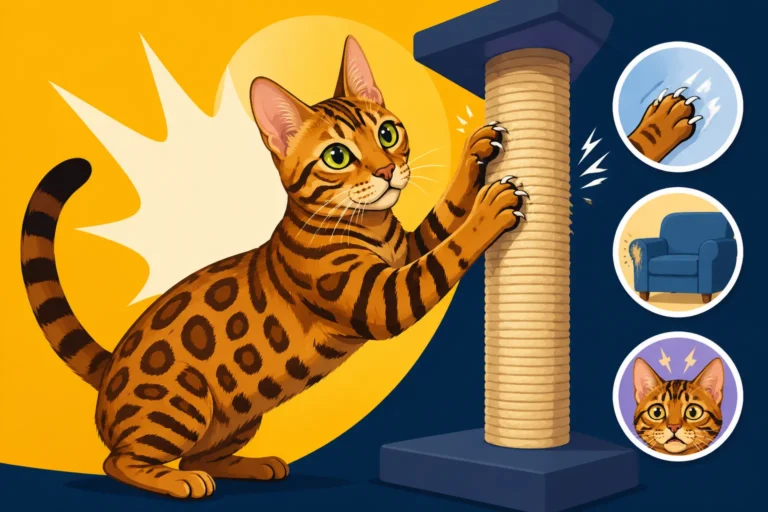
When it comes to vertical scratching, Bengals need serious equipment. Those flimsy, carpeted posts you often find in general pet stores simply won't cut it. Your Bengal needs to be able to stretch their entire body while scratching. This means a post that is tall enough for them to extend fully upwards, from their hind paws to their outstretched front paws, without hunching. Many adult Bengals need posts that are at least 30-36 inches tall, if not more.
Equally important is stability. A wobbly scratching post is not only frustrating for your cat but can also be dangerous if it topples over. Look for posts with a wide, heavy base. The material is also critical: sisal rope or sisal fabric are usually preferred over carpet, as they provide a satisfying resistance that cats love to sink their claws into. Some Bengals also enjoy corrugated cardboard posts, which can be found in various shapes and sizes. Place these robust posts in areas where your Bengal likes to scratch your furniture, or in prominent locations where they can easily access them for stretching and marking. For deeper insights into what works best, check out Which Scratching Post a Bengal Cat Needs.
Horizontal Scratchers and Mats
While many cats prefer to scratch vertically, others enjoy scratching horizontally, especially for that satisfying full-body stretch along the ground. It's vital to provide both options to cater to your Bengal's preferences. Horizontal scratchers often come as corrugated cardboard mats or sturdy sisal mats. These can be placed on the floor near areas your cat frequents, or even just inside doorways.
Some Bengals will gravitate towards horizontal scratchers for nail filing, while others might prefer them for a different kind of stretch. If you notice your Bengal attempting to scratch rugs or carpets, a horizontal scratcher is a perfect substitute. Experiment with different textures and locations to see what your cat prefers. You might find they enjoy a horizontal scratcher right where they wake up from a nap, for an immediate post-sleep stretch. Don't overlook these versatile options, as they can be surprisingly effective. You might even discover that Whether a Bengal Cat Uses a Horizontal Scratcher depends entirely on the specific material and placement.
| Scratcher Type | Preferred Orientation | Common Materials | Key Benefit | Ideal Placement |
|---|---|---|---|---|
| Vertical Post | Upright | Sisal rope, Sisal fabric | Full body stretch, territory marking | Near furniture, high traffic areas |
| Horizontal Mat | Flat on floor | Corrugated cardboard, Sisal fabric | Ground-level stretch, paw conditioning | Near sleeping spots, doorways |
| Cat Tree | Multi-level | Carpet, Sisal, Wood | Climbing, scratching, resting | Central room, window view |
Cat Trees and Multi-Level Structures
For a highly active and agile breed like the Bengal, a cat tree isn't just a luxury; it's often a necessity. These multi-level structures combine scratching surfaces with climbing opportunities and elevated perches, fulfilling several of your Bengal's natural instincts in one go. Remember, The Bengal Cat Is the Most Active Cat You Can Own, so they crave opportunities to climb and explore.
Look for cat trees that are tall, sturdy, and offer multiple sisal-wrapped posts for scratching. Many Bengals love to scale these trees, perch at the highest point to survey their domain, and then enjoy a vigorous scratch on the way down. The combination of different scratching materials (sisal, carpet on platforms, even exposed wood) can appeal to various preferences. A well-placed cat tree near a window or in a central living area can become your Bengal's personal kingdom, drawing their attention away from your sofa. Consider that How Much Vertical Space a Bengal Cat Needs is often significant, so don't shy away from taller, more expansive models. You can often find a wide variety of durable and engaging cat trees on online retailers like Chewy or Amazon, making it easier to find one that fits both your space and your Bengal's needs.
Making Your Furniture Less Appealing
Once you've provided attractive scratching alternatives, the next step is to make your existing furniture seem like the least desirable option. This dual approach helps guide your Bengal towards the right scratching spots.
Protective Covers and Deterrents
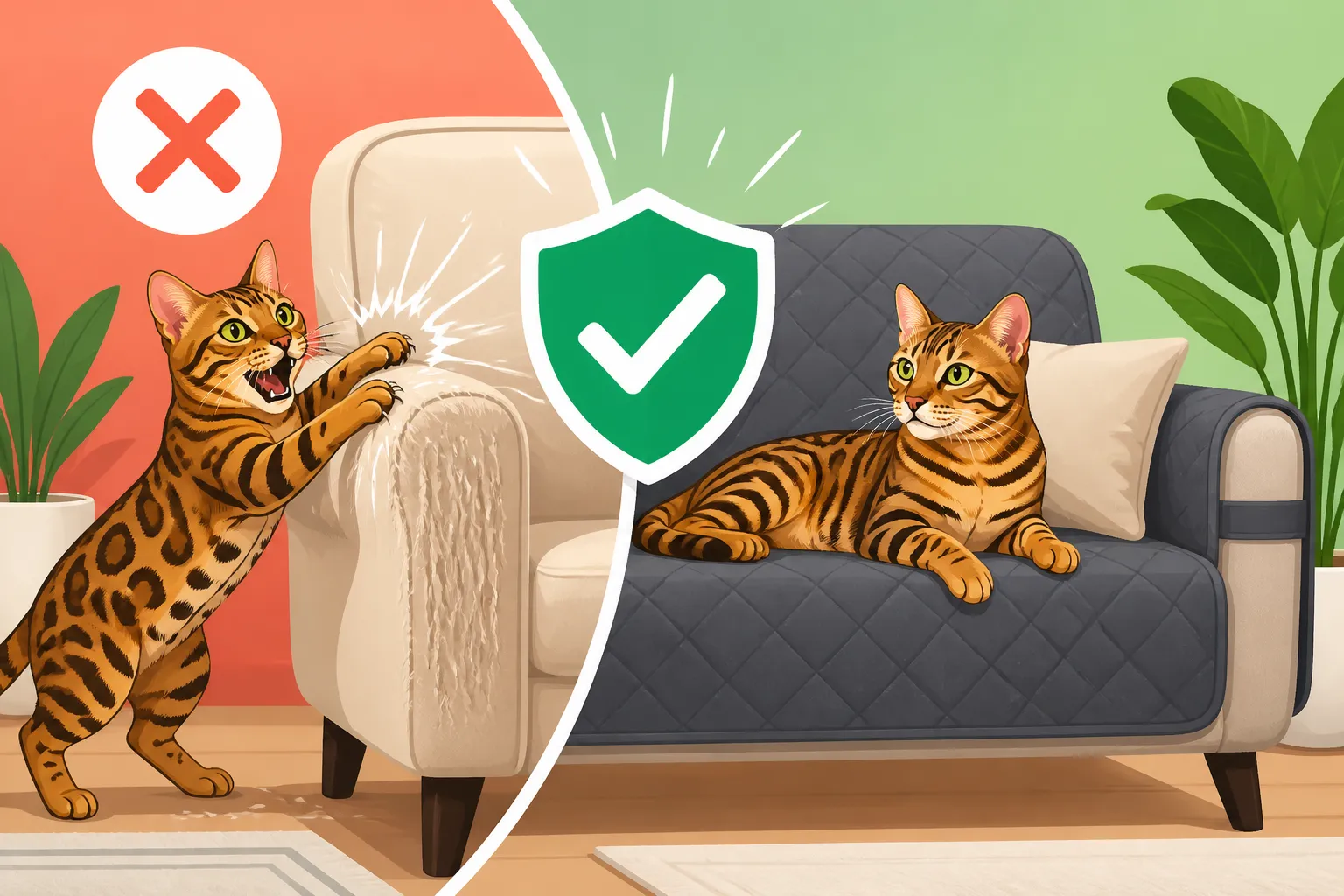
Sometimes, prevention is the best medicine. For furniture that's already a target, or pieces you want to protect proactively, covers and deterrents can be incredibly effective. Thick, durable slipcovers or blankets can protect sofas and chairs, and some even come with scratch-resistant fabrics. If your Bengal has a particular spot they love on your sofa, simply covering it with a throw might be enough to break the habit.
Beyond covers, there are various deterrents that can make scratching unpleasant. Double-sided sticky tape is a popular option. Cats generally dislike the sticky sensation on their paws, and applying strips to the corners or sides of furniture can discourage scratching. Non-toxic citrus sprays are another common deterrent; cats usually dislike the smell, though effectiveness can vary between individuals. Some owners also use aluminum foil on specific areas, as cats often dislike the sound and texture. The goal is to create an immediate, harmless negative association with scratching your furniture. These items are readily available through online stores like Amazon, allowing you to experiment with what works for your particular feline.
Redirecting Scratching Behavior
Deterrents work best when combined with positive reinforcement for using the right scratching posts. This involves actively redirecting your Bengal. If you see them heading for the sofa, gently pick them up and place them on their scratching post. As soon as they even touch the post, lavish them with praise, a favorite treat, or a few minutes of interactive play with a wand toy near the post. This teaches them that scratching the post leads to good things.
Consistency is key here. Every time you catch them scratching inappropriately, redirect. Never punish them; cats don't understand punishment in the way humans do, and it can create fear and anxiety, potentially leading to other behavioral problems. Instead, make the desired behavior (scratching the post) rewarding and the undesired behavior (scratching furniture) unappealing. You might even incorporate clicker training to mark the exact moment they scratch the appropriate surface, which can accelerate their understanding. Many Bengals are incredibly intelligent and respond well to this kind of positive reinforcement. For more on training, consider looking into How to Clicker Train a Bengal Cat.
Regular Claw Maintenance
While providing scratching surfaces helps maintain claws, regular trimming by you can also significantly reduce potential damage to your furniture. Shorter, blunter claws are simply less destructive. Most Bengals will need their claws trimmed every 2-4 weeks. Start early when they're kittens, and make it a calm, positive experience with treats and praise. If your Bengal isn't used to it, introduce it gradually.
Don't rush the process; trim one or two claws at a time if that's all your cat tolerates. Use sharp, good-quality cat nail clippers. Only snip the very tip, avoiding the quick (the pink part that contains blood vessels and nerves). If you're unsure, ask your vet or a groomer to show you how. While trimming won't eliminate the need for scratching (they still need to shed claw sheaths and stretch), it will definitely lessen the impact of any accidental or intentional furniture scratching. It's surprising How Fast a Bengal Cat's Claws Grow Back, so consistency is important. While some Bengals are cooperative, getting your cat to tolerate nail trims can be a challenge. Resources on Whether a Bengal Cat Sits for a Nail Trim might offer more specific tips for this particular breed.
Long-Term Strategies and Lifestyle Adjustments
Protecting your furniture from a Bengal cat is an ongoing commitment that often requires understanding their unique personality and making some adjustments to your home environment and daily routine.
The Role of Enrichment and Play
A bored Bengal is often a destructive Bengal. These cats are incredibly intelligent and have immense energy, a direct legacy of their wild ancestors. If they don't have enough appropriate outlets for their physical and mental energy, they will find their own entertainment—and that often involves your furniture. You might be surprised to find What a Bored Bengal Cat Destroys.
Daily interactive play sessions are non-negotiable for a Bengal. Aim for multiple sessions a day, each lasting 10-15 minutes, using wand toys, laser pointers (with a physical 'catch' at the end to prevent frustration), or feathered teasers. Beyond active play, provide puzzle feeders to stimulate their minds, and rotate toys regularly to keep things interesting. Consider adding a cat wheel if you have the space; many Bengals adore them and they're fantastic for burning off excess energy. The more fulfilled and stimulated your Bengal is, the less likely they are to resort to destructive behaviors like scratching your furniture out of boredom. For guidance on how much play they truly need, research How Many Play Sessions a Bengal Cat Needs.
Understanding Your Bengal's Preferences
Every Bengal is an individual. What works for one cat might not work for another. Pay close attention to your cat's scratching habits. Do they prefer vertical or horizontal? What textures do they seek out? Do they always target a specific type of furniture or a particular room? Observe their natural inclinations.
For example, if your Bengal consistently attacks the sisal rug, they might prefer a horizontal scratching surface over a vertical post. If they prefer the carpeted base of your old cat tree, maybe a new post wrapped in a similar carpet will be more appealing than sisal. The location of their preferred scratching spots is also important. If they always scratch the arm of the sofa when they wake up, then placing a highly desirable scratching post right next to that spot is a strategic move. Don't be afraid to try different types of scratchers, materials, and locations until you find what truly resonates with your particular feline.
Investing in Durable Furniture
While not always feasible for every piece, if you're in the market for new furniture, consider materials that are less appealing or more resistant to cat claws. Tightly woven fabrics like microfiber are often a good choice, as they don't offer the satisfying loose weave for claws to snag on. Some types of leather, particularly smooth, treated varieties, can be more durable than fabric, though they can still show puncture marks. Natural wood furniture with a very hard finish might also fare better than softer woods.
Ultimately, living with a Bengal means accepting that your home is shared with a powerful, instinctive animal. While we can implement many strategies to protect furniture, a certain level of wear and tear might be inevitable, especially on much-loved pieces. The goal is to minimize damage and redirect behavior, not to achieve a pristine, unblemished home at the expense of your cat's well-being. Sometimes, making peace with the occasional minor scratch is part of the journey of owning one of these magnificent creatures.
Disclaimer
This article is for general informational purposes only and does not constitute professional advice. Laws, prices and regulations vary by location and change over time. Consult a qualified professional for guidance on your specific situation.