Every Bengal Cat Color the Registries Accept
It’s easy to get lost in the dazzling array of patterns and hues when you’re looking at Bengal cats. Many aspiring owners are curious about all the vibrant shades these wild-looking beauties come in, only to find themselves utterly confused by terms like "snow" or "charcoal," and wondering which ones are actually considered "official." This guide is here to untangle that knot of information, clearly outlining every Bengal cat color the major registries officially accept and explaining why these distinctions truly matter for the breed.
Understanding the Breed Standard: Why Registry Rules Matter
When we talk about accepted colors for Bengal cats, we’re really talking about what the major cat registries, like The International Cat Association (TICA), deem permissible for showing and breeding within the established breed standard. This isn't just about aesthetics; it’s about maintaining the integrity and unique characteristics of the Bengal cat as a distinct breed. The breed standard acts as a blueprint, describing the ideal physical traits, temperament, and, yes, coat colors and patterns that define a Bengal.
The Role of Breed Registries
Think of cat registries as the gatekeepers of a breed's identity. They establish the rules and guidelines that breeders must follow to ensure consistency and quality across the breed. For the Bengal cat, TICA was the first to accept the breed, paving the way for its recognition and development. TICA Accepted the Bengal Cat in 1986 and has since been instrumental in shaping what we understand as a "true" Bengal. Without these standards, breeders might drift, leading to a loss of the very features that make Bengal cats so captivating and distinct from other spotted or marbled felines.
This means that while a cat might visually look like a Bengal with a certain coat color, if that color isn't recognized by the breed standard, it typically cannot be shown in championship classes or used in a registered breeding program to produce recognized Bengal kittens. This isn't to say these cats aren't beautiful or wonderful pets, but they fall outside the specific criteria set forth for the breed. It’s a crucial distinction for anyone considering breeding or showing, or simply wanting to understand the lineage of their pet.
Why Some Colors Are Not Accepted
The decision to accept or reject a color is often rooted in genetics and the initial vision for the breed. The Bengal cat was created to mimic its wild ancestor, the Asian Leopard Cat, while maintaining the temperament of a domestic housecat. A Leopard Cat and a Housecat Made the First Bengal Cat. Therefore, colors and patterns that closely resemble the wild cat's natural camouflage are generally preferred and accepted. Colors that indicate outcrossing to other domestic breeds, or that simply do not align with the desired "wild look," are usually excluded.
For instance, certain dilute colors found in domestic cats, such as blue (a soft grey) or lilac, are not part of the Asian Leopard Cat’s natural palette, nor were they intentionally introduced during the breed's development. While these colors can occur through recessive genes from the domestic cat side of the Bengal's ancestry, they are not considered part of the established breed standard. This helps to keep the Bengal's appearance focused on its unique, wild heritage, preventing it from blending too much with other domestic breeds in terms of recognized aesthetics.
The Foundation Colors: Brown, Snow, and Silver
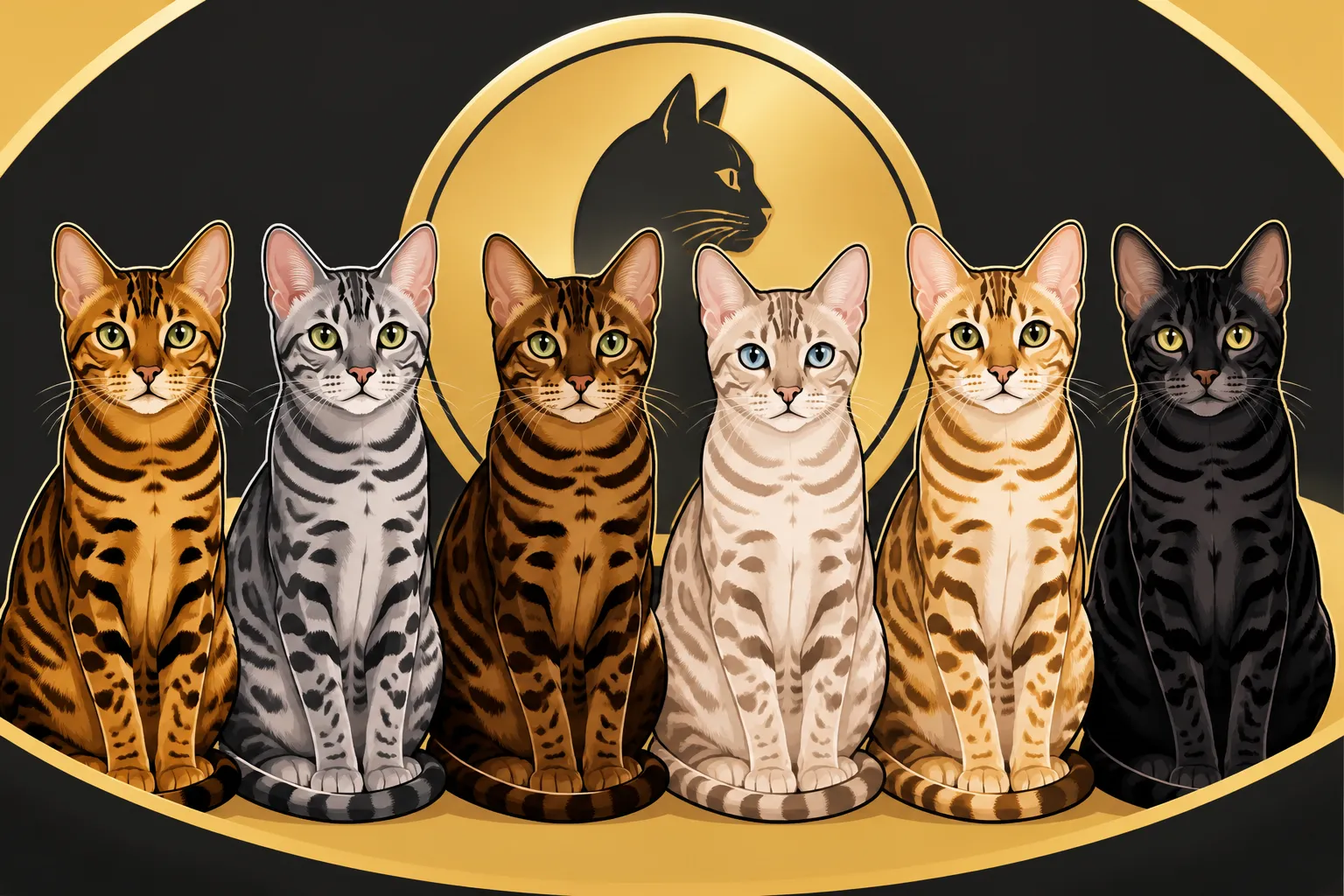
The core of accepted Bengal cat colors revolves around three main categories: Brown, Snow, and Silver. These are the broad groupings under which most recognized Bengal cats fall, each with its own beautiful variations and genetic underpinnings. When you look at these categories, you're seeing the direct influence of the Asian Leopard Cat's striking coat, adapted and refined through generations of careful breeding.
Brown Tabby Bengal
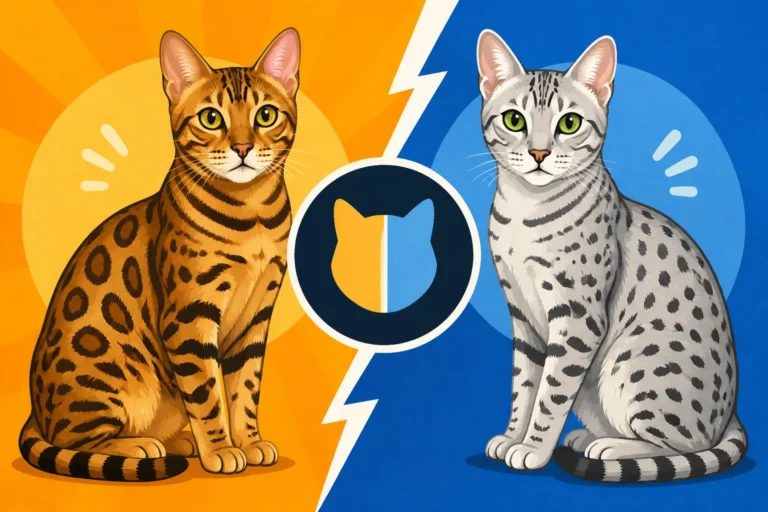
The Brown Tabby Bengal is arguably the most iconic and popular color, epitomizing the wild look that breeders initially aimed for. These cats feature a warm, rich background color that can range from a light golden fawn to a deep reddish-orange or even a more cool, dark brown. Overlaid on this background are distinct markings—spots or marbling—that are typically dark brown to black. The contrast between the background and the markings is key here, making the pattern truly pop.
A truly striking Brown Tabby Bengal will have vivid contrast, with clear, sharp markings against a warm, clean background. They often exhibit what's called "glitter," a unique shimmering effect where the tips of their guard hairs catch the light, making their coats appear dusted with gold. The Glitter Gene and What It Does to a Bengal Cat's Coat is a hallmark of the breed, enhancing the wild aesthetic. This color group also often displays "mascara" markings around the eyes and a dark tail tip, further adding to their wild appeal.
Snow Bengal
Don't let the name "Snow" fool you; these aren't albino cats, nor are they pure white. Instead, "Snow" refers to a family of colors characterized by a lighter, creamier base coat, with markings that appear in shades of seal or brown. These ethereal cats often have striking blue eyes in their lynx point variation, adding to their allure. The Snow Bengal is a captivating color variant that arose from recessive genes present in the domestic shorthairs used in the breed's foundation.
Within the Snow Bengal category, there are three distinct variations, each determined by a specific recessive gene that affects the intensity of their pigment:
Seal Lynx Point Bengal
The Seal Lynx Point Bengal is the lightest of the Snow Bengals, genetically a colorpoint cat. These stunning felines are born almost entirely white or cream, with their markings developing as they mature. Their points (ears, face, paws, and tail) will be a darker shade of seal, while their body markings are a lighter, muted version of the brown tabby pattern. The most striking feature of the Seal Lynx Point is their brilliant blue eyes, a direct inheritance from the Siamese contribution in their early lineage.
The contrast on a Seal Lynx Point can vary, but generally, it's softer than a Brown Bengal. The base coat might be a cool cream or ivory, and the markings will be a warm, mid-tone brown. It’s important for breeders to ensure good contrast, even in these lighter shades, so the pattern remains clear and defined. The playful energy of these cats, often expressed by their love of water and climbing, means keeping their coats healthy with good nutrition from reputable sources like Chewy is essential.
Seal Mink Bengal
The Seal Mink Bengal offers a slightly warmer and more intense coloration than the Lynx Point. Genetically, a Mink is heterozygous for the colorpoint gene, meaning it carries one copy of the Burmese gene and one copy of the Siamese gene. This gives them a richer, warmer cream to tan background color, with their markings appearing in a medium to dark seal brown. Their eyes can range from aqua to blue-green, a beautiful blend of the two colorpoint genes.
The Seal Mink's markings are more defined at birth than a Lynx Point's, and they typically present with better overall contrast. They retain the "snow" appearance but with a bit more depth and warmth in their palette. Owners often appreciate the striking balance between their light body and more pronounced patterns, making them visually distinct while still maintaining that soft, snowy aesthetic.
Seal Sepia Bengal
The Seal Sepia Bengal is the darkest of the Snow Bengals, carrying two copies of the Burmese colorpoint gene. These cats have a rich, warm cream to a deeper tan or light brown background color, with their markings appearing in a dark, warm seal brown. Their eyes are typically gold or green, rather than blue. They often have the strongest contrast among the Snow Bengals, sometimes almost resembling a muted brown Bengal.
Because the Sepia Bengal carries two copies of the Burmese gene, their markings are evident from birth and continue to darken as they age. They share the same beautiful glitter and pelted coat texture as other Bengals, contributing to their wild appearance. While all Snow Bengals are captivating, the Sepia provides a bridge between the classic brown and the lighter, cooler snow varieties, offering a darker but still distinctly "snow" option.
Silver Bengal
The Silver Bengal presents a striking, cool-toned contrast to the warm browns and creams. These cats possess a white to silver-grey base coat, with their patterns appearing in shades of black or charcoal. The silver gene actually inhibits the production of warm pigment, allowing only the cool tones to shine through, creating a stunning metallic sheen. A Silver Bengal with strong, clear black markings against a brilliant silver background is truly breathtaking.
The key to a good Silver Bengal is the purity of the silver. Any unwanted warm, yellowish, or brown "tarnishing" in the background coat is considered undesirable in the show ring. Breeders work hard to produce silvers with a clean, clear, icy white or bright silver base, maximizing the dramatic contrast with their dark patterns. These cats can have green or gold eyes, which provide a beautiful pop of color against their cool coats.
Delving Deeper into Patterns: Rosetted and Marbled
Beyond the base colors, the Bengal cat is defined by its unique patterns, inherited directly from its wild ancestor. These patterns are not just random spots; they are distinct formations that breeders strive to perfect according to the breed standard. Rosetted Against Marbled: The Two Bengal Cat Patterns is a fundamental aspect of the breed's visual identity, making them truly stand out.
Rosetted Patterns
Rosettes are the most sought-after and iconic pattern in Bengal cats, directly mimicking the markings of the Asian Leopard Cat, jaguars, and leopards. Unlike simple spots found on many domestic cats, rosettes are multi-toned markings with a darker outline or center that creates depth and dimension. They are a true testament to the breed's wild heritage and a primary feature that judges look for in the show ring.
There are several types of rosettes, each with its own specific appearance:
Arrowhead Rosettes
Arrowhead rosettes are exactly what they sound like: markings shaped like arrowheads pointing towards the back of the cat. These are typically solid spots that taper to a point, creating a dynamic, flowing pattern across the coat. While not as complex as other rosette types, well-formed arrowhead rosettes contribute to a sleek, wild appearance, giving the impression of movement and speed.
These rosettes are distinct from simple random spots due to their directional nature and often slightly elongated shape. They provide excellent contrast against the background color, creating a striking and visually interesting pattern. Breeders aim for clear, defined arrowheads that are evenly distributed across the cat’s body.
Paw Print Rosettes
Paw print rosettes are essentially open rosettes that have a darker outer edge with a lighter, solid color center. They resemble a paw print or a broken circle, hence the name. These rosettes add depth to the coat, as the lighter inner color often matches the background coat, while the darker outline creates the distinct shape. They are highly desirable and contribute to a very natural, wild look.
The key here is the "open" nature—the outline isn't fully closed, giving the impression of an animal print. A Bengal with well-defined paw print rosettes truly looks like it just stepped out of the jungle, and this pattern is a hallmark of high-quality breeding.
Donut Rosettes
Donut rosettes are considered the pinnacle of rosetting and are highly prized. These are fully enclosed, two-toned markings with a distinct darker outline and a clearly lighter, often warm-toned, center that typically matches the background color of the coat. They create a strong contrast and incredible depth, making the cat's coat appear three-dimensional.
A Bengal with perfectly formed donut rosettes looks like a miniature leopard or jaguar. The clearer the outline and the more distinct the lighter center, the more valuable the pattern is considered. Achieving consistent, symmetrical donut rosettes is a significant breeding challenge and a mark of exceptional lineage.
Clouded Rosettes
Clouded rosettes are a less common but equally stunning variation. These are large, irregularly shaped rosettes that often appear connected or clustered together, creating a "clouded" effect. They are still two-toned with a darker outline, but their larger, more abstract shape gives them a unique appeal, reminiscent of the cloud leopard.
While less defined than individual donut rosettes, clouded rosettes offer a dramatic, sweeping pattern that can cover large areas of the cat's flanks. They create an impressive, powerful look and are particularly striking on a well-muscled Bengal cat. The distinctiveness of this pattern often grabs attention and is highly valued by connoisseurs of the breed.
Marbled Patterns
While rosettes get a lot of attention, the marbled pattern is another officially accepted and equally stunning variation in Bengal cats. Instead of spots, marbled Bengals feature swirling, horizontal patterns that flow across their coat. These patterns are typically darker than the background, creating a dramatic and artistic effect. A well-marbled Bengal looks like a work of art, with intricate swirls and ribbons that are entirely unique.
The ideal marbled pattern has what's called "horizontal flow," meaning the swirls run horizontally along the body rather than vertically. This creates a natural, elongated appearance. The pattern should also be distinct and clear, with good contrast against the background color, avoiding a muddy or indistinct look. What a Marbled Bengal Cat Is can be just as captivating as a rosetted one, offering a different kind of wild beauty.
Sheet Marble Pattern
A sheet marble Bengal has extensive, large areas of connected marbling, often creating an almost continuous "sheet" of pattern across the back and flanks. The pattern tends to be broad and flowing, covering significant portions of the body with dark, rich swirls. There are fewer distinct individual "ribbons" or smaller swirls; instead, the pattern merges into broader, sweeping designs.
This pattern can be incredibly dramatic, especially when the background color is bright and the marbling is dark and well-defined. It emphasizes the strength and musculature of the Bengal cat, giving it a powerful and almost abstract artistic quality.
Horizontal Flow Marble Pattern
The horizontal flow marble pattern is characterized by its distinct, elongated swirls and ribbons that appear to flow horizontally along the cat's body. This creates a sense of movement and elegance, differing from the more circular or random patterns found in some other marbled cats. The lines should be clean, clear, and well-defined, showing good contrast.
This pattern is highly desired because it mimics the natural flow of movement of a wild cat, giving the Bengal a sleek and powerful appearance. The patterns should be as uniform as possible across the body, maintaining their horizontal orientation for maximum impact.
The Enigmatic "Charcoal" Bengal: A Powerful Presentation
Beyond the main color categories, the Charcoal Bengal is a captivating and unique genetic variant that is fully accepted by TICA. It's not a separate color class like "Brown" or "Snow," but rather a modifier that overlays these existing colors, creating a dramatically darker, richer appearance. A Charcoal Bengal often looks like it's perpetually living in shadow, with an intensity that truly sets it apart.
What Makes a Bengal Charcoal
The charcoal trait is caused by a specific combination of genes: one copy of the "agouti" gene from the Asian Leopard Cat (Apb) and one copy of the "domestic non-agouti" gene (a) from the domestic cat. This specific genetic pairing (Apb/a) results in a coat that has a darker background color, often with a "mask" on the face that resembles a Zorro mask, and a prominent "cape" or dark stripe running down the back. This combination significantly deepens the coat color and enhances contrast.
The charcoal gene acts like a darkening filter, intensifying the background color of any Bengal coat. So, you can have a "Charcoal Brown Bengal" or a "Charcoal Snow Bengal" (which would be called a Charcoal Seal Lynx Point, Charcoal Seal Mink, or Charcoal Seal Sepia). The effect is always a more dramatic, darker version of the base color, giving the cat a profound and striking appearance.
Characteristics of a Charcoal Bengal
Charcoal Bengals are recognized for several distinctive features. Their background color is often a much cooler, smokier grey or a deeper, richer brown, rather than the warm tones typical of a standard Brown Bengal. The most noticeable features are the dark "Zorro mask" on their face, making their eyes appear to pop, and the strong, dark "cape" that runs down their spine. This cape is usually a solid black line that extends from the shoulders to the tail, almost looking like a darker shadow has been cast over their back.
The markings on a Charcoal Bengal, whether rosetted or marbled, also tend to be incredibly dark and well-defined, providing exceptional contrast against their already darkened background. This intense contrast is one of the most celebrated aspects of the charcoal trait, making the patterns incredibly vivid and eye-catching. The eyes on a Charcoal Bengal are usually gold or green, adding another layer of striking beauty to their already dramatic appearance.
Colors Not Accepted by Registries (but still exist)
While the accepted colors are beautiful and diverse, it’s worth noting that Bengal cats can occasionally exhibit other coat colors that are not recognized by the breed standard. These cats are still 100% Bengal by lineage, but their colors might be considered "non-standard" or "disqualified" in a show setting. Understanding these differences helps to manage expectations, especially if you’re looking at kittens advertised with "rare" colors.
Blue Bengal
The Blue Bengal is one such color that occasionally pops up, characterized by a lovely soft grey or slate-blue background color with markings in a darker shade of grey. This dilute color is stunning in its own right and can produce beautiful cats, but it is not currently accepted by TICA or other major registries for championship status. The blue gene is recessive and comes from the domestic cat side of the Bengal's ancestry, not the Asian Leopard Cat.
Despite not being recognized for show, Blue Bengals can make wonderful pets. Their soft coloration offers a unique aesthetic that many find appealing. If you encounter a Blue Bengal, it simply means that the domestic genes expressed a dilute color, which isn't part of the established wild-type look the breed standard aims for. It's a color that exists but falls outside the strict criteria for showing and breeding within championship lines. What a Blue Bengal Cat Is can still be a highly sought-after pet for its unique beauty.
Melanistic Bengal
Melanistic Bengals are perhaps the most dramatic of the non-standard colors. These cats are entirely black or very dark brown, with their pattern (spots or marbling) still subtly visible as "ghost" markings under direct light. Essentially, they are black panthers in miniature, retaining the Bengal's body type and wild features but with a coat that has an overabundance of eumelanin (black pigment).
Like the blue gene, the melanistic gene (non-agouti) comes from the domestic cat lineage. While incredibly striking and possessing a mysterious allure, the melanistic coat obscures the distinct patterns that are a hallmark of the Bengal breed standard. Therefore, they are not accepted for championship showing. However, a Melanistic Bengal can be a fantastic companion, possessing all the energy and personality of its more colorful counterparts. What a Melanistic Bengal Cat Is is often a conversation starter and a unique addition to any home.
Beyond Color: The Importance of Pattern and Clarity
While color is certainly a huge draw, the true artistry of a Bengal cat's coat lies in the quality and clarity of its pattern. A Bengal could have an accepted color, but if its pattern is muddled, indistinct, or doesn't meet the breed standard's criteria for shape and distribution, it won't be considered a prime example of the breed. This emphasis on pattern is a direct link to the Asian Leopard Cat, whose distinct markings are crucial for camouflage and survival in the wild.
Defining Contrast and Clarity
"Contrast" refers to the distinctiveness between the background color of the coat and the markings. High contrast means the patterns stand out sharply, making them easy to see and appreciate. "Clarity" refers to the crispness and definition of the individual spots or rosettes. A clear pattern has sharp edges, without fuzziness or blurring. Both high contrast and clarity are essential for a Bengal's coat to be considered excellent.
Imagine a Brown Bengal with a muddy, dull background color and spots that blend too much, lacking sharp edges. This would be an example of poor contrast and clarity. In contrast, a beautiful Bengal would have vivid, dark rosettes popping against a clean, warm background, each rosette perfectly shaped and defined. This level of detail is what breeders strive for and what makes a Bengal truly magnificent. How a Bengal Cat's Pelt Is Judged in the Ring often comes down to these fine points.
The Role of Glitter in Enhancing Appearance
Glitter is a unique trait found in many Bengal cats, where the tips of their guard hairs are hollow and translucent, allowing light to pass through and reflect back, creating a sparkling effect. It's like having millions of tiny diamonds sprinkled over their coat. This isn't strictly a "color" but rather a characteristic that enhances the vibrancy and richness of any accepted Bengal color. What the Glitter Gene Does to a Bengal Cat is a hallmark that elevates the coat's overall appeal.
While not all Bengals possess glitter, it's highly prized because it adds another layer of wild beauty and sophistication to their already stunning appearance. It gives the coat a luxurious depth and shimmer that truly stands out, making the cat look even more exotic and captivating. Whether on a Brown, Snow, or Silver Bengal, glitter adds that extra touch of magic, especially in natural light.
What the Registries Look For in a Show Cat
When a Bengal cat is presented in a TICA show, judges evaluate not only the color but also the overall balance, conformation, and, most importantly, the quality of the pattern. A cat might have a perfect brown color, but if its rosettes are not well-formed or are too sparse, it won't score as highly as a cat with excellent rosettes, even if its color is just "good." The pattern should be random and horizontal, avoiding "ribbon barring" or "vertically aligned" markings which are more typical of domestic tabby cats.
The placement of the pattern, the sharpness of the contrast, and the presence of desirable traits like whited tummies (a lighter belly, mimicking the wild cat) and mascara markings are all considered. This holistic approach ensures that the Bengal cat maintains its wild appearance while adhering to the standards that make it a recognized and celebrated breed. When seeking a Bengal, particularly for showing or breeding, understanding these nuanced requirements is vital. You might even find specialized supplies for show cats on Chewy, supporting their prime condition.
Table of Accepted Bengal Cat Colors and Patterns
To help summarize, here's a quick overview of the colors and patterns officially accepted by major registries like TICA for championship status.
| Color Category | Genetic Basis (Simplified) | Key Characteristics | Accepted Patterns | Eye Color (Typical) | Notes |
|---|---|---|---|---|---|
| Brown | Full color (B/B or B/b) | Warm background (fawn-red/orange), dark brown/black markings, high contrast. | Rosetted, Marbled | Gold/Green/Brown | Most common, classic "wild" look. Often has glitter. |
| Snow | Colorpoint gene(s) | Lighter, creamy background, seal-toned markings. | Rosetted, Marbled | Blue (Lynx), Aqua/Green (Mink), Gold/Green (Sepia) | Three variations: Lynx Point, Mink, Sepia. |
| Lynx Point | Siamese gene (cs/cs) | Lightest background, seal markings, born nearly white, strong blue eyes. | Rosetted, Marbled | Blue | Markings darken with age. |
| Mink | Burmese + Siamese (cb/cs) | Warmer cream background, medium seal markings, aqua/blue-green eyes. | Rosetted, Marbled | Aqua/Green | Intermediate shade between Lynx and Sepia. |
| Sepia | Burmese gene (cb/cb) | Warmest cream/tan background, dark seal markings, gold/green eyes. | Rosetted, Marbled | Gold/Green | Darkest of the Snows, good contrast. |
| Silver | Silver inhibitor gene (I/i) | Cool white/silver-grey background, black/charcoal markings, striking contrast. | Rosetted, Marbled | Gold/Green | Inhibits warm pigments, can suffer from "tarnishing" if not clean. |
| Charcoal | ALC Agouti + non-agouti (Apb/a) | Darkens any base color, "Zorro mask" on face, pronounced "cape" down the back. | Rosetted, Marbled | Gold/Green | Not a standalone color, a modifier (e.g., Charcoal Brown, Charcoal Snow). |
Note: This table focuses on colors accepted for championship status in most major registries. Non-accepted colors like Blue and Melanistic are beautiful but not part of the standard.
Choosing Your Bengal: Beyond Just Color
Ultimately, the choice of your Bengal cat will come down to personal preference, but understanding the accepted colors and the breed standard provides valuable insight. While a stunning brown rosetted Bengal might be the classic ideal, a shimmering silver marbled, or an ethereal snow lynx point can be equally captivating. Each color and pattern variation carries the unique essence of the Bengal breed, combining the allure of the wild with the charm of a domestic companion.
When you're welcoming a Bengal into your home, whether it's for showing, breeding, or simply as a beloved pet, remember that a healthy temperament and good overall health are paramount. A reputable breeder will always prioritize these factors, regardless of the cat's specific color or pattern. They will also be transparent about their cats' lineage and genetic health screenings, ensuring you bring home a happy, well-adjusted companion. Look for breeders who test for genetic conditions like Pyruvate Kinase Deficiency in a Bengal Cat and HCM Is What Kills Bengal Cats Early. This focus on health and welfare ensures your gorgeous Bengal, no matter its hue, lives a long, joyful life with you.
Disclaimer
This article is for general informational purposes only and does not constitute professional advice. Laws, prices and regulations vary by location and change over time. Consult a qualified professional for guidance on your specific situation.