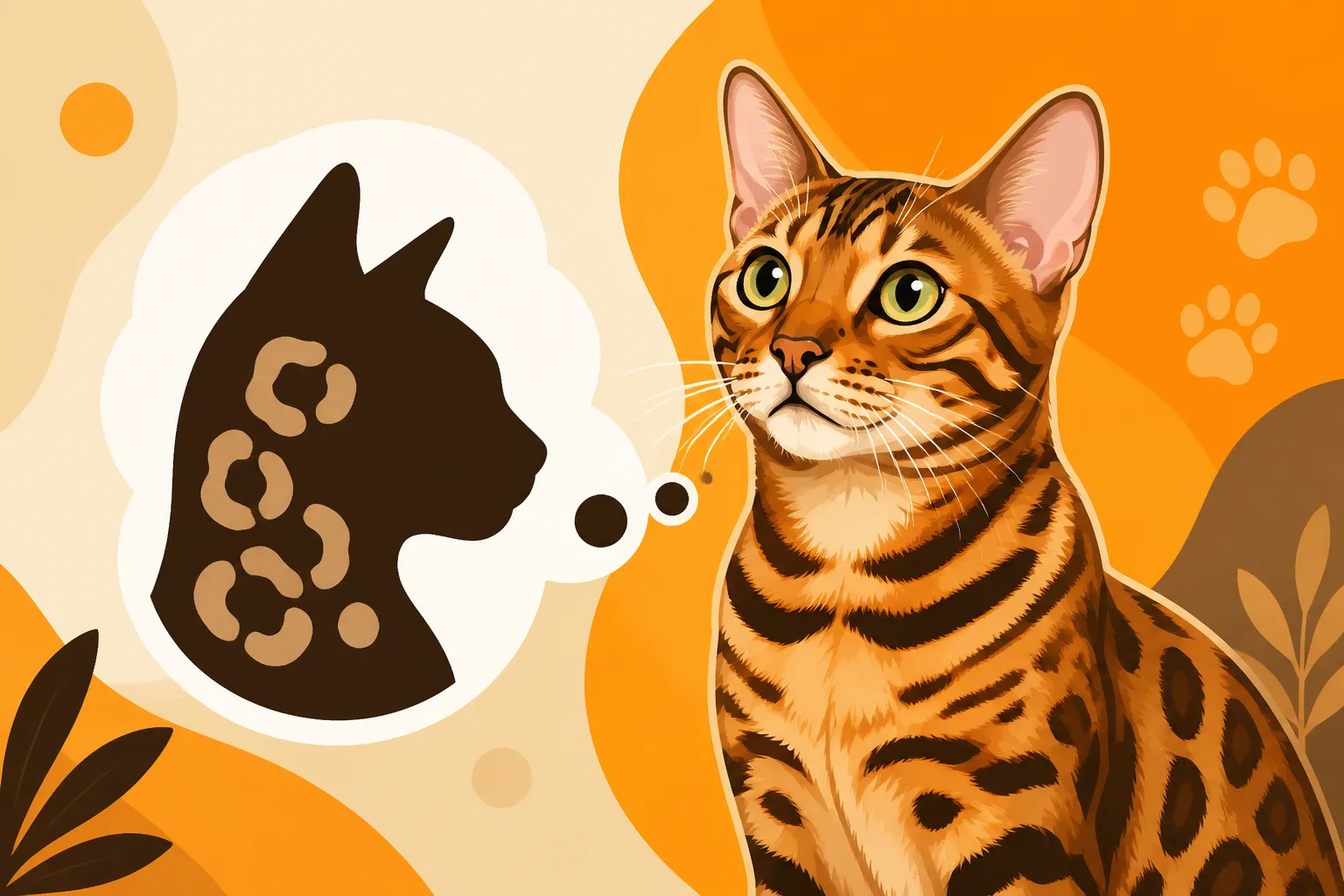
What SBT Stands For in a Bengal Cat
SBT in a Bengal cat’s pedigree means “Stud Book Tradition,” a registry designation associated with Bengal-to-Bengal breeding across multiple generations. It is not a coat pattern, a health result, or a precise measure of wild ancestry. This guide explains what the label tells you, how it differs from F1, F2, and F3, and how to check what a breeder means by it.
What SBT Means in a Bengal Cat
SBT stands for Stud Book Tradition
SBT is short for Stud Book Tradition, a term used in cat registration to describe a pedigree built through breeding within an established breed. In Bengal cats, the designation indicates that the cat’s ancestry follows the registry’s requirements for Bengal-to-Bengal breeding over several generations.
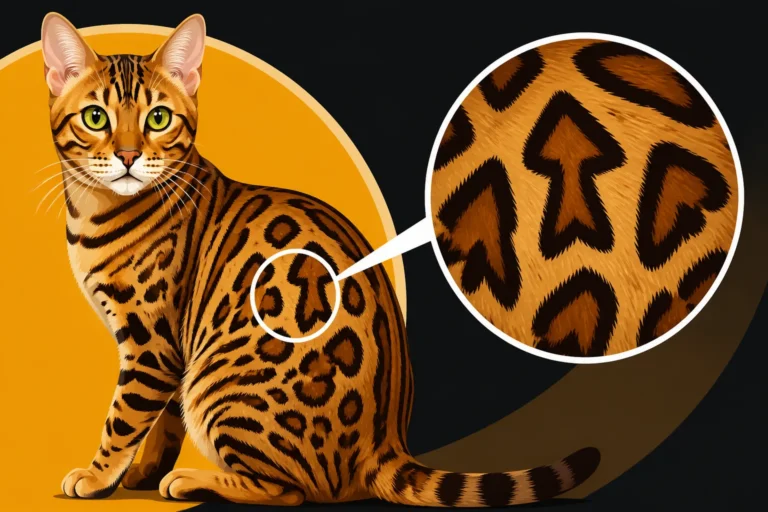
You may see “SBT” on a pedigree, registration record, or breeder listing. It identifies a pedigree category; it is not a separate Bengal variety. An SBT Bengal can be brown, silver, snow, spotted, or marbled. The label does not describe the cat’s appearance, personality, size, or health.
The term is especially associated with The International Cat Association, or TICA, which registers Bengal cats. In everyday conversations, breeders may use SBT as shorthand for a Bengal from established domestic lines rather than an early-generation hybrid. For a fuller explanation of how the labels fit together, see F1 to SBT: How a Bengal Cat's Generation Is Counted.
It describes a pedigree, not a percentage of wild ancestry
SBT does not tell you an exact percentage of Asian leopard cat ancestry. Nor should you assume that every Bengal with an SBT label has an identical genetic history. The code reflects pedigree and registry classification, not a simple DNA calculation.
That distinction matters because generation labels and pedigree categories answer different questions. An F-number describes a cat’s filial generation in relation to an Asian leopard cat ancestor. SBT, by contrast, refers to a registry’s classification of a Bengal pedigree with the required succession of breed-to-breed generations.
A breeder may describe an SBT Bengal as “fully domestic” to distinguish it from an early-generation hybrid. That can be a useful general contrast, but the letters alone are not a complete description of a cat’s individual ancestry, temperament, or needs. If the exact pedigree matters to you, ask to see the registered record rather than relying on a verbal explanation.
The meaning can depend on registry records
SBT is most useful when you know which registry issued the paperwork and can examine the pedigree behind the claim. A breeder’s website or sales contract may use the term informally, but the registration record is the better place to confirm how a particular cat is classified.
Ask the breeder to explain the wording on the documents and show how the cat’s parents and earlier ancestors are recorded. If you are comparing kittens, request the same kind of documentation for each one. That makes it easier to compare like with like rather than trying to interpret a short code without context.
A listing on a pet retailer’s website, or a purchase receipt from Chewy for food and supplies, cannot establish a cat’s lineage. Those records can help you manage everyday ownership, but pedigree and registration details need to come from the breeder and the relevant registry.
How SBT Differs From F1, F2, and F3
F1, F2, and F3 describe filial generations
F1, F2, and F3 are commonly used to identify early generations in a Bengal’s ancestry relative to the Asian leopard cat. An F1 is the first filial generation from a direct Asian leopard cat and domestic cat cross. F2 and F3 refer to later generations in that line.
These labels can help explain why an early-generation Bengal may be discussed differently from a Bengal from established domestic lines. They are not a guarantee of a particular personality. Individual behavior depends on many things, including the cat’s socialization, environment, health, and temperament.
For a closer look at the early labels, see What F1 Means in a Bengal Cat and What F2 and F3 Mean in a Bengal Cat. Those terms are often mentioned alongside SBT, but they do not mean the same thing.
SBT is a pedigree classification rather than another F-number
A common source of confusion is assuming SBT is simply the next step after F3, as if the labels formed one uninterrupted sequence. That is not a reliable way to read a pedigree. F-numbers refer to filial generation; SBT is a stud-book classification used under registry rules.
| Label | What it generally describes | What it does not tell you by itself |
|---|---|---|
| F1 | First filial generation from an Asian leopard cat and domestic cat cross | A guaranteed temperament or care requirement |
| F2 | A later filial generation in an early-generation line | An exact genetic percentage |
| F3 | A further filial generation in that line | That the cat is automatically SBT |
| SBT | A registered pedigree category reflecting Bengal breeding across generations | Coat color, health status, or precise wild ancestry |
The exact way a registry applies a category should be checked against its own records and rules. Don’t try to calculate SBT status from a kitten’s appearance or from a seller’s shorthand. If the paperwork uses both an F-number and another registration code, ask the breeder to explain what each one means for that individual cat.
This difference also matters when you are reading articles or comparing breeders. The guide Which Generation TICA Registers as a Bengal Cat offers relevant background on registry generation categories, while How to Find a Bengal Cat's Generation on Its Pedigree can help you approach the document itself.
An SBT label is not a promise about personality
Some buyers see SBT and assume it guarantees an easygoing, predictable house cat. It does not. The term says something about the pedigree classification, not whether a particular Bengal will be quiet, affectionate, comfortable with children, or content to spend long periods alone.
Bengals are often active and curious, and individual cats can vary widely. A well-socialized kitten from established domestic lines may still need daily play, climbing opportunities, and interaction. Ask the breeder about the kitten’s behavior, how it has been raised, and what the parents are like at home. Those details are more useful for anticipating daily life than the SBT letters alone.
Generation is only one part of choosing a suitable Bengal. If you are weighing different cats for your household, Which Bengal Cat Generation Suits a Family provides another perspective. And because early-generation Bengal breeding has additional complexities, Why F1 to F3 Bengal Cat Males Cannot Breed explains one reason those cats should not be treated as interchangeable with later domestic lines.
How to Check an SBT Claim
Ask for the registration record and pedigree
If a breeder describes a kitten as SBT, ask what registry the term refers to and request the kitten’s registration details or pedigree documentation. A clear answer should explain the designation and show how the kitten fits into its recorded lineage.
Look at the document as a whole rather than focusing only on the letters. Check that the kitten’s identity matches the paperwork and ask how the parents are registered. If anything is unclear, ask the breeder to walk you through the relevant entries. A responsible breeder should be comfortable explaining what the documents mean, even if the terminology feels unfamiliar at first.
If the breeder says the paperwork will be provided later, ask when and what you will receive. A verbal statement may be part of the conversation, but it is not a substitute for records. Chewy can be useful for routine pet supplies, but neither a shopping account nor a product listing serves as proof of a Bengal’s registration or ancestry.
Separate pedigree evidence from health information
SBT tells you about pedigree classification; it does not mean a cat has passed health screening. A registration designation cannot stand in for veterinary records, health testing, or a breeder’s explanation of known conditions in the line.
Ask what health checks were performed on the parents and request the related results where applicable. If the breeder treats SBT as though it proves a kitten is healthy, ask follow-up questions. Pedigree, health, and behavior are three different topics, and each deserves its own evidence.
Keep your records organized after bringing a kitten home. Store the registration paperwork, contract, vaccination history, and veterinary records together. If you later buy food, litter, or other supplies from Chewy or another retailer, save those receipts separately; they can help with household budgeting, but they do not add information to the cat’s pedigree.
What SBT Means for a Bengal Owner
It can help distinguish established Bengal lines from early hybrids
For a prospective owner, SBT can be a helpful clue that a Bengal comes from a pedigree developed through generations of Bengal-to-Bengal breeding. That context may be useful when comparing a breeder’s cats, asking about ancestry, or learning why a seller distinguishes an SBT Bengal from an early-generation hybrid.
Still, don’t make a decision based on the label alone. Ask how the breeder raises kittens, how they introduce them to everyday household experiences, and what support they provide after adoption. A thoughtful conversation about the kitten’s needs can reveal much more about your likely match than a registration abbreviation can.
It is also sensible to check local rules if a cat’s generation is unclear or if you are considering an early-generation Bengal. Laws and restrictions can depend on location and may use generation terminology in specific ways. For related background, see How a Bengal Cat's Generation Is Counted and check the rules that apply where you live.
It does not change the practical work of cat ownership
An SBT Bengal still needs a safe home, routine veterinary care, suitable food, litter facilities, and daily attention. The designation does not mean a cat is low-maintenance, nor does it tell you exactly how energetic or vocal your individual companion will be.
Before bringing a kitten home, plan for the basics: a secure carrier, scratching surfaces, climbing spaces, interactive toys, and a quiet area where the cat can settle in. If you use Chewy to order ordinary supplies, make a checklist first and confirm that the products suit your cat’s age and needs. The retailer is a source for supplies, not a substitute for advice from your breeder or veterinarian.
Most importantly, judge the cat in front of you. Ask about its health history and socialization, review the paperwork, and take time to understand the breeder’s explanations. SBT is a useful piece of information when read correctly: it points to a pedigree category, while the full record and the cat’s individual history provide the context.
Disclaimer
This article is for general informational purposes only and does not constitute professional advice. Laws, prices and regulations vary by location and change over time. Consult a qualified professional for guidance on your specific situation.