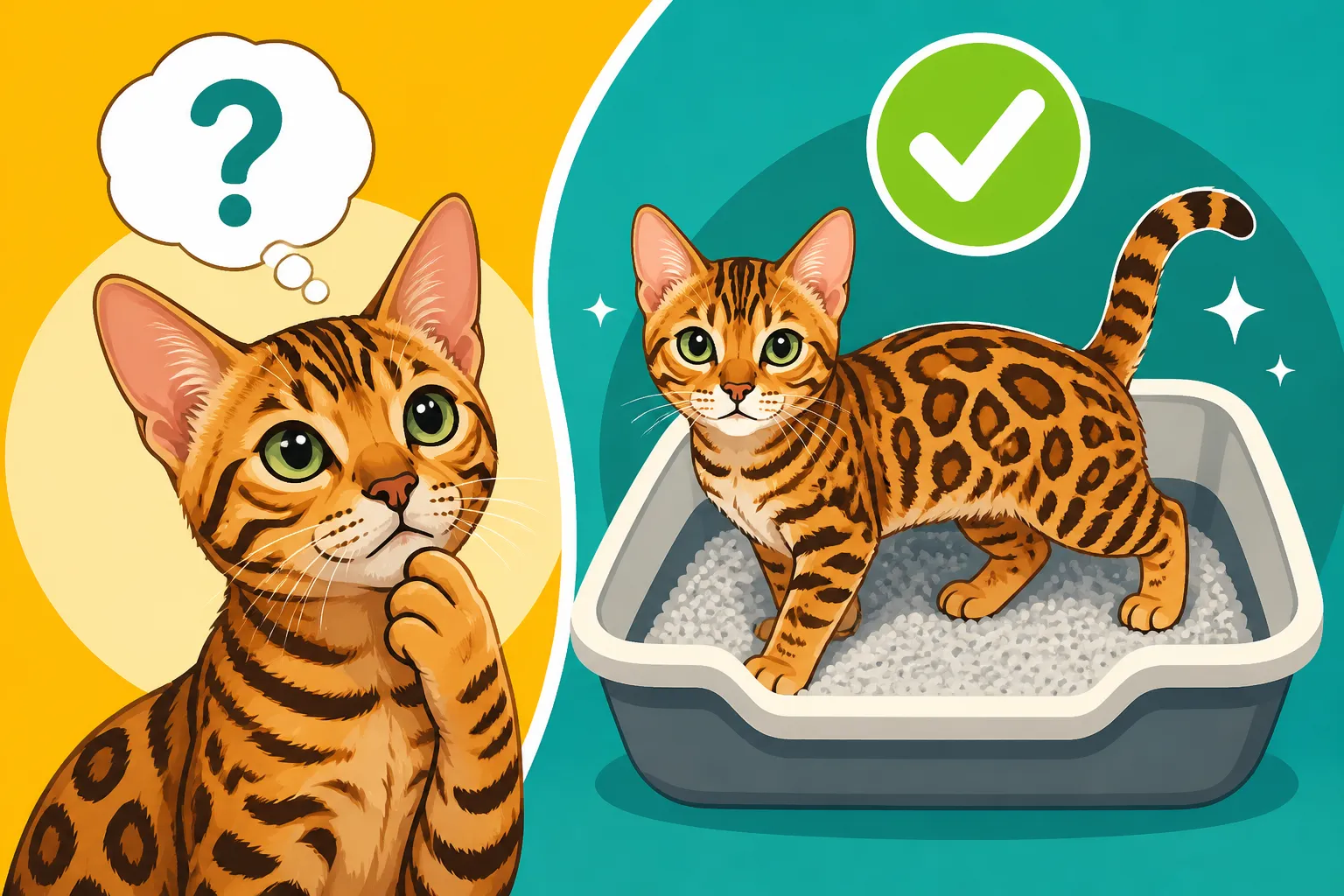
Whether an F1 Bengal Cat Uses a Litter Box
An F1 Bengal’s wild ancestry can make prospective owners wonder whether litter-box habits will be as reliable as those of a typical house cat. The reassuring answer is that many F1 Bengals can learn to use a litter box, but success depends on the individual cat, its early experience, and a setup that feels safe and easy to use. Here’s what to consider before bringing one home.
Can an F1 Bengal Cat Use a Litter Box
Litter-box use is possible, but not guaranteed
An F1 Bengal is the first generation produced from an Asian leopard cat and a domestic cat. That ancestry can affect behavior and care needs, but it does not mean an F1 will automatically avoid a litter box. A kitten raised indoors with consistent access to an appropriate box may learn to use it. Another cat, even from a similar background, may take longer or have less predictable habits.
The details of a cat’s upbringing matter. Ask the breeder or current caregiver whether the kitten has used a litter box consistently, what type of box and litter it knows, and whether it has lived in a home environment. A cat that has practiced with a familiar setup is likely to have an easier transition than one raised with limited household exposure. Still, past success cannot promise that a move, stress, or an unsuitable box won’t cause setbacks.
It also helps to be clear about what “using a litter box” means. A cat may urinate and defecate in the box most of the time but still have accidents or mark in certain situations. Litter training, toileting habits, and territorial marking are related but different issues. If an F1 cat has trouble, it is not automatically proof that the cat is impossible to house-train.
F1 does not mean every cat behaves the same way
The term F1 describes a generation, not a complete personality profile or a guarantee of particular habits. An individual cat’s temperament, early socialization, environment, health, and routine all play a role. Two F1 cats can respond differently to the same home and litter setup.
For context, What F1 Means in a Bengal Cat explains the generation label, while How a Bengal Cat's Generation Is Counted can help make sense of where F1 fits in a pedigree. Generation alone cannot tell you whether a particular kitten will reliably use a box. Ask about the cat in front of you rather than assuming every F1 will act alike.
Early-generation Bengal ownership can involve considerations beyond toileting. The cat’s background, adult temperament, housing needs, and applicable local rules all deserve careful attention. If you are deciding whether this type of cat suits your household, Which Bengal Cat Generation Suits a Family is a useful next topic to explore.
How to Set Up a Litter Box for an F1 Bengal
Choose a roomy, easy-to-access box
A cramped or awkward box can discourage a cat from using it, especially if it has to turn, dig, and cover waste in a small space. Choose a box large enough for the cat to enter comfortably, turn around, and dig without bumping into the sides. For a growing kitten, consider whether the entry is low enough to reach while still containing litter as the cat gets bigger.
Placement matters too. Set the box somewhere quiet and accessible, away from food and water, busy walkways, and loud appliances. A laundry room with a noisy washer, for example, may seem convenient to a person but unpleasant to a cat. Avoid placing the box where the cat could feel cornered or be interrupted by children or other pets.
In a multi-cat home, make sure one cat cannot block another from getting to a box. A common starting point is one box per cat, plus one extra, placed in separate locations. Even if the F1 will be the only cat, offering more than one box can be helpful in a larger home or during an adjustment period.
Keep litter familiar and the routine consistent
When possible, begin with the same litter type the cat already knows. A sudden switch in texture, scent, or depth can put a cat off. Many cats prefer unscented litter, but individual preferences vary. If you need to change products, introduce the new litter gradually rather than replacing the old one all at once.
A retailer such as Chewy can be a convenient place to compare box sizes and litter types, but the cat’s preference matters more than a product label. If the breeder provides a sample or tells you the exact litter the kitten has used, start there. Once the cat is settled, you can test alternatives slowly, keeping the familiar option available while you observe the response.
Keep boxes clean and scoop them regularly. Some cats will tolerate a box that is overdue for cleaning; others will avoid it. If you are unsure whether a new litter or box is the problem, change one feature at a time. For example, keep the box in place and try a different litter before changing both the litter and location.
Prepare the home before the cat arrives
Set up the box before bringing the cat home and show the cat where it is. After meals, naps, or energetic play, give the cat an easy opportunity to find it. Avoid forcing the cat into the box or punishing accidents. Scolding can make a cat wary of toileting in front of you and may make an existing problem harder to understand.
For the first days, a calm, smaller area can help the cat learn where essential resources are. That does not mean leaving the cat isolated without attention; it means making food, water, a resting place, and the box easy to locate while the cat gets used to unfamiliar smells and sounds. Expand access to the home gradually, particularly if the layout is large or has several floors.
| Litter-box choice | Why it can help | What to watch for |
|---|---|---|
| Large, open box | Gives the cat room to turn and dig | Some cats prefer more privacy |
| Low-entry box for a kitten | Makes access easier | Replace or adapt it as the cat grows |
| Unscented litter | Avoids strong fragrances some cats dislike | Texture preferences still vary |
| Quiet, accessible location | Reduces interruptions and startling noises | Keep the route clear and easy to reach |
| Multiple boxes in separate places | Gives the cat alternatives | Boxes side by side may function like one location |
If an F1 Bengal Has Accidents
Look for patterns without assuming defiance
If an F1 cat toilets outside the box, note when and where it happens. Is it always near the box, on a particular surface, or after a change in the home? Does the cat use the box for urine but not stool, or the other way around? A simple record can help you spot a pattern and give a veterinarian or behavior professional more useful details.
Check the basics first: Is the box clean, easy to reach, and large enough? Has the litter changed? Is another pet blocking access? Did the cat recently move, meet a new animal, or experience a disruption to its routine? These questions do not prove the cause, but they can identify practical issues to address.
Clean accident areas with a product intended to remove pet-urine odor, following its label directions. Lingering scent can draw a cat back to the same spot. Avoid punishment, rubbing the cat’s nose in waste, or startling it near the box. Those responses do not teach the intended behavior and can add stress to an already unsettled situation.
Separate toileting problems from marking
Urine marking is often different from ordinary urination outside the box. A cat may deposit a small amount of urine on a vertical surface, sometimes in response to territory or stress. A larger puddle on a horizontal surface may point to a different issue, though appearance alone cannot diagnose what is happening. Both patterns warrant attention rather than blame.
Changes in the home, tension with other animals, or an unfamiliar environment may contribute to elimination problems. For an F1, it is especially important to assess the whole situation instead of treating generation as the only explanation. A behavior issue might reflect the layout, resource access, social stress, or a mismatch between the cat’s needs and the household routine.
If you are still evaluating whether an early-generation cat is a good fit, read Whether an Early Generation Bengal Cat Is Housetrained and How an Early Generation Bengal Cat Behaves Differently. They can help frame the question more broadly than simply asking whether the cat knows how to use a box.
Ask a veterinarian about sudden or persistent changes
A cat that previously used the box and suddenly stops should be checked by a veterinarian, particularly if the cat is straining, making frequent trips, producing very little urine, crying while trying to urinate, or showing blood in the urine. Difficulty passing urine can be urgent. Do not assume these signs are behavioral or wait for a litter change to solve them.
Persistent accidents also deserve professional attention, even when the cat seems otherwise well. A veterinarian can assess potential medical causes and advise on next steps. If there is no medical explanation, a qualified feline behavior professional may help identify stressors and build a practical plan for the home.
Questions to Ask Before Bringing an F1 Bengal Home
Ask for a clear history of box habits
Ask what litter the cat uses, what kind of box it knows, how often it has accidents, and whether its habits have changed recently. Find out whether it has been raised in a household, how it responds to other animals, and what happens when its surroundings change. Specific answers are more useful than a general assurance that the cat is “litter trained.”
If possible, ask to see the environment where the cat is being raised and how the box is set up. Notice whether the box is clean and accessible, and whether the cat has an obvious place to retreat. A seller’s description is only one part of your decision; the cat’s behavior and living conditions matter too.
Ask for pedigree and generation documentation as well. A litter-box claim does not verify that a cat is F1, and a generation label does not establish how well socialized it is. How to Find a Bengal Cat's Generation on Its Pedigree offers a starting point for understanding the paperwork, while What SBT Means in a Bengal Cat explains a different generation-related term you may encounter.
Be realistic about the home you can offer
Consider whether you can provide a stable routine, suitable indoor space, and enough time to help the cat adjust. Think through where boxes will go, whether other pets can interfere, and whether everyone in the household can respond calmly to accidents. A litter-box plan is much easier to manage before the cat arrives than after it has started avoiding a box.
Also check the rules that apply where you live before committing to an early-generation Bengal. Requirements can vary by location and may depend on the cat’s generation. Which Bengal Cat Generation Most States Draw the Line At is relevant background, but verify the rules that apply to your specific home and circumstances.
For supplies, a shop such as Chewy may help you compare box styles or find the familiar litter the cat already uses. Chewy is one possible source, not a substitute for asking the breeder about the cat’s preferences or consulting a veterinarian when toileting habits change.
An F1 Bengal can learn to use a litter box, but a responsible decision starts with the individual cat’s history and your ability to provide a calm, suitable setup. Plan for a transition period, make the box easy to use, and investigate accidents rather than assuming they are simply part of being an F1.
Disclaimer
This article is for general informational purposes only and does not constitute professional advice. Laws, prices and regulations vary by location and change over time. Consult a qualified professional for guidance on your specific situation.