What a Clouded Rosette Is on a Bengal Cat
A clouded rosette is a Bengal cat’s spotted coat marking with a soft, mottled or blurred appearance rather than a crisp, evenly outlined shape. The term can be confusing because rosettes vary widely, and people sometimes mistake them for marbling or ordinary spots. This guide explains what to look for, how the pattern differs from other Bengal markings, and what it means for a cat’s coat.
What a clouded rosette looks like on a Bengal cat
A rosette with a soft, cloudy interior
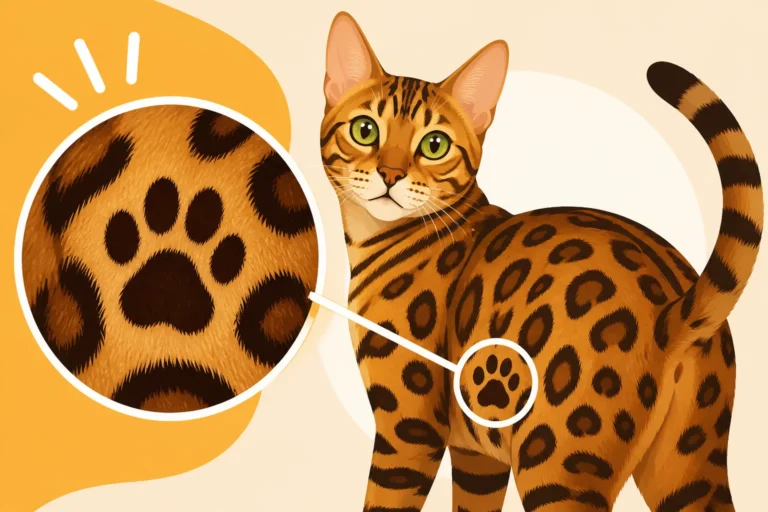
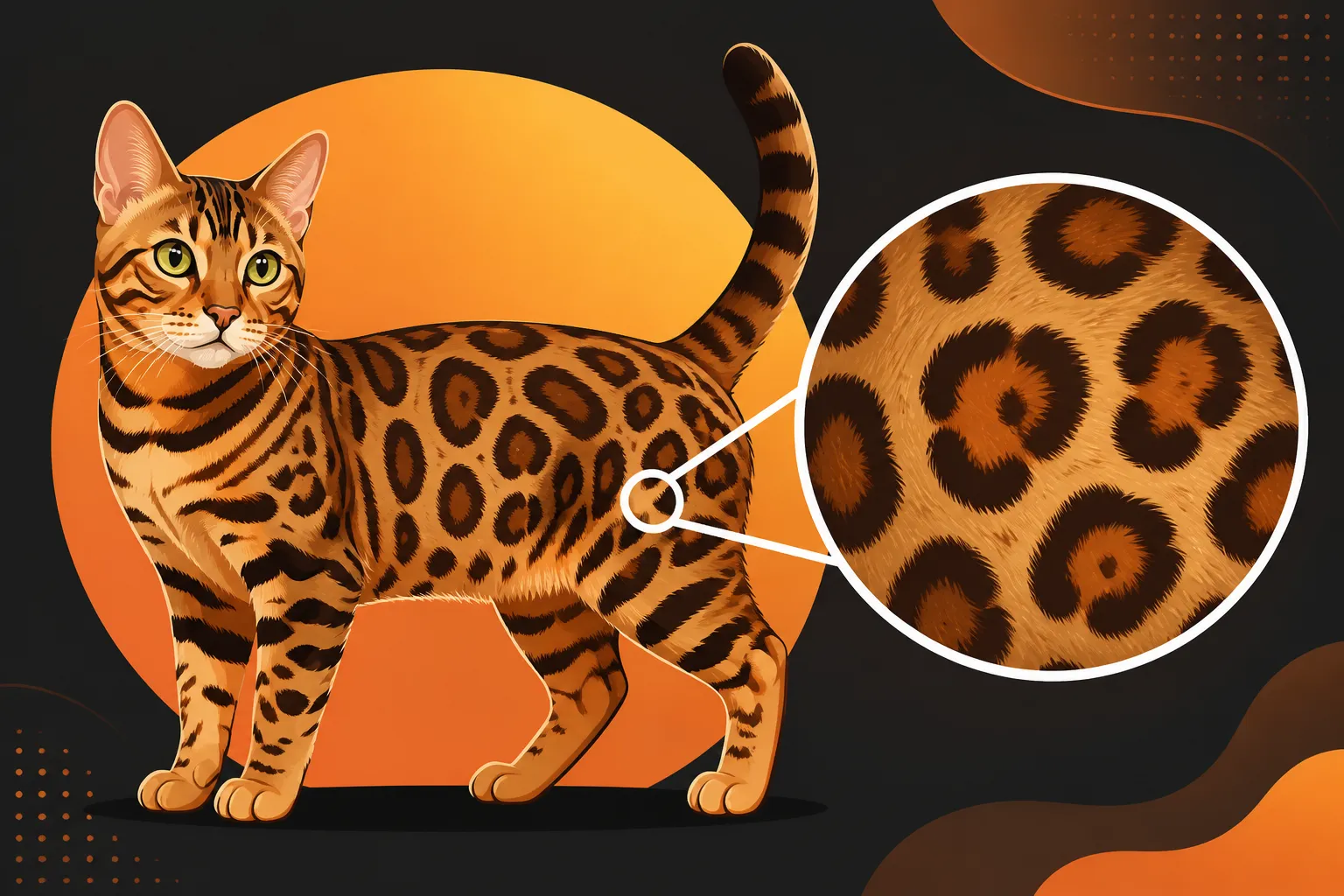
A rosette is a marking made up of more than one shade of color. Instead of a single solid spot, it usually has a darker outer edge and a lighter or differently colored area inside. A clouded rosette has a less sharply defined look: the center may appear softly mottled, shaded, or blended, and the outline may not form a neat ring.
Imagine looking at a Bengal’s side in natural light. A crisp, donut-like rosette might look like a dark circle around a clearly contrasting center. A clouded rosette may look more like a patch of changing color, with its edges and interior blending into one another. It can still be a rosette; it simply has a softer, less graphic appearance.
The word “clouded” describes how the marking looks, not a separate coat color or health condition. It is also a descriptive term rather than a perfectly fixed label: people may use it a little differently when talking about individual cats. That is one reason photos of Bengal patterns can be confusing. Lighting, coat color, and the angle of a picture can all make a marking look sharper or softer than it does in person.
How clouded rosettes differ from other Bengal markings
Bengal coats can have spots, rosettes, or marbled patterns. A single spot is generally a solid marking. A rosette has more than one tone within the marking, often with a darker border and a contrasting center. Marbling usually appears as flowing, connected swirls or bands across the body rather than as separate individual spots.
The distinction is easiest to see when you look at the pattern as a whole. Separate markings scattered across the sides are more likely to be spots or rosettes. Long, connected, flowing shapes suggest marbling. If you want a closer look at the basic terminology, What a Rosette Is on a Bengal Cat explains the broader category, while How Marbling Differs From Rosetting in a Bengal Cat focuses on the difference between isolated markings and flowing pattern.
| Marking type | What it often looks like | Helpful clue |
|---|---|---|
| Solid spot | One shade, with no distinct lighter center | Looks like a single-color mark |
| Clouded rosette | A multi-toned mark with a soft, blended or mottled appearance | The interior and outline may look less sharply separated |
| Donut-style rosette | A darker border around a lighter center | The outline often looks more defined |
| Marbling | Broad, flowing swirls or bands | Markings connect and move across the coat |
These descriptions are useful for understanding what you see, but a single marking may not fit a neat category in every photo. A Bengal can also have several types of markings across its coat, or rosettes that vary in shape and clarity. For an overview of the recognized coat appearance, see What a Bengal Cat Looks Like by the Standard.
How to recognize one in real life
Look at several markings, not just one
When you are trying to identify a clouded rosette, check several markings along the cat’s sides and back. One oddly shaped spot may not tell you much. Look for repeated multi-toned patches with soft or mottled centers, and compare the borders and interiors across the coat.
It helps to view the cat in daylight and from more than one angle. A photograph taken under warm indoor bulbs can flatten the contrast between shades, while strong sunlight can make darker outlines look unusually crisp. If the pattern seems different in every picture, that may reflect the lighting rather than a change in the coat.
Also keep in mind that a Bengal kitten’s markings can look less distinct while its coat is developing. Kittens may have a softer or fuzzier-looking coat for a period, which can make the pattern harder to read. As the coat changes, the markings may appear clearer. That does not mean every kitten’s pattern will develop in the same way or become a particular rosette type.
Notice contrast, shape, and pattern flow
A few practical questions can help you describe what you see:
- Does the marking have more than one shade?
- Is it separate from nearby markings, or does it flow into a larger pattern?
- Does the outline look crisp, or does it blend softly into the surrounding coat?
- Is the center mottled or shaded rather than a simple, clearly defined patch?
If the mark has multiple tones but looks soft and blended, “clouded rosette” may be a useful description. If the markings join into broad, connected swirls, “marbled” may be a better fit. If the mark appears to be one solid shade, it may be a spot rather than a rosette.
These are visual clues, not a formal test. Bengal coat patterns have natural variation, and different observers may use different descriptive terms for markings that sit between familiar examples. For more pattern comparisons, Which Rosette Type Judges Prefer in a Bengal Cat discusses the qualities people often look at when comparing rosettes.
What the term means and what it does not mean
It describes appearance, not pedigree or health
Calling a marking a clouded rosette tells you about how part of the coat looks. By itself, it does not confirm a cat’s pedigree, breed registration, or ancestry. A spotted domestic shorthair can have an attractive pattern, too, and appearance alone cannot reliably prove that a cat is a Bengal. If you are trying to determine whether a cat is a Bengal, Whether a Spotted Domestic Shorthair Is a Bengal Cat covers why pattern is only one piece of the puzzle.
The term also does not indicate a medical problem. “Clouded” refers to the blended appearance of the marking, not cloudiness in the eyes or a change in the cat’s skin. If you notice a sudden coat change, hair loss, irritation, or a new skin lesion, that is a separate issue worth discussing with a veterinarian rather than interpreting as a pattern feature.
Nor does the term automatically mean a cat is show quality. Coat pattern is only one aspect of how a Bengal is assessed, and descriptions used casually by owners are not the same as a full evaluation against a breed standard. If you are comparing cats, consider overall health, temperament, care needs, and reliable background information alongside appearance.
It is not a grooming requirement
A clouded rosette does not need special grooming to keep its shape. The marking is part of the coat’s natural color pattern; brushing cannot sharpen its edges or change its colors. Routine care is mainly about keeping the coat and skin in good condition, not enhancing individual markings.
If your Bengal dislikes being brushed, a gentle grooming glove or soft brush may be easier to introduce than a long grooming session. Keep the experience brief and positive, and stop if your cat becomes uncomfortable. When comparing grooming items at a pet retailer such as Chewy, focus on the tool’s softness and whether your cat tolerates it, rather than any promise that it will improve the pattern. Chewy is one place owners may browse for basic grooming supplies, but the best option is the one your cat accepts safely.
Avoid bathing or brushing more often just to make the coat look more dramatic. A clean, healthy coat can make natural contrast easier to see, but the markings themselves do not need treatment. If you are unsure whether a change is normal, check the skin and coat rather than relying on the pattern name. For broader coat-care context, Why a Bengal Cat's Coat Feels Like Nothing Else describes the distinctive feel people often notice.
Questions Bengal cat owners often ask
Are clouded rosettes rare?
There is no simple answer based on the label alone, partly because “clouded rosette” is used descriptively and may not mean exactly the same thing to every person. Bengal markings vary from cat to cat, and a breeder, owner, or enthusiast may describe the same soft-edged marking differently. A photograph can also exaggerate or hide the effect.
If you are choosing a kitten, ask the breeder to show clear, recent photographs in ordinary lighting and explain how they describe the kitten’s pattern. It is reasonable to ask what the parents’ coats look like, too, while remembering that a kitten’s markings do not necessarily copy one parent exactly. A pattern name should not replace questions about health, socialization, and the kitten’s living conditions.
Can a clouded rosette become more defined?
A marking may look different as a kitten’s coat develops, and the appearance can vary with lighting, coat condition, and season. But there is no reliable way to promise that a particular clouded rosette will become a crisp, sharply outlined shape. Coat pattern is not something that can be trained or groomed into a different form.
If you are comparing photos over time, try to use similar lighting and angles. A quick phone picture in a dim room may make markings look dull, while bright direct light can increase apparent contrast. For a fair comparison, look at several parts of the coat rather than judging one marking in isolation.
Does the name affect a Bengal’s value?
A label by itself does not provide a dependable measure of a cat’s quality or value. People may have personal preferences for particular rosette shapes, contrast, or overall pattern flow, but those preferences do not tell you whether a cat is healthy, well cared for, or a good fit for your home.
When evaluating a breeder or kitten, prioritize documented health information, the cat’s temperament, and a thoughtful match with your household. A visually striking coat can be lovely, but daily life with a Bengal also involves activity, enrichment, and long-term care. The marking is one small part of the whole cat.
If you are looking at grooming supplies while preparing for a Bengal, browsing Chewy or another retailer can help you compare basic brushes and nail-care tools; choose based on comfort and safe handling, not on claims about changing coat markings. The word “clouded” is simply a helpful way to describe a soft-looking, multi-toned rosette.
Disclaimer
This article is for general informational purposes only and does not constitute professional advice. Laws, prices and regulations vary by location and change over time. Consult a qualified professional for guidance on your specific situation.