What Separates a Pet From a Show Bengal Cat
It’s an exciting time when you’re looking to bring a Bengal cat into your life! You’ve probably seen those stunning photos online, admired their wild, exotic patterns, and imagined having such a striking companion. But then you start talking to breeders or browsing listings, and suddenly you’re faced with confusing terms like "pet quality" and "show quality." It can feel like you’re entering a secret club with its own language, and it leaves you wondering if a "pet quality" cat means you’re settling for something less. This guide is designed to cut through that jargon, explaining exactly what these terms mean, what the differences entail, and ultimately, what you should prioritize when choosing your incredible Bengal.
Understanding the Bengal Breed Standard: The Gold Standard for Show Cats
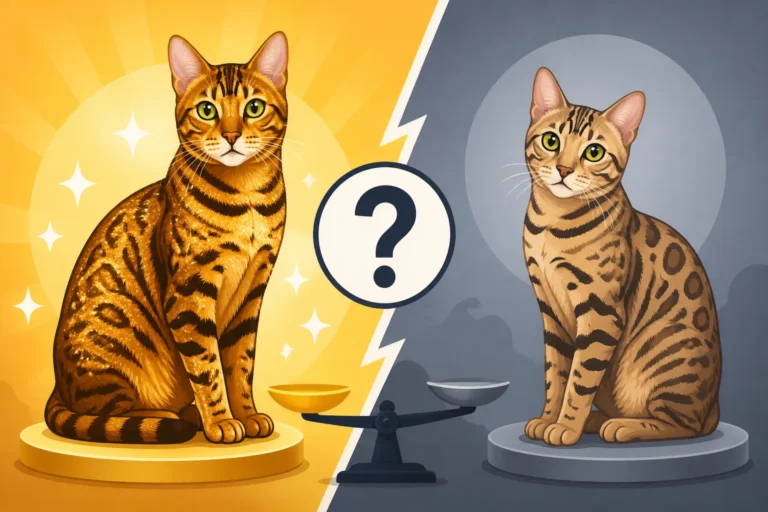
When breeders talk about "show quality," they're referring to how closely a particular Bengal cat aligns with the written breed standard established by feline registries like The International Cat Association (TICA). This standard is essentially a detailed blueprint, describing the ideal Bengal cat from nose to tail, encompassing everything from their head shape and eye color to the set of their ears, the length of their tail, and, most famously, their coat pattern and texture. It's a comprehensive document that outlines what a perfect Bengal should look like and behave like in the show ring.
What the Standard Demands in Conformation
The breed standard isn't just a suggestion; it's a set of precise requirements that judges use to evaluate cats in competition. For conformation, it details the size and shape of the head, advocating for a broad, modified wedge, slightly longer than wide, with high cheekbones and a strong muzzle. The ears should be small to medium, set wide apart, and ideally have those beautiful "ocelli" marks on the back, mimicking their wild ancestor. What a Bengal Cat Looks Like by the Standard is something many aspiring owners find fascinating to delve into. Even the profile is crucial, with a gentle curve from the forehead to the bridge of the nose, which itself should be rather large and broad.
Beyond the head, the body should be long and substantial, but not overtly bulky, displaying well-developed musculature. Bengals are athletes, and the standard reflects this with requirements for powerful hindquarters that are slightly higher than the shoulders, giving them that characteristic wild "prowling" gait. Legs should be medium in length, with large, rounded paws. A short, thick, low-set tail is preferred, tapering to a rounded tip. Any deviation from these ideals, even minor ones like ears that are too large or a tail that's too long, can result in points deducted in the show ring, distinguishing a "good" show cat from a "top tier" show cat.
The Nuances of Pattern and Color for the Show Ring
While a Bengal’s overall structure is vital, it's often their breathtaking coat that first captures attention. For a show quality Bengal, the pattern must be exceptionally clear, crisp, and high-contrast, whether it's spotted (rosetted) or marbled. Rosettes are particularly prized, especially those with distinct outlines, like donut rosettes, paw-print rosettes, or arrowhead rosettes, rather than simple spots. Which Rosette Type Judges Prefer in a Bengal Cat can be a rabbit hole of fascinating detail for those interested in the intricacies. The pattern should flow horizontally or randomly, rather than vertically, to avoid a "mackerel tabby" look. The belly must also be spotted, often referred to as a "whited tummy," echoing their wild lineage.
Color, too, plays a critical role. Acceptable colors generally include various shades of brown, snow (seal lynx point, seal mink, and seal sepia), and silver. Regardless of the base color, the contrast with the pattern must be stark and vivid. For example, a brown spotted Bengal should have rich black or dark brown spots on a warm, clear ground color. The coveted "glitter" gene, which gives the coat a shimmering, iridescent quality as if dusted with gold, is also highly desirable and contributes to a show cat's appeal. What the Glitter Gene Does to a Bengal Cat explains this phenomenon in more detail. A show cat's coat should also be exceptionally soft and pelt-like, lying close to the body, with minimal undercoat, reflecting their Asian Leopard Cat heritage. Fuzzies on kittens are normal, but a show kitten must clear these by a certain age to reveal their clear, defined pattern.
What "Pet Quality" Really Means: Still a Magnificent Companion
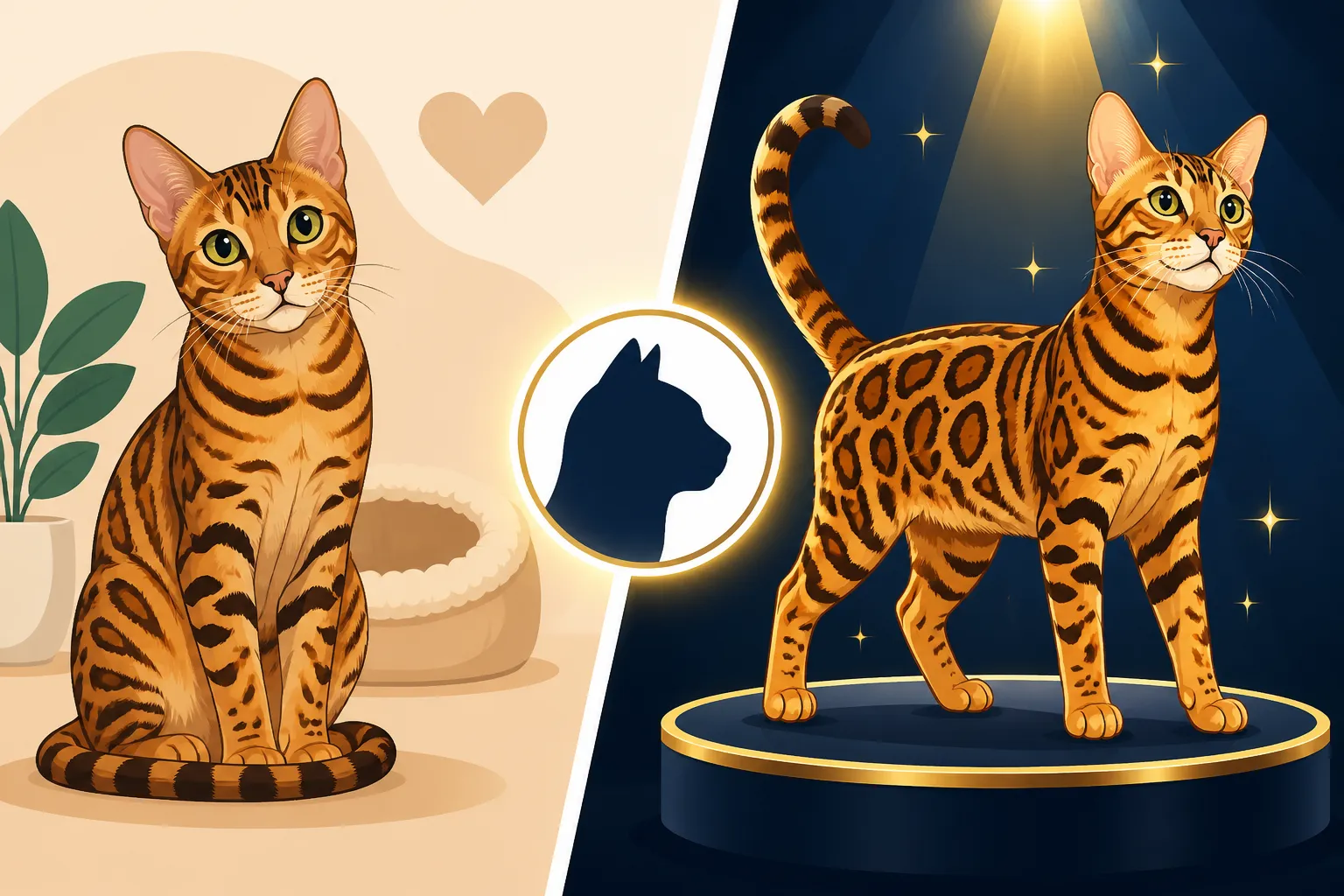
The term "pet quality" can sometimes feel dismissive, as if it implies an inferior animal. However, nothing could be further from the truth. A pet quality Bengal is typically a healthy, well-socialized cat with the wonderful, active, and affectionate temperament that makes the breed so beloved. The main difference is that they simply possess minor deviations from the stringent breed standard that would prevent them from being competitive in a show ring or might mean they shouldn't be used for breeding to preserve the exact physical traits. They are still 100% Bengal, with all the personality and beauty you expect, just without the expectation of winning ribbons.
Minor Conformation or Pattern Flaws
A "pet quality" Bengal might have a physical trait that, while perfectly harmless and endearing, doesn't quite match the breed standard. Perhaps their ears are a touch too large, or their tail is slightly longer than the ideal. Maybe their chin isn't quite as strong as a judge would prefer, or their leg length isn't perfectly proportionate. These are often subtle points that only a trained eye or an experienced breeder would notice. For instance, a beautifully patterned Bengal might have rosettes that are less perfectly formed, or the contrast might not be as dramatic as a top show cat's. A marbled Bengal might have a more vertical flow to its pattern, which is still gorgeous but not what the standard typically rewards.
These slight imperfections have absolutely no impact on the cat's health, its ability to interact with its family, or its overall quality of life. They are cosmetic distinctions relevant only to the highly specialized world of cat shows. When you visit a breeder, they'll be transparent about why a particular kitten is priced as "pet quality," often pointing out these minor deviations. You'll likely see a charming, playful kitten who looks just like the Bengal you imagined, but at a slightly more accessible price point.
Temperament and Practical Considerations for a Pet
While physical traits are the primary differentiators, temperament can sometimes play a subtle role too. A show cat often needs to be exceptionally confident, unflappable, and enjoy being handled by strangers (judges!) and exposed to noisy, busy show environments. A pet quality Bengal might have a perfectly lovely temperament but be a bit shyer, less tolerant of new situations, or simply prefer the quiet comfort of their home. This doesn't make them any less of a wonderful pet; in fact, for many families, a slightly less outgoing cat might be an even better fit.
Most breeders health-test all their breeding cats extensively, regardless of whether their offspring are destined for the show ring or a pet home. You should always expect your kitten to come from parents screened for common Bengal health issues like HCM (heart disease), PK deficiency, and PRA-b (progressive retinal atrophy). What a Bengal Cat Breeder Should Have Tested provides a comprehensive list of these crucial health screenings. A responsible breeder will ensure that all their kittens, pet or show, receive the same foundational care, vaccinations, and socialization. So, while a pet quality Bengal might not be able to compete, they’re still receiving the best possible start in life.
The Practical Differences for Owners: Cost, Expectations, and Lifestyle
Understanding the distinction between pet and show quality isn't just about cat fancy terms; it has real, tangible impacts on what you pay, what you can expect from your cat, and even how you approach their care and daily life. It’s about matching the right Bengal to your personal goals and lifestyle.
Cost and Commitment
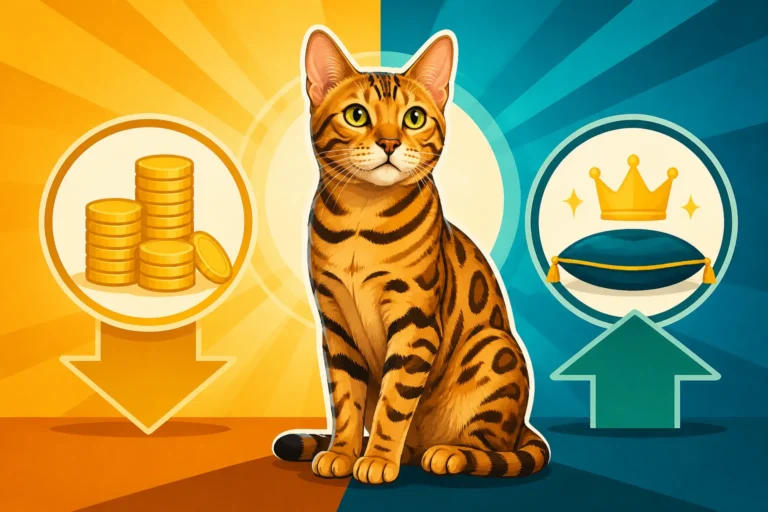
The most immediate difference many prospective owners notice is the price tag. Show quality Bengals, particularly those with breeding rights, command a significantly higher price. This reflects the immense investment a breeder makes in their lines: purchasing top quality breeding cats, extensive health testing, attending shows, and constantly striving to improve the breed. The F1 to F5 Price Ladder for a Bengal Cat often includes further details on how generation also influences cost.
Pet quality Bengals, while still representing a considerable investment compared to a domestic shorthair, will typically be more affordable. They are sold on a spay/neuter contract, meaning they are intended purely as companions and will not be used for breeding. This commitment to spaying or neutering is often part of the purchase agreement and protects the breed from indiscriminate breeding. For most families, a pet quality Bengal is a perfect choice, offering all the joy of the breed without the premium price associated with show potential or breeding responsibilities. Remember, a lower price for a pet quality Bengal doesn't equate to lower quality care or health; it just means it doesn't meet the exacting standards for competitive showing or breeding.
Lifestyle and Expectations for Your Bengal
If you acquire a show quality Bengal, especially one purchased with breeding rights, there are often inherent expectations that come with it. You might be expected to show the cat yourself, or at least keep them in a condition where they could be shown. Breeding rights come with a huge responsibility to continue health testing, select appropriate mates, and adhere to ethical breeding practices. This is a commitment not to be taken lightly, and it's a path for dedicated fanciers who want to contribute to the breed's future. Whether an Affected Bengal Cat Should Be Bred is a key ethical consideration.
For a pet quality Bengal, your main expectation is simply to provide a loving, safe, and stimulating home. Their primary job is to be your companion. You don't have to worry about maintaining a show coat (though most Bengals require very little grooming anyway!), dealing with show travel, or the complexities of breeding. You can focus purely on enjoying their vibrant personality, their endless energy, and their unique bond with you. Whether you're providing them with interactive toys or considering specialized nutrition, your focus is entirely on their well-being as a cherished family member.
Matching the Right Bengal to Your Home
When making your decision, consider your lifestyle. Do you envision a quiet lap cat, or are you prepared for an intelligent, highly active feline companion? Bengals, whether pet or show quality, are known for their boundless energy, their love of climbing, and their desire for interaction. How Much Enrichment a Bengal Cat Actually Needs is a topic every prospective owner should explore in depth. They thrive on play, puzzle toys, and often enjoy leash walks or secure catios. Even a "pet quality" Bengal will demand a lot of your time and attention.
If you have no aspirations of showing or breeding, a pet quality Bengal is undoubtedly the right choice. You get all the stunning looks and incredible personality without the added cost and pressures associated with the show world. If, however, you are passionate about the breed, have the financial means, and are prepared for the dedication required for showing and ethical breeding, then a show quality Bengal might be your calling. Regardless of the label, what truly matters is the bond you form and the love you share with your unique feline friend. For any Bengal, keeping them covered with pet insurance like Healthy Paws is a wise decision, as it protects against unexpected vet bills for a lifetime of adventure.
Here's a quick overview of the key distinctions:
| Feature | Show Quality Bengal | Pet Quality Bengal |
|---|---|---|
| Adherence to Breed Standard | Near perfect, minimal to no faults | Minor deviations from the breed standard (cosmetic) |
| Purpose | Breeding, showing, advancing the breed | Companion, family member |
| Physical Appearance | Exemplary pattern, contrast, conformation, glitter | Still beautiful, but pattern/conformation may have minor "flaws" |
| Cost | Significantly higher, reflects breeding/show potential | More affordable, no show/breeding expectations |
| Temperament (Show Specific) | Highly confident, outgoing, handles novel situations well | Excellent companion, may be shyer or less tolerant of public scrutiny |
| Breeding Rights | Often sold with full breeding rights (higher cost) | Sold on a spay/neuter contract, no breeding rights |
| Health Testing | Extensive health testing of parents (and often the kitten) | Extensive health testing of parents (and often the kitten) |
| Owner Commitment | May include showing, breed preservation, ethical breeding | Focus entirely on loving companionship and well-being |
Making Your Choice: What Matters Most for Your Bengal
Ultimately, the choice between a pet quality and a show quality Bengal comes down to your priorities, budget, and aspirations. Both are capable of being incredibly loving, engaging, and beautiful companions. The "quality" simply refers to their suitability for a very specific competitive environment, not their inherent worth as a family member.
Beyond the Label: The Importance of a Good Breeder
Regardless of whether you choose a pet or show quality kitten, the most crucial factor is finding a reputable and ethical breeder. A good breeder will prioritize the health and temperament of their cats above all else. They will conduct all the necessary health screenings, such as for How Common HCM Is in Bengal Cats, and be transparent about their breeding practices. They will ensure their kittens are well-socialized, coming from a clean, loving environment. They will be eager to answer your questions, provide references, and offer ongoing support.
A responsible breeder will also be honest about why a particular kitten is priced as "pet" or "show" quality. They won’t try to upsell you on a show quality cat if your intentions are purely for companionship. They want their kittens to go to the right homes where they will thrive, whether that home is a quiet sanctuary or a busy show circuit. They are often a valuable resource, guiding you to suitable products, from the best high-protein food options you might find on Chewy, to discussing why A Bengal Cat Needs Almost No Grooming.
Embracing Your Bengal for Who They Are
At the end of the day, when you bring your Bengal home, those labels fade away. What remains is a vibrant, intelligent, and often mischievous companion who will fill your life with joy and activity. Whether they have perfect rosettes or slightly large ears, your Bengal will jump to impressive heights, perhaps join you in the shower, and certainly keep you entertained with their clever antics. How Intelligent a Bengal Cat Is is something every owner quickly discovers.
Your “pet quality” Bengal won't know they're not a show winner, and frankly, they won't care. They'll just know they're loved, fed well, and have a human to play with. Focus on finding a Bengal that fits your family's dynamic and brings you happiness. The world of cat shows is fascinating, but for most of us, the real prize is the purring, playful cat curled up on our sofa.
Disclaimer
This article is for general informational purposes only and does not constitute professional advice. Laws, prices and regulations vary by location and change over time. Consult a qualified professional for guidance on your specific situation.