How to Tire a Bengal Cat Before Bed
Oh, the joys of living with a Bengal cat! If you're reading this, chances are you've experienced the midnight zoomies, the persistent meows at 3 AM, or the playful pounces on your toes when all you want is some peaceful slumber. It's a common frustration for Bengal owners: their boundless energy can feel never-ending, especially when your own energy levels are tanking. This guide is all about helping you understand that incredible energy and, more importantly, offering practical, realistic strategies to tire out your spirited Bengal before bed, so both of you can enjoy a more restful night.
Understanding the Bengal Cat's Nocturnal Nature and Energy Levels
It's not just "being a cat"; there's a specific reason your Bengal seems to come alive just as you're winding down. Their unique heritage plays a huge role in their activity patterns and energy needs.
Why Your Bengal Cat is a Night Owl
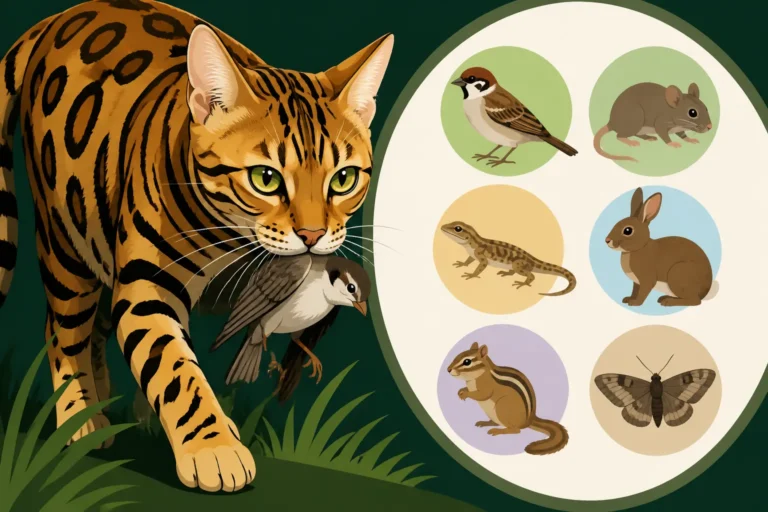
Bengals carry the DNA of their wild ancestor, the Asian Leopard Cat, which is a crepuscular hunter. "Crepuscular" simply means they're most active during the twilight hours – dawn and dusk. For our domestic Bengals, this often translates into bursts of energy in the early morning and, yes, those infamous evening and nighttime antics. Your Bengal isn't intentionally trying to disrupt your sleep; they're simply following instincts honed over millennia.
This innate drive is why you might find them staring intently out the window as dusk settles, or suddenly launching themselves across the room for no apparent reason just as you're settling in with a book. It’s their internal clock, a vestige of their wild past, telling them it's prime hunting time. Validating this natural behavior can help us approach their energy management with more understanding and less frustration. They aren't misbehaving; they're just being magnificent Bengals.
The Sheer Volume of Bengal Cat Energy
Compared to many other domestic breeds, a Bengal cat's energy levels are off the charts. They're built for action, with powerful hind legs, incredible agility, and an insatiable curiosity. This isn't a breed that's content to lounge around all day, occasionally batting at a toy. They require intense, sustained engagement to truly feel fulfilled and, crucially, tired.
Many new Bengal owners underestimate just how much exercise these cats truly need. A casual ten-minute play session with a feather wand might be enough for a typical housecat, but for a Bengal, it's just a warm-up. They need activity that challenges both their body and their incredibly clever minds. Ignoring this need can lead to destructive behaviors, vocal demands, and, inevitably, those sleepless nights for you. Understanding How Active a Bengal Cat Is is the first step in managing their exuberance. We're talking about a cat that can run on a wheel for considerable periods or scale the tallest cat tree in mere seconds.
High-Intensity Play Sessions Before Bed
The key to a calmer evening and a more peaceful night lies in harnessing and directing that immense Bengal energy during their natural activity windows. It's about working with their instincts, not against them.
Timing is Everything: The "Hunt, Catch, Kill" Cycle
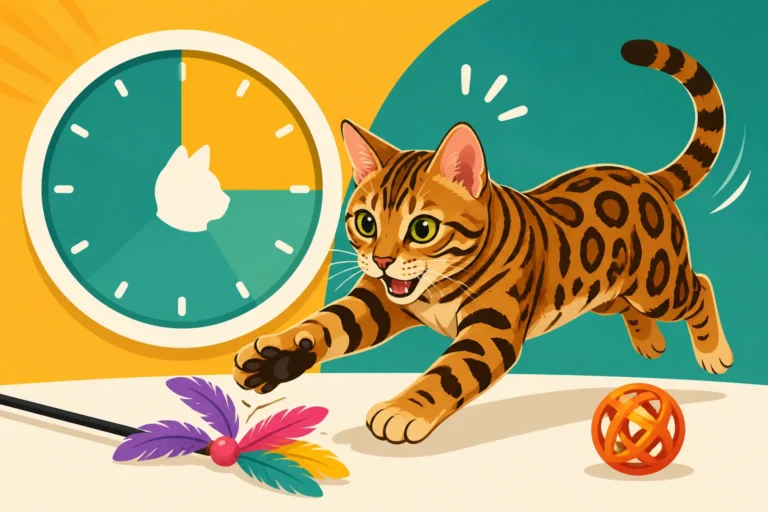
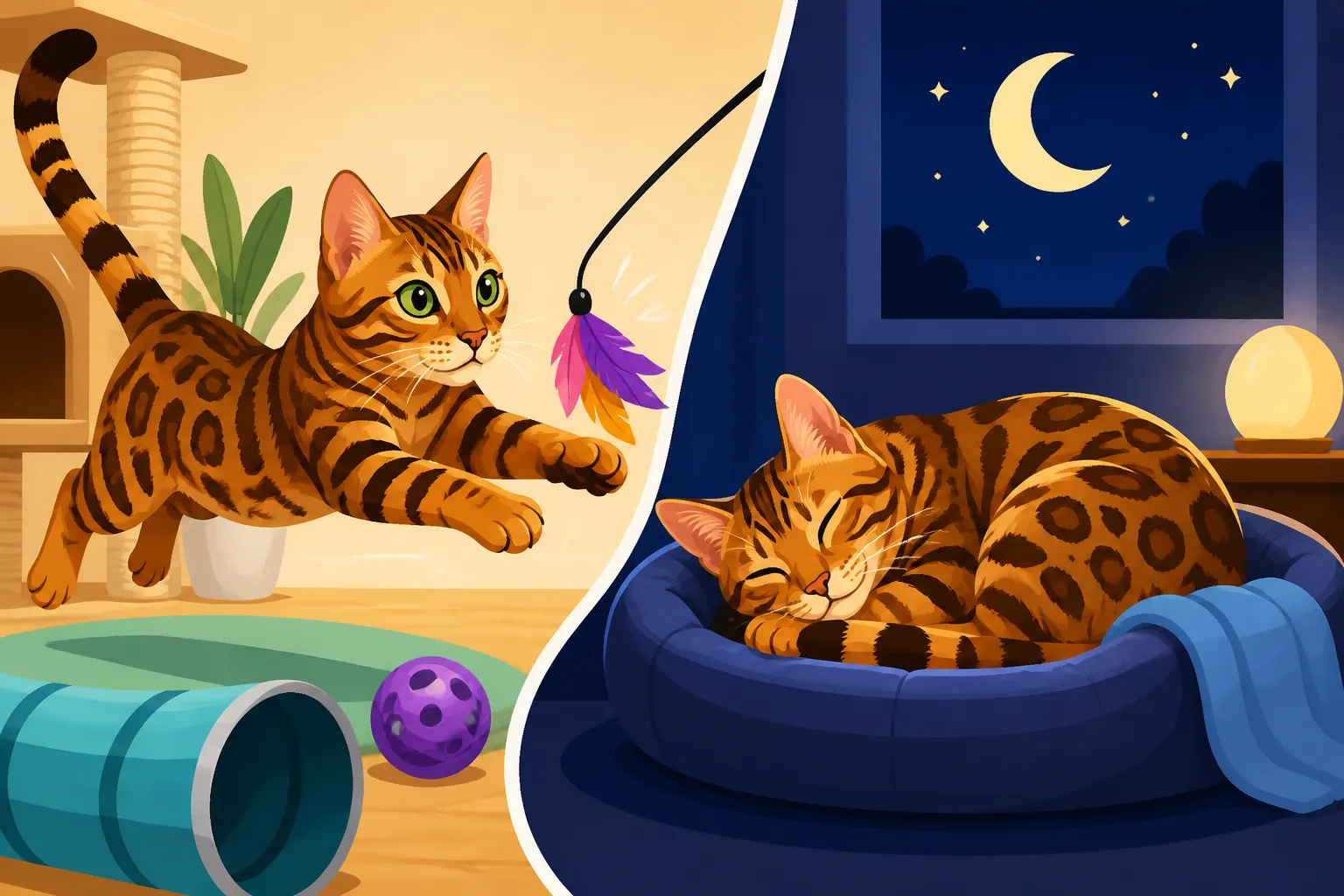
To effectively tire out a Bengal, you need to replicate the natural hunting sequence. This means a period of high-intensity play, followed by a definitive "kill," and then a reward. Schedule your primary play session for about one to two hours before your own bedtime. This allows them to burn off their peak energy, cool down, and then settle into a sleep cycle more aligned with yours.
Think of it as their "evening hunt." During this session, you're the prey, and your Bengal is the predator. Engage them fully, encouraging stalking, pouncing, chasing, and leaping. Don't just wave a toy around idly; make it dart, hide, and mimic real prey movements. The intensity should be high, pushing them to use their athletic abilities. This isn't just physical exercise; it's mentally stimulating as well, which is crucial for a breed as intelligent as the Bengal.
Engaging Toys for Maximum Exhaustion
Not all cat toys are created equal, especially when it comes to the formidable Bengal. You'll need durable, engaging toys that can withstand their powerful jaws and relentless play. Wand toys, especially those with real feathers or tough, fabric "prey" attached, are often a Bengal's favorite. They allow you to control the movement, mimicking erratic prey behavior that captivates their attention. Look for wands with long, flexible rods that allow for wide, sweeping movements, compelling your Bengal to leap and run. Finding one that can truly stand up to a Bengal's enthusiasm is key, as Which Wand Toy a Bengal Cat Destroys Fastest is a common complaint among owners.
Interactive toys are also fantastic. Laser pointers can be great for getting them running, but it's vital to always end a laser session by directing the beam onto a physical toy or treat that they can "catch" and sink their teeth into. This prevents frustration from never truly capturing their "prey." Automated toys that move unpredictably can also be a hit, providing mental and physical stimulation even when you're busy. You can often find a fantastic array of these durable and interactive options on Amazon, where reviews from other Bengal owners can guide your choices.
Structured Play Routines
Consistency is your best friend when it comes to managing a Bengal's energy. Establish a routine for their high-intensity play. For example, a 15-20 minute session an hour or two before bed can make a world of difference. During this time, make sure you are actively involved. Drag the wand toy under furniture, let it "escape" up a cat tree, and really make them work for it. The goal is to get their heart rate up and their muscles engaged.
At the end of the session, let them "catch" the toy and "kill" it. Allow them to gnaw on it for a moment, feeling the satisfaction of a successful hunt. Then, put the toy away. This signals the end of hunting time and prevents them from obsessing over it or trying to "hunt" it on their own after you've gone to bed. A structured play session also helps reinforce your role as the provider of fun and challenge, strengthening your bond. If you have multiple Bengals, ensure each cat gets individual play time if they prefer, or set up group play that encourages healthy competition without aggression.
Mental Stimulation and Winding Down Activities
Once the intense physical play is over, it’s time to transition to activities that engage their formidable intellect in a calmer way, helping them wind down for sleep.
Puzzle Feeders and Foraging
Bengals are incredibly smart, and their minds need just as much exercise as their bodies. Puzzle feeders are an excellent way to tap into their natural problem-solving skills and foraging instincts. Instead of just putting their dinner in a bowl, scatter it in a few puzzle feeders around the house or hide small portions of kibble in different safe spots. This makes them "hunt" for their food, turning mealtime into a stimulating activity rather than a quick gobble.
There's a huge variety of puzzle feeders available, from simple treat-dispensing balls to more complex mazes. Start with something easy and gradually increase the difficulty to keep them engaged. This kind of mental work is surprisingly tiring for cats, much like how a challenging puzzle can leave us feeling mentally fatigued. You can explore many different types of puzzle feeders on Amazon, finding options that challenge your Bengal's cunning and dexterity. This can be a great way to engage them post-play without further amping up their physical energy. Indeed, finding Which Puzzle Feeder Beats a Bengal Cat can be an entertaining challenge for both of you!
Clicker Training and Tricks
Who says only dogs can learn tricks? Bengals are often highly trainable and thrive on positive reinforcement. Teaching them commands like "sit," "stay," "fetch," or even more complex sequences using a clicker can be incredibly rewarding for both of you. These short, focused training sessions before bed can provide significant mental exercise. Think about it: they're concentrating, problem-solving, and engaging with you on a deep level.
Not only does clicker training tire them out mentally, but it also strengthens your bond and builds their confidence. Plus, it’s just plain fun to watch a Bengal learn to high-five or jump through a hoop! Keep sessions short, positive, and end on a high note before your Bengal loses interest. This isn't about rigid obedience; it's about channeling their intelligence into constructive, calming activities. For tips on specific commands, you might find articles like How to Teach a Bengal Cat to Sit quite helpful.
Calming Rituals
After all the excitement of hunting and mental games, a winding-down ritual is essential. This helps signal to your Bengal that the active part of the day is over and it's time to relax. A small, high-protein meal after their intense play and puzzle solving can mimic the satisfaction of a successful hunt, leaving them feeling full and content. This satiation can often lead to a natural desire for rest.
Follow up with some quiet cuddle time, if your Bengal is a lap cat, or a gentle grooming session. Even if your Bengal barely needs brushing, a soft rub-down with a grooming mitt can be a soothing experience. The Grooming a Bengal Cat Will Actually Sit Still For might be minimal, but the tactile sensation can be calming. Create a consistent, peaceful routine that your Bengal learns to associate with bedtime. This predictability is incredibly reassuring for them and helps them transition from "hunt mode" to "sleep mode."
Creating a Sleep-Conducive Environment
Even with the best play and winding-down routine, a Bengal's environment plays a significant role in how well they sleep through the night. Making your home a haven for rest can be a game-changer.
Vertical Space and Safe Havens
Bengals are climbers by nature, loving to survey their domain from on high. Providing ample vertical space in your home is not just about enrichment; it's about giving them safe, elevated spots where they can feel secure and relax. Tall cat trees, wall-mounted shelves, and cat "superhighways" provide excellent outlets for their climbing instincts during the day, which in turn can lead to less restless energy at night. When you consider How High a Bengal Cat Can Jump, you realize these structures need to be substantial.
These elevated spots also serve as perfect napping perches. Ensure there are comfortable beds or soft blankets on these high platforms where your Bengal can retreat and feel safe while they snooze. A catio, if you have one, also acts as a fantastic safe outdoor space for daytime exploration and napping, burning off energy and providing sensory input that keeps their minds engaged. Providing enough How Much Vertical Space a Bengal Cat Needs is crucial for their overall well-being and helps them feel secure enough to rest.
Minimizing Overnight Disturbances
To encourage your Bengal to sleep through the night, try to minimize any potential disturbances in their environment. This means dimming lights, ensuring the house is quiet, and securing anything they might try to "play" with during the night. Bengal cats are famously adept at opening cabinets, drawers, and even doors. How to Cat Proof Cabinets From a Bengal Cat is essential to prevent them from getting into mischief and waking you up. Child locks or magnetic latches can be your best friends here.
If your Bengal is particularly disruptive at night, you might consider creating a designated "cat room" for them. This doesn't have to be a permanent solution, but a space where they have all their necessities – litter box, water fountain, comfy bed, a few approved toys – and can safely be sequestered for a few hours without being able to wake you. This isn't about punishment but about managing nocturnal energy to ensure everyone gets needed rest.
The Role of a Catio or Enriched Indoor Space
A catio is truly one of the best investments a Bengal owner can make for their cat's overall well-being and, by extension, their own sleep. A securely enclosed outdoor space allows your Bengal to experience the sights, sounds, and smells of nature without the dangers of free-roaming. This natural stimulation during the day can significantly reduce pent-up energy that might otherwise manifest as nighttime restlessness. It gives them a "job" to do during daylight hours, observing birds, chasing bugs, and soaking up the sun. Why a Catio Is the Answer to a Bengal Cat is a sentiment many happy owners share.
If a catio isn't feasible, ensure your indoor space is as enriched as possible. This means investing in good quality cat trees, climbing shelves, and perhaps even a cat wheel. Many Bengals absolutely adore a cat wheel, running off excess energy like a hamster on a wheel. It's a fantastic outlet for their need to run and sprint. Finding a suitable wheel, often available on Amazon, can be a game-changer for their daily exercise routine and, consequently, their nighttime calm. Regular use of a cat wheel, as explored in How Often a Bengal Cat Uses a Cat Wheel, can contribute immensely to their overall physical fitness and help them settle down more easily when evening comes.
Here's a quick look at how different activities can help you tire out your Bengal:
| Activity Type | Energy Type Tapped | Effect on Bengal Cat | Ideal Timing |
|---|---|---|---|
| High-Intensity Wand Play | Physical & Mental | Exhausts muscles, satisfies hunting drive | 1-2 hours before bed |
| Puzzle Feeders / Foraging | Mental | Burns mental energy, reduces boredom, slows eating | Post-play, before final meal |
| Clicker Training / Tricks | Mental | Stimulates intellect, strengthens bond, builds confidence | Short sessions throughout evening |
| Cat Wheel / Vertical Play | Physical | Sustained cardio, releases pent-up energy | Throughout the day, especially evening |
| Calming Cuddles / Grooming | Emotional | Promotes relaxation, signals end of activity | Immediately before final meal/sleep |
Disclaimer
This article is for general informational purposes only and does not constitute professional advice. Laws, prices and regulations vary by location and change over time. Consult a qualified professional for guidance on your specific situation.