Whether a Bengal Cat Can Be Walked in a City
The thought of taking your energetic, leash-trained Bengal cat for a walk through the bustling city streets might sound like an exciting adventure, a chance to show off your stunning companion. However, the reality of urban environments presents a unique set of challenges that can easily overwhelm even the most confident feline. This guide will delve into the complexities of city walking with a Bengal, exploring the sensory overload, safety concerns, and practical steps you can take to make it a positive experience, or help you decide if it's not the right fit for your unique cat.
Understanding the Bengal Cat's City Challenge
Your Bengal cat might be an intrepid explorer in your home or backyard, but the city is a different beast entirely. It’s a symphony of sights, sounds, and smells that can be incredibly stimulating and, frankly, terrifying for a creature whose instincts are still rooted in the wild. We need to acknowledge that what might seem like a simple stroll for us can be a high-stakes adventure for them.
The Sensory Overload of City Life
Imagine the city through your Bengal's eyes and ears. It's a constant barrage. The sudden shriek of a bus braking, the insistent blare of a car horn, the rumble of a subway passing underground – these aren't just background noise for a cat. Their hearing is far more sensitive than ours, meaning these sounds are amplified and can be genuinely startling. Then there are the smells: exhaust fumes, countless different human scents, other animals, discarded food. Their powerful sense of smell, designed to track prey in a natural environment, becomes overloaded with artificial and unfamiliar odors. Add to that the constant movement – cars zipping by, bicycles whizzing past, people rushing, children playing. All these visual stimuli require constant processing, and what a Bengal sees as a potential threat can change in an instant, triggering their innate flight response. This perpetual state of heightened awareness can be exhausting and distressing, leading to anxiety or attempts to escape.
Wild Instincts vs. Urban Environment
Let's not forget the "wild" part of the Bengal. While generations removed from their Asian Leopard Cat ancestors, those instincts are still very much present. A rustling leaf could be a mouse, a bird chirping from a tree branch could be dinner, a squirrel scampering across the sidewalk is an irresistible chase. The city, despite its concrete and steel, is full of potential "prey" that can trigger your Bengal's prey drive. If they bolt after a pigeon or a dropped piece of food, even the most secure harness can fail under the sudden force of their powerful build. This isn't just about losing them; it's about the danger of traffic, aggressive dogs, or getting tangled in their leash. Their natural agility and desire to climb can also become a problem. A tall fence or a parked van might look like an invitation to scale, rather than an obstacle, potentially leaving them stranded or in a precarious position. Trying to reconcile these deep-seated hunting and survival instincts with the artificial, unpredictable environment of a city street is where the true challenge lies.
The Unpredictable Nature of Crowds
One minute you might be walking down a quiet street, and the next, you're enveloped in a throng of people. For a Bengal cat, who often regards strangers with a healthy dose of suspicion, this can be incredibly unsettling. Sudden movements, outstretched hands, loud voices – these are all potential threats. Many people, charmed by a leash-walking cat, will want to approach and pet them. While some Bengals are social butterflies, many are not comfortable with unsolicited attention, especially from strangers. This can lead to hissing, swatting, or a desperate attempt to flee. Even if your Bengal is generally friendly, being surrounded by legs and feet can be disorienting and frightening. They might get stepped on, or simply feel trapped and vulnerable. Managing these interactions requires constant vigilance and the ability to politely but firmly advocate for your cat's space and comfort. It's a dance between enjoying an outing and protecting your feline companion from well-meaning but ultimately overwhelming human attention.
Essential Gear for City Adventures
If you're still determined to introduce your Bengal to city life, having the right equipment is paramount. This isn't just about comfort; it's about safety. Standard cat collars and flimsy harnesses simply won't cut it for a cat with a Bengal's strength and escape artistry. Investing in quality gear is non-negotiable.
The Right Harness and Leash
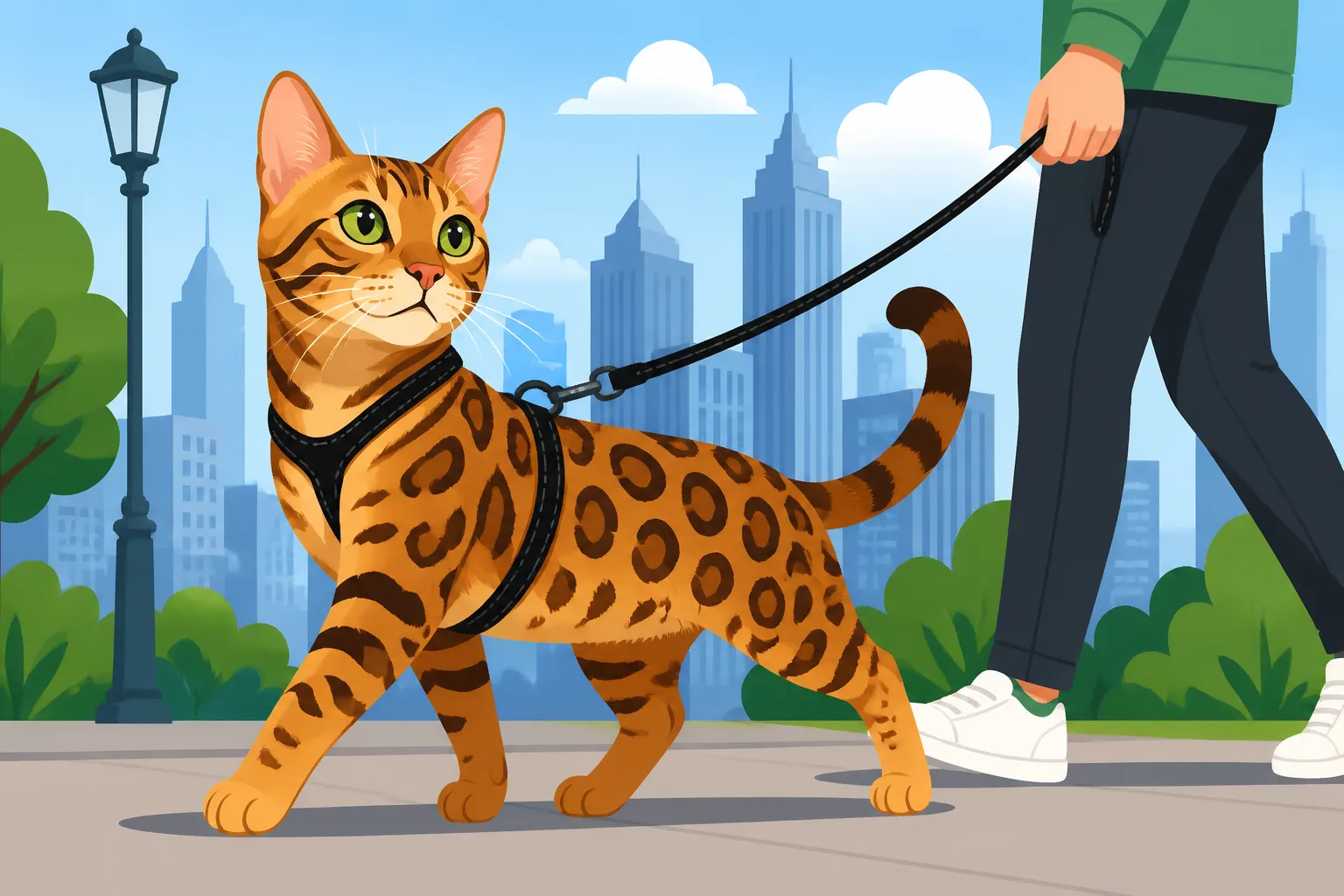
The single most important piece of equipment is a secure, escape-proof harness. Forget those flimsy H-style harnesses that cats can easily back out of; a Bengal, especially when spooked, will Houdini their way out of anything less than perfect. Look for a harness that offers multiple points of adjustment and a snug fit around both the neck and chest. Many owners swear by vest-style harnesses or those designed specifically for "escape artist" cats. These typically cover more of the cat's torso, making it much harder to slip free. Brands on Amazon often carry a variety of options, but always read reviews from other cat owners, especially those with Bengals, regarding security and fit.
Coupled with a sturdy harness, you need a reliable leash. A lightweight nylon or rope leash, about 6 feet long, is often ideal. It gives your Bengal some room to explore without you having to constantly tug, but it's short enough for you to maintain control in a crowded or dangerous situation. Avoid retractable leashes in a city environment – they offer poor control and can be dangerous if your cat suddenly bolts into traffic. Consider having a secondary, shorter leash attached as a backup, just in case. When choosing a harness, ensure it doesn't restrict movement or rub uncomfortably, especially under their "armpits," as this will make them miserable and unwilling to cooperate. Which Harness Fits a Bengal Cat can provide more detailed insights into selecting the best fit.
Safety Carriers and Backup Plans
Even with the best harness, things can go wrong. A sudden loud noise, an aggressive dog, or a child running up unexpectedly can send your Bengal into a panic. For these situations, a portable, secure carrier is essential. This isn't for the whole walk, but rather as a safe haven or a quick exit strategy. Imagine being caught in an unexpected downpour or needing to navigate a particularly crowded block; a carrier offers immediate protection and containment. You can carry a soft-sided, collapsible carrier in a backpack or a larger tote bag, ready to deploy at a moment's notice.
Beyond the carrier, you absolutely need to have robust backup plans. Your Bengal must be microchipped, and their registration details kept up-to-date. This is your absolute best chance of reunification if they do manage to get away. Furthermore, they should wear a collar with an ID tag that includes your phone number, even if it's just a break-away collar. The visual ID tag can be the fastest way for a good Samaritan to contact you. Keep a recent photo of your cat on your phone. If the worst happens and they escape, you'll be able to quickly show people what your cat looks like. Understanding Why a Bengal Cat Should Be Microchipped is crucial for all Bengal owners, especially those venturing outdoors.
Hydration and Comfort on the Go
City walks, especially on warm days, can be dehydrating and exhausting. You wouldn't go for a long walk without water, and neither should your Bengal. Bring a portable water bottle and a collapsible bowl. Many pet stores and Amazon offer travel-friendly options. Offer water regularly, even if your cat doesn't seem thirsty. Dehydration can quickly lead to overheating and lethargy, which can be dangerous for active cats.
Treats are also a non-negotiable item for city outings. They are vital for positive reinforcement. Use high-value treats to reward calm behavior, successful leash walking, and ignoring distractions. If your cat gets spooked or needs a moment of reassurance, a tasty treat can help redirect their attention and create a positive association with the experience. Consider a small fanny pack or treat pouch to keep these readily accessible. Finally, assess the weather. On hot pavement, your Bengal's paw pads can burn. During colder months, while Bengals tolerate cold better than many cats, their sparse coat might still make them uncomfortable during long exposure. How a Bengal Cat Copes With Cold provides more context on their cold tolerance. Always prioritize their comfort over your desire for an outing.
Training for Urban Exploration
Simply putting a harness on your Bengal and stepping out the door is a recipe for disaster. Successful city walks require dedicated training, patience, and a deep understanding of your cat's comfort levels. This isn't about forcing them; it's about building confidence and a positive association with the urban environment.
Gradual Desensitization and Socialization
The key to successful city walking is a slow, methodical approach to desensitization. Start in your home, getting your Bengal used to wearing the harness for short periods, gradually increasing the duration. Once they're comfortable indoors, move to a quiet, enclosed outdoor space like a fenced backyard. The goal here is to introduce them to new sounds and sights in a controlled manner. From there, progress to extremely quiet outdoor areas, perhaps a deserted park path during off-peak hours, or your driveway.
Each step should be short, positive, and end before your cat shows signs of stress. Look for flattened ears, a tucked tail, dilated pupils, or excessive vocalization. If you see these signs, it's time to go home. The idea is to build up their tolerance to city stimuli gradually. You might start by simply sitting on a park bench with your cat in their carrier, letting them observe the world from a safe distance, rewarding calm behavior with treats and praise. Over time, you can gradually increase exposure to more activity, never pushing them beyond their comfort zone. Remember, rushing this process will likely create a fearful cat who associates harnesses and outdoors with stress, making future attempts even harder.
Mastering Leash Training
Leash training a Bengal isn't just about putting a leash on them; it's about teaching them to walk with you, rather than pulling or lagging behind. Begin by allowing them to drag the leash around indoors while supervised, getting used to the feel. When you start walking, encourage them with treats and gentle verbal cues. Use positive reinforcement heavily. Every step they take calmly on a loose leash should be rewarded. Avoid yanking or pulling on the leash, as this can scare them and create negative associations.
Practice the "come" command indoors first, making it a fun game with treats. Once they've mastered it, practice in quiet outdoor areas. This command can be a lifesaver in the city, allowing you to quickly recall your cat if danger arises. How to Teach a Bengal Cat to Come details effective methods for this vital skill. Focus on short, frequent training sessions rather than long, exhausting ones. Bengals are intelligent and learn quickly, but their attention spans can vary. Consistent, positive reinforcement will yield the best results. Don't expect perfection overnight; it's a marathon, not a sprint. How Long Leash Training a Bengal Cat Takes can give you a realistic expectation of the time investment required.
Building Confidence and Trust
Your Bengal needs to trust you implicitly when out in the city. You are their protector, their guide, and their source of security. This trust is built through consistent, positive experiences. Never force your cat into a situation they are clearly uncomfortable with. If they freeze, try to hide, or show signs of fear, respect that. Pick them up, put them in their carrier, or simply end the walk and try again another day in a less stimulating environment.
Observe their body language constantly. Are their ears swiveling, trying to pinpoint every sound? Is their tail twitching nervously? Are they low to the ground, trying to make themselves small? These are all cues that they're feeling anxious. Your job is to be attuned to these signals and act accordingly. Speak in a calm, reassuring voice. Offer comfort and physical contact if they solicit it. Positive interactions, such as discovering a new interesting smell or successfully navigating a short stretch of sidewalk with you, reinforce that you are a reliable companion. Over time, this builds their confidence not just in the environment, but in your ability to keep them safe, which is crucial for urban excursions.
Safety First: Mitigating Risks in the City
The urban jungle is full of unforeseen dangers for a small, curious cat. Even with the best training and gear, you need to be constantly aware of your surroundings and actively work to minimize risks. A momentary lapse in judgment or attention can have serious consequences.
Avoiding Dangerous Situations
Prevention is always better than cure. When planning your city walks, think strategically. Avoid peak hours when traffic and pedestrian activity are at their highest. Choose quieter streets, park pathways, or less-trafficked green spaces whenever possible. Steer clear of areas with aggressive off-leash dogs or stray cats, as confrontations can be incredibly stressful and dangerous. Remember, even friendly dogs can be too boisterous for a cat on a leash.
Be mindful of environmental hazards. Broken glass, discarded food (which might be toxic), puddles of antifreeze, or even pest control substances can all be found on city streets and are serious threats to a curious cat. Keep your Bengal away from street grates or open drains where they might fall or get stuck. Look up and around for potential dangers too – construction sites, loose wires, or anything that could startle them or fall. Your role is to act as their vigilant scout, scanning for potential trouble before it becomes an issue. This constant assessment is part of the responsibility of walking a cat in such an unpredictable environment.
Emergency Preparedness
Despite your best efforts, emergencies can happen. What if your Bengal slips their harness, or is attacked by another animal? Having a plan is crucial. If they escape, the first thing to do is stay calm and get low. Call their name in a reassuring voice. They may be hiding nearby. Have a favorite toy or treat ready to lure them out. If they run, remember their last direction and immediately start searching, informing local animal control and nearby residents. You should always have your vet's number programmed into your phone. If your cat is injured, you need immediate access to medical help.
Consider carrying a small first-aid kit designed for pets, including things like antiseptic wipes, gauze, and vet wrap for minor injuries. Knowing local emergency veterinary clinics and their routes is also smart. Always consider potential escape routes or safe zones during your walk. For instance, if you're near a quiet cafe with outdoor seating, that might be a place you can quickly duck into if your cat gets overwhelmed. Thinking through these scenarios beforehand can make a critical difference in a high-stress situation. How Far a Bengal Cat Goes If It Escapes highlights the importance of immediate action and preparation.
Legal and Community Considerations
Before you even step out the door, familiarize yourself with local leash laws and any specific ordinances regarding cats in public spaces. Some cities have strict rules about pets in certain areas, and early generation Bengals might even face specific restrictions. Whether a Bengal Cat Is Legal in Your State or Which City Ordinances Catch a Bengal Cat Owner Out can provide critical information you need to research beforehand. You don't want to inadvertently break a law or face a fine simply by taking your cat for a walk.
Beyond the letter of the law, consider community etiquette. Not everyone appreciates seeing a cat on a leash, and some people have severe allergies or phobias. Be respectful of others' space and property. Keep your cat on a short leash when passing people, especially children, and be prepared to pick them up if necessary. Clean up after your cat if they use the bathroom in a public area – though this is less common with cats than dogs, it's still responsible pet ownership. Being a good ambassador for leash-walking cats means being considerate and responsible, ensuring that your enjoyment doesn't negatively impact others.
| Hazard Type | Examples in a City Environment | Mitigation Strategy |
|---|---|---|
| Sensory Overload | Sirens, traffic, crowds, construction, unfamiliar smells | Start in quiet areas, gradual exposure, high-value treats for calm, observe body language, use carrier as a retreat. |
| Physical Threats | Cars, bicycles, aggressive dogs, stray cats, broken glass, toxic spills, sharp objects | Choose quiet routes, avoid peak hours, scan ahead for hazards, keep leash short in high-risk areas, carry pet first-aid kit. |
| Escape Risks | Sudden scares, poorly fitted harness, open gates, strong prey drive reactions (e.g., chasing a bird) | Use escape-proof harness, double-check fit, microchip, ID tag on collar, practice recall command, carry a portable carrier. |
| Social/Legal | People wanting to pet, fear of cats, local leash laws, park rules | Be aware of surroundings, politely decline interactions if cat is stressed, research local ordinances, be a responsible pet owner. |
Alternatives if City Walks Aren't a Fit
After all the preparation and training, you might find that city walks just aren't a positive experience for your particular Bengal cat, and that's perfectly okay. Every cat is an individual, and some are simply not built for the hustle and bustle of urban exploration. The good news is there are plenty of other ways to provide enrichment and outdoor enjoyment without the stress of city streets.
Secure Catios and Enclosures
For many Bengals, a catio (a safe, enclosed outdoor patio or enclosure) is the ultimate compromise. It allows them to experience fresh air, sunshine, and the stimulating sights and sounds of the outdoors without any of the associated dangers of direct exposure to the city. A catio can range from a small window box enclosure to a sprawling, multi-level structure complete with climbing shelves, scratching posts, and even small trees.
Inside a catio, your Bengal can stalk butterflies (from a safe distance!), watch birds, feel the breeze, and bask in the sun, all while being completely secure from traffic, aggressive animals, and potential escape. Many owners find designing and building a catio to be a rewarding project, and there are countless plans available online, or ready-made kits on platforms like Amazon. It gives them mental stimulation, physical activity, and a taste of the wild in a controlled environment. Why a Catio Is the Answer to a Bengal Cat delves deeper into the benefits and considerations of creating such a space. This option truly provides the best of both worlds for your adventurous feline.
Indoor Enrichment and Activities
Even if outdoor adventures are off the table, your Bengal's need for mental and physical stimulation is paramount. These cats are incredibly intelligent and active, and a bored Bengal is often a destructive Bengal. You can provide a rich and engaging environment entirely indoors. This includes vertical space – cat trees, wall-mounted shelves, and perches – that allows them to climb, observe their "territory" from above, and fulfill their natural desire to be high up. How Much Vertical Space a Bengal Cat Needs is a great resource for ideas.
Interactive play sessions, multiple times a day, are crucial. Think wand toys, laser pointers (used sparingly to avoid frustration), and puzzle feeders that challenge their intellect and prey drive. Which Puzzle Feeder Beats a Bengal Cat can help you find toys that genuinely engage their clever minds. Consider a cat wheel; these can provide an immense outlet for their boundless energy, allowing them to run to their heart's content in a safe, indoor setting. How Often a Bengal Cat Uses a Cat Wheel illustrates just how much some Bengals enjoy this specific type of exercise. Rotate toys regularly to keep things fresh and interesting, and dedicate time each day to active play that mimics hunting. A stimulating indoor environment can be just as fulfilling, if not more so, than a stressful city walk.
Understanding Your Bengal's Personality
Ultimately, the decision of whether or not to walk your Bengal in the city comes down to your individual cat's personality and temperament. Not every Bengal, despite the breed's reputation for adventurousness, will enjoy or tolerate urban outings. Some are naturally more timid, more easily startled, or simply prefer the quiet predictability of their home. Forcing a fearful cat into a high-stress situation will only lead to anxiety, fear, and a breakdown of trust between you and your pet.
Pay attention to your cat's cues. Do they seem genuinely excited by the harness, or do they slink away? Are they curious about the outdoors from a window, or do they seem content indoors? If your Bengal consistently shows signs of stress or discomfort during even short, controlled outdoor excursions, it’s a clear signal that city walking isn't for them. There's no shame in admitting that a particular activity isn't a good fit. Your primary responsibility as a pet parent is to ensure your cat's well-being and happiness. If that means sticking to indoor play, a secure catio, or quieter, less stimulating outdoor spaces, then that's the right choice for your unique companion.
Disclaimer
This article is for general informational purposes only and does not constitute professional advice. Laws, prices and regulations vary by location and change over time. Consult a qualified professional for guidance on your specific situation.