Whether a Bengal Cat Suits an Apartment
Many people fall in love with the stunning, wild look of a Bengal cat and immediately start dreaming of bringing one home. But then reality sets in: you live in an apartment. A common worry is whether such an active, intelligent, and sometimes demanding breed can truly thrive in a smaller living space without driving both you and your neighbors absolutely batty. It's a valid concern, as Bengals are not your average couch potato cats. This guide is here to provide a deep dive into whether a Bengal cat can truly suit an apartment lifestyle, outlining the challenges and, more importantly, offering practical, realistic solutions to make it work.
The Bengal Cat's Innate Drive: Why Apartments Pose a Challenge
Let's be honest, a Bengal cat isn't just a pretty face; they come with a personality and energy level that are truly in a league of their own. Their wild ancestry isn't just a distant memory; it manifests in their daily behavior, and it's something you absolutely need to factor in when considering apartment living.
High Energy and Activity Levels
If you've ever owned a regular domestic shorthair, you're probably used to bursts of play followed by long naps. Bengals, however, operate on a different frequency. These cats are incredibly active, constantly seeking engagement, and possess an almost boundless energy. They're built for movement, for exploring, for hunting, and for burning off calories. In an apartment, without careful planning, this can quickly turn into a problem.
Imagine a bored Bengal pacing your living room, unable to truly stretch its legs or engage in meaningful activity. This isn't just about a bit of zoomies; it's a fundamental need that, if unmet, can lead to frustration for both you and your feline friend. A Bengal cat's day isn't complete without vigorous play sessions that mimic hunting and stalking. They need to run, jump, and pounce, often for sustained periods. This isn't a breed that will be content with a five-minute dangle of a feather toy. You might find yourself asking How Many Hours a Day a Bengal Cat Plays and realizing your current routine just won't cut it. Their high energy means they need constant outlets, and an apartment often naturally limits these without creative intervention.
Vertical Space and Climbing Instincts
One of the most striking things about a Bengal cat is their athleticism. They are incredible climbers and jumpers, seemingly defying gravity as they scale anything and everything. This isn't just for fun; it's an instinct deeply ingrained in their DNA, harking back to their Asian Leopard Cat ancestors who used height for safety, observation, and hunting advantage. For them, vertical space is as important as horizontal floor space.
In an apartment, where floor space might be limited, the lack of appropriate climbing structures can be a huge issue. If your Bengal doesn't have designated tall places to climb, observe, and perch, they will find their own. This often means scaling curtains, scrambling up bookshelves, or perching precariously on top of doors. A Bengal can easily jump to impressive heights, often making you wonder How High a Bengal Cat Can Jump. Without purpose-built vertical territory, your furniture and decor become their personal jungle gym, which is not ideal for apartment living or your security deposit. They crave the ability to survey their territory from above, feeling secure and dominant in their environment. Providing ample How Much Vertical Space a Bengal Cat Needs is not a luxury; it's a necessity for their psychological well-being.
Vocalization and Noise
Another aspect of Bengal cats that often surprises new owners, especially those in apartments, is their vocal prowess. They aren't quiet, demure creatures. Bengals are known for being quite vocal, expressing themselves with a wide range of chirps, trills, meows, and even full-blown yowls. This isn't necessarily a bad thing, as it's part of their charming personality, but it can be a significant consideration in an apartment building with thin walls and close neighbors.
Their vocalizations aren't always a gentle purr or a polite meow for food. Sometimes, they are loud, insistent demands, especially if they are bored, lonely, or feel their needs aren't being met. Imagine a Bengal yowling at the door at 3 AM because they want to play, or continuously vocalizing to get your attention. While you might find it endearing (or at least tolerable), your neighbors downstairs or next door might not. Understanding How Loud a Bengal Cat Is is crucial. This isn't just about their regular communication, but also about the potential for distress calls or demanding vocalizations when they are under-stimulated. It's not uncommon for a Bengal to make sounds that genuinely echo their wild ancestry, which can sound quite startling in a quiet apartment hallway.
Maximizing Apartment Space for a Bengal Cat's Well-being
Living in an apartment with a Bengal cat doesn't mean you're doomed to a life of destruction and noise. It simply means you need to be more intentional and creative with how you utilize your space and provide enrichment. The key is to think vertically and intelligently about engaging their minds and bodies.
Creating a Vertical Wonderland
Since Bengals love to climb, your apartment needs to transform into a multi-level playground. Don't just think about floor space; look up! Walls are prime real estate for Bengal cat enrichment. Investing in tall, sturdy cat trees is a must. These aren't just decorative items; they are essential tools for a Bengal's mental and physical health. Look for trees that are stable, have multiple levels, and ideally reach near the ceiling, giving them a sense of height and dominance. Brands like Amazon offer a wide variety of options that can fit different budgets and aesthetics.
Beyond cat trees, consider installing wall-mounted shelves, perches, and even cat "superhighways" or modular climbing systems. These allow your Bengal to traverse your walls, exploring new heights and pathways without taking up valuable floor space. You can create a circuit around a room, linking different shelves and perches, which provides both exercise and mental stimulation. Thinking about How to Build Shelves for a Bengal Cat can be a fun DIY project, or you can find ready-made kits. Make sure everything is securely mounted, as a leaping Bengal can exert a surprising amount of force. A quality Which Cat Tree a Bengal Cat Needs will be tall, sturdy, and offer various textures for scratching and climbing.
Unleashing Energy Indoors: Exercise and Play
Since outdoor adventures might be limited in an apartment, you need to bring the excitement indoors. This means committing to regular, interactive play sessions that truly tire your Bengal out. Think about quality over quantity here, but also recognize that "quality" for a Bengal often means significant time. Use wand toys with feathers, crinkly balls, or even laser pointers (used carefully, always ending with a tangible catch to prevent frustration). Engage their hunting instincts by hiding treats or scattering food for them to "forage" for, rather than just putting it in a bowl.
A dedicated exercise wheel is another fantastic investment for apartment-dwelling Bengals. These large, safe wheels allow your cat to run to their heart's content, burning off excess energy without needing vast amounts of space. Many owners find their Bengals take to these naturally, using them for extended periods throughout the day. It’s amazing to see How Often a Bengal Cat Uses a Cat Wheel. While they might seem like a luxury, for an apartment Bengal, they can be a game-changer in preventing boredom and destructive behaviors. Don't forget simple, engaging toys they can play with alone, but always prioritize direct interaction from you.
Mental Stimulation through Puzzle Feeding
Bengal cats are incredibly intelligent creatures, and their minds need just as much exercise as their bodies. A bored Bengal mind can quickly turn to mischief. Puzzle feeders are an excellent way to engage their problem-solving skills and make mealtime an enriching activity rather than a quick gobble. Instead of simply placing food in a bowl, use puzzle feeders that require them to manipulate objects, solve a small challenge, or work for their kibble.
This taps into their natural foraging instincts and can significantly reduce boredom. You'll be surprised Whether a Puzzle Feeder Tires a Bengal Cat – it absolutely can! There are many types available on Amazon, from simple treat balls to more complex multi-stage puzzles. Rotate these feeders to keep things interesting. You can also hide their kibble or treats around the apartment, encouraging them to hunt and explore. This active engagement during feeding can help prevent them from getting bored and looking for less desirable ways to occupy themselves, like opening cabinets or exploring places they shouldn't.
Managing Typical Bengal Behaviors in an Apartment
Even with the best intentions and clever setups, Bengal cats have certain innate behaviors that need careful management in an apartment setting. Understanding these and having strategies in place will save you a lot of headaches (and potentially your furniture).
Addressing Destructive Tendencies
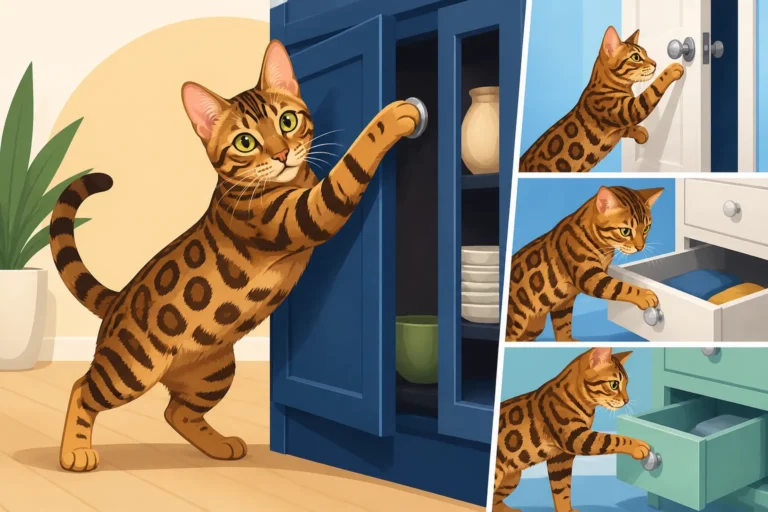
A bored or under-stimulated Bengal can quickly become a destructive force. This isn't out of malice, but simply because they need an outlet for their energy and intelligence. Common destructive behaviors include scratching furniture, chewing on plants or electrical cords, and opening cabinets and drawers. It's often a case of What a Bored Bengal Cat Destroys – anything that seems remotely interesting or challenging.
To combat scratching, provide multiple, varied scratching posts. Bengals typically prefer tall, sturdy posts that allow them to stretch fully. Offer different materials like sisal, cardboard, and carpet. Place them strategically near entryways or next to furniture they've shown interest in scratching. For cabinet-opening antics, child-proof locks or magnetic latches can be effective solutions. Learning How to Cat Proof Cabinets From a Bengal Cat is often an essential skill for Bengal owners. Keep valuable or dangerous items locked away, and ensure all electrical cords are secured or covered to prevent chewing. Consistent redirection and positive reinforcement for appropriate scratching and playing are key.
Mitigating Excessive Vocalization
While some Bengal vocalizations are normal, incessant or demanding yowling can become a problem, especially if it disturbs neighbors. The first step is always to rule out any underlying medical issues with a vet check. Once health is cleared, persistent vocalization is often a sign of unmet needs: boredom, loneliness, hunger, or a desire for attention.
If your Bengal is vocalizing excessively, assess their daily routine. Are they getting enough play and mental stimulation? Are you providing enough consistent attention? Sometimes, we inadvertently reinforce demanding behavior by immediately responding to every meow. Try to anticipate their needs and initiate play or feeding before they start demanding. If they are yowling for attention, try to ignore it until there's a brief pause, then reward the quiet behavior. Never punish vocalization, as it can create anxiety. Sometimes, the wild-sounding cries might just be their unique way of communicating, and you'll learn to distinguish between a "hello" and a "play with me NOW!" But if it’s truly excessive, a dedicated strategy to How to Stop a Bengal Cat Demanding is necessary.
The Importance of a Catio or Leash Training
One of the biggest limitations of apartment living for a Bengal is the lack of safe outdoor access. These cats crave exploration and the sensory richness of the outdoors. While completely free-roaming is generally not recommended for Bengals due to their value, safety, and predatory instincts, providing some safe outdoor experience is incredibly beneficial.
A "catio" (cat patio enclosure) is an ideal solution for apartment dwellers. Even a small balcony can be converted into a secure, enriching catio where your Bengal can safely enjoy fresh air, sunshine, and observe the world without danger. This provides vital mental stimulation and a change of scenery. You’ll quickly understand Why a Bengal Cat Needs a Catio – it fulfills a deep, primal need. If a catio isn't possible, leash training is another excellent alternative. Bengals are often highly trainable and many enjoy walking on a harness and leash, allowing them to explore safe outdoor environments under your supervision. Start harness training early and make it a positive experience. This allows them to experience new sights, sounds, and smells, which can be incredibly enriching and help burn off energy.
Lifestyle Considerations for Apartment Dwellers with a Bengal
Ultimately, successfully keeping a Bengal cat in an apartment isn't just about the physical space; it's about the lifestyle you can provide. Your commitment, patience, and ability to integrate their unique needs into your daily routine are paramount.
Time Commitment for Play and Interaction
This is perhaps the most crucial factor for apartment-dwelling Bengal owners. A Bengal cat is not a low-maintenance pet you can leave alone for long stretches, especially in a confined space. They demand a significant amount of your time and attention for interactive play and mental engagement. If you work long hours, travel frequently, or have a very busy social life, an apartment-dwelling Bengal might not be the right fit unless you have robust solutions for their care.
You need to schedule dedicated playtimes every day. These aren't optional; they are essential for your Bengal's well-being. Without sufficient interaction, they will become bored, frustrated, and potentially destructive. Consider if your schedule truly allows for this level of commitment. An adult Bengal can feel lonely and under-stimulated if left alone for extended periods. Reflect on How Long a Bengal Cat Can Be Left Alone and be realistic about your availability. It often takes two or more dedicated sessions of active play daily, sometimes totaling over an hour, to truly tire out a Bengal.
Adapting to Apartment Rules and Neighbors
Before bringing a Bengal into an apartment, thoroughly review your lease agreement and HOA rules regarding pet ownership, especially for "exotic" or hybrid breeds. Some apartments may have size or breed restrictions, or even outright bans on certain hybrid cats. It's better to clarify this upfront than face eviction or having to rehome your beloved cat later.
Beyond official rules, consider your neighbors. As discussed, Bengals can be vocal. While you can manage excessive vocalization, some level of distinct vocalization is part of their charm. If you have very sensitive neighbors or thin walls, this is a factor to weigh. Be proactive in managing noise, and if possible, introduce yourself to close neighbors so they know you're a responsible pet owner. Investing in good soundproofing or strategic placement of cat trees away from shared walls might also be helpful.
The Role of Companionship
For many Bengals, especially those in apartments with owners who work or are away for parts of the day, a companion animal can be a lifesaver. Another Bengal or a similarly energetic, playful cat can provide much-needed interaction and reduce feelings of loneliness and boredom. They can burn off energy together, wrestling and chasing each other, which takes some pressure off you to be their sole entertainer.
Of course, introducing a second cat requires careful planning and ensures both cats are compatible. Not all Bengals enjoy living with other cats, but many thrive with a playmate. If you're pondering When a Bengal Cat Needs a Second Cat, consider your own schedule and your Bengal's personality. If you're consistently out for more than a few hours a day, a companion can often make a huge difference in an apartment setting, helping to keep both cats stimulated and happy. Even a well-exercised Bengal can benefit from having another feline friend to interact with when you're not available.
| Aspect of Apartment Living | Challenge for Bengal Cat | Solution/Adaptation |
|---|---|---|
| Space | Limited floor area | Maximize vertical space with tall cat trees, wall shelves, cat superhighways (available on Amazon). |
| Energy Levels | Prone to boredom, destructive behavior | Daily dedicated play sessions, exercise wheel, puzzle feeders, leash walks/catio access. |
| Vocalization | Can be loud and demanding | Rule out medical issues, consistent enrichment, ignore demanding yowls, reward quiet behavior, soundproofing. |
| Destruction | Scratching, opening cabinets | Provide multiple scratching posts, use child locks on cabinets, secure cords. |
| Outdoor Access | None or limited | Build a secure catio on a balcony, consistent and positive leash training for supervised outdoor excursions. |
| Owner's Time | High demand for interaction | Prioritize daily interactive play, consider a compatible companion cat, utilize puzzle toys and automated feeders. |
Disclaimer
This article is for general informational purposes only and does not constitute professional advice. Laws, prices and regulations vary by location and change over time. Consult a qualified professional for guidance on your specific situation.