Why a Bengal Cat Kills a Hamster
It's a heartbreaking scenario many Bengal cat owners dread, or perhaps, sadly, have experienced: bringing home a new small pet, like a hamster, only to find their beloved Bengal's wild instincts kick in with devastating consequences. The truth is, a Bengal cat, for all its domestic charm and affection, carries the powerful legacy of its wild Asian Leopard Cat ancestors, and that includes a formidable prey drive that can make cohabitation with small rodents incredibly risky, if not outright impossible. This guide will delve into why this happens, what it means for your small companions, and how to prevent such a tragedy.
Understanding the Bengal Cat's Predatory Drive
When you look into the gleaming, intelligent eyes of your Bengal cat, it's easy to forget that just a few generations back, their ancestors were truly wild. This wild heritage isn't just about their stunning rosetted coat or their boundless energy; it's deeply ingrained in their very nature, especially when it comes to hunting.
The Wild Ancestry: Asian Leopard Cat's Influence
At the very heart of every Bengal cat beats the instinct of the Asian Leopard Cat (ALC). These small, nocturnal wild felines are incredibly agile and efficient hunters in their natural habitats across Asia. Their diet primarily consists of small prey animals like rodents, birds, insects, and even small reptiles. They are built for stealth, speed, and precision in capturing these fast-moving creatures. Think about their acute hearing, their powerful hind legs for pouncing, and those lightning-fast reflexes. These aren't just traits; they are survival tools honed over millennia.
Now, fast forward to your domestic Bengal. While they might be cuddled up on your sofa or chasing a feather wand, those same ancestral genes are at play. They possess the same keen senses, the same incredible athleticism, and the same innate programming to stalk, pounce, and dispatch small, scurrying creatures. It's not malice; it's instinct. It's what their wild lineage dictates, and it's a powerful drive that can be triggered by the sights, sounds, and smells of a small rodent. This isn't something that can simply be "trained out" of them because it's part of their fundamental being.
Hardwired Instincts vs. Training
Many cat owners, understandably, hope that with enough training, positive reinforcement, or early exposure, their Bengal can learn to differentiate between a pet and prey. Unfortunately, when it comes to small prey animals, this is often a dangerous misconception. A Bengal cat's predatory instinct is not a learned behavior; it's hardwired. It's like asking a retriever not to fetch or a border collie not to herd. They might learn to suppress it under direct supervision for a short period, but the instinct remains incredibly strong and can override any learned manners in a split second.
Consider a hypothetical scenario: you introduce your Bengal kitten to a hamster from a young age, and they seem to coexist. Perhaps the kitten bats at the cage playfully, but never seems aggressive. The danger lies in that "play." To the Bengal, it is a simulation of the hunt. To the hamster, it is a constant source of terror. One day, the cage might accidentally be left open, or the hamster might squeeze through a bar, and the Bengal's instinct will take over instantly. The "play" becomes real, and the outcome is almost invariably tragic for the smaller animal. No amount of "no" or time-outs will extinguish this fundamental drive when it is triggered. For more on their natural activity, read The Bengal Cat Is the Most Active Cat You Can Own.
The Thrill of the Chase
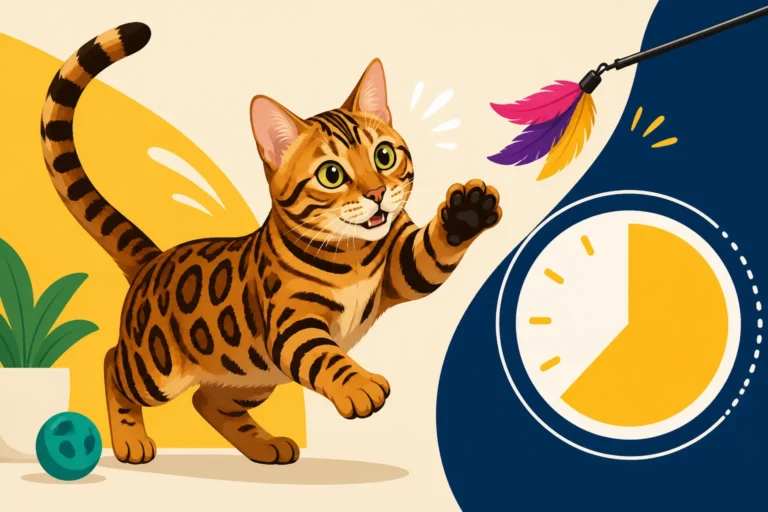
Bengals are incredibly intelligent and require significant mental and physical stimulation. Part of this stimulation comes from activities that mimic hunting. They love to chase, stalk, and capture toys. This is why interactive play is so crucial for them – it channels that innate drive in a safe, appropriate way. However, for a Bengal, the ultimate thrill is the genuine hunt.
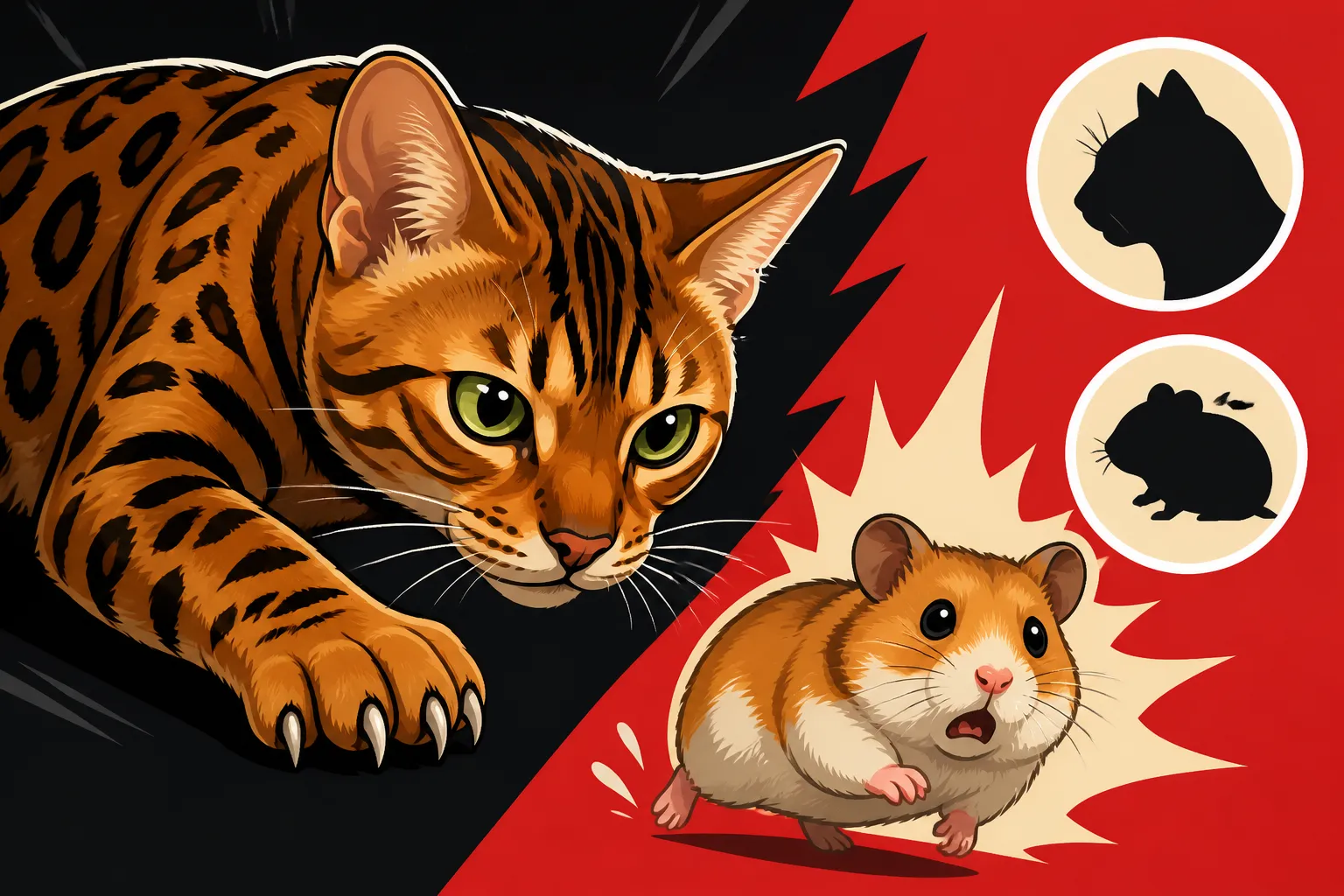
When a Bengal sees a small animal like a hamster, guinea pig, or even a bird, it doesn't just see a pet; it sees a fast-moving, squeaking, twitching target. The visual, auditory, and olfactory cues all scream "prey." For them, the act of stalking, the adrenaline rush of the chase, and the satisfaction of the "catch" are profoundly rewarding experiences. This isn't about hunger; it's about fulfilling a deeply embedded behavioral pattern. A bored Bengal, in particular, might seek out this kind of stimulation, making small, vulnerable pets even more at risk. This is why What a Bored Bengal Cat Destroys often includes things that move or can be "hunted" in a destructive way.
Why Hamsters and Other Small Rodents Are Unsuitable Companions
Given their intense predatory instincts, it becomes clear why hamsters and other tiny rodents are simply not safe around a Bengal cat. It's not a matter of "if" something might happen, but "when" or "how."
The Hamster's Natural Vulnerability
Hamsters, by their very nature, are prey animals. They are small, typically nocturnal, and have evolved to be constantly on alert for predators. Their scuttling movements, high-pitched squeaks when startled, and even their scent are all signals to a predator that they are potential food. They don't have the size, defensive capabilities, or aggressive nature to deter a cat, especially one as powerful and driven as a Bengal.
Even the most secure hamster cage, if within sight or smell of a Bengal, can be a constant source of stress for the hamster. Imagine being perpetually aware of a large predator watching you, even if behind bars. The hamster's immune system can be compromised by chronic stress, leading to illness. Furthermore, no cage is 100% escape-proof, and even a moment's lapse in judgment by a human can have irreversible consequences when a small, determined hamster and a highly motivated Bengal are in the same vicinity.
The "Play" That Turns Deadly
For many domestic cats, a small rodent might be something to bat around, a curiosity. For a Bengal, however, this "play" is typically a warm-up for the kill. Their robust build, powerful jaws, and razor-sharp claws mean that even a seemingly playful swipe can cause significant internal injury or crush a tiny hamster instantly. It's not like a playful swat at a toy mouse; their hunting mechanics are designed for efficiency.
A Bengal's "play" can involve complex predatory sequences: stalking, pouncing, batting, tossing, and then the final bite. These are all part of the natural hunting behavior of felines. A hamster, being so delicate, simply cannot withstand such interactions. What might start as a "game" for the Bengal quickly escalates, often without any warning for the human observer, into a fatal encounter for the hamster. The speed and intensity of a Bengal's attack can be truly shocking to those who haven't witnessed their raw instinct firsthand.
Risk of Injury, Not Just Death
While immediate death is the most tragic outcome, it's not the only one. Even if a hamster survives an initial attack, the injuries can be severe. Internal bleeding, broken bones, neurological damage, or deep puncture wounds from claws or teeth can lead to a slow, agonizing decline. Vets often face the difficult decision of humane euthanasia in such cases, highlighting the severity of injuries inflicted by a cat.
Beyond physical harm, the psychological trauma for a hamster in a household with a Bengal can be immense. Constant fear, even if the cat never gets direct access, affects their quality of life. This is why responsible pet ownership extends beyond preventing immediate harm; it means creating a safe, stress-free environment for all animals in your care. Trying to make it work between a Bengal and a hamster often means sacrificing the well-being of the hamster, and that's not fair to the tiny creature who relies on you for safety.
Strategies for Preventing Tragic Encounters
Knowing the inherent risks, the most compassionate and responsible course of action is to prevent any possibility of interaction between a Bengal cat and a small prey animal. This requires vigilance, careful planning, and consistent effort from everyone in the household.
Strict Separation: The Only Real Solution
When it comes to small prey animals and a Bengal cat, there is no such thing as "coexistence" without risk. The only truly safe solution is strict, absolute physical separation, 24/7. This means the small pet's enclosure should be in a room that the Bengal cat can never access. This isn't just about keeping the door closed; it might mean a room with a lock, or even a different floor of the house.
Consider a multi-level home where the hamster lives in a secure, cat-proofed room downstairs, and the Bengal has free run of the upstairs. Ensure doors have robust locks, not just handles that a clever Bengal might learn to manipulate. (Yes, Bengals can learn to open doors! Read How a Bengal Cat Opens a Door to understand just how clever they are.) If you live in a smaller home, this separation might be impractical or even impossible, and that's a crucial consideration before bringing either type of pet into your life. Never underestimate a Bengal's determination when their prey drive is activated.
Enrichment and Distraction for Your Bengal
While you cannot train away a Bengal's prey drive, you absolutely can provide appropriate outlets for it. This is where enrichment becomes vital. A well-exercised, mentally stimulated Bengal is less likely to become obsessed with forbidden "prey."
- Interactive Play: Dedicate significant time each day to interactive play with wand toys that mimic the hunt. Let them stalk, pounce, chase, and "capture" the toy. Allow them to feel the satisfaction of the kill by letting them "catch" the toy at the end of each session.
- Puzzle Feeders: Bengals are intelligent problem-solvers. Using puzzle feeders for their meals can provide mental stimulation and "hunt" for their food. There are many robust options available on platforms like Amazon that can withstand a determined Bengal's efforts. For ideas, check out Which Puzzle Feeder Beats a Bengal Cat.
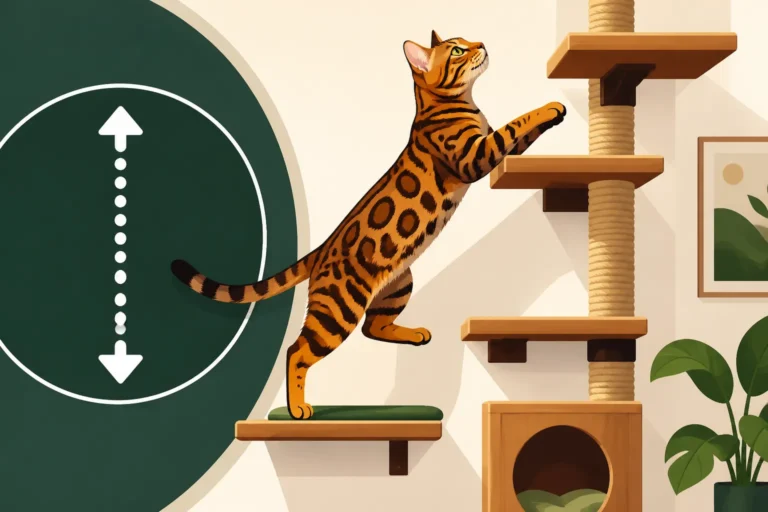
- Vertical Space: Provide plenty of climbing opportunities, tall cat trees, and wall shelves. This allows them to survey their territory from above, fulfilling another natural feline instinct.
- Cat Wheels: For an animal as active as a Bengal, a cat wheel can be a fantastic way to burn off excess energy and satisfy their need to run. It gives them an intense workout in a safe indoor environment. You can find various models on Amazon, but be sure to choose one appropriate for their size, as detailed in Which Cat Wheel Size a Bengal Cat Needs.
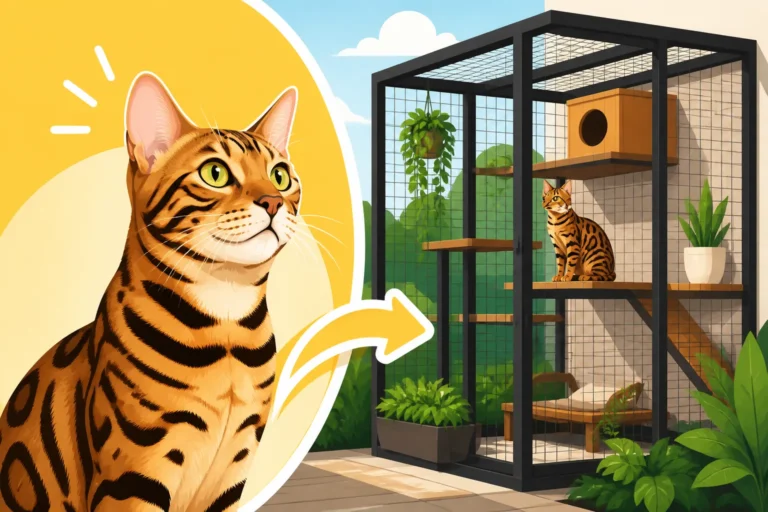
- Catios: If feasible, a secure outdoor enclosure (catio) can provide safe outdoor stimulation, fresh air, and new sights and sounds, channeling their energy away from indoor "prey." Explore Why a Bengal Cat Needs a Catio for more insights.
By keeping your Bengal engaged and providing ample opportunities to express their natural behaviors in safe ways, you reduce the likelihood of them fixating on household small pets.
Educating All Household Members
The safety of a small pet in a Bengal household isn't just up to one person; it's a collective responsibility. Every single person living in or visiting your home must understand and strictly adhere to the rules of separation. Children, especially, need clear and consistent guidance on why the Bengal and the hamster must never be in the same room, and certainly never interact.
This means:
- No unsupervised access: Absolutely no situations where the Bengal is in a room with the small pet, even if the small pet is in a cage. Accidents happen, and a cage could be knocked over, or the pet could escape.
- Reinforce rules: Regularly remind everyone about the boundaries. It's easy for complacency to set in, but even one slip-up can be fatal.
- Secure enclosures: Ensure the small pet's enclosure is not only robust but also placed in a location where the Bengal cannot possibly reach it, knock it over, or stare at it intensely, causing stress to the small pet.
It’s about understanding that these aren’t just "house rules"; they are life-saving protocols for your small pets. A Bengal's intelligence, combined with their relentless energy and strong prey drive, means that they will constantly test boundaries. How Intelligent a Bengal Cat Is can give you an idea of the mental challenges they pose.
Considering Multi-Pet Households with Bengals
While the focus here is on hamsters, the principles extend to any small, vulnerable prey animal. Understanding what makes a suitable companion for a Bengal is key to a harmonious and safe multi-pet home.
Compatibility with Other Cats and Dogs
Bengals often get along well with other cats and even dogs, particularly if introduced properly and raised together. Their high energy levels and playful nature can be a good match for another active cat, or a dog that enjoys playing and has a confident, non-prey-like demeanor. How a Bengal Cat Gets On With a Dog and How to Introduce a Bengal Cat to a Resident Cat offer excellent advice on making these introductions successful. The key difference here is size, self-defense capabilities, and the inherent perception of "prey." A dog or another large cat is typically not seen as prey by a Bengal.
The "Prey Animal" Divide
The critical distinction lies in the "prey animal" category. This includes:
- Rodents: Hamsters, guinea pigs, mice, rats, gerbils.
- Birds: Parakeets, finches, cockatiels, larger parrots.
- Small Reptiles/Amphibians: Small lizards, frogs, snakes.
- Fish: In aquariums or ponds.
- Rabbits: While larger, rabbits are still very much prey animals for cats.
For a Bengal, these animals will almost always trigger that primal hunting instinct. Their size, movement, and general vulnerability make them irresistible targets, regardless of how "tamed" or "well-behaved" your Bengal might seem. It's not a reflection of your Bengal's personality, but rather the immutable force of nature within them.
Making Responsible Choices
Ultimately, owning a Bengal cat means accepting their unique characteristics, including their strong prey drive. If you currently own small prey animals, or are considering getting one, you must honestly assess whether your home environment can guarantee their absolute safety from your Bengal. Sometimes, the most loving decision is to recognize that certain species simply cannot coexist safely under the same roof.
Responsible pet ownership is about providing a safe, enriching environment for all your animals. For a Bengal, this means lots of play, mental challenges, and appropriate outlets for their hunting instincts. For a hamster, it means a stress-free environment free from the constant threat of a predator. Attempting to force these two worlds together often leads to tragedy for the smaller, more vulnerable pet. Make choices that honor the natural needs and instincts of every creature in your care.
Bengal Cat Prey Drive Comparison
To help illustrate the differences, here's a general comparison between a typical domestic house cat and a Bengal cat when it comes to prey drive towards small rodents.
| Feature | Typical Domestic House Cat (e.g., Tabby) | Bengal Cat |
|---|---|---|
| Wild Ancestry Influence | Minimal (many generations removed from wild ancestors) | Direct and strong (Asian Leopard Cat within 3-5 generations for SBTs) |
| Prey Drive Intensity | Varies; can be moderate to high, often less persistent | Very high; deeply ingrained, relentless |
| Hunting Success Rate | Variable; may "play" with prey for longer, less efficient | High; efficient, quick, powerful, instinctive kill sequence |
| Physical Capabilities | Agile, but generally less muscular or fast than a Bengal | Extremely athletic, powerful, fast, agile, excellent jumpers |
| Response to Small Rodents | May show interest, bat, or stalk; often can be distracted | Intense focus, immediate stalking, high likelihood of escalating to kill |
| Trainability/Redirection | Can often be redirected with toys and supervision | Instincts are extremely difficult to override or suppress with training alone |
| Risk to Small Pets | Moderate to High, depending on individual cat's drive | Very High to Extreme; constant vigilance required, separation recommended |
Disclaimer
This article is for general informational purposes only and does not constitute professional advice. Laws, prices and regulations vary by location and change over time. Consult a qualified professional for guidance on your specific situation.