How to Tell a Bengal Cat From an Ocicat
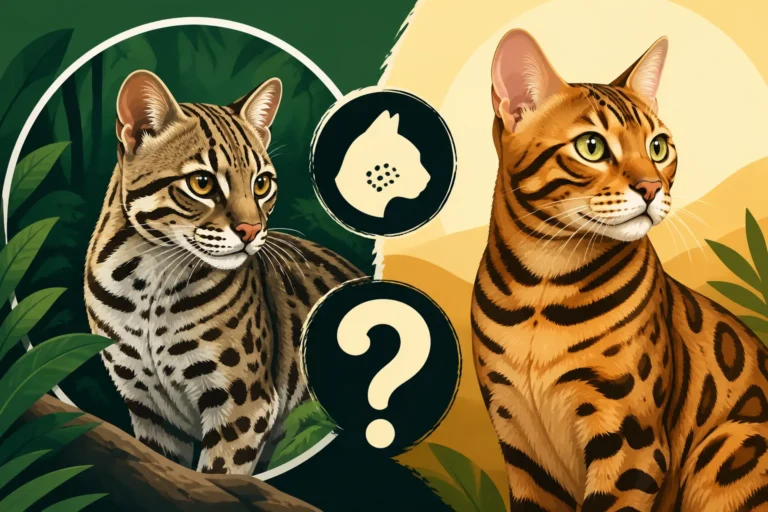
A spotted cat can look convincingly wild without being either a Bengal or an Ocicat. The confusion makes sense: both breeds have short coats, athletic bodies and distinctive markings. This guide explains the clues that help tell them apart, which features are easy to misread, and how to check a cat’s background without treating appearance as proof of pedigree.
The quickest way to tell a Bengal from an Ocicat
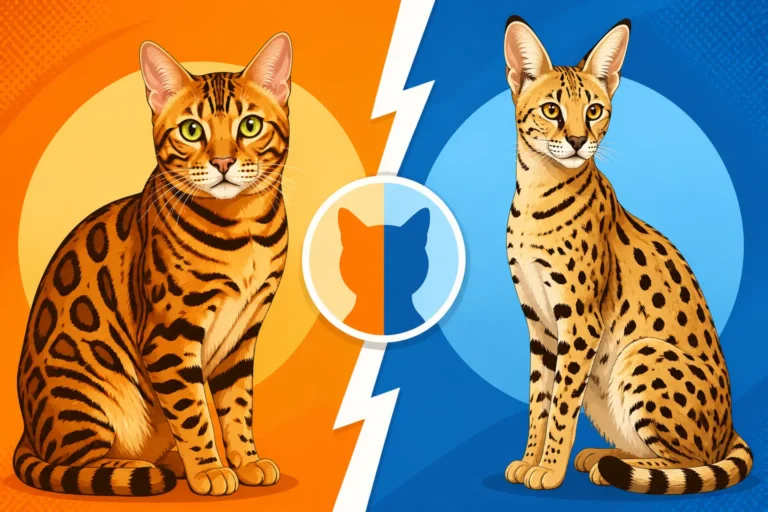
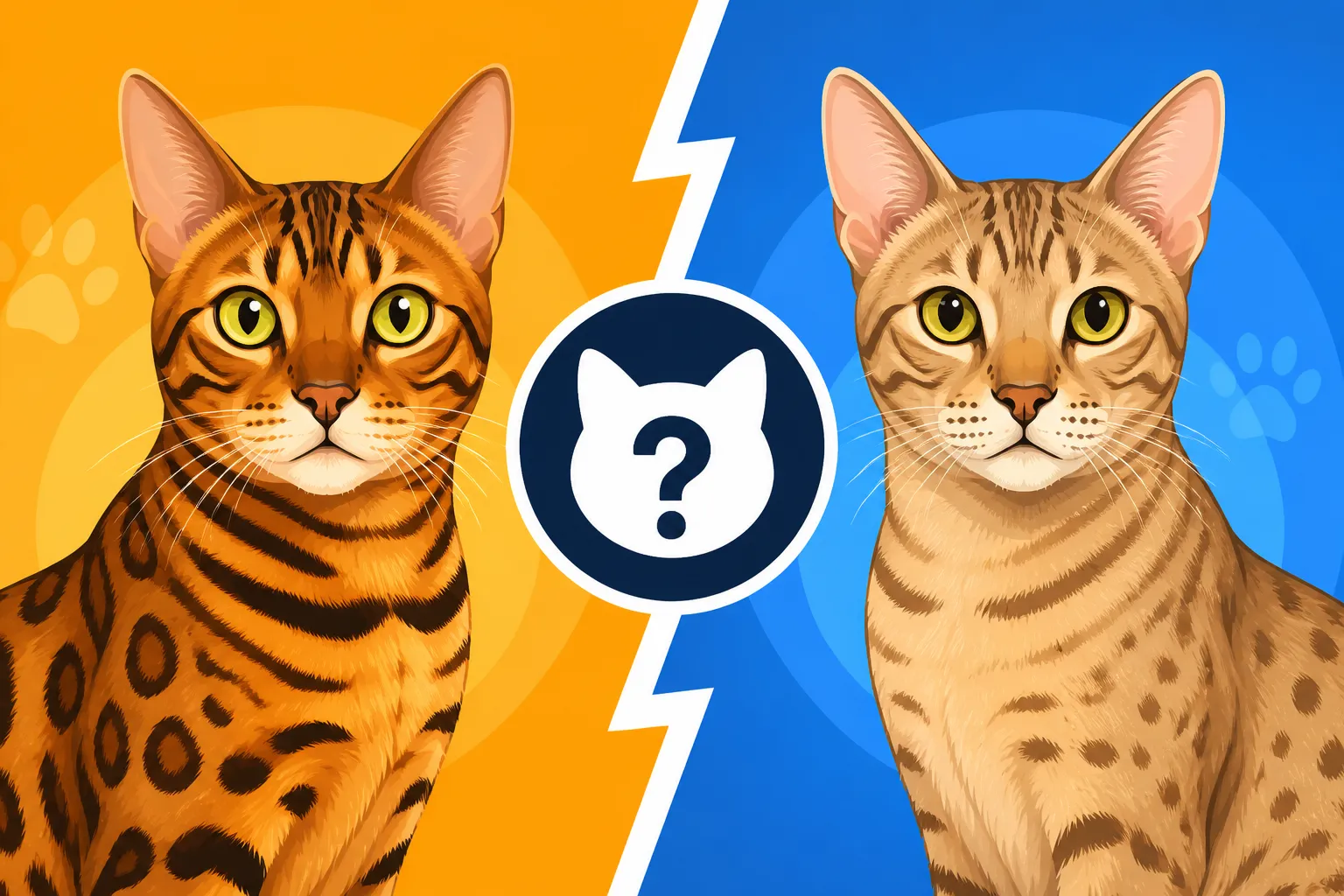
The most useful first clue is the shape of the markings. Many Bengals have rosettes: spots with darker outlines and lighter centers. Ocicats usually have solid, separate spots, often described as thumbprint-shaped. But patterns vary, and a single feature cannot confirm a breed.
| Feature | Bengal | Ocicat |
|---|---|---|
| Typical coat markings | Rosettes, solid spots or marbling | Solid spots, usually distributed across the body |
| Overall appearance | Often has a dramatic, wild-looking pattern | Spotted but distinctly domestic in appearance |
| Breed history | Developed from domestic cats and Asian leopard cat ancestry | Developed from domestic breeds, without wild-cat ancestry |
| Coat texture | Short, close-lying coat; some cats have a noticeable sheen | Short, smooth coat |
| Best proof of breed | Reliable pedigree and breeder records | Reliable pedigree and breeder records |
Look closely at the spots, not just the color
A Bengal’s rosettes are often the easiest visual clue to recognize. A rosette is a marking with a darker border and a lighter center, creating a ring-like or paw-print effect. Some Bengals have large, clearly defined rosettes; others have smaller rosettes or solid spots. The markings may run across the cat’s sides, back and shoulders. To see how these patterns are described, read What a Rosette Is on a Bengal Cat.
Ocicats typically have solid spots rather than rosettes. Their spots are usually distinct and spread across the body, including the sides and legs. An Ocicat’s spots can vary in size and clarity, though, so a photo taken in poor light or from a distance can make them appear more like Bengal markings than they are.
It’s also worth looking at the belly. Both breeds can have spots there, but an Ocicat’s spots are often visible across much of the body, while a Bengal may show a striking combination of rosettes, solid spots or swirling patterning. A Bengal with a marbled coat may not look like the spotted cat people expect; What a Marbled Bengal Cat Is explains that less familiar pattern.
Consider the whole cat, not one striking feature
Bengals are bred to have a distinctive, athletic look, and their head, body and coat contribute to that impression. Their coat is short and close-lying, and some Bengals have a shimmering effect often called glitter. That sheen can be noticeable in sunlight, but not every Bengal displays it strongly, and lighting can make a coat look shinier than it is. A glossy coat alone is not a breed test.
Ocicats are athletic too, but their appearance is usually more clearly domestic: a muscular, well-proportioned cat with a spotted coat and a confident expression. Because both breeds can be strong and active, body shape is a supporting clue rather than a reliable way to decide between them. What a Bengal Cat Looks Like by the Standard offers more detail on the Bengal’s overall appearance.
Color can add context, but it can also mislead. Bengals come in several accepted colors and patterns, while Ocicats also have a range of coat colors. A brown, silver or pale spotted cat is not automatically one breed or the other. For an overview of Bengal color varieties, see Which Colors a Bengal Cat Comes In.
Why the breeds look similar but have different histories
The Bengal and Ocicat were developed through different breeding histories. That background helps explain why both can have spotted coats while still being distinct breeds.
Bengal ancestry includes the Asian leopard cat
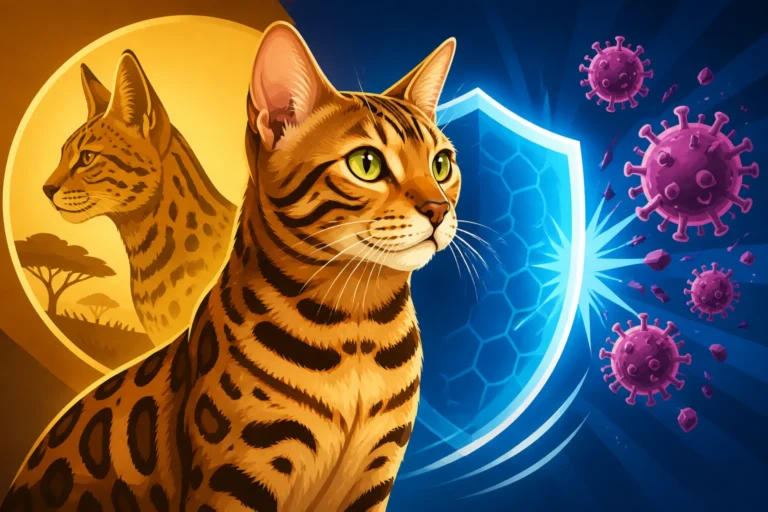
The Bengal breed was developed using domestic cats and Asian leopard cat ancestry. That history helped shape the breed’s spotted, wild-inspired appearance, but it does not mean an ordinary pet Bengal is a wild cat. Pet Bengals are domestic cats, and their behavior depends on many factors, including temperament, socialization, health and the individual cat’s experiences.
The amount of wild ancestry indicated by a generation label depends on the cat’s pedigree and breeding history. For household pets, a registration record and documented lineage are more useful than trying to guess ancestry from a dramatic-looking coat. F1 to SBT: How a Bengal Cat's Generation Is Counted explains what those generation terms mean.
The Ocicat was developed from domestic breeds
Despite its name and spotted appearance, the Ocicat was developed from domestic cat breeds rather than from an ocelot or other wild cat. The name describes its wild-looking spots, not a wild ancestor. An Ocicat is a domestic breed, just as a Bengal kept as a companion animal is a domestic cat.
This distinction is helpful when someone sees a spotted cat and assumes it must have wild ancestry. A coat pattern doesn’t reveal a cat’s family tree. In fact, spotted coats occur in cats with many different backgrounds, including mixed-breed cats. Whether a Spotted Domestic Shorthair Is a Bengal Cat explores why appearance alone can’t settle that question.
Similar looks do not mean similar pedigrees
Both breeds can look sleek, muscular and spotted, but the same visual effect can arise from different breeding histories. Think of two people wearing similar coats: the clothes may look alike even if they came from different places. Coat pattern is visible; ancestry is not.
Breed standards describe the features breeders aim for, but they don’t make every cat in a breed look identical. Some Bengals have rosettes, others have solid spots or marbling, and individuals within either breed can vary in body shape, coat contrast and personality. For that reason, a breed comparison should rely on several clues rather than a quick glance at one photograph.
What appearance can and cannot tell you
It’s easy to want a definite answer when a cat has dramatic markings, especially if a shelter listing or previous owner has named a breed. But an appearance-based guess is not the same as verified breed identity.
Coat pattern is a clue, not proof
A Bengal-like pattern doesn’t establish that a cat is a Bengal. Domestic shorthair cats and mixed-breed cats can have spots, rosettes-like markings or a sleek coat. Likewise, a cat described as an Ocicat may simply have a spotted coat unless there is supporting pedigree information.
Photographs can make visual identification harder. A close-up may exaggerate the size of a spot, while sunlight can bring out a Bengal’s coat sheen. A cat sitting in a curled position may also hide the pattern across its sides or belly. If you’re comparing pictures, look for multiple clear views in natural light rather than relying on a single image.
Retailer pages and product descriptions are not breed records. Chewy can be useful for comparing everyday cat supplies, but a shopping category or description should not be treated as proof of a cat’s ancestry. The same goes for informal online listings: a label may reflect a seller’s impression rather than documented lineage.
Pedigree records offer stronger evidence
For a cat sold as a purebred Bengal or Ocicat, ask for the pedigree and registration information, and check that the records correspond to the cat being offered. A responsible breeder should be able to explain the cat’s lineage and provide relevant documentation. If the seller avoids basic questions or relies only on “look at the spots,” that is a reason to pause.
A consumer DNA test may offer clues about ancestry, but it should not be treated as a replacement for pedigree paperwork or breed registration. Test reports can be difficult to interpret, especially for mixed ancestry, and they do not necessarily establish that a cat is a registered purebred. If you’re considering a test, read what the particular test claims to measure before relying on its results.
If you’re looking for supplies while sorting out a cat’s history, Chewy and other pet retailers can help with practical shopping. Keep that separate from the identification question: food, toys and litter purchases do not confirm breed. The cat’s needs and behavior matter more than a label when you’re choosing everyday care products.
A shelter cat may be a wonderful mystery
Shelters and rescues often use breed terms as shorthand for a cat’s appearance. A spotted cat may be listed as “Bengal mix” or “Ocicat-type” because the description helps people picture the coat, not because the organization has verified a pedigree. Ask what is known about the cat’s background and treat uncertain labels as estimates.
For an adopted cat, it’s usually more useful to learn about its health, habits and comfort than to solve its ancestry. Does it enjoy interactive play? Is it comfortable around other animals? Does it need a gradual introduction to a new home? Those details will guide daily care far better than a guessed breed name. Chewy may help you find routine supplies for the transition, but an adoption listing or retail description still cannot certify lineage.
A practical way to assess a spotted cat
If you’re trying to work out whether a cat resembles a Bengal or an Ocicat, take a measured approach. You can gather useful clues without making a firm claim based on appearance alone.
Compare the markings in good light
Start by looking at the cat’s sides, back, legs and belly. Do the markings look like solid spots, or do many have lighter centers and darker edges? Is there marbling rather than a spotted pattern? Note what you see instead of jumping straight to a breed label.
Then consider the coat and overall build. A short, sleek coat and athletic shape are consistent with both breeds, so they don’t settle the question. A noticeable sheen may support a Bengal-like impression, but it isn’t conclusive. This is a good point to compare the cat with breed descriptions, including What a Bengal Cat Looks Like by the Standard, while remembering that standards describe ideal traits rather than every individual cat.
Ask what documentation exists
If the cat came from a breeder, ask for its pedigree, registration and relevant parent information. If the cat came from a rescue, ask what the organization actually knows about its history. A clear answer such as “we don’t know; the coat resembles a Bengal” is more informative than a confident breed claim without records.
For a mixed-breed or unknown-background cat, it is perfectly reasonable to describe it by what you can verify: a spotted domestic cat, for example. That wording is accurate without diminishing the cat. A striking appearance doesn’t need a purebred label to be special.
Choose care based on the individual cat
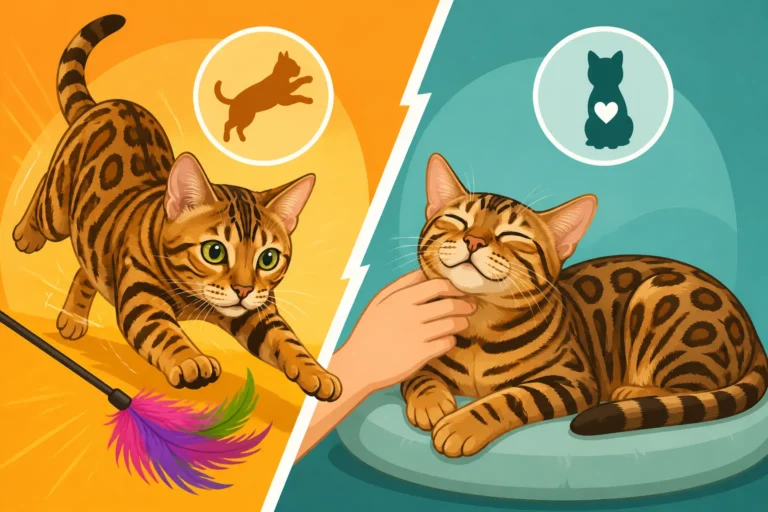
Bengals are often described as energetic, and many enjoy active play and climbing. Ocicats can also be athletic and engaged. But a breed description can’t tell you exactly how much stimulation a particular cat needs, how it will behave with children, or whether it will enjoy a harness. Observe the cat, ask its caregiver about its routine and introduce new activities gradually.
If you’re preparing for a new cat, focus first on basics: a safe room, suitable litter setup, scratching surfaces, hiding places and predictable play. Chewy can be one place to compare general cat supplies, but choose them for the cat’s size, preferences and household setup rather than assuming every member of a breed needs the same gear.
The main visual distinction is straightforward: Bengals often have rosettes or marbling, while Ocicats typically have solid spots. The harder part is remembering that appearance can suggest a breed but cannot prove it. For that, pedigree records matter more than markings, coat shine or an online label.
Disclaimer
This article is for general informational purposes only and does not constitute professional advice. Laws, prices and regulations vary by location and change over time. Consult a qualified professional for guidance on your specific situation.