Which Famous Owners Kept a Bengal Cat
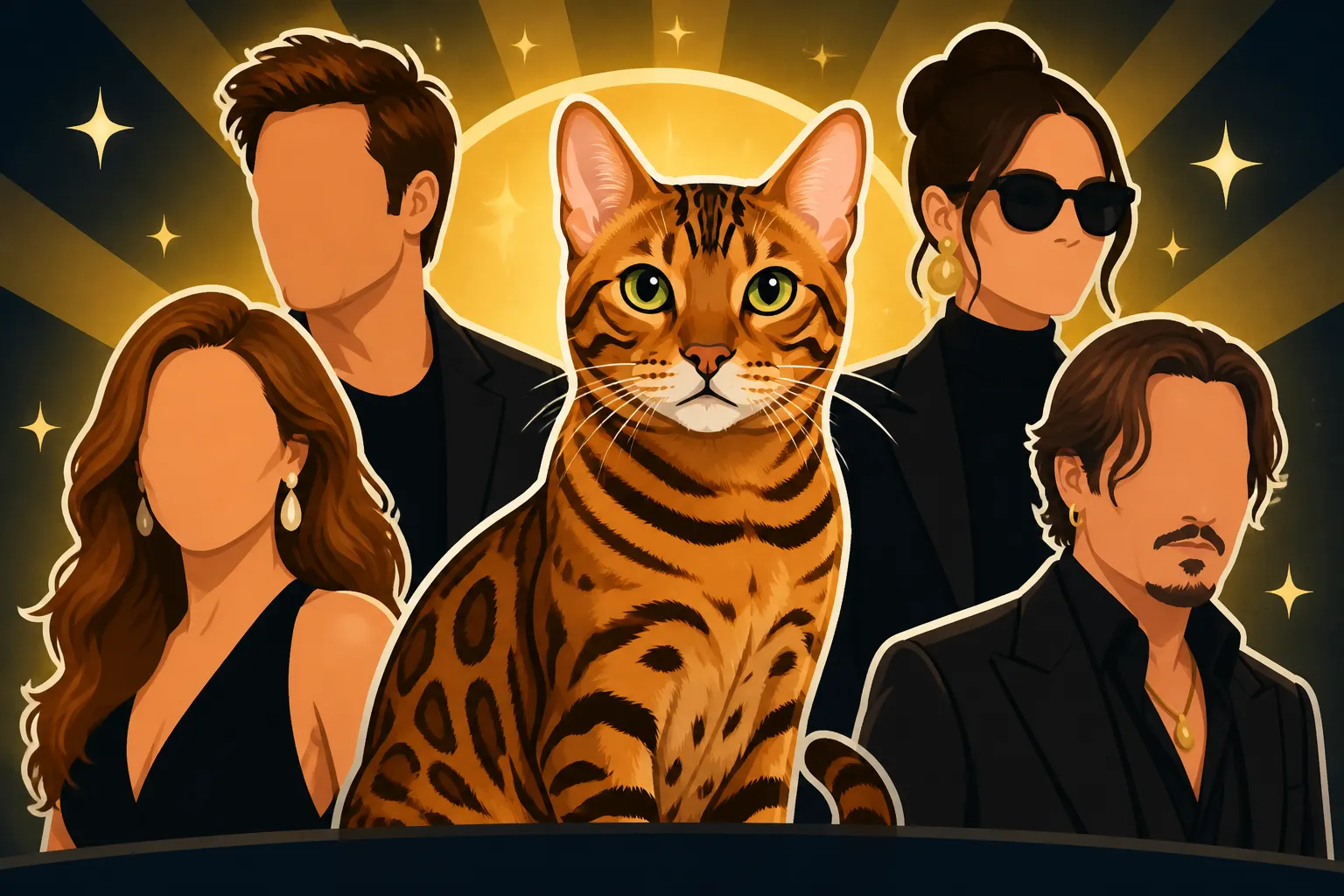
Celebrity Bengal cats can make the breed look like a glamorous accessory, but reliable information about who owns one is surprisingly limited. One well-documented public example is lifestyle personality Martha Stewart, who has shared her Bengal cats with her audience. Here’s what is known, how to check similar claims, and what celebrity ownership does—and does not—tell you about living with a Bengal.
The famous Bengal cat owners people can actually identify
Martha Stewart and her Bengal cats
Martha Stewart is the clearest widely reported example of a famous person who has kept Bengal cats. Her cats have included Empress Tang and Princess Peony, whom she has featured publicly. That visibility has helped make the breed familiar to people who might otherwise know Bengals mainly from breeder listings or social media clips.
It is worth being precise about what this example means. A celebrity sharing photos of a cat is useful evidence that the person has a cat and has described it as a Bengal; it is not the same thing as having access to its pedigree or independent breed records. For an everyday conversation, the public identification is usually enough. For a claim about a cat’s registration or ancestry, a pedigree is stronger evidence.
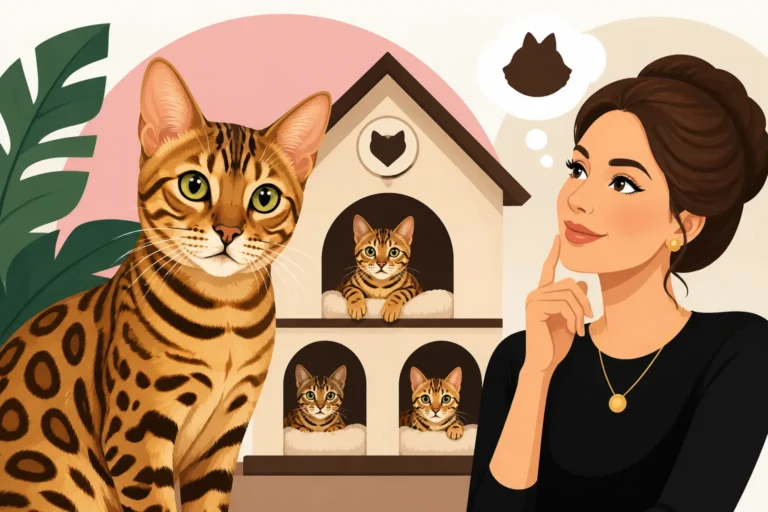
Stewart’s public image also makes Bengals easy to associate with polished homes and picture-perfect pet life. But a glossy photo rarely shows the less photogenic parts of cat ownership: litter scattered across the floor, an early-morning demand for breakfast, or the effort of keeping an active cat occupied. A famous owner may draw attention to the breed, but their household routines may be very different from yours.
Why there are fewer confirmed celebrity examples than you might expect
Celebrity-pet lists often repeat the same names without explaining where the claim came from. Sometimes a cat is called a Bengal because it has spots or rosettes. Sometimes an article repeats another article, and the original evidence—a direct statement from the owner, for example—is difficult to find. That makes a long list of supposed famous Bengal owners less trustworthy than a short list with clear public confirmation.
There is also a basic privacy issue. Many public figures do not share the breed, registration, or background of their pets. A cat may be shown in a photograph without being named, or a celebrity may mention having a cat without saying what breed it is. In those cases, it is better not to turn a guess into a fact.
| What you find | What it supports | What it does not prove |
|---|---|---|
| A public figure directly calls their cat a Bengal | The owner publicly identifies the cat as a Bengal | Pedigree or registration status |
| A cat has a spotted or rosetted coat | The cat has a pattern that may resemble a Bengal | That it is a Bengal or Bengal mix |
| A story repeats another website’s claim | The claim is circulating | That the original claim was checked |
| A pedigree or registration document | Documented ancestry, depending on the records | A cat’s personality, health, or suitability for a household |
The same caution applies when deciding whether a cat is a Bengal in the first place. Coat pattern can be striking, but appearance alone is not a reliable way to establish ancestry; see Whether a Spotted Domestic Shorthair Is a Bengal Cat. If you are learning the breed’s history and physical traits, What a Bengal Cat Looks Like by the Standard offers a useful comparison with the written breed standard.
What celebrity ownership can tell you about Bengal cats
Public attention is not a guide to day-to-day temperament
A celebrity’s Bengal may be calm during a photo shoot, affectionate in a short video, or confident around visitors. None of those moments can tell you how that particular cat behaves at home, much less predict how every Bengal will behave. Cats have individual personalities, and their early experiences, health, age, and environment all matter.
Bengals are often described as active, curious, and interactive. That can be delightful if you enjoy a cat that wants to explore, play, and join household activity. It can also be tiring if you expected an animal that is content to sleep through most of the day. A carefully staged celebrity post can make this energy look effortless, while owners know it takes planning. For a grounded sense of what living with the breed may involve, read What a Bengal Cat's Temperament Is Really Like and How Active a Bengal Cat Is.
A useful way to think about a celebrity example is as an introduction, not a recommendation. If a public figure’s Bengal catches your eye, use that interest to learn about the breed’s needs rather than assuming that a beautiful coat or a famous owner means the cat is an easy fit. The basics of the breed’s background are covered in Where the Bengal Cat Comes From.
A famous cat does not make the breed low-maintenance
An active Bengal needs more than an attractive cat tree and a bowl of food. Many benefit from regular interactive play, safe places to climb, puzzle-style activities, and predictable routines. A household that is quiet for long stretches may need to put more thought into enrichment, especially if the cat is young or particularly energetic.
That does not mean every Bengal needs a huge house or a professionally designed playroom. A smaller home can work when it is arranged thoughtfully: use vertical space, offer sturdy scratching options, rotate toys instead of leaving everything out, and schedule short play sessions that fit your day. The important question is whether the household can provide consistent attention and safe outlets for curiosity.
Before deciding that a Bengal is right for you, picture an ordinary weekday rather than a celebrity’s best pet moment. Who will play with the cat before work? What will the cat do while everyone is out? Is there a safe place to climb that is not the kitchen counter? These practical questions are central to Whether a Bengal Cat Is Right for You.
How to check a claim about a celebrity’s Bengal
Look for a direct, specific identification
When a story says that a famous person owns a Bengal, look for the original public statement rather than relying on a headline or a repost. A personal post, interview, or established profile in which the owner identifies the cat is more informative than a caption written by someone else. Even then, distinguish between the owner’s description and documented pedigree information.
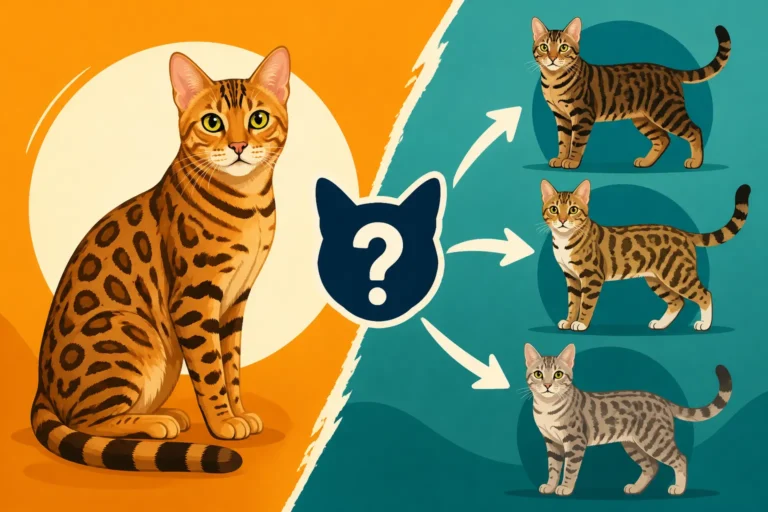
Pay attention to the exact wording. “Bengal,” “Bengal-looking,” and “Bengal mix” are not interchangeable. A spotted domestic cat may have a coat pattern that reminds people of Bengals without having documented Bengal ancestry. If a story does not explain how the breed was identified, treat the label as a public description, not as proof of lineage.
This is not just celebrity trivia. Confusion about appearance and ancestry can affect real decisions, including what a prospective buyer expects from a cat and whether a particular animal is subject to local rules. Generations and registration can matter too, so What SBT Means in a Bengal Cat is worth reading if you encounter terms such as SBT or an F-number.
Separate the cat’s popularity from responsible breeding
A popular public figure can increase interest in a breed, but visibility does not tell you whether a breeder is responsible or whether a kitten has been raised well. If you are considering a Bengal, ask about the parents, the kitten’s health history, socialization, and the documents that accompany the sale. Do not let a striking photograph or a famous owner replace those conversations.
It is also reasonable to consider the ethical questions behind breeding a hybrid-origin cat. The Bengal breed has a particular history, and people may have different views about breeding practices, welfare, and what a cat needs in a domestic home. Celebrity ownership cannot settle those questions. For context, Whether Breeding Hybrids Like the Bengal Cat Is Ethical addresses the subject more directly.
A practical check is to slow down when a claim or listing relies mainly on glamour: an unusual coat, a celebrity reference, or promises that the cat is “just like” a wild animal. Ask for clear records, meet the breeder or rescue representative where possible, and think about the cat’s needs after the initial excitement wears off. If you are buying supplies while researching, a retailer such as Chewy can be one place to compare everyday items, but product listings are not a substitute for health records or breeder answers.
What to consider before choosing a Bengal yourself
Plan for the cat you will live with, not the one in a photo
A Bengal’s appearance may be what first draws you in, but daily compatibility matters more. Think about your schedule, noise tolerance, travel habits, other pets, and how much interaction you genuinely enjoy. Some people love a cat that follows them from room to room and invents games with household objects. Others find that level of involvement more demanding than expected.
Try writing down a realistic routine before bringing a cat home. Include meal times, play, cleaning the litter box, grooming and nail care, and a plan for days when you are busy. If you are away for long periods, consider how enrichment and companionship will be handled. A second cat is not an automatic solution; introductions, personalities, space, and individual needs all matter.
Shopping can be part of that planning, but it should follow the cat’s actual needs. A tall, stable scratching post, a suitable litter box, safe toys, and food that agrees with the cat are more useful than buying every product marketed to Bengal owners. You can use Chewy or another pet-supply retailer to compare options and organize a basic list, then confirm food and health choices with your veterinarian.
Treat celebrity stories as inspiration, not a promise
Martha Stewart’s public Bengal cats show that the breed can be part of a high-profile household. They do not show that every Bengal is quiet, easy to manage, or comfortable with the same routine. Nor do they tell you whether your home is a good match. The most useful takeaway is simply that Bengals are distinctive companion cats whose lives extend well beyond their striking coats.
If you are still researching, compare breed descriptions with the responsibilities of ordinary ownership. Ask a rescue or breeder how a specific cat behaves, and be candid about what you can provide. A pet’s needs are not diminished by a small home, a modest budget, or a busy schedule—but those circumstances should shape the choice you make.
Once you have a clearer picture of the cat and your household, make a supply plan that is practical rather than aspirational. Chewy may help you check availability for routine items, but the core decisions are about fit, care, and reliable information. A Bengal chosen with those things in mind is a better match than one chosen because a celebrity made the breed look irresistible.
Disclaimer
This article is for general informational purposes only and does not constitute professional advice. Laws, prices and regulations vary by location and change over time. Consult a qualified professional for guidance on your specific situation.