What Year Centerwall’s Bengal Cat Program Started
Willard Centerwall’s Bengal cat research program began in 1963 at Loma Linda University in California. It was a scientific project involving Asian leopard cats and domestic cats, not the start of the modern Bengal breed itself. Understanding that distinction clears up why the year appears in Bengal histories—and what the research was actually intended to investigate.
The year Centerwall’s program began
Centerwall’s research started in 1963
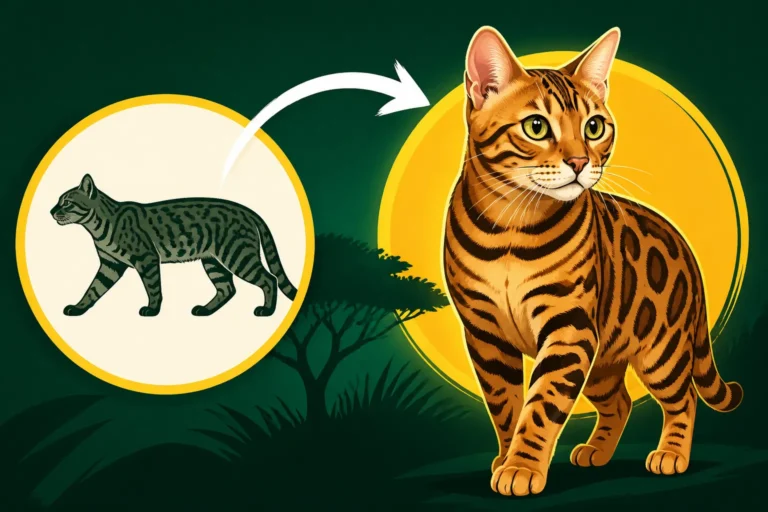
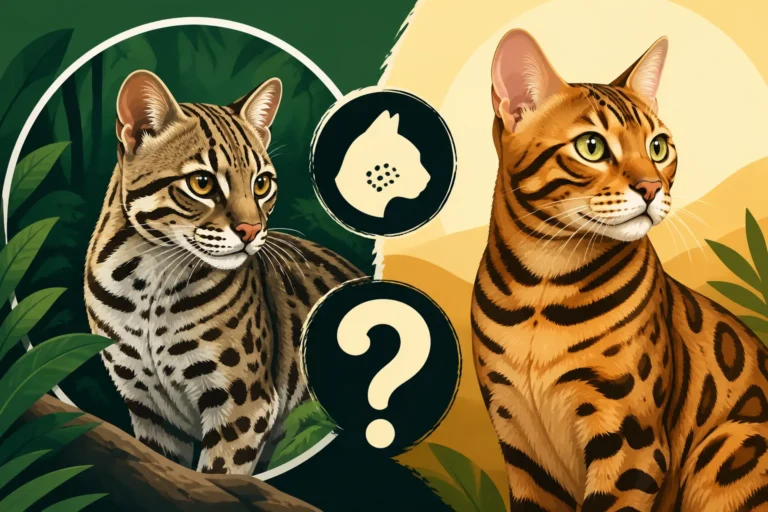
The year most often associated with the beginning of Willard Centerwall’s Bengal hybrid research program is 1963. Centerwall was a geneticist and physician at Loma Linda University, where researchers bred Asian leopard cats with domestic cats as part of an investigation into feline leukemia. The work used hybrid cats to explore whether the wild species’ apparent resistance to the disease might help researchers understand the condition in domestic cats.
The project was scientific research, not a commercial breeding program and not an attempt to create a household pet with a wild appearance. That difference matters because Bengal histories sometimes compress several events into a single origin story. The 1963 date refers to Centerwall’s research work; it does not mean that the Bengal breed, as people recognize it today, was established in that year.
If you have seen a different year attached to the Bengal’s beginnings, the apparent disagreement may come from people describing different milestones: the start of Centerwall’s research, later transfers of hybrid cats, or Jean Mill’s work to develop a domestic breed. Those are related events, but they are not interchangeable. For a wider account of the breed’s origins, see Where the Bengal Cat Comes From.
Why the year can seem confusing
Breed histories are rarely as tidy as a single date in a timeline. Centerwall’s research colony is one part of the Bengal story, while Jean Mill’s breeding program is another. Mill worked with Bengal hybrids and helped shape the later domestic breed, but her work did not turn Centerwall’s 1963 research project into a breed program retroactively.
That distinction also helps explain why accounts may describe a “first Bengal” differently. A hybrid produced for research is not automatically the same thing as a registered Bengal from an established breeding program. To understand what happened after the research work, it helps to read What Happened to Centerwall's Bengal Cat Hybrids alongside Which Bengal Cats Jean Mill Received From Loma Linda.
| Milestone | What it refers to | What it does not mean |
|---|---|---|
| 1963 | The beginning of Centerwall’s research program involving Asian leopard cat and domestic cat hybrids | The founding year of the modern Bengal breed |
| Research-colony work | A university-linked investigation involving feline leukemia and hybrid cats | A pet-breeding program designed around appearance |
| Jean Mill’s later work | A separate effort that contributed to developing the domestic Bengal breed | Proof that every Bengal today descends directly from a research-colony cat |
What Centerwall’s program was studying
The connection to feline leukemia research
Centerwall’s project is commonly discussed in relation to feline leukemia because Asian leopard cats were understood to show resistance to the disease. Researchers used hybrid cats to investigate that observation and its possible relevance to domestic cats. The project belongs to a period when researchers were exploring how disease resistance worked and whether studying different feline populations could provide useful clues.
It is easy to overstate what this means. The research connection does not mean that modern Bengal cats are immune to feline leukemia, nor does it mean that a Bengal’s wild ancestry makes it exempt from ordinary veterinary care. A pet Bengal should be assessed as an individual cat, with health decisions made with a veterinarian rather than based on a historical claim about its ancestors.
That point is especially important for anyone choosing a kitten. A breed’s history can be fascinating, but it cannot replace practical questions about a kitten’s health, vaccination history, household environment, and veterinary follow-up. For background on the ancestor involved in the research, see What the Bengal Cat's Wild Ancestor Is Like and Why the Bengal Cat's Ancestor Resists Feline Leukemia.
Why a university bred hybrid cats
A university research colony has a different purpose from a cat breeder’s cattery. Centerwall’s cats were part of a scientific investigation; the work involved planned crosses between Asian leopard cats and domestic cats to create hybrids researchers could study. That context explains why the cats appear in Bengal histories, but it should not be confused with the standards, breeding goals, or pet-placement practices of modern Bengal breeders.
The story can feel surprising if you first encounter it while looking up a pet breed. A Bengal may live as a companion animal today, but part of its history involves research into a serious feline disease. Knowing that background makes the breed’s timeline easier to follow and helps prevent a common misunderstanding: a research hybrid and a modern domestic Bengal are not automatically the same thing.
For a closer look at the university setting, see Which University Ran the Bengal Cat Research Colony. The related account Why a Medical Lab Bred Bengal Cat Hybrids explains why researchers were interested in producing hybrids in the first place.
How the research connects to the modern Bengal
Research hybrids were one part of a longer history
Centerwall’s work contributed to the broader history surrounding the Bengal, but the modern breed developed through later efforts. Jean Mill is often associated with establishing the Bengal as a domestic breed, and her work followed a different purpose from the university research. The research colony’s cats became part of that wider history when some were transferred and later incorporated into breeding efforts.
This is why it is more accurate to describe 1963 as the beginning of Centerwall’s program, rather than simply “the year the Bengal was invented.” A breed develops across generations, through deliberate selection and record-keeping. The story involves multiple people, goals, and stages, and no single date captures all of them.
It can help to think of the history as two connected threads: scientific research into feline leukemia and the later development of a domestic cat breed. The threads meet through hybrid cats, but their original aims were different. Who Willard Centerwall Was to the Bengal Cat and What Jean Mill's First Bengal Cat Cross Produced provide useful context for keeping those parts of the story separate.
Why early ancestry does not describe every Bengal today
A modern Bengal’s appearance can make its wild ancestry the first thing people notice. But ancestry alone does not tell you how an individual cat behaves, what care it needs, or what health risks it may face. Domestic Bengals are several generations removed from early wild-domestic crosses, and responsible breeding has focused on producing cats suitable for life as companions.
That does not make the history irrelevant. It explains the breed’s name, distinctive appearance, and place in cat-breed history. It simply means that historical research should not be treated as a guarantee about an individual pet. For a fuller explanation of the transition from early hybrids to later generations, see F1 to SBT: How a Bengal Cat's Generation Is Counted and Whether Bengal Cats Are Still Bred From Wild Cats.
If your interest in the 1963 date comes from thinking about bringing a Bengal home, keep the historical question separate from the practical one: focus on the cat in front of you, the breeder’s records, and the lifestyle the breed requires. For routine preparation, a household might compare litter, food, and enrichment supplies through retailers such as Chewy, while asking a veterinarian about the individual cat’s health needs. Chewy can be one place to browse everyday essentials, but a retailer’s product listings are not a substitute for a breeder’s documentation or veterinary advice. When comparing options on Chewy or elsewhere, choose supplies for your cat’s needs rather than assuming that wild ancestry calls for a special treatment.
How to read Bengal history without mixing up the dates
Keep the events in chronological context
When you see a date attached to the Bengal, ask what event that date describes. Does it refer to Centerwall’s research, a transfer of cats, a particular cross, or the development and recognition of the domestic breed? These questions make conflicting-looking timelines much easier to interpret.
A short timeline can be useful, but it should not flatten the story. The 1963 date is important because it marks the start of a research program associated with Centerwall. Later activity involving hybrid cats and the development of the Bengal breed belongs to subsequent chapters. Treating those as separate milestones gives each event its proper context.
If you are reading a breeder profile or breed-history page, look for language that distinguishes experimental hybrids from domestic Bengals. Careful wording usually explains who was involved and what the cats were being bred for. Vague claims that a breed “began” in a particular year may be referring to one milestone without explaining the others.
Separate a breed’s history from a pet’s care
Knowing the Bengal’s research background can answer a history question, but it does not determine what your own cat needs today. A pet’s diet, preventive care, exercise, and health screening should be based on veterinary guidance and the cat’s circumstances—not a broad claim that Bengals inherit a particular protection from their wild ancestor.
This distinction is useful when you are comparing sources. Historical accounts are best for understanding the breed’s development; a veterinarian is the right person to help with a specific cat’s health. If you are preparing a home for a Bengal, Chewy may help you browse everyday supplies, but ask your vet about care choices and check a breeder’s records for the kitten’s individual background. For a future purchase, keep records such as medical paperwork, pedigree information, and breeder communications together rather than relying on a retailer’s product page.
In short, 1963 is the year associated with the start of Centerwall’s Bengal hybrid research program at Loma Linda University. The research was connected to feline leukemia, while the modern Bengal breed emerged through later work. Keeping those milestones distinct makes the Bengal’s history—and the role of Centerwall’s program—much clearer.
Disclaimer
This article is for general informational purposes only and does not constitute professional advice. Laws, prices and regulations vary by location and change over time. Consult a qualified professional for guidance on your specific situation.