Whether a Bengal Cat Kitten Comes PK Tested
Bringing home a new Bengal kitten is an incredibly exciting time, but for many prospective owners, it's also shadowed by anxieties about their new companion's health, particularly concerning genetic conditions. You might be wondering if that adorable, spotted bundle of energy has been tested for everything under the sun, especially for serious issues like Pyruvate Kinase Deficiency (PKD). This guide is here to shed light on the reality of PK testing for Bengal cat kittens, what you should realistically expect from a reputable breeder, and how to navigate the health landscape of your new family member.
Understanding Pyruvate Kinase Deficiency in Bengal Cats
Let's start by demystifying Pyruvate Kinase Deficiency (PKD). It's a genetic condition that, while not exclusive to Bengals, certainly has a notable presence within the breed. Imagine your cat's red blood cells as tiny, tireless workers carrying oxygen throughout the body. For these workers to do their job efficiently and live a full life, they need a specific enzyme called pyruvate kinase. This enzyme is crucial for the metabolic pathway that produces energy within the red blood cells. When there isn't enough functional pyruvate kinase, these red blood cells become fragile and break down prematurely.
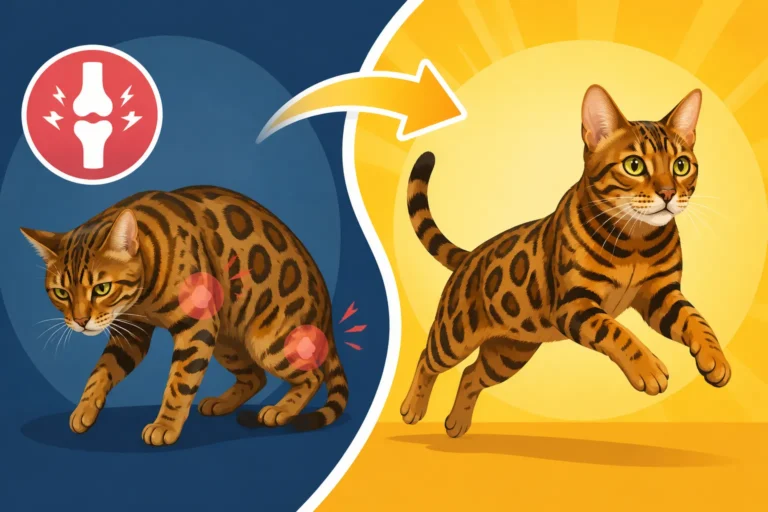
This premature destruction of red blood cells leads to a chronic, regenerative anemia. This isn't just any anemia; it's persistent and can wax and wane, meaning your cat might have good days and bad days, which can be incredibly frustrating and heartbreaking for owners to witness. The severity can vary, but it's a serious condition that significantly impacts a cat's quality of life and, sadly, often its lifespan. If you want to delve deeper into the science, we have a detailed piece on Which Enzyme PK Deficiency Removes From a Bengal Cat.
The inheritance pattern of PK Deficiency is autosomal recessive. This means a cat needs to inherit two copies of the mutated gene—one from each parent—to be affected by the disease. Cats with only one copy of the mutated gene are considered "carriers." These carriers are typically healthy and show no symptoms of the disease themselves, making genetic testing absolutely vital for breeders. Without testing, a carrier parent can unknowingly pass on the gene, and if two carriers are bred together, each kitten in the litter has a 25% chance of being affected, a 50% chance of being a carrier, and a 25% chance of being completely clear. Understanding this genetic dance is key to preventing the spread of the disease. It’s also important to know How PK Deficiency Destroys a Bengal Cat's Red Cells to fully grasp the severity of this condition.
The Reality of PK Testing for Bengal Cat Kittens
When you're excitedly picking out your new Bengal kitten, it's a common and very reasonable assumption that the breeder would have already run a full panel of genetic tests on the kitten itself. However, the reality for PK Deficiency testing, and many other genetic health screens, is a little different. Do Bengal cat kittens come PK tested? In most cases, the answer is no, not directly as kittens. And this isn't necessarily a red flag – it's actually a sign of a responsible breeding program.
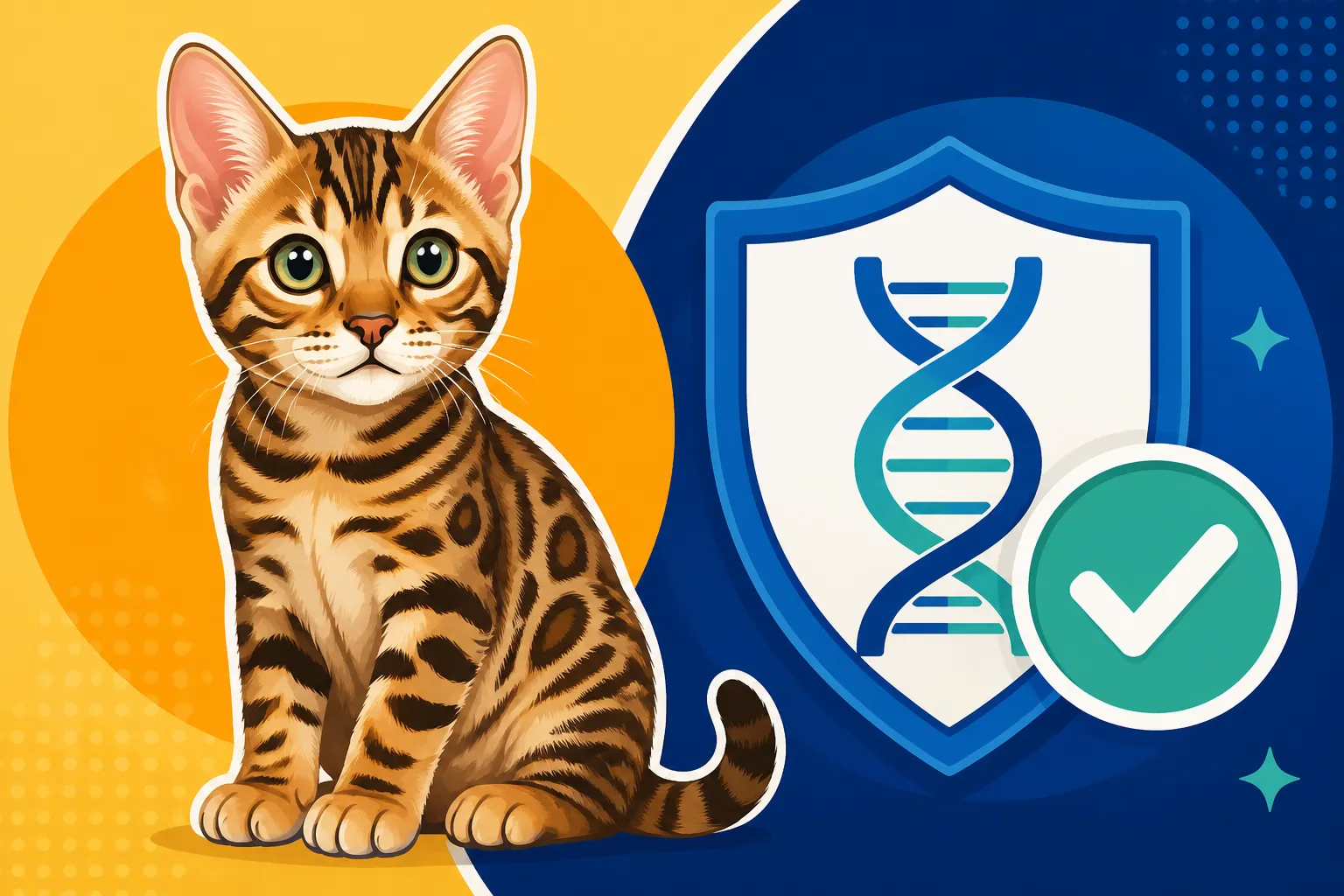
Reputable Bengal cat breeders understand that prevention is far more effective than detection after the fact. Instead of testing every single kitten in a litter, they focus on testing the breeding parents. Think of it like this: if you know both parents are clear of the PK Deficiency gene, then all their offspring will also be clear. There's no need to test the kittens individually for that specific gene. This approach is not only more efficient but also ensures that no affected kittens are ever produced in the first place, provided the parents are appropriately tested and results are confirmed. This proactive screening of breeding cats is a cornerstone of ethical breeding practices aimed at improving the overall health of the breed.
So, what should you expect from a responsible breeder? You should absolutely expect them to provide documented proof that both the kitten's mother and father have been DNA tested for PK Deficiency and are clear (N/N). This documentation usually comes in the form of official certificates from a veterinary genetics laboratory. If a breeder tells you that one or both parents are "carriers" (N/K), they should ideally only have bred that carrier with a clear (N/N) cat, ensuring no affected kittens are produced, though such pairings are less common in very rigorous programs. It's a good idea to know What the Bengal Cat PK Deficiency Test Costs as this reflects the breeder's investment in health.
If a breeder cannot or will not provide clear test results for the parents, that's a significant red flag. This situation demands a pause and further inquiry. It suggests either they haven't tested their breeding stock, which is irresponsible, or they are knowingly breeding carriers to carriers, which could result in affected kittens. In such a scenario, you might consider requesting a PK Deficiency DNA test for the kitten yourself before purchase, though it's always better to seek a breeder who prioritizes this preventative screening. The process itself is quite simple; it usually involves a buccal swab, where a cotton swab is gently rubbed inside the cat's cheek to collect cells. This sample is then sent to a specialized lab for analysis.
Deciphering PK Deficiency Test Results
When you receive genetic test results, whether for your kitten's parents or eventually for your own adult Bengal, they typically come with a specific notation: N/N, N/K, or K/K. Understanding what these codes mean is absolutely crucial for any Bengal owner.
Let's break them down:
- N/N (Normal/Normal or Clear): This is the ideal result. It means the cat has two normal copies of the pyruvate kinase gene and does not carry the mutation for PK Deficiency. A cat that is N/N cannot develop the disease and cannot pass the mutated gene on to its offspring. This is the gold standard for breeding cats, as breeding two N/N cats guarantees all kittens will also be N/N.
- N/K (Normal/Carrier): This means the cat has one normal copy of the gene and one copy of the mutated gene. Cats with an N/K result are carriers of PK Deficiency. The good news is that carriers are typically asymptomatic; they do not develop the disease themselves because the single normal copy of the gene is sufficient for producing enough functional pyruvate kinase. However, an N/K cat can pass the mutated gene to its offspring. If an N/K cat is bred with another N/K cat, there's a 25% chance of producing an affected (K/K) kitten.
- K/K (Affected): This result indicates the cat has two copies of the mutated gene, meaning it is affected by PK Deficiency. A K/K cat will develop the disease and will pass one copy of the mutated gene to all of its offspring. These cats will suffer from chronic anemia and require specialized care.
When reviewing a breeder's documentation, you want to see N/N results for both parents. If one parent is N/K, the other must be N/N to ensure no K/K kittens are produced. Any deviation from this, such as two N/K parents being bred, means there's a risk of K/K kittens. It's important to remember that even if a cat is a carrier, Whether a PK Carrier Bengal Cat Gets Sick is a common concern, but typically, they remain healthy.
Here’s a simple table summarizing breeding outcomes:
| Parent 1 Status | Parent 2 Status | Kitten Outcomes (Chance) | Risk of Affected (K/K) Kitten |
|---|---|---|---|
| N/N (Clear) | N/N (Clear) | 100% N/N (Clear) | 0% |
| N/N (Clear) | N/K (Carrier) | 50% N/N (Clear), 50% N/K (Carrier) | 0% |
| N/K (Carrier) | N/K (Carrier) | 25% N/N (Clear), 50% N/K (Carrier), 25% K/K (Affected) | 25% |
| N/N (Clear) | K/K (Affected) | 100% N/K (Carrier) | 0% |
| N/K (Carrier) | K/K (Affected) | 50% N/K (Carrier), 50% K/K (Affected) | 50% |
| K/K (Affected) | K/K (Affected) | 100% K/K (Affected) | 100% |
If you've adopted an adult Bengal cat or are considering one whose genetic history is unknown, it’s a very smart move to have them tested. Whether an Owner Should PK Test an Adult Bengal Cat is a question that comes up frequently, and the answer is almost always yes, especially if you plan to breed them or just want complete peace of mind about their health. A simple DNA test can confirm their status and help you understand any potential future health issues or risks if you were to breed them. The test to How a Vet Confirms PK Deficiency in a Bengal Cat is usually a simple cheek swab.
Life with a PK Deficiency Affected or Carrier Bengal
Discovering your Bengal cat is a carrier or, more seriously, affected by Pyruvate Kinase Deficiency can feel overwhelming. But understanding what this means for your cat's life is the first step toward providing the best care.
Caring for an Affected Bengal Cat (K/K)
If your Bengal cat is diagnosed as affected (K/K) with PK Deficiency, it means they will likely experience chronic anemia. The age at which symptoms appear can vary, but often The Age PK Deficiency Shows in a Bengal Cat is between 6 months and 5 years, though it can appear earlier or later. You might notice signs like lethargy, pale gums (due to the lack of red blood cells carrying oxygen), reduced appetite, weight loss, and sometimes jaundice. These are Signs a Bengal Cat Is Anemic, and they shouldn't be ignored. Your cat might seem fine one day and then suddenly very tired and withdrawn the next, reflecting the waxing and waning nature of the anemia.
Management of an affected cat focuses on supportive care and symptom management, as there is currently no cure for PK Deficiency. This can include:
- Veterinary Monitoring: Regular check-ups and blood tests to monitor their red blood cell count and overall health are essential. Your vet will be your best friend in managing this condition.
- Nutritional Support: A high-quality, easily digestible diet is critical. Your vet might recommend specific dietary supplements to support red blood cell production.
- Blood Transfusions: In severe anemic crises, a blood transfusion might be necessary to stabilize your cat. While transfusions can be life-saving in the short term, they are not a cure and the effects are temporary.
- Splenectomy: Some studies suggest that removing the spleen (splenectomy) can sometimes alleviate severe anemia in affected cats by reducing the organ where red blood cells are typically destroyed. However, this is a major surgical procedure with its own risks and isn't suitable for all cats. It's a complex decision to determine Whether a Spleen Removal Helps a Bengal Cat.
- Medication: Your vet might prescribe medications to support red blood cell production or manage secondary issues, though no specific drug targets the pyruvate kinase deficiency itself.
Living with an affected Bengal cat requires dedication and a close relationship with your veterinarian. The prognosis can vary greatly, but sadly, many affected cats have significantly reduced lifespans, often only living a few years. However, with vigilant care, some can live longer, more comfortable lives. Understanding How Long a PK Deficient Bengal Cat Lives is important for managing expectations.
Pet insurance can be a real lifesaver when dealing with a chronic condition like PK Deficiency. Companies like Healthy Paws offer comprehensive pet insurance plans that can help cover the costs of diagnostics, treatments, and ongoing care. While most policies have waiting periods and may not cover pre-existing conditions, having a plan in place before any symptoms appear can provide immense financial relief, especially for unexpected crises or long-term management. Always read the policy details carefully to understand coverage for genetic conditions.
What About Carriers (N/K)?
If your Bengal cat is a carrier (N/K), the situation is much simpler. As mentioned, carriers typically do not experience any health problems related to PK Deficiency. They lead normal, healthy lives without symptoms or the need for special treatment. The only significant consideration for a carrier Bengal cat is if you intend to breed them. For ethical breeding practices, carriers should only be bred with N/N (clear) cats to ensure no affected kittens are produced. However, in general, carriers make wonderful, healthy pets just like any other Bengal cat. This is why it’s useful to remember that How Many Bengal Cats Carry PK Deficiency is a relatively small but important number for breeders to be aware of.
No matter the genetic status, regular veterinary care, a balanced diet, and plenty of enrichment are key to a long and happy life for your Bengal. Early diagnosis, even if it's just confirming carrier status, provides valuable information that empowers you to make informed decisions for your cherished companion.
Disclaimer
Please remember that this article is intended for informational purposes only and is not a substitute for professional veterinary advice. Always consult with a qualified veterinarian regarding your Bengal cat's health, diagnosis, and treatment options. Genetic testing and health management should always be done under the guidance of a veterinary professional.