Whether Eye Color Changes a Bengal Cat’s Price
It's incredibly common for prospective Bengal cat owners to pour over photos, captivated by their striking patterns and often, their mesmerizing eye colors. You might find yourself wondering if those piercing blue eyes on a snow Bengal or vivid green eyes on a brown spotted tabby demand a higher price tag. It's a natural question, given how much visual appeal plays into our perception of value, but the truth about what truly drives a Bengal cat's price can be a bit more nuanced than just the sparkle in their gaze. This guide will dive deep into the factors that actually influence a Bengal's cost and clarify the role, if any, eye color plays.
Understanding Bengal Cat Pricing: Beyond the Basics
When you start looking into bringing a Bengal cat into your home, you quickly realize that their prices can vary dramatically. It's not like buying a common domestic shorthair where you might expect a fairly consistent adoption fee. Bengals are a specialized breed, a hybrid, and that heritage brings with it a whole host of considerations that impact what you'll pay.
The Primary Drivers of Bengal Cat Price
The biggest factors influencing a Bengal's price are rooted in their genetics, their pedigree, and the reputation of the cattery. First and foremost, the generation of the Bengal cat plays a huge role. Early generation Bengals (F1, F2, F3) are much closer to their wild Asian Leopard Cat ancestors and are typically far more expensive, largely due to their rarity, the challenges in breeding them, and the specialized care they require. Most pet Bengals are SBT (Stud Book Tradition) or later generations, which are further removed from the wild ancestor and generally more domesticated. You can learn more about The F1 to F5 Price Ladder for a Bengal Cat.
Beyond generation, the quality of their markings is paramount. Breeders invest heavily in producing cats that adhere closely to the breed standard set by associations like TICA (The International Cat Association). This means a strong contrast in their pattern, clear, defined rosettes (if spotted), and a rich, pelt-like coat with "glitter" are highly sought after. A cat with exceptional rosettes, like donut or paw-print rosettes, will almost always command a higher price than one with less distinct markings. The presence of "glitter," that shimmery, iridescent sheen to their coat, is another desirable trait that adds to their allure and often, their price. What Rosettes and Glitter Add to a Bengal Cat's Price goes into detail on this.
Finally, the reputation of the breeder and the health testing they perform significantly impact the price. Responsible breeders invest time, money, and expertise into ensuring their breeding cats are healthy, well-socialized, and free from common genetic diseases. This often includes extensive DNA panels and cardiac screenings. This commitment to health and ethical breeding practices is reflected in their prices, and rightly so. These are the kinds of breeders who will readily provide Which Health Results a Bengal Cat Breeder Must Show.
The "Exotic" Factor vs. Domestic Traits
It’s easy to get caught up in the "exotic" look of a Bengal cat. Their wild appearance is what draws many people in, making them feel like they're bringing a miniature leopard into their home. This "wild look" encompasses their athletic build, their powerful gait, their unique patterns, and sometimes, their intense gaze. It's this overall package of exoticism combined with domestic charm that breeders strive for.
Because eye color can contribute to an intense or striking facial expression, people naturally assume it's a key factor in their price. For instance, a Bengal with particularly bright, expressive eyes might stand out in a litter. However, it's usually the entirety of the cat's conformation, including head shape, ear placement, and body structure, alongside the pattern and coat quality, that judges and discerning buyers assess. Eye color, while beautiful, is rarely the single defining feature that tips the scales on price in the same way generation or rosette quality does. It's more about how the eyes fit into the overall "wild look" rather than the color itself being a premium feature.
Eye Color in Bengal Cats: A Spectrum of Beauty
Bengal cats boast a stunning array of eye colors, each adding to their captivating appeal. From rich greens to deep golds, and even brilliant blues, their eyes can be as varied as their coat patterns.
Common Bengal Cat Eye Colors
Most commonly, Bengal cats will have eyes in shades of green or gold/copper. These vibrant hues are characteristic of the breed and complement their warm brown and golden tones beautifully. You might see a spectrum from a pale chartreuse green to a deep emerald, or from a bright lemon yellow to a rich, burnished copper. These colors are generally accepted and celebrated within the breed standard and are what many people envision when they think of a Bengal's gaze.
Less common, but equally striking, are the eyes of the Snow Bengal. These unique Bengals, which come in Seal Lynx Point, Seal Mink, and Seal Sepia, often display blue eyes. What a Snow Bengal Cat Is can give you a deeper understanding of this captivating color variation.
How Eye Color Relates to Coat Color (Especially Snow Bengals)
The most direct genetic link between eye color and coat color in Bengals is found in the various "Snow" varieties. A Seal Lynx Point Bengal cat, for example, must have blue eyes. This is a genetic requirement, similar to how a Siamese cat always has blue eyes. These cats carry the gene for albinism, which results in their paler coat and signature blue eyes. A lynx point Bengal with any other eye color would not be considered a true Seal Lynx Point by breed standards. You can explore Why a Snow Bengal Cat Has Blue Eyes for a more in-depth explanation of this fascinating genetic trait.
For Seal Mink Bengals, eye color can range from blue-green to aqua, while Seal Sepia Bengals typically have gold, green, or amber eyes. So, while a blue-eyed Bengal is certainly striking, it's usually a direct consequence of their specific genetic makeup for a snow coloration, rather than an independent trait that a breeder can manipulate or charge extra for across all Bengal colors. A brown Bengal, for instance, won't suddenly develop blue eyes, nor would it be desirable in the breed standard. The eye color must match the expected genetic presentation of the coat.
The Truth About Eye Color and Price
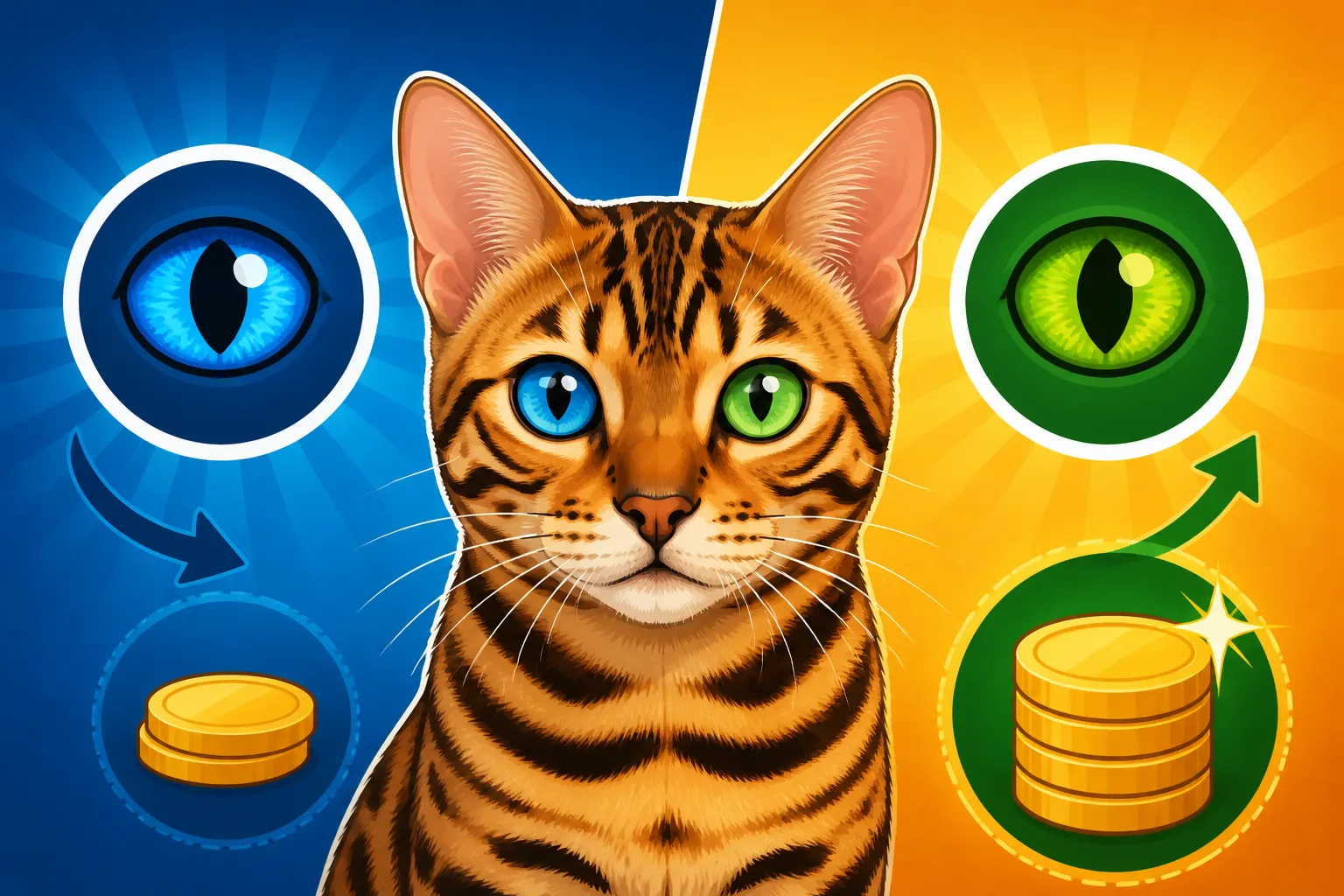
It’s a persistent myth that a Bengal cat with a specific eye color, say bright green or deep blue, automatically comes with a higher price tag. While beautiful, eye color alone rarely dictates the price in the way other fundamental traits do.
Why Eye Color Isn't a Primary Price Determinant
Reputable Bengal breeders focus on a holistic approach when determining a kitten's value. Their priority is producing healthy, well-tempered cats that closely match the breed standard. This includes:
- Health: Ensuring the kitten is free from genetic diseases through parent testing (like for PRA-b and PK deficiency) and vet checks. This is paramount, as a healthy kitten will save you heartache and significant vet bills in the long run.
- Temperament: Socialization is crucial, especially for an active breed like the Bengal. A well-adjusted, friendly kitten is invaluable.
- Generation: As mentioned, the filial generation significantly impacts the price, with F1 and F2 cats being the most expensive due to their wilder traits and breeding complexities.
- Pattern Quality: The clarity, contrast, and type of rosettes (or marbling) are huge drivers. A perfectly formed donut rosette on a strong, clear coat will always be a premium feature.
- Overall Conformation: How well the cat meets the entire TICA breed standard – including head shape, ear size, body length, and tail – is judged as a whole.
Eye color, while undeniably adding to a cat's individual charm, is typically a secondary consideration. It's like choosing a car based on the color of the interior stitching; it's a nice bonus, but not the reason you buy the car. Breeders aren't generally pricing a brown rosetted Bengal higher just because its eyes are a particularly vibrant shade of green. They're looking at the whole package.
When Eye Color Seems to Influence Price (and why it's a misconception)
There are instances where eye color might appear to influence the price, but it's usually a misconception. Take, for example, the highly sought-after Seal Lynx Point Snow Bengal with its piercing blue eyes. These cats often command a higher price. However, it's not the blue eyes alone that drive the cost. It's the fact that they are a Snow Bengal, a specific color class, and their blue eyes are a characteristic trait of that genetic type. If that same Snow Bengal also has exceptional rosette patterning and a stunning glittered coat, it contributes to the overall higher value. The blue eyes are simply part of a desirable genetic package.
Similarly, if a breeder has a particular line of brown Bengals known for exceptionally vivid green eyes, and those cats also happen to consistently produce show-quality patterns and outstanding temperaments, then kittens from that line might be more expensive. But again, it's not the eye color in isolation. It's the cumulative effect of all the desirable traits that the breeding program has achieved. You're paying for the overall quality and adherence to the breed standard, not just the hue of their iris.
What Truly Adds Value to a Bengal Cat's Price Tag
Instead of focusing solely on eye color, understanding the real elements that contribute to a Bengal cat's value will help you make a more informed decision and appreciate the work of dedicated breeders.
Quality of Pattern and Rosettes
This cannot be stressed enough: the pattern is King (or Queen!) in the Bengal world. Whether it's the rich, defined rosettes that mimic a leopard or jaguar, or the flowing, intricate marbling, the quality of these markings is a primary price determinant. Breeders strive for high contrast, clear outlines, and desirable rosette types like donut, paw-print, or arrowhead. A cat with a messy, undefined, or 'ribboned' pattern will be priced lower than one with exquisite, well-separated rosettes. This is often what gives a Bengal that truly wild, exotic look that captivates so many. What a Rosetted Bengal Cat Costs further explains these nuances.
Health Testing and Pedigree
A responsible breeder invests significantly in the health of their breeding program, and this investment is reflected in the price of their kittens. They will perform health screenings for genetic conditions like HCM (Hypertrophic Cardiomyopathy), PRA-b (Progressive Retinal Atrophy), and PK Deficiency (Pyruvate Kinase Deficiency). These tests are not cheap, but they are crucial for producing healthy kittens and ensuring the longevity of the breed. For example, knowing How Common HCM Is in Bengal Cats means a good breeder will be vigilant with screening.
A clear, extensive pedigree is another sign of a reputable breeder and adds value. It demonstrates the lineage of the cat, often tracing back to champion lines, and confirms its purebred status. When you adopt from such a breeder, you're not just getting a kitten; you're getting peace of mind and the assurance of ethical breeding practices. Looking into pet insurance providers like Healthy Paws early on can also help mitigate potential costs associated with unforeseen health issues, even with a responsibly bred kitten.
Temperament and Socialization
Bengal cats are known for their high energy and intelligent, sometimes mischievous, personalities. A well-socialized Bengal kitten, raised in a loving home environment, will be much easier to integrate into your family. Breeders who spend ample time handling, playing with, and exposing their kittens to various sights and sounds are doing invaluable work. This hands-on socialization ensures the kitten is confident, friendly, and ready for a domestic life, despite their wild ancestry. A well-socialized kitten is far more precious than one with a specific eye color.
When considering your budget, remember the long-term commitment. The initial purchase price is just one part of Fifteen Years of a Bengal Cat, Priced Out. Ongoing costs include high-quality food, vet care, toys, and enrichment. For a truly comprehensive look at initial costs, you might want to check out What a Bengal Cat Costs to Buy in 2026, keeping in mind that the numbers represent market averages without specific current figures. The overall value comes from health, temperament, and adherence to the breed standard, not just a single physical trait.
Price Factors: Eye Color vs. What Really Matters
To help clarify, here's a quick comparison of factors that genuinely drive a Bengal cat's price versus those that have a minimal or indirect impact.
| Price Influencer | High Impact | Low/Indirect Impact |
|---|---|---|
| Generation | F1, F2, F3 (early generations highest) | SBT (later generation, typically pet price) |
| Pattern Quality | Clear, high-contrast rosettes (donut, paw-print) | Faint, muddy, or 'ribboned' patterns |
| Breeder Reputation | Ethical, health-tested lines, champion pedigrees | Backyard breeders, unknown lineage |
| Health Certifications | DNA tests, echocardiograms, vet checks for parents | No health testing, 'pet-only' clauses |
| Temperament | Well-socialized, confident, friendly | Shy, aggressive, or poorly socialized |
| Coat Quality | Glitter, soft pelt-like texture, short & dense | Dull coat, excessive fuzzies (beyond kitten stage) |
| Overall Conformation | Adherence to TICA breed standard | Deviations from breed standard |
| Eye Color | Indirect: linked to specific coat genetics | Direct: generally not a standalone price factor |
Disclaimer
This article is for general informational purposes only and does not constitute professional advice. Laws, prices and regulations vary by location and change over time. Consult a qualified professional for guidance on your specific situation.