Whether the Bengal Cat Is TICA’s Most Popular Breed
A Bengal may be one of the first breeds you see when browsing cat rankings, but “most popular” can mean registered most often, searched most often, or simply talked about most. This guide explains what a TICA popularity claim can—and cannot—tell you, why rankings change, and how to judge whether a Bengal is a good fit for your home.
What “TICA’s most popular breed” actually means
TICA rankings depend on what is being counted
TICA, The International Cat Association, is a major cat registry. When people describe a breed as TICA’s “most popular,” they may be referring to registration numbers, show participation, an audience poll, or another measure. Those measures do not necessarily produce the same ranking.
Registration figures are usually the clearest basis for a registry ranking, but even those need context. A count may cover a particular period, and a ranking can change when the time window changes. It also reflects cats registered with that organization—not every cat living in homes, every kitten sold, or every person who says a certain breed is their favorite.
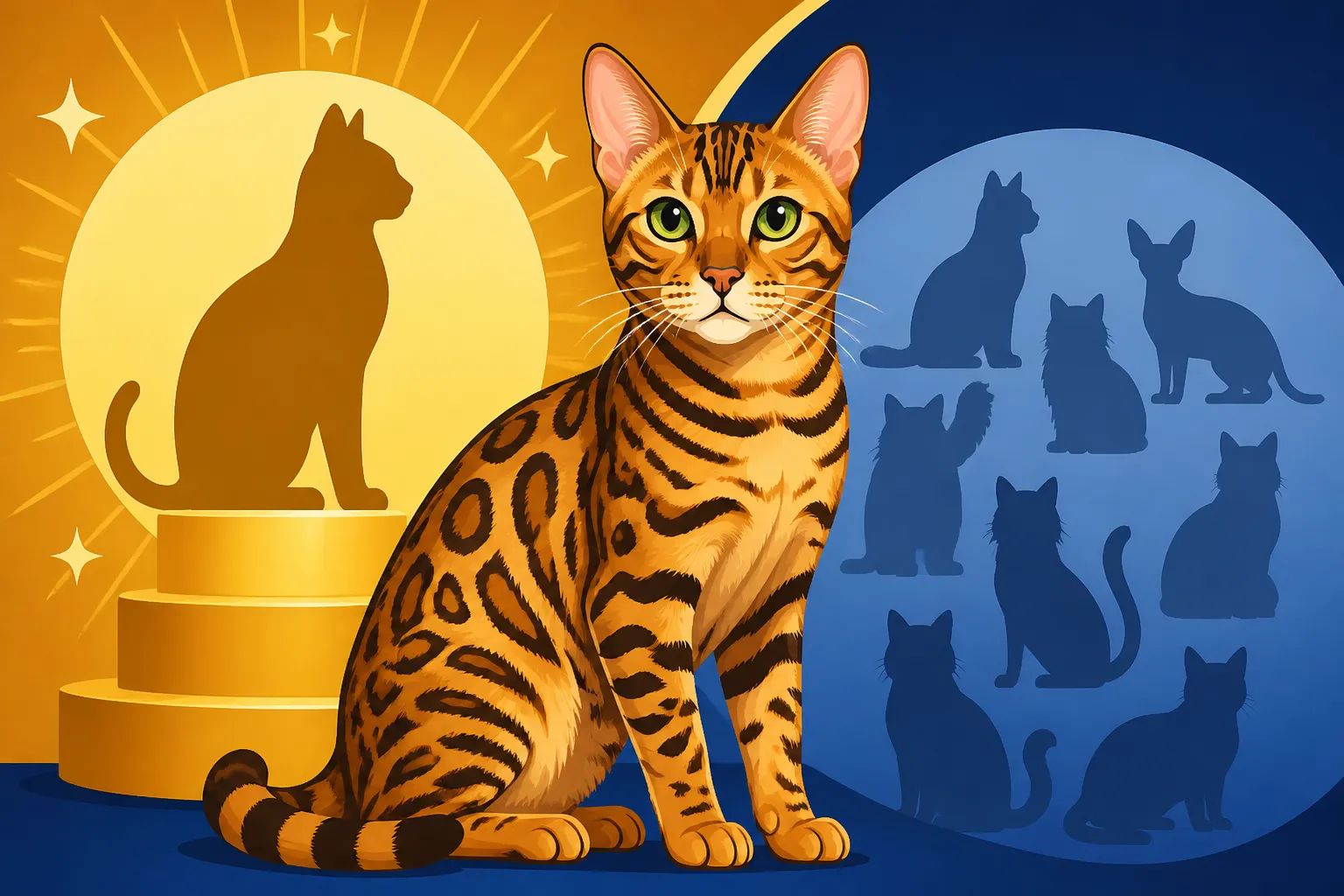
So the most accurate answer is: the Bengal is a prominent and widely recognized breed, but the phrase “TICA’s most popular breed” needs a specific ranking period and a defined measure to be confirmed. Without those details, it is safer to call the Bengal popular than to state that it is definitively number one.
Popularity is different from breed recognition
A breed can be accepted by a registry without being its most registered breed. TICA accepted the Bengal decades ago, and later gave it championship status, which allowed eligible Bengals to compete at that level. Those milestones establish the breed’s standing within the organization; they do not, by themselves, demonstrate that it leads a popularity ranking. You can read more about When TICA Accepted the Bengal Cat and When the Bengal Cat Got Championship Status.
There is a similar distinction between recognition and everyday ownership. A breed can attract attention at shows and online while representing a smaller share of household cats overall. Conversely, a familiar household breed may be common in homes without generating as much public interest or show activity.
That is why a ranking should be read as a narrow answer to a narrow question. “Which breed had the most registrations in this reporting period?” is different from “Which breed do people like most?” and both are different from “Which breed is best for a first-time cat owner?”
How to interpret Bengal popularity claims
Check the source, date range, and measurement
When you see a claim that the Bengal is TICA’s most popular breed, look for three details before repeating it: who compiled the ranking, what time period it covers, and what “popular” measures. If a post gives no date or method, it may be using an old result, a different organization’s data, or a general impression rather than a verified registry ranking.
A useful comparison might look like this:
| Popularity measure | What it can tell you | What it does not establish |
|---|---|---|
| TICA registrations | How often cats were registered with TICA during a specified period | How many Bengals live in all homes |
| Show entries | How much participation a breed has in shows | Overall ownership or public preference |
| Search interest | How often people look up a breed online | How many cats are registered or owned |
| Poll results | Preferences among the people who responded | The preferences of all cat owners |
| Breeder availability | How easy it may be to find kittens from participating breeders | The breed’s total population |
If the source does provide a period and method, you can assess the statement more fairly. A breed may top one measure but rank differently in another. For registry-specific context, Where the Bengal Cat Ranks in Registrations is a useful related topic.
A high ranking does not mean a Bengal suits every household
Popularity can make a breed seem like an obvious choice, especially when photos highlight its spotted or marbled coat. But a ranking cannot tell you whether an individual cat’s needs match your daily routine. Bengals are often energetic, curious cats, and many need regular play, climbing opportunities, and interaction. That can be a delight for someone who wants an involved companion—and a real strain for someone expecting a quiet, low-maintenance pet.
Think about a typical weekday in your home. If you are out for long stretches, do you have a plan for play and stimulation before and after work? If you rent, are you prepared to make space for sturdy climbing equipment and protect surfaces that may become tempting scratching spots? Popularity cannot answer those practical questions for you.
It helps to look beyond the breed’s appearance and consider its temperament and activity needs. What a Bengal Cat's Temperament Is Really Like and How Active a Bengal Cat Is offer a more useful starting point than a league table. If you are still deciding whether the breed matches your lifestyle, Whether a Bengal Cat Is Right for You can help you think through the everyday commitment.
Why Bengals attract so much attention
Their appearance is distinctive, but it is only one part of the story
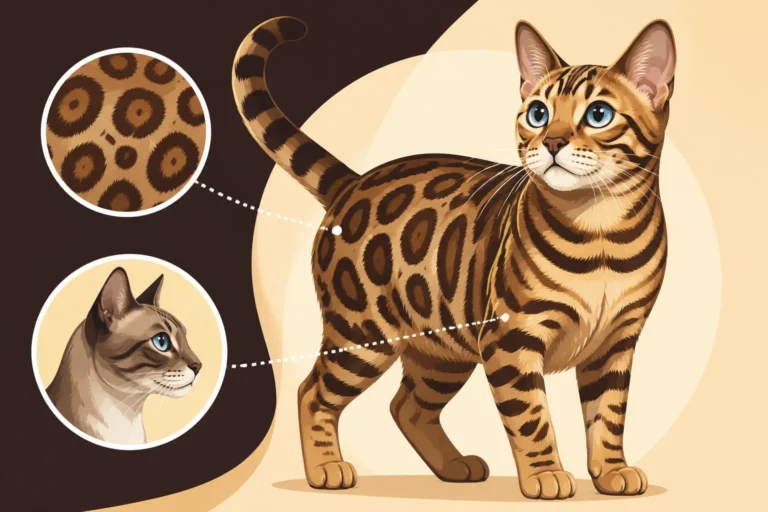
The Bengal’s coat is a major reason the breed stands out. Rosettes, spots, and marbled patterns can give a Bengal a striking look, and that visual appeal is easy to share in photos and videos. People who have never owned a Bengal may first encounter the breed through those images, which can create interest and contribute to its visibility.
Yet a distinctive coat should not be mistaken for a complete picture of the cat. Appearance says little about how much attention a particular cat needs, how it behaves around other pets, or whether it will settle comfortably into a given home. The breed standard describes physical characteristics, but owning a cat involves far more than matching a visual ideal. For more on appearance and breed criteria, see What the Bengal Cat Standard Asks For.
Bengals also have a history that helps explain their unusual look and name. They were developed through domestic-cat breeding involving the Asian leopard cat, followed by generations of selective breeding. That history does not mean a modern Bengal is a wild animal, but it does help explain why the breed is often discussed differently from more familiar domestic cats. Where the Bengal Cat Comes From explores that background.
Activity and enrichment can shape the ownership experience
A common source of disappointment is discovering that an appealing, popular cat needs more engagement than expected. A Bengal that gets too little activity may look for its own entertainment: investigating cupboards, climbing onto shelves, pestering people, or turning household objects into toys. Those behaviors are not proof that the cat is “bad”; they can be a sign that its environment needs adjustment.
A practical routine can make a difference. Short interactive play sessions, safe climbing routes, puzzle feeders, and suitable scratching surfaces give a cat appropriate ways to use its energy. If you are gathering supplies, retailers such as Chewy can be one place to browse toys, scratchers, and puzzle feeders; the key is choosing items that are sturdy and appropriate for your cat rather than buying a pile of novelty toys that may not hold its interest.
A Bengal may also benefit from predictable interaction, especially if the household is busy. Some owners rotate toys, hide small portions of food in puzzle feeders, or set aside time for supervised play before work and in the evening. Chewy may be convenient for comparing those enrichment options, but products alone will not replace attention and a consistent routine. For a fuller look at daily needs, read How Much Enrichment a Bengal Cat Actually Needs.
What to consider before choosing a Bengal
Assess your home and routine, not just the breed’s ranking
Before choosing any breed, consider how much time you can realistically devote to play, interaction, grooming, and veterinary care. Ask whether your home has safe vertical space, whether other pets are likely to be compatible, and how you will manage introductions. A Bengal can be a wonderful companion in a household prepared for an active cat, but that does not make the breed an automatic match for every family.
If you are a first-time cat owner, do not assume that a popular breed is an easy starter choice. Some people thrive with a highly engaged cat; others find the demands more than they expected. The important question is not whether Bengals are widely admired, but whether you want the day-to-day experience of living with one. Why a Bengal Cat Is a Bad First Cat discusses why the breed’s needs deserve careful thought before you commit.
Practical preparation matters, too. If you are buying equipment, Chewy is one option for finding basics such as litter supplies, carriers, scratching posts, and toys. Compare products for durability and suitability, and ask the breeder, rescue, or veterinarian what the cat already uses. Familiar litter and food can make a transition easier than changing everything at once.
Use popularity as context, not as a decision rule
A breed’s popularity can be useful context. It may mean there is a lively community of owners, plenty of general information, and a range of breeders or rescue contacts to investigate. But popularity can also make it easier to encounter oversimplified claims, rushed decisions, or sellers who emphasize appearance while giving too little attention to health, temperament, and responsible placement.
Take time to ask specific questions. How is the kitten being raised? What health information is available for the parents? What support does the breeder or rescue provide after placement? Can you meet the cat or learn about its behavior in a home setting? These questions are much more relevant to your future experience than whether a breed appeared at the top of one list.
Most of all, meet the individual cat when possible. Bengals can share broad breed tendencies, but every cat has its own personality and history. A confident, busy kitten may need a different home from a cautious adult cat, even if both are Bengals. A ranking can suggest that the breed has broad appeal; it cannot predict the bond you will form with one particular animal.
Disclaimer
This article is for general informational purposes only and does not constitute professional advice. Laws, prices and regulations vary by location and change over time. Consult a qualified professional for guidance on your specific situation.