How Many Calories a Bengal Cat Burns
One of the most common frustrations Bengal cat owners face is trying to figure out just how much to feed their endlessly energetic companions. It often feels like they're a bottomless pit, always on the go, and standard feeding guides for domestic cats just don't seem to apply. This guide is here to shed light on exactly how many calories a Bengal cat truly burns, helping you understand their unique metabolic needs and ensure your feline friend is perfectly fueled for their wild adventures.
Understanding the Bengal Cat's Unique Energy Needs
When you look at a Bengal cat, you're not just seeing a beautiful domestic feline; you're seeing generations of carefully selected traits that hark back to their wild ancestor, the Asian Leopard Cat. This lineage isn't just about their stunning coat patterns or captivating eyes; it profoundly impacts their physiology, particularly their metabolism and activity levels, which directly dictate how many calories they burn.
Wild Ancestry and Activity Levels
It's no secret that Bengal cats are a whirlwind of motion. They possess an athletic physique and an innate curiosity that drives them to explore, climb, and play with an intensity rarely seen in other domestic breeds. This isn't just a quirky personality trait; it's a fundamental part of their genetic makeup. Their wild ancestors were agile hunters, constantly on the move, and that drive to move and hunt is deeply ingrained in the Bengal. As a result, a Bengal cat's daily routine often involves far more strenuous activity than your average housecat. They don't just "play"; they sprint, leap, pounce, and climb, often for hours on end, sometimes even getting in the shower with you! This sustained, high-intensity activity demands a significantly higher caloric intake to maintain their energy levels and physical condition. Think of them as feline athletes—they need athlete-level nutrition. You might find yourself wondering How Much Exercise a Bengal Cat Needs a Day just to keep up with them, and the answer is usually "more than you'd expect!"
Their energy expenditure isn't limited to structured playtime either. A Bengal cat is constantly surveying its environment, exploring new heights, and investigating every nook and cranny. This mental and physical engagement is continuous, from their morning zoomies to their late-night adventures. This constant state of alertness and movement means their metabolic engine is almost always running at a higher RPM compared to a sedentary cat. They are quite literally The Bengal Cat Is the Most Active Cat You Can Own, and that activity comes with a high metabolic price tag.
Metabolism and Muscle Mass
Beyond just their sheer activity, the very composition of a Bengal cat's body contributes to their elevated calorie burn. These cats are known for their lean, muscular build. Unlike some breeds that might be more prone to carrying extra weight, a healthy Bengal cat typically boasts a dense, athletic musculature. Muscle tissue is metabolically much more active than fat tissue. This means that even at rest, a muscular Bengal cat will burn more calories than a cat of the same size with a higher fat-to-muscle ratio.
Their efficient metabolism is a finely tuned engine designed for performance. This is why you'll often hear discussions among breeders and owners about the importance of high-quality, high-protein diets. It's not just a preference; it's a necessity to support that active muscle mass and rapid metabolism. Providing sufficient calories and nutrients, especially protein, is crucial for maintaining this lean muscle and preventing them from using their own muscle tissue for energy. If you're pondering What a Muscular Bengal Cat Should Weigh, remember that their weight should be lean and solid, not flabby. This focus on muscle also explains Why an Old Bengal Cat Loses Muscle First if their diet or activity wanes, underscoring the lifelong importance of proper nutrition.
Factors Influencing Calorie Burn in Bengal Cats
While Bengal cats universally have higher energy needs than many other breeds, it's not a one-size-fits-all equation. Several individual factors can significantly influence how many calories your specific Bengal cat burns in a day. Understanding these nuances is key to tailoring their diet precisely.
Age, Sex, and Spay/Neuter Status
Just like humans, a Bengal cat's caloric needs change throughout their life. Kittens, with their explosive growth and boundless energy, are often little calorie furnaces. They're constantly developing bone, muscle, and neurological systems, and their play is relentless. A young Bengal kitten might burn proportionally more calories than an adult to fuel both growth and activity. Conversely, as a Bengal cat enters their senior years, their activity might naturally start to wind down, leading to a slight decrease in their caloric requirements. The Age a Bengal Cat Is Considered Senior is often around 10-12 years, and this is when you'll really need to pay attention to their changing needs.
Sex also plays a role, though often tied to muscle mass and hormonal activity. Male Bengal cats, especially intact males, tend to be larger and more muscular, and their hormonal drive can lead to higher activity levels, thus burning more calories. Females, while also incredibly active, might have slightly lower overall caloric needs if they are smaller in stature. The biggest change, however, often comes with spaying or neutering. After this procedure, a cat's metabolism can slow down, and their hormonal drives (which often contribute to restless energy and territorial marking) are reduced. This means a spayed or neutered Bengal will generally require fewer calories than an intact one to maintain a healthy weight. Owners often find that How Easily a Bengal Cat Becomes Overweight increases dramatically post-spay/neuter if their diet isn't adjusted.
Environmental Enrichment and Playtime
This is where Bengal cats truly shine—and burn calories! The amount and type of environmental enrichment you provide, coupled with dedicated playtime, directly impact how active your Bengal is, and consequently, how many calories they expend. A Bengal living in a stimulating environment with plenty of vertical space, interactive toys, and opportunities for mental engagement will naturally be more active than one left in a barren home with little to do.
Think about a Bengal cat with a large cat tree, climbing shelves, regular leash walks, and puzzle toys. This cat is actively engaged, jumping, climbing, exploring, and hunting. Each of these activities burns calories. If your Bengal has a cat wheel, they might be logging miles every day! This continuous engagement means their body is constantly drawing on energy reserves. On the flip side, a Bengal without these outlets, while still having an innate drive for activity, might express it in less constructive ways or become frustrated, but their overall caloric burn might still be higher than a regular cat, just perhaps not as optimized. To ensure they burn those calories constructively, providing things like a Cat Wheel for a Bengal Cat Costs are investments in their health and happiness. Regular, engaging play sessions are critical. You'll observe How Many Hours a Day a Bengal Cat Plays and realize it's a substantial portion of their waking hours.
Health Conditions and Stress
A Bengal cat's health status and stress levels can also significantly impact their metabolic rate and, therefore, their caloric needs. Illnesses can either increase or decrease calorie burn. For instance, a cat fighting an infection or recovering from surgery will have increased energy demands as their body works to heal and repair. Chronic conditions, on the other hand, might lead to lethargy and reduced activity, thereby lowering their caloric needs. It's vital to work closely with your veterinarian if your Bengal has any health issues, as their dietary requirements might need special adjustments.
Stress is another often-overlooked factor. A stressed cat might exhibit changes in appetite, either eating less or overeating as a coping mechanism. Chronic stress can also affect hormone levels, which in turn influence metabolism. For an anxious Bengal, calories might be burned faster due to restlessness, or stored differently due to stress-related physiological responses. Changes in environment, new pets, or household disruptions can all be sources of stress. Observing your Bengal's behavior and consulting with your vet if you notice significant changes in appetite or weight are crucial steps. This is part of the broader commitment to understanding What a Bengal Cat Costs Over Its Lifetime and recognizing that vet care for any health changes is paramount.
Estimating Daily Calorie Requirements
Figuring out the exact calorie needs for your Bengal can feel a bit like a mathematical puzzle, but it’s a crucial step in ensuring they’re getting the right nutrition. We can break it down into a few manageable steps, acknowledging that every cat is an individual.
Basal Metabolic Rate (BMR) and Resting Energy Requirement (RER)
First, let's talk about the absolute minimum. The Basal Metabolic Rate (BMR) is the number of calories a cat burns simply to maintain basic bodily functions while at complete rest, like breathing, circulation, and cell production. Since it's nearly impossible to measure true BMR in a clinical setting, veterinarians use the Resting Energy Requirement (RER) as a practical estimate. This is the energy needed for an animal at rest in a thermoneutral environment with no physical activity or food digestion.
The formula commonly used for RER is: RER (kcal/day) = 70 * (body weight in kg)^0.75.
Don't let the exponents scare you! Most veterinary nutritionists and online calculators can do this for you. For example, a Bengal weighing 5 kg would have an RER significantly lower than their actual daily needs, as this only covers basic existence, not their wild leaps and bounds. This RER value serves as a baseline, the foundation upon which we add their activity and other factors. It's the bare minimum, the quiet hum of their engine when they're totally still.
Daily Energy Requirement (DER) Calculations
Once you have the RER, you need to factor in your Bengal cat's unique level of activity, their reproductive status, and their life stage to get their Daily Energy Requirement (DER). This is where the Bengal's athletic nature really shines through in the numbers. The DER is typically calculated by multiplying the RER by an "activity factor" or "metabolic factor."
Here's a general guideline for these factors, but remember, Bengals often skew to the higher end:
| Life Stage / Condition | Activity Factor | Example Use Case |
|---|---|---|
| Neutered Adult (Sedentary) | 1.0 – 1.2 | Unlikely for a Bengal, even a couch potato one. |
| Neutered Adult (Active) | 1.2 – 1.4 | A typical, moderately active adult Bengal. |
| Intact Adult (Active) | 1.4 – 1.6 | Higher energy needs due to hormones and activity. |
| Weight Loss | 0.8 – 1.0 | Carefully calculated by a vet for gradual weight loss. |
| Weight Gain | 1.4 – 1.8 | For underweight Bengals or those needing to build muscle. |
| Growing Kitten | 2.0 – 3.0 | Rapid growth and immense activity require significantly more. |
| Pregnant/Lactating Queen | 2.0 – 4.0 | Immense energy demands for milk production and kitten growth. |
So, if our 5 kg Bengal has an RER of, say, 234 kcal/day, and they are a highly active, neutered adult, you might multiply that by 1.4 or even 1.6 if they are particularly energetic. That could put their DER at around 327 to 374 kcal/day. For a Bengal kitten, that factor could be as high as 2.5 or 3.0, meaning a kitten could easily need 500-700+ kcal/day! It's clear that What a Bengal Cat Eats to Fuel That Activity is often far more than many owners initially estimate. This isn't just theory; it's a practical guide to keep your Bengal thriving.
Consulting Your Vet for Personalized Advice
While these formulas provide a great starting point, they are general guidelines. Your Bengal cat is a unique individual, and their exact needs can vary based on their specific genetics, health, and lifestyle. This is why consulting with your veterinarian or a board-certified veterinary nutritionist is absolutely essential. They can perform a thorough physical examination, assess your cat's body condition score, and discuss their daily routine, specific activity levels, and any underlying health concerns.
Your vet can help you fine-tune these calculations, recommend appropriate food types and brands (you might find high-quality options on Chewy or Amazon, but your vet can guide your choices), and monitor your Bengal's weight and health over time. They can tell you if your Bengal is actually burning through, say, 400 calories a day, or if they're closer to 300 based on their individual needs. Don't hesitate to ask for help! Regularly scheduled wellness exams, as detailed in How Often a Bengal Cat Needs a Wellness Exam, are the perfect opportunity to discuss these nutritional questions. This personalized approach ensures your Bengal cat receives the precise fuel they need to live their best, most active life.
Addressing Common Misconceptions About Bengal Cat Calories
It's easy to fall into traps when feeding a Bengal, especially if you've only ever owned more sedentary cat breeds. Their unique physiology and activity levels mean that some widely held beliefs about cat nutrition simply don't apply to them, or need significant adjustment.
The Myth of "Self-Regulating" Bengals
One common misconception is that cats, including Bengals, will simply "self-regulate" their food intake and eat only what they need. While some cats do have better self-control than others, for an active breed like the Bengal, this often isn't the whole story. Their incredible metabolism and constant energy burn can make them seem perpetually hungry. They might raid cabinets (How a Bengal Cat Learns to Open a Cabinet), jump on counters, and generally act like they're starving, even if they've just eaten. This isn't necessarily a sign of true hunger, but rather their innate drive to forage and their high caloric needs signaling their bodies to seek out more fuel.
Leaving a full bowl of kibble out for a Bengal, expecting them to stop when satisfied, can often lead to overconsumption. Because they are so active, they might not immediately show signs of weight gain until it's become a more significant issue. Or, conversely, if the food isn't nutrient-dense enough, they might eat more in an attempt to get the nutrients they need, leading to excess calories from poor quality food. It's not that they can't self-regulate at all, but their baseline drive is so high that free-feeding often isn't the best strategy for maintaining optimal body condition. You'll understand Why a Bengal Cat Never Seems to Tire, and that endless energy needs careful management, not just an open buffet.
Overfeeding vs. Under-nourishing
This is a delicate balance with Bengals. On one hand, you don't want to overfeed them, leading to unnecessary weight gain, which can impact their joints and overall health down the line. Even an active Bengal can become overweight if consistently given too many calories, especially as they get older or if their activity levels dip. On the other hand, under-nourishing an active Bengal can be just as detrimental. This isn't necessarily about giving them too little food, but rather giving them food that lacks the dense nutrition their bodies demand.
A Bengal cat needs a diet rich in high-quality animal protein to support their significant muscle mass and high energy output. If you feed them a diet with too many fillers, carbohydrates, or low-quality protein, they might eat a large volume of food but still not be getting the essential amino acids and energy they need. This can lead to a cat who seems constantly hungry, potentially leading to begging or even destructive behaviors born of nutritional deficits. It also means they aren't getting the building blocks for healthy muscles and a strong immune system. The argument for The High Protein Argument for a Bengal Cat isn't just about weight, but about optimal health and performance for this unique breed. It's about feeding for their athleticism, not just their appetite.
Practical Tips for Fueling Your Active Bengal
Now that we've delved into the science behind their calorie burn, let's talk about practical steps you can take to ensure your Bengal cat is optimally fueled. It’s about more than just quantity; it’s about quality and smart feeding strategies.
Choosing the Right Food Type
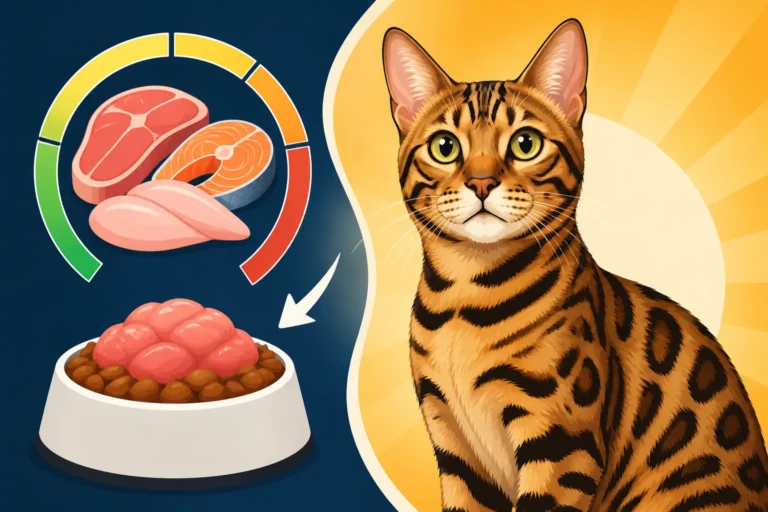
For a Bengal cat, the type of food you choose is paramount. Given their wild ancestry and high protein needs, a diet rich in high-quality animal protein is essential. Look for foods where meat is the first and primary ingredient, not grain fillers or vegetable proteins. While grains aren't inherently "bad" for all cats, many Bengal owners find their cats thrive on grain-free or limited-ingredient diets, particularly if they have sensitive stomachs, a common Bengal trait.
Wet food is often a better choice than dry kibble for a Bengal, or at least a significant component of their diet. Wet food provides crucial hydration, which supports kidney health, and typically has a higher protein-to-carbohydrate ratio. If you're using dry kibble, opt for a high-quality, high-protein formula specifically designed for active cats. You might explore various brands available on platforms like Chewy or Amazon, always checking ingredient lists carefully. Some owners even delve into raw feeding, though this requires extensive research and veterinary guidance to ensure it's nutritionally complete and safe. Ultimately, the “best” food is one your Bengal thrives on, maintains a healthy weight with, and enjoys eating.
Monitoring Weight and Body Condition
Regularly monitoring your Bengal cat's weight and body condition is one of the most important things you can do to ensure they are getting the correct number of calories. Weight alone isn't always sufficient; you need to assess their body condition score (BCS). This involves feeling their ribs, spine, and waistline.
A healthy Bengal should have ribs that are easily palpable under a thin layer of muscle, but not visibly protruding. They should have a distinct waist when viewed from above, and an abdominal tuck when viewed from the side. If you're struggling to feel their ribs, or they look round when viewed from above, they might be carrying too much weight, even if they're constantly on the move. Conversely, if their ribs are sharply visible or their hip bones protrude, they may be underweight. Weigh your Bengal regularly, perhaps once a month, and keep a log. These subtle changes can signal that their caloric intake needs adjustment. Remember, What a Bengal Cat Weighs varies, but it should always be lean and muscular.
Creative Ways to Burn Extra Energy
Even with a perfectly calibrated diet, a Bengal cat with excess energy can find destructive outlets. Providing ample opportunities for them to burn those calories constructively is vital for their physical and mental well-being. This isn't just about burning calories; it's about channeling their innate hunting and exploring instincts.
Think vertical! Climbing is a huge part of a Bengal's natural behavior. Invest in tall, sturdy cat trees, wall-mounted shelves, and cat "superhighways" that allow them to explore heights safely. Regular, interactive play sessions with wand toys are a must; aim for multiple short sessions throughout the day rather than one long one. Don't underestimate the power of puzzle feeders, which engage their minds and make them "work" for their food, burning mental and physical energy. Leash training can also be an incredible way to allow your Bengal to explore the outdoors safely, burning calories and satisfying their curiosity, as outlined in A Bengal Cat Walks on a Leash. Building a secure outdoor enclosure, or "catio," gives them safe access to fresh air and stimulation, allowing them to burn energy in a natural environment. These varied activities, discussed further in What a Bengal Cat Does All Day, ensure that the calories they consume are put to good use, maintaining their athletic physique and keeping them happy and engaged.
Disclaimer
This article is for general informational purposes only and does not constitute professional advice. Laws, prices and regulations vary by location and change over time. Consult a qualified professional for guidance on your specific situation.