Why a Bengal Cat Destroys Cheap Cat Furniture
There's a special kind of heartache that comes with bringing home a brand-new, shiny piece of cat furniture, only for your energetic Bengal cat to turn it into shredded scraps within weeks, or even days. You thought you were doing something good, providing them with a stimulating environment, and now you're left with a wobbly, claw-marked wreck and a feeling of exasperation. This guide is all about diving deep into why Bengal cats seem to have a vendetta against cheap cat furniture and how you can invest wisely to save your sanity and your wallet in the long run.
The Raw Instincts Behind the Demolition
Bengal cats aren't just your average house cat. They carry the majestic legacy of their wild ancestors, the Asian Leopard Cat, right in their DNA. This lineage isn't just about their stunning looks; it imbues them with a set of instincts that demand a lot more from their environment, especially when it comes to things like climbing and scratching. When cat furniture doesn't meet these innate needs, it quickly becomes a victim of their natural drives.
The Urge to Climb and Perch
If you've ever watched a Bengal cat in action, you know they are incredibly athletic, agile, and seemingly defy gravity. They possess an inherent, powerful urge to climb, explore vertical spaces, and perch at the highest points possible. This isn't just for fun; it's deeply rooted in their predatory instincts. From an elevated position, a wild cat can survey its territory, spot potential prey, and feel safe from perceived threats on the ground. Your Bengal might not be hunting gazelles in the living room, but that instinct to be high up, observing their domain, is as strong as ever.
Cheap cat furniture often falls woefully short here. It typically lacks the height and, more crucially, the stability to support a Bengal's powerful leaps and bounds. Imagine a flimsy, carpeted tower barely reaching your waist. For a Bengal that instinctively wants to scale a mountain, this is less a challenge and more a sad little hill. They’ll try to climb it, perhaps even launch themselves at it with full force, only to find it wobbles dangerously or can't even hold their weight securely. This frustration can lead to them simply bypassing the inadequate furniture and finding alternatives – like your curtains, your bookshelves, or the top of your refrigerator – which might not be ideal for you or safe for them. A truly satisfied Bengal needs to feel like they're on top of the world, not risking a fall from a rickety perch. You'll often find them attempting to reach the highest points in your home because that's what feels natural to them. For more on their natural inclinations, consider The Bengal Cat Is the Most Active Cat You Can Own.
Powerful Scratching and Stretching Needs
Another primary instinct driving the destruction of inadequate cat furniture is their intense need for scratching. This isn't just about sharpening claws; it's a multi-purpose behavior that's vital for a cat's physical and mental well-being. When a Bengal scratches, they are shedding old claw sheaths, marking their territory both visually and with scent glands in their paws, and getting a full-body stretch that activates muscles used in hunting and climbing. Their claws are incredibly strong and designed for gripping, climbing, and taking down prey.
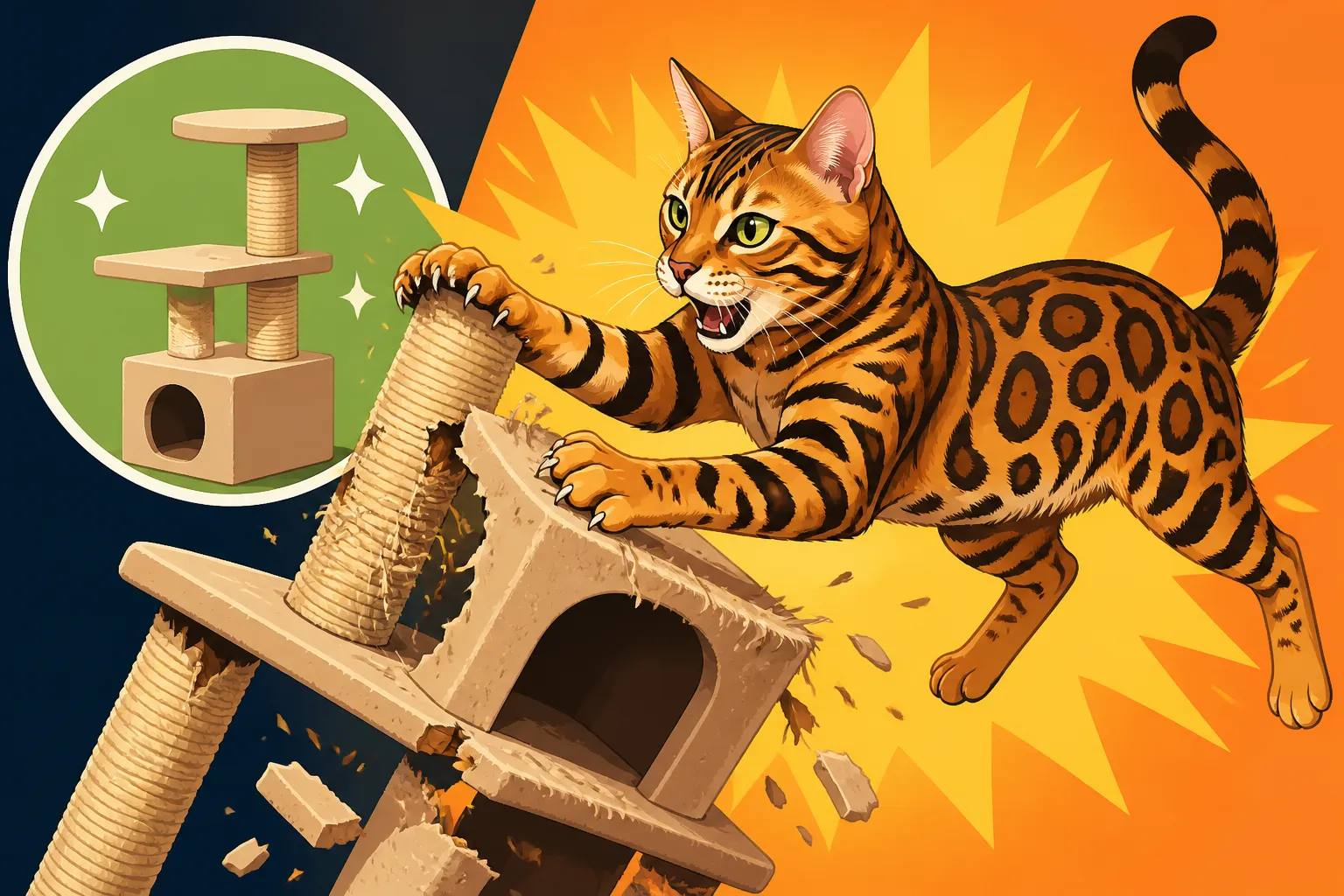
Therefore, when presented with cheap cat furniture featuring thin, low-quality scratching surfaces – often just a thin layer of carpet glued to particle board – it simply doesn't stand a chance. The material gives way too easily, quickly becoming shredded and offering no satisfying resistance. It's like trying to sharpen a knife on a wet paper towel; it's ineffective and utterly frustrating. A Bengal needs a surface they can really sink their claws into, one that allows for a long, satisfying pull and stretch. If the scratching post is too short, too narrow, or made of material that shreds after a few uses, your Bengal will abandon it in favor of something more durable, such as your sofa, your expensive rug, or your wooden doorframes. This isn't malice; it's instinct. They must scratch, and if you haven't provided an acceptable outlet, they'll create one from whatever is available.
Why "Affordable" Cat Furniture Falls Apart So Quickly
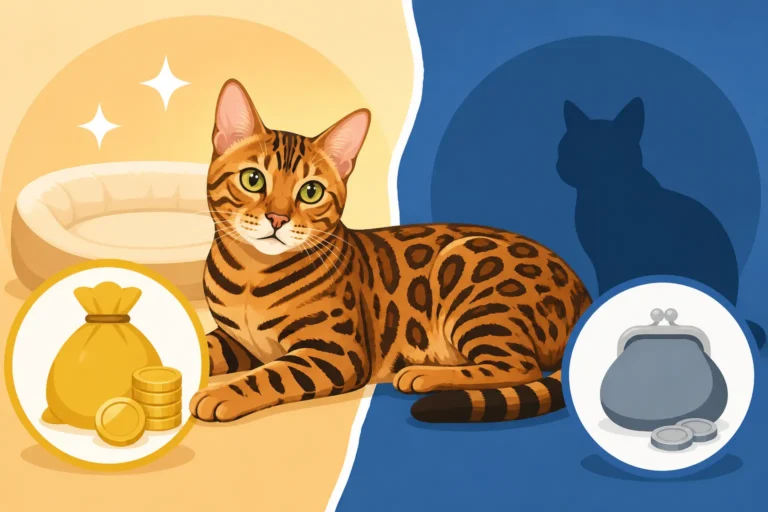
The market is flooded with seemingly affordable cat trees and scratchers, promising endless fun for your feline friend. However, for a breed as dynamic and physically robust as the Bengal, these budget-friendly options often prove to be a false economy. They're simply not built to withstand the unique challenges a Bengal cat presents, leading to rapid deterioration and, ultimately, disappointment.
Flimsy Materials and Construction
The core issue with most cheap cat furniture lies in the materials chosen and the way they're put together. Manufacturers often prioritize low production costs over durability, resulting in products that look appealing on the shelf but can't stand up to the rigorous daily use of an active Bengal.
Think about the typical construction: thin particle board panels, wrapped in an even thinner layer of carpet or faux fur, held together with minimal hardware. Particle board, while inexpensive, is incredibly prone to crumbling, especially when subjected to the force of a Bengal launching themselves off platforms or clawing at the base. Over time, moisture from cleaning or even just ambient humidity can cause it to swell and weaken further. The carpet covering is often sparse, designed more for aesthetics than resilience. It peels away easily, exposing the rough particle board underneath, which quickly becomes an unappealing and non-functional surface. Hollow cardboard tubes, sometimes used for support columns, offer virtually no structural integrity against a powerful Bengal's weight and momentum, flexing and eventually collapsing. These materials aren't chosen for longevity or strength; they're chosen for price point. A Bengal needs furniture that feels solid, unyielding, and safe, not something that feels like it could disintegrate under their paws.
Inadequate Stability and Safety Concerns
Beyond material weakness, a critical flaw in many cheap cat furniture designs is their lack of stability. A Bengal cat is a creature of incredible power and speed. When they decide to leap from a standing start to the top platform, they do so with considerable force. A poorly constructed, lightweight cat tree with a small base is simply no match for this energy.
Imagine your Bengal, mid-leap, reaching the top perch, only for the entire structure to sway violently or, worse, topple over completely. This isn't just an inconvenience; it's a significant safety hazard. A fall can lead to injury – sprains, fractures, or even more serious trauma. Cats are intelligent animals, and a negative, frightening experience like a collapsing cat tree will teach them to avoid it. They associate the furniture with danger rather than a safe haven for play and rest. This undermines the entire purpose of the furniture. Instead of providing an outlet for their climbing instincts, it becomes something to be feared. For a breed that loves to scale heights and demands robust play, stability isn't just a nice-to-have; it's absolutely essential. They need a solid, unwavering foundation that gives them the confidence to perform their impressive aerial maneuvers without a second thought.
What to Look for in Bengal-Proof Cat Furniture
If you've experienced the frustration of quickly demolished cat furniture, it's time to shift your perspective from short-term savings to long-term investment. Choosing the right furniture for your Bengal cat means prioritizing durability, stability, and thoughtful design that caters to their unique needs.
Durability and High-Quality Materials
When shopping for Bengal-proof cat furniture, the first thing you need to scrutinize is the quality of the materials. Forget the flimsy particle board and thin carpet. Instead, look for structures made from solid wood. Solid wood provides exceptional stability and can withstand years of enthusiastic climbing and scratching. It doesn't crumble, swell, or easily break.
For scratching surfaces, sisal rope is your best friend. Unlike cheap carpet, sisal is incredibly durable and offers a satisfying texture that mimics tree bark, a natural scratching surface for felines. Ensure the sisal is tightly wound and securely attached to the posts. Some high-quality furniture uses sisal fabric panels, which can be even more robust. For lounging areas, look for dense, plush carpeting or sturdy upholstery fabrics that can resist clawing and provide comfort. These materials are built to last and provide the satisfying sensory experience your Bengal craves, encouraging them to use the designated furniture instead of your home furnishings. You can often find a good selection of high-quality options at retailers like Chewy, where you can read reviews from other cat owners to gauge durability.
Stability, Height, and Multi-Level Design
A Bengal's energy demands a cat tree that can keep up. Stability is paramount. Look for furniture with a wide, heavy base that prevents tipping, even during the most energetic leaps. Some premium cat trees also offer wall-mounting options, providing an extra layer of security. This is particularly beneficial for very tall structures, ensuring they won't wobble or collapse as your Bengal rockets to the top.
Height is equally crucial. Bengal cats are natural climbers and feel most secure and engaged when they have elevated perches. Look for multi-level designs that allow them to ascend and descend, with various platforms and perhaps even enclosed dens or cubbies for napping or hiding. The more vertical space you can provide, the happier your Bengal will be. Think about How High a Bengal Cat Can Jump and how much How Much Vertical Space a Bengal Cat Needs they truly crave. Consider looking for specific designs often recommended in articles like Which Cat Tree a Bengal Cat Needs for ideas on what stands up to their athletic prowess. If you're handy, you might even consider methods from How to Build Shelves for a Bengal Cat to create custom climbing structures.
Variety and Placement are Key
It's not just about one perfect piece of furniture; a truly enriched environment for a Bengal cat includes a variety of options strategically placed throughout your home. They need choices for scratching, climbing, resting, and observing.
Consider a tall, sturdy cat tree placed near a window, offering a prime view of the outdoors – a constant source of fascination. Supplement this with horizontal scratchers in different textures (cardboard, sisal mats) placed in high-traffic areas where your cat naturally stretches and marks territory. Climbing shelves mounted on walls can create an exciting aerial highway, allowing them to traverse rooms without touching the floor. Tunnels and cubbies provide opportunities for hiding and ambush play. Don't forget their need for interactive play to keep them engaged, as explored in How Much Enrichment a Bengal Cat Actually Needs. The placement is almost as important as the quality; furniture that is in the "wrong" spot, even if it's excellent, might be ignored. Experiment with different locations to see where your Bengal naturally gravitates. Ultimately, providing a rich, stimulating environment with diverse, durable furniture reduces the likelihood of them seeking out less desirable outlets for their instincts.
Investing in Long-Term Happiness (and Avoiding Frustration)
While the initial sticker shock of high-quality cat furniture might give you pause, thinking of it as an investment in your Bengal's well-being and your home's integrity can reframe the decision. It's about more than just a cat tree; it's about providing a sustainable, enriching environment that truly meets the needs of this extraordinary breed.
The Cost-Benefit of Quality
Let's face it: no one enjoys repeatedly buying items that quickly break. The "affordable" cat tree that you replace every six months ends up costing you more in the long run than a single, well-made piece that lasts for five, ten, or even more years. Beyond the financial savings, there's the benefit of reduced frustration. You won't be constantly sweeping up shredded carpet scraps or worrying about your Bengal damaging your expensive sofa.
A durable piece of cat furniture, while a higher upfront cost, pays dividends in terms of longevity, safety, and providing genuine enrichment for your Bengal. It stands up to their powerful claws, supports their athletic climbs, and provides stable perches where they feel secure. This investment helps to channel their natural instincts into appropriate outlets, reducing destructive behaviors around your home. When you consider the full lifespan of your Bengal, which can be The Twelve to Sixteen Years a Bengal Cat Gets, a piece of furniture that lasts a decade or more is an incredibly wise choice. You’re not just buying a product; you’re buying peace of mind and contributing to your cat’s long-term happiness.
Creative Solutions and DIY Options
If the cost of premium cat furniture feels prohibitive, don't despair! There are still ways to provide your Bengal with the robust environment they need without completely breaking the bank. Sometimes, a little creativity and DIY spirit can go a long way.
For instance, you might be able to reinforce an existing, slightly wobbly cat tree by adding a heavier, wider wooden base or securing it to a wall stud. You can also re-wrap worn-out scratching posts with new sisal rope, easily found at hardware stores. Building your own cat shelves or even a simple, sturdy wooden box platform can provide vertical space. Scouring local second-hand stores or online marketplaces for used, solid wood furniture that can be repurposed (cleaned thoroughly, of course!) is another excellent option. The key is to ensure any DIY project prioritizes stability and uses durable, cat-safe materials. Even simple planks of wood mounted securely to walls can create fantastic climbing opportunities, as detailed in guides like How to Build Shelves for a Bengal Cat. When thinking about how to protect your cherished belongings, ideas from How to Protect Furniture From a Bengal Cat can be really helpful.
Beyond Furniture: Total Enrichment
Remember that even the most magnificent cat tree is just one component of a fulfilling life for a Bengal. Their high energy and intelligence mean they require a holistic approach to enrichment. This includes plenty of interactive play sessions with you using wand toys, laser pointers (used carefully and always ending with a tangible catch toy), and puzzle feeders that challenge their minds.
A cat wheel, for example, can be an incredible outlet for their boundless energy, allowing them to run for miles safely indoors. Consider a fully enclosed outdoor catio if your living situation allows, providing them with safe access to the sights, sounds, and smells of nature without the dangers of free-roaming, as explored in Why a Catio Is the Answer to a Bengal Cat. For their diet, highly active cats like Bengals thrive on nutritious food with fresh, high-quality ingredients that can support their energetic lifestyle. And because an adventurous Bengal might occasionally get into scrapes, having pet insurance from a reputable provider like Healthy Paws can offer peace of mind for unexpected vet bills. By combining high-quality, appropriate furniture with engaging toys, mental stimulation, a healthy diet, and preventative care, you'll ensure your Bengal cat lives their best, most enriched life.
Disclaimer
This article is for general informational purposes only and does not constitute professional advice. Laws, prices and regulations vary by location and change over time. Consult a qualified professional for guidance on your specific situation.