Why a Bengal Cat Throws Litter Everywhere
Oh, the joy of having a gorgeous Bengal cat… until you step on a rogue piece of litter halfway across the living room! If you're constantly finding litter scattered far and wide, from next to the box to seemingly impossible distances, you're not alone in your frustration. This guide is here to unravel the mystery of why your energetic Bengal seems intent on redecorating your home with their litter and, more importantly, what practical steps you can take to keep it contained.
Understanding the Bengal Cat's Instincts and the Litter Box
Let's be honest, our Bengals aren't doing this to spite us (as much as it feels that way sometimes!). Their unique behaviors, even the messy ones, are often rooted in deep-seated instincts. Understanding these can help us approach the problem with more empathy and, ultimately, more effective solutions.
The Wild Instinct to Bury and Dig Deep
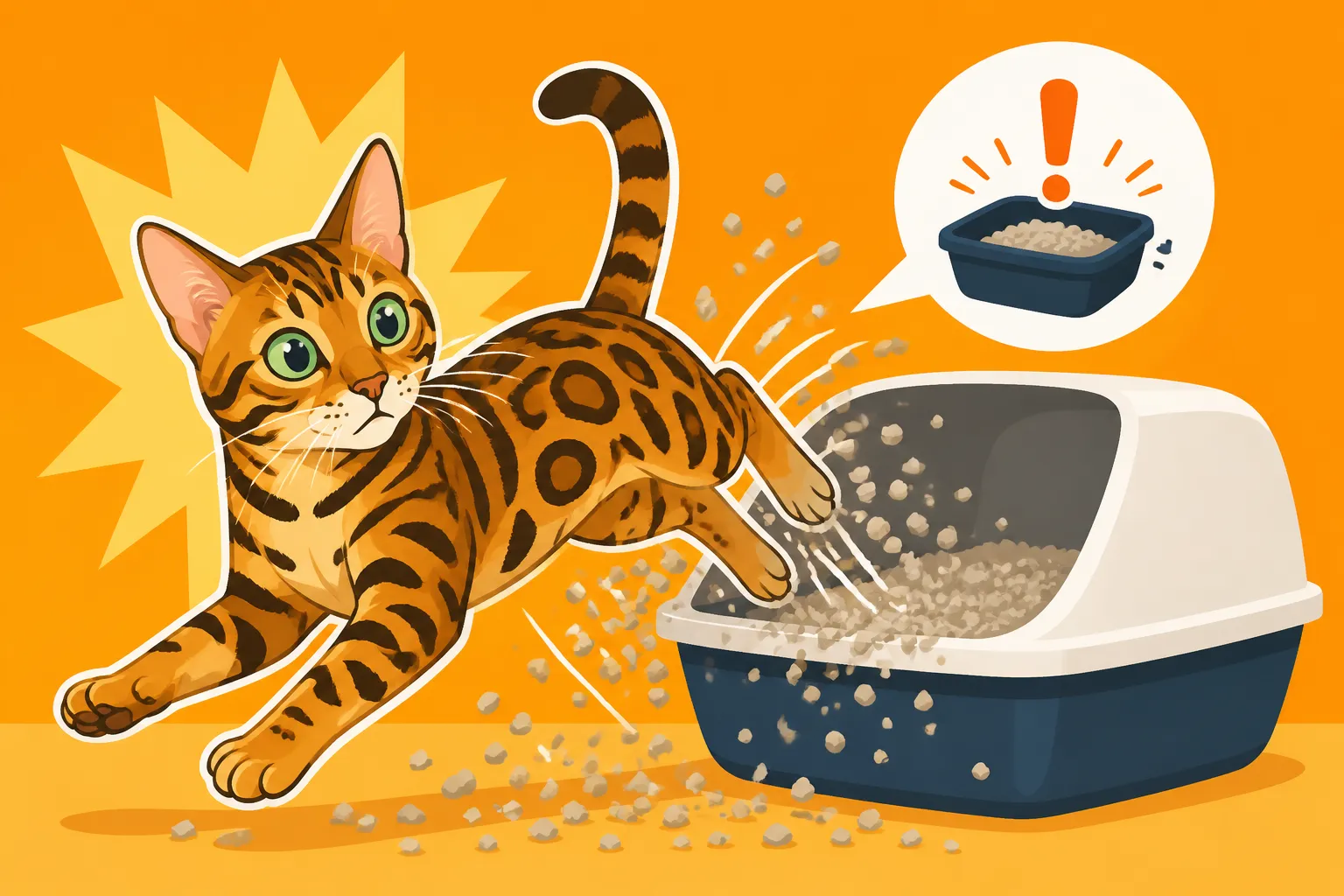
First and foremost, your Bengal cat carries a strong lineage from their wild ancestor, the Asian Leopard Cat. This isn't just about their stunning looks; it's about their ingrained behaviors, too. One of the most prominent is an incredibly powerful instinct to bury their waste. They aren't just giving it a quick flick of litter; they are engaging in a serious excavation project, often digging down to the very bottom of the litter tray before commencing an equally vigorous covering ceremony. This intense digging naturally sends litter flying.
This isn't a dainty little scrape-and-cover. Picture them in their ancestral environment, needing to completely obliterate any scent that might betray their presence to predators or potential prey. They dig with a singular focus, often pausing to survey their work before resuming the rigorous task of burying. Our comparatively small, domestic litter boxes, even the large ones, can feel constricting to these dedicated diggers. When they hit the sides or bottom of the tray with their powerful paws, the only place for the litter to go is up and out.
It's a testament to their wild heritage. They feel compelled to ensure that every last trace is covered, and that often means moving a significant volume of litter. What looks like a mess to us is, to them, a perfectly executed job of hiding their tracks.
High Energy and Exuberant Play
If you own a Bengal, you know they're not exactly couch potatoes. They are renowned for their incredible energy levels, their boundless curiosity, and their tendency to do everything with a certain amount of pizzazz. This high-octane approach doesn't magically stop when they step into the litter box. Their sheer exuberance can be a major contributor to the litter scatter.
Sometimes, it's less about a deliberate "throwing" motion and more about the sheer force and speed with which they operate. They might pounce into the box, dig with the ferocity of a miniature bulldozer, do their business, and then leap out as if propelled by a spring, ready for their next adventure. All of these powerful, quick movements will inevitably carry litter with them, both on their paws and simply through displacement.
Their playful nature can even extend to the litter box itself. Some Bengals might bat at the litter, or even treat the digging as a mini-game, especially if they're not getting enough other forms of enrichment. A bored Bengal is a creative Bengal, and sometimes that creativity spills over into making a mess in unexpected places. For more on their activity, check out The Bengal Cat Is the Most Active Cat You Can Own.
Paw Size and Fur Texture
It might seem like a small detail, but the physical characteristics of your Bengal can also play a role in litter dispersion. Bengals tend to have rather robust, muscular paws, which are perfectly adapted for their climbing and exploratory habits. These powerful paws, while agile, can act like efficient little shovels when they're digging with gusto in the litter box.
Beyond the sheer mechanics of their paws, consider their unique coat. Bengal cats have a distinct "pelted" coat, which is often dense and feels incredibly soft, like silk. While they're generally low-shedders, the fur between their toe pads can be a magnet for tiny litter granules, especially with finer litters. Even if they try to be meticulous, those tiny bits get caught in the fur, only to be deposited on your floor the moment they jump out of the box.
This is particularly noticeable with certain types of litter. Fine, dusty clay litters cling easily to fur and static electricity, making them excellent travelers. Larger, heavier litter pellets might not stick as much, but their size makes them easier to kick out with force. It's a constant battle to find the right balance between what your Bengal prefers and what minimizes the mess. To understand more about their coat, read A Bengal Cat's Coat Is a Pelt, Not Fur.
The Litter Box Environment: Size, Type, and Location
Once you understand why they're so messy, the next logical step is to address the environment you've provided for their bathroom needs. The litter box itself and where it sits can make a world of difference.
The Critical Importance of Box Size
This is often the number one culprit when it comes to Bengal litter scatter. Most standard litter boxes sold in pet stores are simply too small for an active, vigorous Bengal. Imagine trying to dig a trench in a teacup – you'd get dirt everywhere! Your Bengal feels the same way. They need ample space to perform their elaborate digging rituals without constantly bumping into the sides or feeling cramped. A small box directly limits their ability to dig effectively and cover their waste without flinging it.
The general guideline for any cat is a box that's at least 1.5 times the length of your cat from nose to the base of their tail, and wide enough for them to turn around comfortably. For a large, long-bodied Bengal, this means you're often looking at something significantly bigger than what's marketed as "large" or "jumbo." Many owners find success using clear, high-sided storage totes as DIY litter boxes because they offer unparalleled space and depth.
Don't underestimate this point. A truly spacious litter box provides them with the real estate they need to dig deeply and cover their waste without immediately hitting a barrier. It allows them to position themselves better, reducing the amount of kick-out. It’s an investment that pays off in cleaner floors. If you're wondering about options, delve into Which Litter Box Survives a Bengal Cat.
High Sides and Covered vs. Open Boxes
Once you've got the footprint right, the next step is considering the height of the walls. A low-sided litter box is practically an open invitation for a digging Bengal to send litter flying over the edge. It's like building a sandpit with no walls and expecting the sand to stay inside. High-sided boxes are a game-changer for containing those powerful kicks. Look for boxes with walls that are at least 12-16 inches high, or consider those storage totes where you can cut an entrance yourself.
The debate between covered and open boxes is a classic one. Covered boxes, with their enclosed design, seem like a natural solution for litter containment. And they can work for some Bengals, trapping kicked-out litter inside. However, many Bengals, being larger and more adventurous, can feel confined or claustrophobic in a covered box, especially if it's not truly enormous. The trapped odors inside a covered box can also be very off-putting to a cat's sensitive nose, leading to aversion or, ironically, more frantic digging to try and cover the smell.
Many Bengal owners find that a large, high-sided open box offers the best compromise. It provides plenty of room for their digging habits and ventilation to prevent odor buildup, while the tall walls act as a barrier against flying litter. A simple, clear plastic storage tote can be a budget-friendly and highly effective solution. Want to know more about this specific type? Check out Why a High Sided Box Suits a Bengal Cat.
Strategic Placement and Privacy
Even the most perfect litter box can become a source of mess if it's placed in the wrong spot. Cats, by nature, value security and privacy when they're at their most vulnerable. A litter box situated in a high-traffic area—like a hallway where people constantly walk by, or near a noisy appliance—can make your Bengal feel exposed and rushed. When they feel the need to get in and out quickly, they're less likely to be meticulous about their digging and covering, leading to more scattered litter.
Think about giving your Bengal a little dignity. A quiet corner of a laundry room, a less-used bathroom, or even a spacious closet can provide the sense of security they crave. This encourages them to take their time, dig thoroughly, and cover their waste with more care, rather than rushing through the process. However, avoid tucking it away so completely that it becomes inconvenient for them to access or for you to clean.
For multi-cat households or larger homes, implementing the "N+1" rule (one litter box per cat, plus one extra) is always a good idea. This ensures options are always available, reducing any perceived urgency or competition that might lead to rushed, messy litter box visits.
The Role of Litter Type and Litter Mats
Even with the perfect box, the material inside it and the area around it play crucial roles in how much litter makes it onto your floor. These two elements are your frontline defense.
Choosing the Right Litter for a Bengal
This is a big one. The type of litter you choose can dramatically impact how much of it ends up outside the box. Fine, dusty, lightweight clumping litters are often the biggest offenders. Their small particles cling effortlessly to paws and fur, and when your Bengal performs their enthusiastic digging routine, they create a plume of dust that settles far and wide. The static cling only helps these tiny particles migrate further.
For a Bengal, consider experimenting with litters that have larger, heavier granules. Options like recycled paper pellets, wood pellets, or even some types of silica gel litter tend to be less prone to tracking and clinging. While these might not always offer the same tight clumping action as some clay litters, their weight and size make them harder for your Bengal to kick out with force, and less likely to stick to their fur and paws.
It's a process of trial and error, as cats can be notoriously particular about their litter texture. A sudden, complete switch might result in a protest, so introduce new litters gradually by mixing them with their old favorite over several days or weeks. Observing their preference for texture versus the level of mess created is key. For a deep dive into litter choices, read Which Litter a Bengal Cat Throws Least.
The Unsung Hero: Litter Mats
Let's face it: despite our best efforts, a highly energetic and instinctively vigorous digger like a Bengal will always track or kick out some litter. This is where a high-quality litter mat transcends being a mere accessory and becomes an absolute necessity. These mats are specifically designed to act as a barrier, catching stray granules as your cat exits the box and scraping them off their paws.
There's a wide variety of litter mats available, from simple textured rubber designs to more advanced honeycomb or mesh mats that trap litter within their cells. For a Bengal, you'll need a mat that is generously sized – ideally, one that extends well beyond the exit of the box, covering the entire area where they first step. The deeper the grooves or cells, the more effectively it will contain and hold the captured litter. Platforms like Chewy and Amazon offer a vast selection, so you can find one that fits your space and your Bengal's style.
Think of it as a mandatory "doormat" for their bathroom. This isn't just about aesthetics; it's a critical first line of defense against tracked litter spreading throughout your home. Remember to regularly shake out or vacuum the mat to keep it effective. To learn more about this essential item, check out Whether a Bengal Cat Needs a Litter Mat.
Keeping the Litter Box Clean and Appealing
A messy litter box is an unhappy litter box for a Bengal, and it can exacerbate their digging habits or even lead to inappropriate urination outside the box. Regular, thorough cleaning is non-negotiable.
The Frequency of Cleaning: More Than You Think
Cats are incredibly clean creatures, and your Bengal is no exception. A dirty, smelly litter box is not just unappealing; it can actively encourage them to dig more intensely in a desperate attempt to find a clean spot or bury the existing mess more thoroughly. If the box is already full and stinky, they'll exert even more effort, which naturally means more litter flinging.
Scooping once a day is often the bare minimum, and for an active Bengal, it's often not enough. Aim for at least twice a day, and if your schedule allows, consider scooping shortly after they've used it. Fresh litter provides a much more appealing surface for their digging instincts and reduces their need to dig "to China" to find clean territory.
Beyond daily scooping, a complete refresh of the litter box is crucial. This means emptying all the old litter, scrubbing the box thoroughly with warm water and an unscented soap (strong scents can deter cats), and refilling it with fresh litter. The frequency of this deep clean depends on your litter type and cat's usage, but generally, every 1-2 weeks is a good benchmark. Neglecting this step can lead to odors permeating the plastic, making the box permanently unappealing.
Odor Control and Litter Depth
A strong odor emanating from the litter box is a major turn-off for any cat. It can trigger more frantic digging as they attempt to cover what they perceive as an offensive smell, ironically leading to more scatter. While some litters boast excellent odor control, the most effective strategy is consistent, diligent scooping and regular deep cleaning. Be wary of heavily perfumed litters or deodorizers; a cat's nose is far more sensitive than ours, and what smells good to us might be an irritating assault to them, making them avoid the box entirely.
Litter depth is another critical factor. Too little litter means they quickly hit the bottom of the tray when digging, frustrating their natural instincts and making it impossible for them to properly cover their waste. This can lead to them giving up and just leaving it exposed, or flinging litter more wildly out of frustration. However, too much litter, especially in a box with insufficient height, can also contribute to scatter simply because there's more material available to be kicked out.
A sweet spot of about 3-4 inches of litter is generally recommended. This depth provides enough material for effective digging and covering without being so abundant that it easily spills over. Adjust this as needed based on your Bengal's specific digging style and the dimensions of your chosen litter box. Good quality clumping litter, maintained at the right depth, effectively traps odors by forming solid clumps around waste. More on their digging habits can be found in Why a Bengal Cat Digs to the Bottom of the Box.
The Number of Litter Boxes: The "N+1" Rule
This rule is tried and true for a reason, and it's especially pertinent for an active, opinionated breed like the Bengal. The "N+1" rule dictates having one litter box per cat, plus one additional box. Even if you only have one Bengal, having two large, well-maintained litter boxes can significantly reduce problems. It gives them options, prevents any perceived competition (even with themselves if they're particularly finicky), and reduces the chances of them being "caught short" and rushing their business.
If you live in a multi-level home, ensure there's at least one box on each floor. This accessibility is crucial, preventing frantic dashing up or down stairs when nature calls, which can often lead to messy exits from the box. More choices mean less stress, and a less stressed cat is often a cleaner cat.
Having multiple boxes provides a backup if one box is occupied or if they find one particularly unappealing for any reason. A Bengal who feels they have abundant, clean options is far less likely to resort to desperate measures that result in litter spread or, worse, inappropriate elimination.
Addressing Underlying Behavioral or Health Issues
While many instances of litter throwing are simply a product of your Bengal's natural exuberance and instincts, it's always wise to consider if there might be something deeper at play, especially if it's a sudden or drastic change in behavior.
Stress, Anxiety, and Environmental Changes
Bengal cats, despite their wild appearance, can be quite sensitive to changes in their environment. Excessive litter throwing, or any sudden shift in litter box habits, can sometimes be a subtle cry for help, indicating underlying stress or anxiety. Has there been a recent move, a new pet introduced, a change in your work schedule, or even prolonged periods of loud construction nearby? All these things can unsettle a Bengal.
A bored Bengal is often a destructive Bengal. If they aren't getting enough mental and physical stimulation, their pent-up energy and intelligence can manifest in undesirable ways, including over-the-top digging in the litter box. Consider if they are receiving adequate interactive playtime, puzzle toys, vertical climbing opportunities, or if they might benefit from a companion.
Pay attention to their overall demeanor. Are they hiding more? Eating less? Grooming excessively? These can be clues that stress is a factor. Addressing the source of their anxiety, whether it's through increased enrichment, more consistent routines, or even calming pheromone diffusers, might surprisingly reduce the litter mess. For thoughts on leaving your Bengal alone, check out How Long a Bengal Cat Can Be Left Alone.
Medical Concerns and Discomfort
Any change in your cat's litter box habits, including a sudden intensification of litter kicking, should always prompt a quick check for medical issues. If a cat is experiencing pain or discomfort while urinating or defecating, they might try to get in and out of the box as quickly as possible, leading to more frantic digging and scattering of litter. They might also associate the box with pain, making them anxious users.
Conditions such as urinary tract infections (UTIs), bladder stones, or various gastrointestinal upsets can make the act of using the litter box painful or unpleasant. If you observe any other symptoms alongside the increased litter throwing—such as straining, vocalizing while in the box, changes in urine color or stool consistency, or attempts to go outside the box—it's absolutely imperative to schedule a visit with your veterinarian.
It’s always best to rule out health issues first. Describe the specific behaviors you've observed in detail to your vet, as this can provide crucial clues. A clean bill of health gives you peace of mind and allows you to focus purely on behavioral and environmental solutions. Learn more about gut issues in Chronic Diarrhea Is the Bengal Cat Complaint Nobody Warns About.
Training and Management Techniques
While you can't erase a Bengal's instinct to dig, you absolutely can implement strategies to manage and mitigate the mess. It's about working with their nature, not against it.
Positive Reinforcement and Redirection
Attempting to "punish" or scold your Bengal for making a litter mess is almost always counterproductive. It can create anxiety around the litter box, leading to fear and potentially more serious issues like avoidance or inappropriate elimination elsewhere in the house. Instead, focus on positive reinforcement.
You can't really train them not to dig, because that's a natural behavior. What you can do is create an environment where their natural digging instinct is satisfied within the box, and their exit is as clean as possible. If you observe your Bengal leaving the box calmly and with minimal scatter, offer quiet praise or a small, high-value treat. This reinforces the desired outcome of their litter box use.
The primary "redirection" here is to channel their energy and instincts into the appropriate setup. By providing the optimal large, high-sided box with the right litter type, you're meeting their needs, making it easier for them to satisfy their instincts without causing excessive mess. The better the setup, the less they'll feel the need to be "frantic" or overly aggressive in their digging, which is often a response to an inadequate environment.
Creating a Litter Containment Zone
Even with the perfect box and litter, a Bengal's sheer vigor might still mean some litter escapes. This is where creating a dedicated "litter containment zone" around the litter box can be a real game-changer. This isn't just a mat; it's a multi-layered defense system.
One popular approach is to place the litter box itself inside an even larger, high-sided container, such as an extra-large storage bin or a modified dog crate. You cut a large entrance hole on one side of the outer container, creating a "vestibule" or an antechamber. When your Bengal enters and exits, any kicked-out litter is contained within this larger outer shell, rather than scattering across your floor. The cat effectively "wipes" their paws as they navigate out.
Another effective strategy involves layering multiple litter mats of different textures around the box. A coarser mat right outside the box can catch the bulk of larger granules, while a finer, softer mat further out can help brush off any remaining dust or smaller particles. Regular vacuuming or sweeping of this zone is key to its effectiveness. It might sound like a lot, but for a truly active Bengal, these containment strategies can drastically reduce your clean-up time. For cost considerations of setting up a litter box area, see What a Litter Box for a Bengal Cat Costs.
Litter Box and Containment Solutions for Bengals
| Feature / Solution | Description | Impact on Litter Mess | Considerations |
|---|---|---|---|
| Extra-Large Box Size | At least 1.5x cat's length, ample turning room (e.g., storage totes) | Dramatically reduces direct kick-out, allows proper digging | May require more space, DIY cutout for entry/exit |
| High Sides (12-16+ inches) | Walls tall enough to block vigorous digging and kicking | Prevents litter from flying over the edges | Ensure easy entry for kittens/seniors (can add ramps) |
| Heavy, Low-Tracking Litter | Larger, denser granules (e.g., wood pellets, some silica gels) less prone to sticking to paws/fur | Reduces tracking and scatter outside the box | Bengal might need adjustment period, clumping ability can vary |
| Honeycomb Litter Mats | Mats with textured cells designed to trap litter from paws | Catches tracked litter directly outside the box | Needs regular emptying, can be pricey for large sizes |
| Walk-Off Mat System | Multiple mats of varying textures (e.g., coarse + fine) layered around the box | Provides multi-stage litter removal from paws | Requires more floor space, frequent cleaning of multiple mats |
| Litter Box Enclosure | Placing the litter box inside a larger container/furniture with a single entry/exit | Contains all kicked-out litter within the outer structure | Can reduce ventilation, requires easy access for cleaning |
| Quiet, Private Location | Placing boxes in low-traffic areas, away from noise/foot traffic | Encourages calmer, more deliberate digging/covering | Ensure accessibility, don't hide so well you forget to clean |
| Multiple Boxes (N+1) | One box per cat plus one extra, spaced throughout the home | Reduces rushing, offers choice, spreads out mess potential | Requires more space for multiple boxes |
Dealing with a Bengal's exuberant litter box habits is a common challenge for owners, but it's definitely a manageable one. By understanding their powerful instincts, optimizing their litter box environment, choosing the right litter, and employing some clever containment strategies, you can drastically reduce the amount of litter that ends up on your floor. Patience, observation, and a willingness to experiment with different solutions will be your best tools in maintaining a cleaner, happier home for both you and your magnificent Bengal.
Disclaimer
This article is for general informational purposes only and does not constitute professional advice. Laws, prices and regulations vary by location and change over time. Consult a qualified professional for guidance on your specific situation.