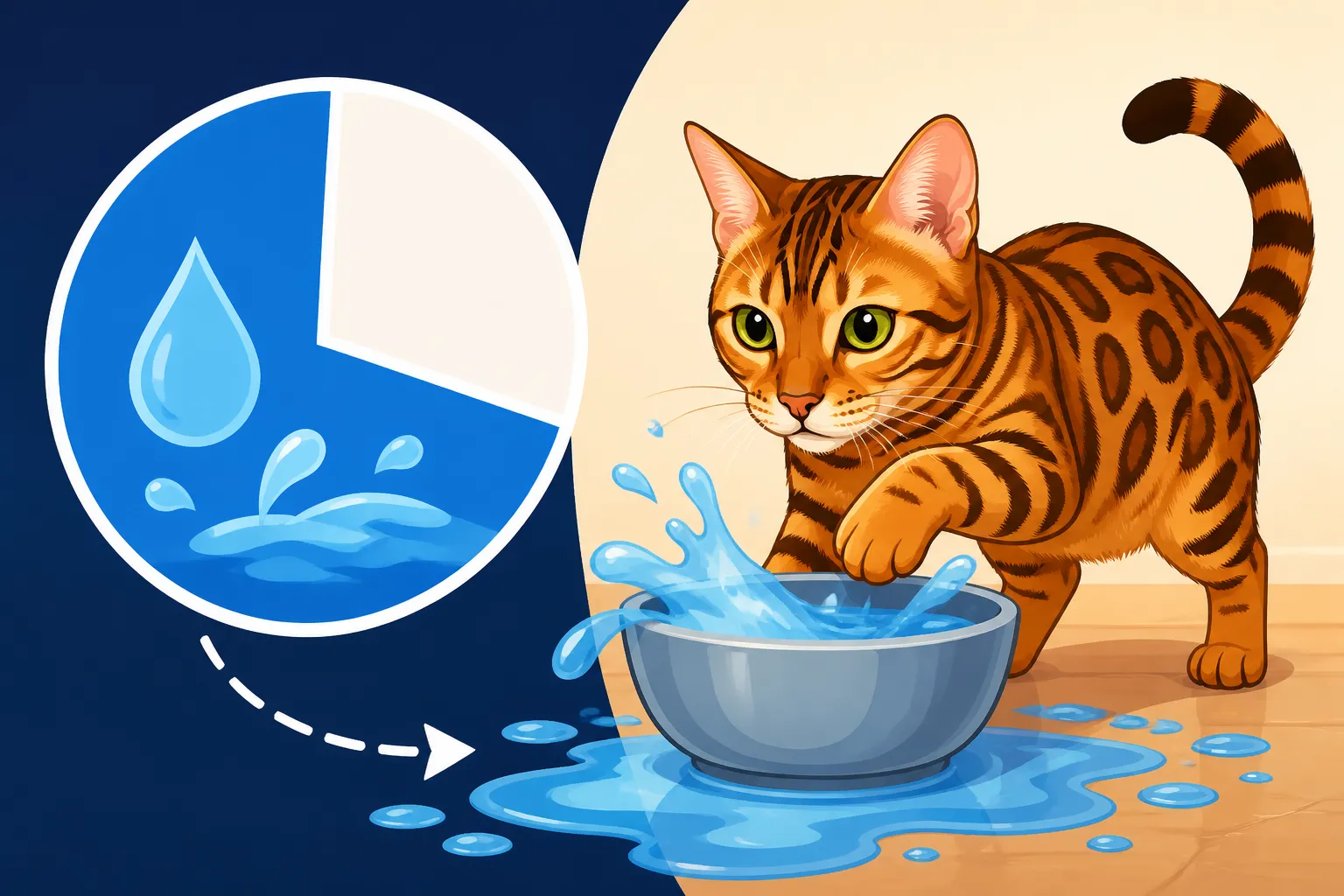
How Much of a Bengal Cat’s Water Ends Up on the Floor
If you share your home with a Bengal cat, you've likely experienced the unique frustration of finding puddles where there shouldn't be any. These stunning felines often have an insatiable fascination with water, which, while endearing, can also lead to a perpetually damp floor around their water bowl, a soaked bathroom mat, or even unexpected splash zones. This guide delves into why your Bengal cat is such a water enthusiast, explores the various ways they turn hydration into a liquid adventure, and offers practical solutions to help you manage the mess while still letting your wild child enjoy their watery escapades.
The Aquatic Instinct: Why Your Bengal Cat Loves Water So Much
It’s no secret that Bengal cats are different from your average house cat, and their relationship with water is one of their most distinctive quirks. While many domestic felines view water with suspicion or outright disdain, Bengals often treat it as a source of endless entertainment and intrigue. This isn't just a random personality trait; it's deeply rooted in their heritage and their inherent nature.
Tracing Their Wild Roots: The Asian Leopard Cat Connection
To understand why your Bengal seems to believe they're part otter, you need to look back to their ancestors: the Asian Leopard Cat (ALC). These small wild felines, native to Southeast Asia, are not just excellent hunters but also quite comfortable in and around water. Unlike many domestic cats who evolved in arid environments, ALCs live in varied habitats, including forests and areas near streams and rivers, where they might fish or simply cool off. This natural affinity for water, including playing, hunting, and even swimming, has been passed down through generations to our modern Bengal companions. It's a genetic blueprint that makes water play a natural, almost instinctual, behavior for them. It’s why you might catch them batting at their water bowl with an almost predatory focus, much like their wild relatives would interact with a pond or stream. Why a Bengal Cat's Water Love Comes From the Wild is a question many owners ponder, and the answer truly lies in this ancestral link.
Intelligence and Boredom: A Recipe for Water Play
Beyond instinct, the Bengal cat's remarkable intelligence and high energy levels contribute significantly to their watery antics. These are incredibly smart and active creatures, and a bored Bengal is a destructive Bengal. If they don't have enough mental and physical stimulation, they'll invent their own games, and water often becomes a prime target. For a Bengal, a still bowl of water isn't just for drinking; it's a dynamic, interactive puzzle. They might experiment with batting at the surface, trying to catch the reflections, or even attempting to "dig" to the bottom. This isn't necessarily a sign of misbehavior; it's often a testament to their clever minds seeking engagement. Providing ample enrichment, like interactive toys or regular play sessions, can sometimes redirect this energy, but the allure of water remains strong. How Clever a Bengal Cat Is truly comes into play here, as they figure out new ways to interact with their environment.
More Than Just Drinking: Water as a Toy
For a Bengal, water is less a utility and more a toy waiting to be activated. The movement, the reflections, the satisfying splash – it all appeals to their sensory-rich world. They might push objects into their water bowl, watch them float, and then try to "rescue" them. Some Bengals even bring their toys to their water bowls, creating a miniature playground. This playful interaction isn't just about quenching thirst; it's a form of active engagement that stimulates their hunting instincts and satisfies their curiosity. It's an ingrained behavior that makes them unique, and for an owner, it means understanding that "drinking water" for a Bengal often involves a whole lot more splashing than sipping. Why a Bengal Cat Plays in Its Water Bowl is a common question, and it really boils down to instinct and enrichment.
The Daily Drip: Common Ways Bengal Cats Make a Splash
So, you've established why your Bengal loves water. Now, let's talk about how they express that love, often to the detriment of your floors. Bengal owners quickly learn that a conventional water bowl often becomes an invitation for chaos.
The Tipped Bowl Tsunami: Why Bowls Become Bathtubs
Perhaps the most common watery woe for Bengal owners is the tipped water bowl. It starts innocently enough: a paw dip, a gentle splash. But for an active Bengal, that can quickly escalate. They might try to move the bowl, either out of curiosity, a desire to "bury" it, or simply because they've found a new game. A lightweight, standard ceramic or plastic bowl is easily sent skidding across the floor, leaving a trail of water in its wake, or worse, completely upturned. I've heard countless stories of owners coming home to find their kitchen floor transformed into a shallow pond, all thanks to a particularly enthusiastic Bengal decided the bowl was better upside down. This isn't usually done out of malice, but pure, unadulterated Bengal curiosity and playfulness. It’s just another example of What a Bored Bengal Cat Destroys when given the opportunity.
Faucet Fascination: Turning on the Tap
Many Bengal cats develop a fascination with running water. This isn't just about preferring fresh water; it's about the sheer mesmerising quality of a flowing stream. Your kitchen or bathroom faucet can become a Bengal's personal water feature. They learn to turn knobs or bat at lever handles, often successfully, leading to a steady drip or even a full stream if left unattended. I’ve known Bengals who will sit patiently by the sink, meowing insistently until a human turns on the tap for them, then happily bat at the stream, sometimes drinking, sometimes just playing. This can be problematic not just for water waste but also for potential flooding if they manage to turn on a tap and you're not around to turn it off. It’s a testament to their dexterity and intelligence that they can even figure out such a complex action.
Paws in the Fountain: From Drinker to Diver
Pet water fountains are often recommended for cats to encourage hydration, but for a Bengal, they can become an advanced splash pad. While many cats are content to drink from the flowing stream, a Bengal might see it as an opportunity for more interactive play. They might stick their entire paw into the basin, bat at the stream, or even try to "catch" the water as it cascades. The filter cover might become a target for removal, or they might try to dig out the internal pump, convinced there’s something interesting hiding underneath. The result? Water displaced from the fountain, often onto the surrounding floor. Even a carefully chosen fountain can be subjected to a Bengal’s relentless curiosity, turning a hydration station into a splash park. You might find yourself constantly refilling the fountain and mopping up spills.
Cleaning Up the Chaos: The Realities of Living with a Wet Bengal
While a Bengal cat's playful nature around water is undeniably charming, the practical reality of living with constant puddles can be less so. It's not just about a little inconvenience; there can be real consequences that impact your home and your peace of mind.
Messy Floors and Slippery Situations
The most immediate and obvious reality is the mess. Whether it’s a tipped bowl, a dripping paw, or a fountain that’s been thoroughly investigated, water inevitably ends up on your floor. This means more cleaning for you, and if left unaddressed, can lead to slippery surfaces, posing a fall risk for both humans and pets. Imagine walking into your kitchen in the dark for a midnight snack and stepping into a cold, unexpected puddle! It's not fun. Beyond the immediate hazard, persistent dampness can affect your flooring, especially if you have hardwood, laminate, or certain types of carpet. It’s a constant battle to keep the area around their water sources dry and safe.
The Hidden Costs: Water Damage and Maintenance
Beyond the everyday mess, consistent water spillage can lead to more significant, hidden costs. Over time, repeated exposure to water can cause damage to flooring materials like wood or laminate, leading to warping, staining, or even mold growth underneath. This isn't just unsightly; it can be expensive to repair or replace. Appliances or furniture near the water source can also be affected. Think about cabinets under a sink where a Bengal regularly plays with the faucet – moisture can seep in and cause damage. Furthermore, the constant need to clean up requires cleaning supplies, towels, and your valuable time. It all adds up, making what seems like a quirky habit into a genuine household management challenge. You need to protect your home just as you How to Cat Proof Cabinets From a Bengal Cat to prevent them from getting into food or dangerous items.
Addressing Hygiene: Keeping Water Clean and Accessible
Another critical aspect of water spillage is maintaining hygiene. While your Bengal might be splashing, they still need access to clean, fresh water for their health. When water is spilled, it can easily become contaminated with dust, dirt, or stray food particles from the floor. If they then try to drink from these puddles, they're ingesting less-than-ideal water. This means you not only have to clean up the spill but also ensure their primary water source is replenished with fresh, clean water regularly. Dirty water bowls or fountains, especially after a Bengal has been "fishing" in them, need frequent cleaning to prevent bacterial buildup. It’s a balancing act: allowing them to express their natural behaviors while safeguarding their health and keeping your home sanitary.
Strategic Solutions: Taming the Torrent (Without Quashing the Fun)
Living with a water-loving Bengal doesn't mean resigning yourself to perpetually wet floors. There are many strategies and products you can employ to minimize the mess, often without dampening your cat's joyous interaction with water. The goal is to manage the environment, not necessarily change your Bengal’s innate personality.
Choosing the Right Water Bowl: Heavy, Wide, and Wonderful
The simplest first step is often to rethink your water bowl choice. Forget those flimsy plastic bowls that can be easily tipped or slid around. Invest in something substantial.
- Heavy Ceramic or Stainless Steel Bowls: These are much harder for a determined Bengal to move or flip. Look for bowls with a wide base to increase stability.
- Non-Slip Bases: Many bowls now come with rubber rings or feet on the bottom to prevent skidding. This is a game-changer for active paws.
- Raised Bowls: Some cats prefer drinking from a slightly elevated position, which can also help keep food particles out of the water. However, some Bengals might still find a way to splash from them.
- Gravity Feeders: While these offer a continuous supply of water, they can still be susceptible to splashing, as the water level is often open. A clever Bengal might still treat it as a mini-pool.
Experiment with different types. You might find that a heavy, wide-based stainless steel bowl from a brand like Chewy, paired with a non-slip mat, drastically reduces the "tipped bowl tsunami" effect.
The Fountain Solution: Managing Flow and Splash
As mentioned, water fountains can be both a blessing and a curse. They encourage drinking, which is great, but can also become a splash fest.
- Consider Fountain Design: Look for fountains with a deeper basin or a design that minimizes splashing. Some have a more enclosed drinking area or a very gentle flow.
- Ceramic or Stainless Steel Fountains: Just like bowls, these are heavier and harder to move. Plastic fountains are often lighter and more prone to being pushed around or disassembled by a curious Bengal.
- Placement is Key: Don't place the fountain right next to furniture or walls. Give it some breathing room, preferably on a surface that can handle water.
- Regular Cleaning and Maintenance: Fountains need frequent cleaning to prevent slime and mold buildup, especially if your Bengal is constantly playing in it. Ensure filters are changed as recommended. Which Water Fountain Survives a Bengal Cat is a critical question for many owners.
Mats and Barriers: Containing the Splash Zone
Even the best bowl or fountain won't stop every single splash from a truly dedicated water player. That's where protective barriers come in.
- Waterproof Mats: Invest in a large, absorbent, waterproof mat to place under and around your cat's water area. Silicone mats with raised edges are excellent for containing spills. Look for options on Amazon that are easy to clean and big enough to catch stray drops.
- Boot Trays: A cheap boot tray can make an excellent large, shallow basin to place your cat’s water station inside. It has raised edges that will catch almost any spill or tip.
- Plastic Floor Protectors: For carpets or delicate flooring, clear plastic chair mats (the kind used under office chairs) can be placed beneath the water area to provide a durable, waterproof barrier.
- Strategic Room Choice: If possible, consider placing your Bengal's primary water source in a room with tile or linoleum flooring, which is much more forgiving of water spills than hardwood or carpet. The kitchen or a utility room is often a good choice.
| Water Spillage Solution | Pros | Cons | Ideal for |
|---|---|---|---|
| Heavy Ceramic/SS Bowl | Hard to tip, durable, hygienic | Can still be splashed from, breakable (ceramic) | Basic daily hydration, reduces tipping |
| Non-Slip Mat | Catches spills, protects floor, easy to clean | Can become saturated, must be cleaned frequently | Containing splashes from any water source |
| Pet Water Fountain | Encourages hydration, running water appeal | Can become a splash toy, requires maintenance | Bengals who prefer moving water, but with caution |
| Boot Tray/Floor Protector | Excellent containment, protects large area | Can be unsightly, may not match decor | High-traffic splash zones, protecting delicate floors |
| Faucet Locks/Child-Proofing | Prevents faucet turning, saves water | Requires consistent application, can be bypassed | Bengals obsessed with turning on taps |
Smart Placement and Supervision
Sometimes, the simplest solutions are the most effective.
- Away from High Traffic: Place water bowls in a relatively quiet area where they are less likely to be accidentally knocked over by humans or other pets.
- Consider Multiple Stations: Having several water bowls in different locations can spread out the "risk" and ensure your Bengal always has access to water, even if one bowl becomes a plaything.
- Supervision: If your Bengal is particularly prone to water play, especially with new water features or taps, some initial supervision can help you understand their habits and intervene before major spills occur. You might even use this time to gently redirect their play or reinforce desired drinking behaviors.
Embracing the Splish-Splash: Living Happily with a Water-Obsessed Bengal
Ultimately, a Bengal cat's love for water is a fundamental part of who they are. While managing the mess is important, a truly happy Bengal household also involves embracing these unique traits and finding ways to channel their energy constructively.
Enrichment Activities: Channeling Water Play Safely
Instead of fighting their natural inclination, give your Bengal appropriate outlets for their water obsession.
- Shallow Water Play: Fill a shallow pan or a large, sturdy Tupperware container with a small amount of water (just an inch or two). Drop in some floating toys, ping-pong balls, or even a few ice cubes. Let them "fish" and splash to their heart's content in a controlled environment. This can be done in a bathtub or a tiled area for easy cleanup.
- Water Fountain Games: While traditional fountains might lead to spills, consider specific water toys designed for cats. Some resemble small pools with circulating water that Bengals can safely bat at.
- Interactive Bath Time (for some Bengals): Believe it or not, some Bengals enjoy baths! If yours is one of them, a controlled bath time can be a fun, enriching experience. Just be prepared for Whether a Bengal Cat Gets in the Shower with you!
- Puzzle Feeders with Water: Some advanced puzzle feeders incorporate water, requiring your cat to interact with it to get a treat. This combines mental stimulation with their love for water. For general enrichment, consider a variety of toys and activities, as How Much Enrichment a Bengal Cat Actually Needs is usually more than you think.
Acceptance and Adaptation: It's Part of the Bengal Charm
A big part of living with a Bengal is accepting that they are not your average house cat. Their energy, their vocalizations, their intelligence, and yes, their water antics, are all part of the package. Trying to completely extinguish their natural behaviors can lead to frustration for both you and your cat. Instead, adapt your home and routines to accommodate their needs. Keep a towel handy, invest in durable flooring in key areas, and learn to laugh at their quirky habits. The occasional splash is a small price to pay for the joy and vibrant personality they bring into your home. This acceptance is crucial for a harmonious household.
Long-Term Management: A Lifetime of Lively Interaction
Managing your Bengal's water play isn't a one-time fix; it's an ongoing process. As they age, their energy levels might slightly decrease, and they might calm down a little, but the underlying instinct will likely remain. Regularly assess your setup: are the mats still working? Is the fountain holding up? Are there new signs of water damage? Continue to provide new forms of enrichment to keep their active minds engaged, and always ensure they have access to fresh water, even if it sometimes means a bit of a clean-up. By understanding their unique needs and preparing your home accordingly, you can enjoy a lifetime of lively, albeit sometimes wet, interaction with your beautiful Bengal.
Disclaimer
This article is for general informational purposes only and does not constitute professional advice. Laws, prices and regulations vary by location and change over time. Consult a qualified professional for guidance on your specific situation.