Whether a Bengal Cat Prefers Sisal or Cardboard
It’s a tale as old as time for many Bengal cat owners: you bring home this gorgeous, energetic companion, and suddenly your favorite armchair starts looking like a victim of a wild animal attack. The hunt for the perfect scratching post becomes a quest, often ending in frustration and a pile of shredded cardboard or ignored sisal. You've heard about sisal, you've seen the cardboard options, but how do you know which one your particular leopard-spotted dynamo will actually use—and not just for five minutes before moving on to the sofa? This guide dives deep into the world of scratching surfaces, helping you understand the unique preferences of Bengal cats when it comes to sisal versus cardboard, and how to keep your furniture safe and sound.
Understanding Your Bengal Cat's Scratching Instincts
Before we even get into materials, it's crucial to grasp why your Bengal cat scratches with such intensity. It's not out of malice or spite, I promise you, even if it feels that way when you see your upholstery. Scratching is a deeply ingrained, essential feline behavior, and for a Bengal, whose ancestry includes the Asian Leopard Cat, these instincts are often amplified.
Why Bengals Scratch with Such Vigor
Think about it: your Bengal isn't just a regular housecat. They carry the spirit of their wild ancestors, and that means their physical needs and behaviors are often more pronounced. When a Bengal scratches, they're not just filing down their claws – though that's certainly a benefit. They're also marking their territory. Their paws have scent glands that release pheromones, leaving a clear message to any other animal (or even just you) that "this is my spot!" The visual marks they leave behind are another powerful signal, a big neon sign saying, "I live here, and I'm strong!"
Beyond territorial marking, scratching is a fantastic way for your Bengal to stretch out those powerful muscles, especially after a nap. It’s like a full-body yoga pose combined with a manicure. Given that The Bengal Cat Is the Most Active Cat You Can Own, they have a lot of energy to expend, and a good, vigorous scratch session helps them work off some of that boundless zest. Their claws are incredibly sharp, and as many owners can attest, Why a Bengal Cat's Claws Outrun the Clippers, so providing an appropriate outlet is non-negotiable if you want to keep your skin and furniture intact.
The Importance of Offering the Right Scratching Surface
Getting the scratching surface right isn't just about saving your sofa; it's about providing for your Bengal's psychological and physical well-being. If they don't have an appropriate place to scratch, they will find one, and it likely won't be what you had in mind. This is where the frustration often builds for owners. You might buy an expensive scratching post, only to watch your Bengal ignore it in favor of a doorframe or the leg of a dining table. The "right" surface offers the perfect combination of texture, resistance, and stability.
If the surface is too soft, too flimsy, or just doesn't feel good under their paws, they'll move on. A scratcher that wobbles when they lean into it with their full weight (and remember, What a Bengal Cat Weighs can be quite substantial for a cat!) isn't going to cut it. They need something that allows them to really dig in, pull, and leave a satisfying mark. A lack of proper scratching outlets can lead to destructive behaviors, as What a Bored Bengal Cat Destroys often includes things you wish they wouldn't. It's about proactive prevention, offering them an irresistible alternative to your cherished belongings.
Sisal Scratching Surfaces: The Durable Contender
Sisal is often hailed as the gold standard for cat scratching posts, and for good reason. It's a natural fiber derived from the agave plant, known for its strength and coarse texture. For a Bengal cat, whose needs are a bit more intense than your average domestic tabby, sisal offers a lot to love.
The Pros of Sisal for a Bengal Cat
The primary advantage of sisal is its incredible durability. Unlike carpeted posts that quickly shred and lose their appeal (and often become just another piece of furniture to scratch, not for scratching), sisal stands up to the powerful raking motions of a Bengal's claws. It provides a satisfying resistance, mimicking the feel of tree bark or a sturdy log, which is precisely what their wild instincts crave. Bengals can really sink their claws into sisal, get a good stretch, and pull without tearing the material to smithereens in one go.
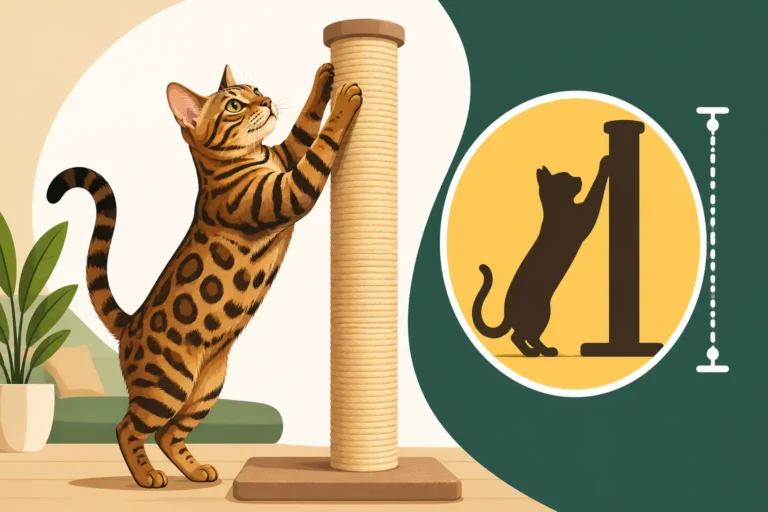
Sisal comes in a few forms: tightly woven sisal fabric (often seen on cat trees or ramps) or sisal rope wrapped around a post. Both offer that desirable rough texture. The tightly woven fabric tends to be more resilient and creates less mess than rope, which can fray over time. For a Bengal that often approaches activities with 110% enthusiasm, a solid sisal post or panel can be a long-term investment that actually pays off by preserving your other household items. Many of the robust scratching trees, which Bengals absolutely adore for their vertical climbing opportunities, are covered in sisal. How Tall a Scratching Post a Bengal Cat Needs is often best answered by a sisal-covered tower!
The Cons and Considerations of Sisal
While sisal is fantastic, it's not without its minor drawbacks. One common issue is that while durable, sisal rope can still fray, especially with a super-enthusiastic Bengal. This can lead to small fibers around the base of the scratcher. It’s certainly less messy than cardboard, but it's not entirely mess-free. Another consideration is the initial cost. Sisal scratchers, especially high-quality, sturdy ones, tend to be more expensive upfront than their cardboard counterparts. However, this is usually offset by their longevity.
Some Bengals might also initially be less drawn to sisal if they're used to softer, more shreddable surfaces. It's a different tactile experience, and it might take a little encouragement. You might need to rub some catnip on it, or gently guide their paws to show them how satisfying it can be. Finally, from an aesthetic perspective, while natural sisal is fairly neutral, some owners might find the look a bit utilitarian compared to other household items. But for functionality and longevity with a Bengal, sisal is hard to beat. If you're looking for Which Scratching Post a Bengal Cat Needs, a solid sisal option should be high on your list.
Cardboard Scratching Surfaces: The Enticing, Disposable Option
Now, let's talk about cardboard. Almost every cat owner has bought a cardboard scratcher at some point, often because they’re affordable and cats seem to adore them, at least initially. For a Bengal, cardboard offers a different kind of satisfaction.
The Allure of Cardboard for Bengal Cats
The undeniable appeal of cardboard for many cats, Bengals included, is the sheer satisfaction of shredding. There's something incredibly gratifying about tearing into a corrugated surface, hearing that rip, and seeing bits fly. It’s primal. It gives them the immediate, tangible reward of destruction, something their high-energy, wild-at-heart nature often craves. This shreddability is a huge draw, offering a sensory experience that sisal doesn't quite match.
Cardboard scratchers are also incredibly accessible and affordable. You can find them almost anywhere, from your local pet store to online retailers like Amazon and Chewy. This makes them a great option for trying out different shapes and sizes to see what your Bengal prefers without a huge financial commitment. Many come infused with catnip, which can be an immediate magnet for your feline friend, drawing them in and encouraging them to use the scratcher right away. For multi-cat households or those needing many scratching stations, cardboard offers an economical way to provide ample options, addressing How Many Scratching Posts a Bengal Cat Household Needs without breaking the bank.
The Downsides and Practicalities of Cardboard
However, the very thing that makes cardboard so appealing – its shreddability – is also its biggest drawback. Bengal cats, with their powerful claws and relentless energy, can utterly destroy a cardboard scratcher in a surprisingly short amount of time. What might last weeks for a docile housecat could be reduced to a pile of confetti by a determined Bengal in a matter of days. This leads to frequent replacement, which, while affordable per unit, can add up over time.
The mess is another significant consideration. As your Bengal enjoys their shredding fiesta, tiny bits of cardboard will inevitably fly everywhere. You'll find them on the floor, clinging to rugs, and even stuck to your cat's paws. Regular vacuuming or sweeping becomes a necessity. Environmentally, the constant disposal of cardboard scratchers can also be a concern for some owners. While many are recyclable, the energy and resources involved in their continuous production and replacement are factors to weigh. This rapid destruction also ties into Why a Bengal Cat Destroys Cheap Cat Furniture; they often see it as a challenge, and the cheaper, flimsier materials succumb quickly.
Making the Choice: Sisal, Cardboard, or Both?
So, after weighing the pros and cons, how do you decide what’s best for your magnificent Bengal? The truth is, there's no one-size-fits-all answer. Every cat is an individual, and your Bengal might have a strong preference that goes against the general trends.
Observing Your Bengal's Personal Preference
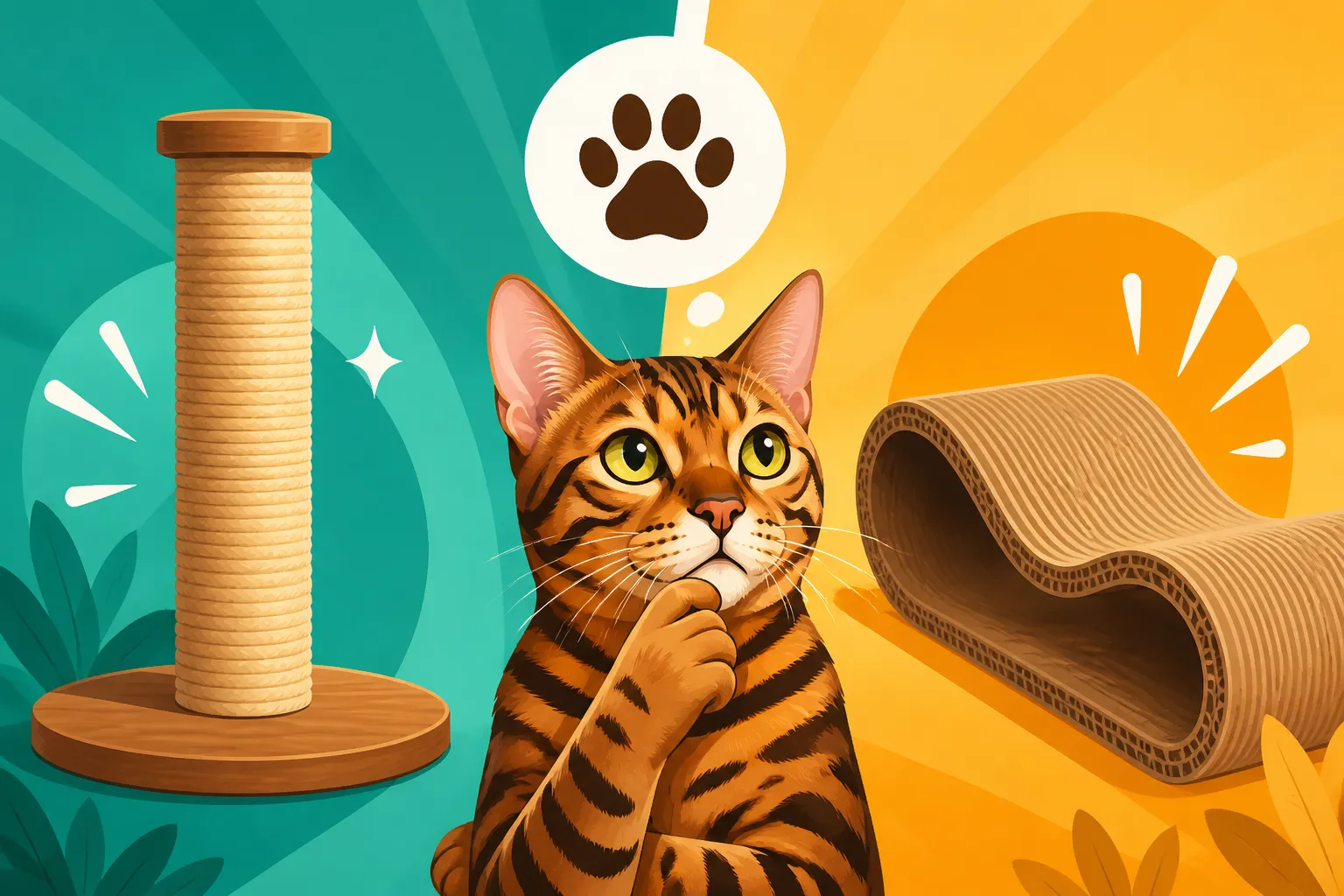
The best approach is to act like a feline anthropologist and observe your cat. What surfaces do they currently try to scratch? Do they prefer vertical surfaces like the side of your couch, or horizontal ones like a rug? Do they seem to enjoy the tearing action, or are they more about the deep, satisfying pull? Offering both sisal and cardboard options side-by-side, ideally in different orientations, is the most effective way to conduct a "scratch test."
Place a sturdy sisal post in one of their favorite areas (perhaps near where they sleep or where they typically stretch) and a cardboard scratcher nearby. You might find that your Bengal uses the cardboard for quick, satisfying rips, and then moves to the sisal for a more prolonged, deep stretch. Pay attention to how often they use each, how long they spend scratching, and what kind of physical exertion they put into it. Their actions will tell you everything you need to know. Remember, the goal is to provide an irresistible alternative to your furniture, so make it easy for them to choose the right option. How to Protect Furniture From a Bengal Cat often starts with understanding their preferences.
Strategic Placement and Variety is Key
Regardless of whether your Bengal leans towards sisal, cardboard, or both, providing a variety of scratching surfaces and strategic placement is absolutely vital. You shouldn't just have one scratcher tucked away in a corner; cats need options scattered throughout their territory. Think about where your Bengal likes to stretch and scratch naturally. Is it right when they wake up? Near a window where they watch birds? By the doorway to greet you? These are prime locations for a scratcher.
A combination approach often works best for Bengals. A tall, sturdy sisal post can satisfy their need for a strong, durable surface for deep stretches and territorial marking, especially given their impressive climbing abilities and energy levels. Meanwhile, a few strategically placed cardboard scratchers can offer instant gratification for their shredding desires, preventing them from turning your carpet or door mat into their personal shredding station. Consider horizontal cardboard pads for those who like to scratch flat, and vertical sisal posts for climbers. Many owners find that this dual approach keeps their Bengals engaged and their furniture intact, contributing to their overall well-being and a happy home. They need varied options to meet How Much Exercise a Bengal Cat Needs a Day in terms of mental and physical stimulation.
Ultimately, the choice between sisal and cardboard for your Bengal cat isn't an either/or situation for many owners. It’s often a matter of providing both and observing which they gravitate towards for different needs. Give them choices, place them strategically, and you'll be well on your way to a happy Bengal and intact furniture.
Disclaimer
This article is for general informational purposes only and does not constitute professional advice. Laws, prices and regulations vary by location and change over time. Consult a qualified professional for guidance on your specific situation.