Whether a Bengal Cat Uses a Horizontal Scratcher
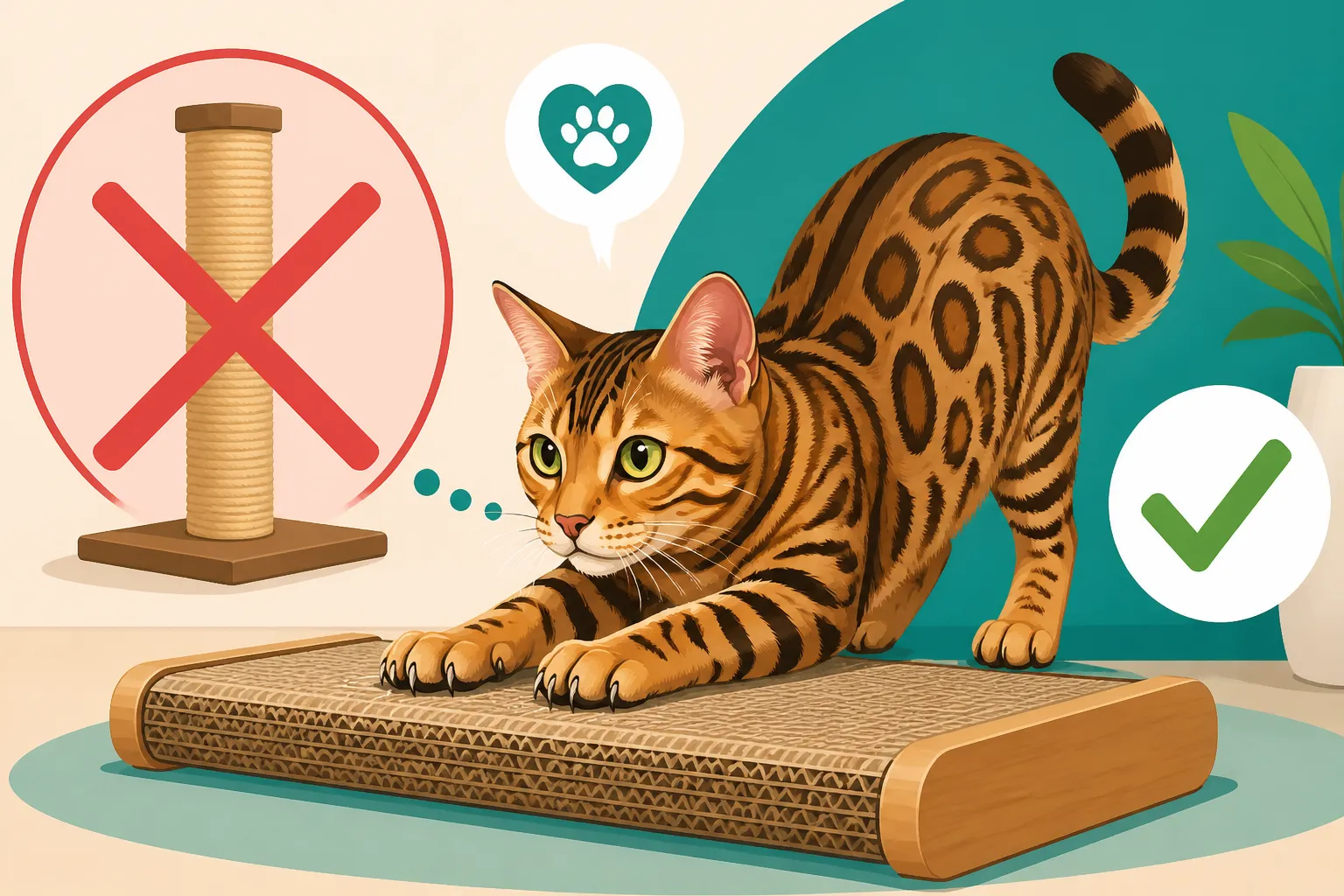
It's incredibly frustrating, isn't it, when you invest in what you think is the perfect scratching post, only to find your energetic Bengal cat still shredding the arm of your sofa or the corner of your favorite rug? Many cat owners assume all cats want to stretch up high, but the truth is, some felines, including many of our wild-hearted Bengals, have a strong preference for scratching horizontally. This guide will dive deep into why your Bengal might prefer a horizontal scratcher, how to choose the right one, and most importantly, how to get them to actually use it.
Understanding Your Bengal Cat's Unique Scratching Instincts
Before we even talk about horizontal scratchers, we need to get into the mind of a Bengal cat. These aren't just any house cats; they carry a strong wild lineage, and their instincts are often more pronounced. Scratching for them isn't just about manicuring their claws; it's a fundamental part of their physical and emotional well-being.
Why Bengals Scratch It's Not Just Sharpening Claws!
For your Bengal, scratching is a multi-purpose activity. First, yes, it helps maintain their claws. Just like us clipping our nails, cats need to shed the outer layer of their claws to keep them sharp and healthy. Those long, strong claws that are so effective for climbing and playing need regular maintenance. But it's so much more than that.
Every time your Bengal digs their claws into a surface, they're also leaving behind a scent mark from glands in their paws. This is a territorial behavior, a clear sign to any other creature (or cat) that this spot belongs to them. In a multi-cat household, or even if your Bengal is the sole feline ruler, these scent marks are crucial for establishing their domain and feeling secure in their environment.
Beyond territory, scratching is a fantastic full-body stretch. Have you ever watched your Bengal really go for it? They might arch their back, extend their front paws fully, and put their whole weight into it. This stretches their muscles, keeps them limber, and releases tension. For such an active and athletic breed, these stretches are incredibly important. Think of it as their daily yoga session! If they're feeling a bit stressed or overstimulated, a good scratch can also be a wonderful outlet for that pent-up energy, allowing them to decompress and feel more grounded. This is especially true for a breed as high-energy as the Bengal, which can sometimes get over-aroused and need an appropriate outlet for that intense drive.
The Vertical vs. Horizontal Preference Debate
When it comes to scratching, cats generally fall into two camps: vertical scratchers or horizontal scratchers. And then, there are the Bengals, who sometimes decide they want both, or neither, or the specific one you didn't buy. It can be a real head-scratcher (pun intended!).
Vertical scratchers, like traditional cat trees or posts, allow a cat to stand on their hind legs and stretch upwards, mimicking scratching a tree trunk. This is great for an all-over stretch. Many cats love the height and the stability these offer. For a Bengal, who loves to climb and explore vertical spaces, a tall, sturdy Which Scratching Post a Bengal Cat Needs is often a hit.
However, many cats have a strong preference for horizontal scratching, which often simulates tearing into fallen logs, tree roots, or even carpeted floors. This involves a different body posture – usually crouching or lying down, pulling their claws towards them. If your Bengal consistently goes for your rugs, the edge of your carpet, or even the side of your couch (horizontally along the bottom), it's a pretty strong indicator that they prefer this style of scratching. It’s not a rebellious act; it's just how they're wired. They're telling you, in their own unique way, what kind of scratching surface feels most natural and satisfying to them.
The Case for Horizontal Scratchers for Your Bengal Cat
Given their active nature and sometimes unconventional preferences, horizontal scratchers can be an absolute godsend for Bengal cat owners. These aren't just for lazy loungers; they offer specific benefits that can appeal to your energetic companion.
When a Horizontal Scratcher Hits the Spot
Think about your Bengal's natural behaviors. They love to chase, pounce, and wrestle. A horizontal scratcher, particularly a flat one, can easily become part of their play routine. Imagine a cardboard scratcher placed in the middle of a zoomie path – it becomes a fantastic pit stop for a quick, satisfying scratch before they continue their mad dash. Some Bengals love to bat at toys on a flat surface, and the texture of a horizontal scratcher can be immensely appealing for digging their claws in right before or after a pounce.
They’re also perfect for those moments of casual stretching and marking. Your Bengal might wake up from a nap, stretch out long on the floor, and instinctively reach for something to dig their claws into horizontally. If a suitable scratcher is right there, rather than your expensive rug, everyone wins! I've seen Bengals treat flat sisal mats like their personal yoga mats, stretching and scratching with gusto. How Many Play Sessions a Bengal Cat Needs often involve these quick, spontaneous scratching moments, making horizontal options very practical.
Different Types of Horizontal Scratchers to Consider
The market for horizontal scratchers has really expanded, thankfully! You've got options beyond just a flat piece of cardboard. Each material and design has its own unique appeal and benefits for your discerning Bengal.
- Cardboard Scratchers: These are probably the most common and often a huge hit. They come in various shapes – flat pads, bowls, or even undulating waves. The corrugated cardboard offers a fantastic texture that cats love to shred. They're usually affordable, and when one gets totally decimated, you can easily replace it. You can find multi-packs on Amazon or Chewy, making them a cost-effective solution. The downside? They can be messy as your Bengal gleefully tears them apart, leaving little bits of cardboard confetti everywhere. But, a happy cat is worth a little vacuuming, right?
- Sisal Mats or Boards: Sisal is a very durable, rough fiber that provides excellent clawing satisfaction. These can be flat mats you lay on the floor, or even boards that are slightly angled or have different textures. Sisal is generally less messy than cardboard and stands up to aggressive scratching better. It's often favored by cats who enjoy a really deep, satisfying pull. Some sisal options are even designed to fit over furniture corners, offering a horizontal and slight vertical angle to protect your sofa.
- Carpet or Fabric Scratchers: While many people try to avoid carpet-like scratchers if their cat is already attacking the carpet (you don't want to confuse them!), some cats simply adore the feel of a carpet-like surface. If your Bengal shows no interest in your actual carpet but likes softer textures, a carpet scratcher might work. Ensure it's a very different color or texture from your home carpets to avoid misunderstandings.
- Scratcher Ramps or Inclines: These offer a blend of horizontal and vertical, giving your Bengal the option to scratch at an angle. It's a great compromise for cats who aren't fully committed to either extreme. They often provide good stability and can be a lot of fun for a cat to climb on and scratch from different positions.
Choosing the right type often involves a bit of trial and error. What one Bengal adores, another might ignore. Don't get discouraged if the first one isn't a hit; keep experimenting!
Here's a quick comparison of popular horizontal scratcher types:
| Scratcher Type | Material | Pros | Cons | Ideal For |
|---|---|---|---|---|
| Flat Pad | Cardboard | Affordable, highly satisfying, various shapes | Messy, needs frequent replacement | Aggressive shredders, cats who like to dig in fully |
| Mat | Sisal | Durable, less messy, natural fiber | Can be pricier, less "shreddy" feel | Cats who prefer a firm, rough pull, minimal mess |
| Ramp/Incline | Cardboard/Sisal | Versatile angles, good stretch opportunities | Can take up more space | Cats who enjoy varied scratching angles, larger cats |
| Carpeted | Carpet | Soft texture, familiar feel for some cats | Can confuse cats about "off-limits" carpet | Cats who specifically seek soft, carpet-like textures (with caution) |
Getting Your Bengal Cat to Actually Use Their Horizontal Scratcher
So you've chosen a horizontal scratcher, perhaps a corrugated cardboard lounge from Chewy, or a durable sisal mat you found on Amazon. Now for the crucial part: getting your Bengal to actually use it instead of looking at you like you've offered them a paperweight. This isn't always straightforward, but with patience and strategy, you can guide them.
Placement is Everything
Location, location, location! This is perhaps the single most important factor. Cats, and especially Bengals, are creatures of habit and territory.
- Target the "Problem" Areas: If your Bengal is currently clawing a specific spot on your carpet or sofa, place the new horizontal scratcher directly over, or immediately adjacent to, that area. This redirects their instinct to the appropriate item.
- High-Traffic Zones: Cats love to scratch in prominent places to mark their territory. Don't hide the scratcher away in a back room. Put it where your Bengal spends a lot of time – near their favorite sleeping spot, in the living room where the family gathers, or by a window they like to perch at. After a good nap, a cat’s first instinct is often to stretch and scratch.
- Strategic Corners and Doorways: These are often natural "marking" spots. A horizontal scratcher placed subtly in a corner where they often stretch can be very effective.
- Offer Variety: Remember, your Bengal might like different types of scratchers in different locations. Don't just get one and expect it to solve all your problems. You might need a flat cardboard one in the living room and an inclined sisal one by their How Much Vertical Space a Bengal Cat Needs in the catio. How Many Scratching Posts a Bengal Cat Household Needs is usually more than you think!
Making it Irresistible: Tips and Tricks
Once you have the placement down, you need to make the scratcher as appealing as possible.
- Catnip Magic: For many Bengals, catnip is an instant attractant. Sprinkle fresh catnip (or spray catnip spray) generously on the scratcher. This can spark their interest and encourage them to investigate and, hopefully, scratch.
- Treat Rewards: When you see your Bengal even sniff the scratcher, offer praise and a high-value treat. If they actually scratch it, make it a party! Positive reinforcement is powerful. Small, healthy, high-quality treats can be excellent for this.
- The "Demonstration": While it might feel silly, sometimes a gentle demonstration can help. Lightly scratch the surface yourself with your fingernails (not your cat's paws!) to show them what it's for. The sound and action can pique their curiosity.
- Playtime Association: Use a wand toy to lure your Bengal towards and onto the scratcher. Encourage them to pounce and dig their claws into it during play. Make the scratcher part of their fun. Which Wand Toy a Bengal Cat Destroys Fastest is often a good one to use for this.
- Scratcher Texture: Ensure the scratcher material is one they enjoy. Some prefer the shreddable nature of cardboard, others the rough resistance of sisal. Pay attention to what surfaces they currently scratch (even if it's your furniture) to get clues.
What to Do When They Still Ignore It
You've tried everything, and your Bengal is still giving you the side-eye while attacking your new rug. Don't despair! This is common, and often requires a bit more detective work and persistence.
- Assess the "Off-Limits" Areas: Why are they still scratching the forbidden spots? Make those spots less appealing. You can cover them with double-sided sticky tape (cats hate the tacky feel), aluminum foil, or even temporarily drape blankets over the areas they target. The goal is to make the "bad" spots undesirable while making the "good" spots irresistible.
- Rotate Scratchers: Cats can get bored. If they ignore a scratcher for a while, try putting it away and reintroducing it later, or rotate it with another type. Novelty can sometimes spark interest.
- Multiple Options: Remember our earlier point about How Many Scratching Posts a Bengal Cat Household Needs? One simply might not be enough. Offer various types (horizontal and vertical) and materials in different locations. They might have a mood for sisal one day and cardboard the next.
- Consider a Professional: If scratching behavior becomes destructive and nothing seems to work, consult with a feline behaviorist. They can help identify underlying stress or medical issues that might be contributing to inappropriate scratching and develop a tailored plan. It's always better to address these things early.
The Bigger Picture: A Holistic Approach to Bengal Scratching
While horizontal scratchers are a fantastic tool, they're just one piece of the puzzle in managing your Bengal cat's powerful scratching instincts. A truly effective approach involves understanding their overall needs and providing a rich, stimulating environment.
Complementing Horizontal Scratchers with Vertical Options
Never assume one type of scratcher will suffice for a Bengal. These agile, energetic cats thrive on variety and need to express their natural behaviors in multiple ways. A robust, tall vertical scratching post is just as important as a horizontal one. They need to be able to stretch fully, reaching high above their heads to extend their spine and shoulder muscles. How Tall a Scratching Post a Bengal Cat Needs is usually taller than you might think, at least 32-36 inches high to allow for a full stretch.
Think of it like this: a vertical scratcher allows them to "climb" and stretch, mimicking a tree. A horizontal scratcher allows them to "rake" and stretch, mimicking a log or a root system. Both are crucial for their muscular health and mental satisfaction. By offering both, you're giving your Bengal the complete workout they crave, making it far less likely they'll turn to your furniture for their diverse scratching needs. This also helps in How to Protect Furniture From a Bengal Cat.
Regular Nail Trims and Their Importance
Even with the best scratchers in the world, regular nail maintenance is still a critical part of caring for your Bengal. Their claws grow surprisingly fast, and they're incredibly strong. Why a Bengal Cat's Claws Outrun the Clippers is a common frustration for owners! Trimming their claws every few weeks can make a huge difference, reducing the damage they can inflict on furniture and even on you during playful wrestling matches.
Getting your Bengal accustomed to nail trims early in life is ideal. Make it a positive experience with treats and praise. If your adult Bengal resists, start slowly, trimming just one or two nails at a time, building up their tolerance. If you're unsure how to do it safely, ask your vet or a professional groomer for a demonstration. It's a small effort that yields big rewards for both your Bengal's comfort and your furniture's longevity. Remember, declawing is never an ethical or humane solution; it's a painful amputation that can lead to lifelong physical and behavioral problems. Why a Bengal Cat Should Never Be Declawed.
Enrichment Beyond Scratching
At the heart of any Bengal cat's well-being is adequate enrichment. A bored Bengal is often a destructive Bengal. If they're not getting enough mental and physical stimulation, they might channel that excess energy into inappropriate scratching, vocalizing excessively, or even What a Bored Bengal Cat Destroys.
Remember, The Bengal Cat Is the Most Active Cat You Can Own. This breed needs daily interactive playtime, puzzle feeders, climbing opportunities, and often, outdoor access in a secure catio or on a leash. Engage them with wand toys, teach them tricks, and provide rotating arrays of toys to keep them interested. A truly enriched Bengal is a happy Bengal, and a happy Bengal is far more likely to use their designated scratchers and less likely to become a destructive force in your home. Providing a stimulating environment addresses the root cause of many behavioral issues, including unwanted scratching.
Disclaimer
This article is for general informational purposes only and does not constitute professional advice. Laws, prices and regulations vary by location and change over time. Consult a qualified professional for guidance on your specific situation.