Why the Bengal Cat’s Ancestor Resists Feline Leukemia
An Asian leopard cat’s reputation for resisting feline leukemia virus can sound reassuring if you share your home with a Bengal. But ancestral resistance is not the same as guaranteed protection for a pet Bengal. This guide explains what researchers observed, how that history relates to the breed, and why testing, vaccination decisions, and everyday exposure still matter.
What resistance to feline leukemia means
The Asian leopard cat and FeLV
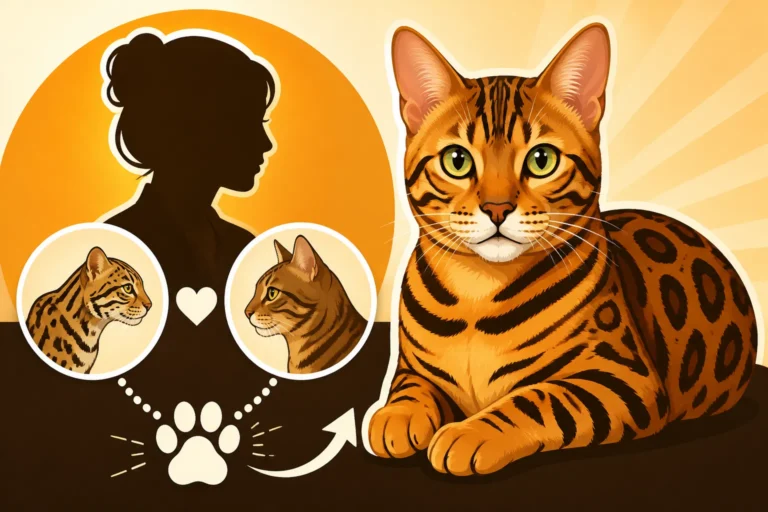
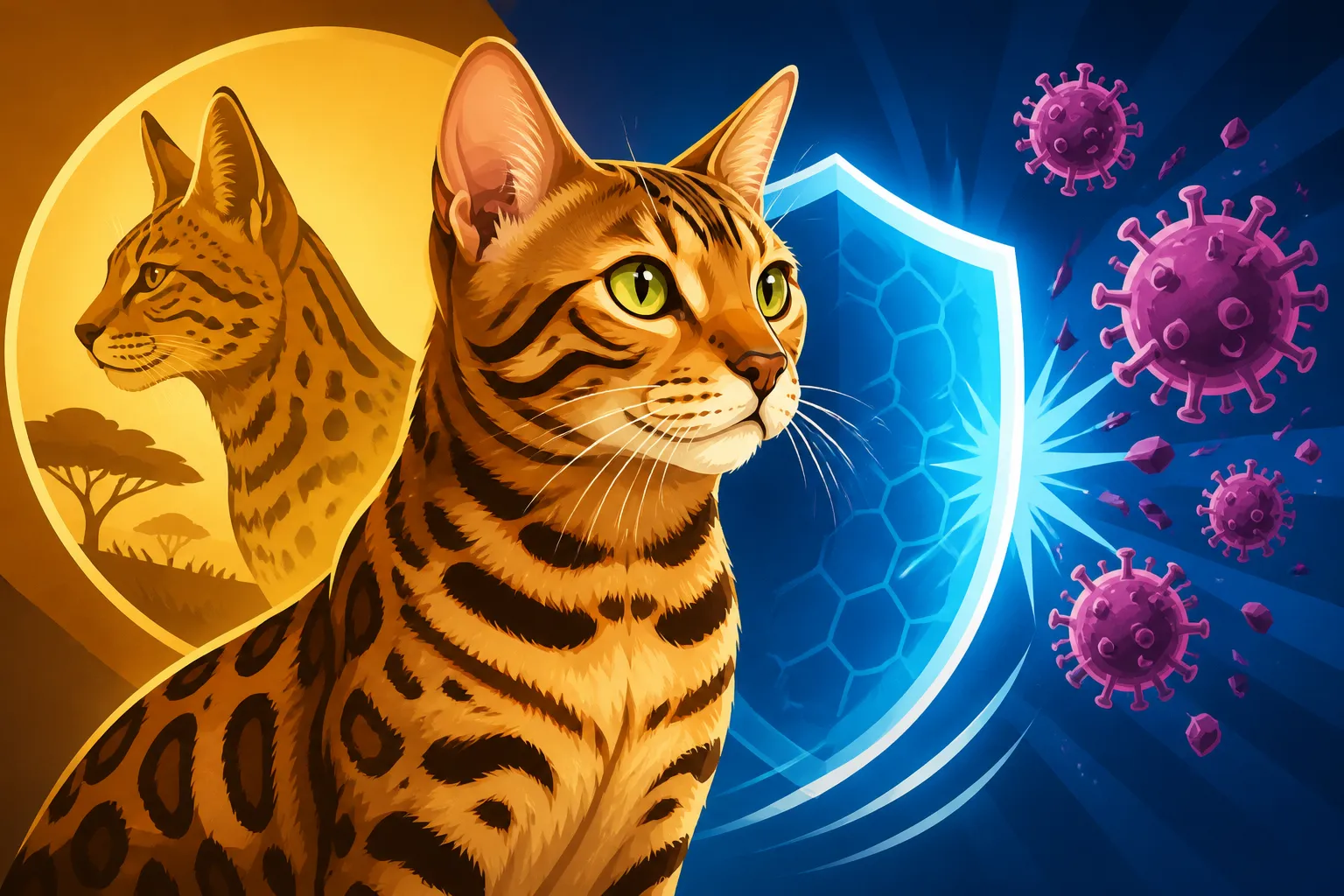
The Bengal’s wild ancestor is the Asian leopard cat, a small wild felid found across parts of Asia. In research settings, Asian leopard cats were observed to be resistant to feline leukemia virus, or FeLV, in ways that made the species interesting to scientists studying the disease. You can read more about What the Bengal Cat's Wild Ancestor Is Like and the history of Why a Medical Lab Bred Bengal Cat Hybrids.
“Resistant” needs careful interpretation. It does not mean an animal can never encounter a virus, never become ill, or is protected from every strain under every circumstance. In this context, it describes an observed difference in susceptibility that researchers investigated. It is not a guarantee that a domestic cat with some Asian leopard cat ancestry cannot contract FeLV.
FeLV is a virus that can affect a cat’s immune system and blood-forming tissues. It can contribute to serious illness, including some cancers, but infection does not mean every cat will develop cancer. The virus spreads most readily through close contact between cats, including mutual grooming and prolonged sharing of living space. It can also pass from an infected mother to her kittens. That makes the practical question less about a breed’s distant ancestry and more about an individual cat’s exposure and health.
Resistance is not the same as immunity
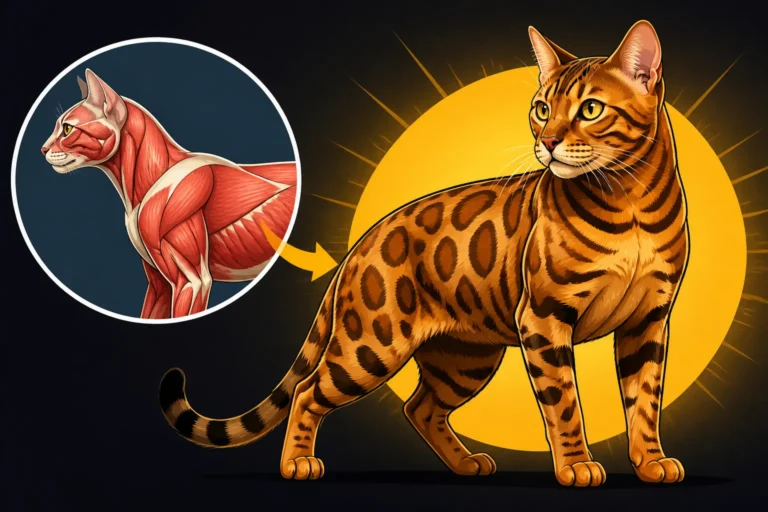
A biological resistance observed in one species does not automatically transfer intact to a hybrid or to a modern breed several generations removed from a wild ancestor. Inheritance is complex, and a particular trait can be affected by many factors. Even when a genetic difference contributes to resistance, that does not establish that every descendant inherits the same protection or expresses it in the same way.
This is one reason it is misleading to say that Bengals “cannot get feline leukemia.” The breed’s ancestry does not serve as an FeLV test, and a Bengal’s appearance or pedigree cannot tell an owner whether that cat is infected. A Bengal can be exposed to FeLV just as other domestic cats can, especially through close contact with an infected cat.
It also helps to separate FeLV from feline immunodeficiency virus, or FIV. Both are feline viruses, but they are different infections with different transmission patterns and medical considerations. A general claim about resistance to one virus should not be stretched into a claim that Asian leopard cats, Bengal cats, or their descendants resist all feline infections.
How the Bengal connection began
The research behind the hybrid cats
The story is tied to efforts to understand feline leukemia, not to a plan to create a household cat with guaranteed disease protection. Willard Centerwall was among the researchers associated with breeding domestic cats with Asian leopard cats for research into resistance. For context, see Who Willard Centerwall Was to the Bengal Cat and Which University Ran the Bengal Cat Research Colony.
The research raised a fascinating scientific question: could crossing a domestic cat with a species that showed resistance help researchers understand how that resistance worked? It was an experimental approach, not proof that every resulting hybrid would be protected from FeLV. A research observation about a wild species and a breeding program’s purpose are not the same thing as a veterinary health claim about today’s pet Bengals.
That distinction often gets lost when a breed’s origin is retold in a sentence or two. People hear that the Asian leopard cat resisted feline leukemia and assume the Bengal inherited a kind of built-in shield. The more accurate account is narrower: an ancestor’s observed resistance contributed to research interest, while the Bengal became a domestic breed through a longer history of breeding and selection.
From research animals to a domestic breed
The research hybrids and the Bengal breed have connected histories, but they are not interchangeable categories. Early hybrid generations can differ from later domestic generations in ancestry and behavior. Modern Bengals are bred as domestic cats, and their relationship to the Asian leopard cat is several generations removed. For a closer look at what happened after the research period, see What Happened to Centerwall's Bengal Cat Hybrids.
This background also explains why the Bengal’s ancestry should not be used as a substitute for individual care. A breed may have a remarkable origin story, but a pet’s health decisions depend on its own exposure, test history, household, and veterinary assessment. A pedigree can help explain lineage; it cannot establish FeLV status.
It is also useful to distinguish historical research from current breeding. Bengals are not generally created by repeatedly crossing pet cats with wild Asian leopard cats. If you are curious about modern breeding practices, Whether Bengal Cats Are Still Bred From Wild Cats explores that point. The key takeaway for FeLV is simple: wild ancestry is not a practical screening tool for a domestic cat.
What this means for a Bengal in your home
Do not assume a Bengal is protected
If you have a Bengal, treat FeLV risk as an individual health question. A cat that lives indoors with no contact with cats of unknown status may face a different exposure risk from a cat that goes outdoors, lives with an infected cat, or regularly meets new cats. The breed name does not answer those questions.
Testing is the way a veterinarian assesses a cat’s FeLV status. A vet may recommend testing when a cat is adopted, before it joins a household with other cats, after a possible exposure, or when illness makes testing appropriate. The exact plan depends on the circumstances. If a cat has had a recent potential exposure, ask the clinic whether repeat testing is advisable, since timing can affect what a test detects.
If you are bringing a new cat home, a temporary separate room and separate feeding supplies can make introductions calmer while you arrange veterinary guidance. Some households use retailers such as Chewy or a local pet shop to find duplicate bowls, bedding, and other basics for that separate space. Those supplies help with organization; they do not prevent or treat FeLV, and they do not replace testing.
Talk with your veterinarian about vaccination
FeLV vaccination decisions are based on factors such as age, lifestyle, likelihood of contact with other cats, and local veterinary guidance—not on the assumption that a Bengal has inherited resistance. Vaccination can be an important part of prevention for cats with exposure risk, but it is not a substitute for testing or for sensible management of contact with cats whose status is unknown. Ask your veterinarian what schedule fits your cat’s situation. See Whether a Bengal Cat Should Be Vaccinated for FeLV for more on the decision.
For example, an indoor Bengal who lives alone and never meets unfamiliar cats may have a different risk profile from a Bengal who spends time outdoors or shares a home with cats whose health status is unclear. Even then, household circumstances can change: a new cat may arrive, an indoor cat may slip outside, or a move may introduce new contact. Revisit the question with your vet when the situation changes rather than relying on an old assumption.
If your Bengal is diagnosed with FeLV, that diagnosis is not a prediction that the cat will become sick immediately. Your veterinarian can explain what monitoring and care are appropriate, including how to reduce risks to other cats in the household. Avoid making decisions based on alarming online claims or the idea that the breed’s ancestry makes the result impossible.
Common claims and what to do instead
A quick comparison of ancestry claims and practical care
| Claim or question | What it really tells you | Practical next step |
|---|---|---|
| The Asian leopard cat showed resistance to FeLV | This describes an observation about a wild species, not a guarantee for every descendant | Treat your Bengal as an individual cat and discuss exposure with a vet |
| My Bengal has wild ancestry | Ancestry alone does not confirm infection status or immunity | Use veterinary testing when recommended |
| My Bengal lives indoors | Indoor living can reduce some exposure opportunities, but a cat’s risk depends on its actual circumstances | Reassess risk if household cats, outdoor access, or contact changes |
| FeLV vaccination is always necessary or never necessary | Neither blanket statement fits every cat | Ask a veterinarian to weigh lifestyle and exposure risk |
| A healthy-looking cat cannot have FeLV | Appearance alone cannot establish a cat’s status | Follow a vet’s advice about testing, especially after possible exposure |
The table is meant to untangle the most common leap in reasoning: “the ancestor resisted the virus, therefore my cat is protected.” The first part concerns a research observation; the second is a conclusion that does not follow from it. A healthy appearance is not a test result, and a breed label is not a substitute for one.
If you are gathering supplies for a new-cat transition, Chewy or another pet retailer may be convenient for separate bowls or washable bedding. Keep the purpose clear: organizing a low-stress space is helpful, while infection-risk decisions belong in a conversation with a veterinary professional. The same applies to cleaning products or carriers. Buying supplies does not establish whether cats can safely share a home.
Questions to bring to a veterinary visit
A useful conversation can start with a short, honest account of your cat’s daily life. Tell the vet whether your Bengal goes outdoors, has contact with unfamiliar cats, lives with other cats, or has recently been adopted. Mention any known exposure to a cat with FeLV and bring existing test or vaccination records if you have them. These details help the clinic make recommendations that fit the actual situation rather than the breed’s reputation.
You can also ask whether your cat should be tested now, whether a later test is needed after a recent exposure, and whether FeLV vaccination is appropriate for its lifestyle. If you have several cats, ask how to manage introductions and shared spaces while you clarify each cat’s status. That practical plan can be reassuring, especially when you are trying to protect a resident cat without unnecessarily isolating a newcomer.
For broader context on breed health, Whether a Bengal Cat Is a Healthy Breed is a useful companion topic. It is still best to separate general breed discussions from individual diagnosis: one cat’s health history, testing, and environment matter more than a sweeping claim about the breed.
The most grounded way to understand the Bengal’s ancestor is to appreciate the scientific history without turning it into a promise of immunity. The Asian leopard cat’s resistance helped prompt research. It does not mean a pet Bengal is automatically protected from FeLV. Testing, thoughtful exposure management, and veterinary advice remain the useful tools for making decisions about the cat in front of you.
Disclaimer
This article is for general informational purposes only and does not constitute professional advice. Laws, prices and regulations vary by location and change over time. Consult a qualified professional for guidance on your specific situation.