How Much Wild DNA an F3 Bengal Cat Has
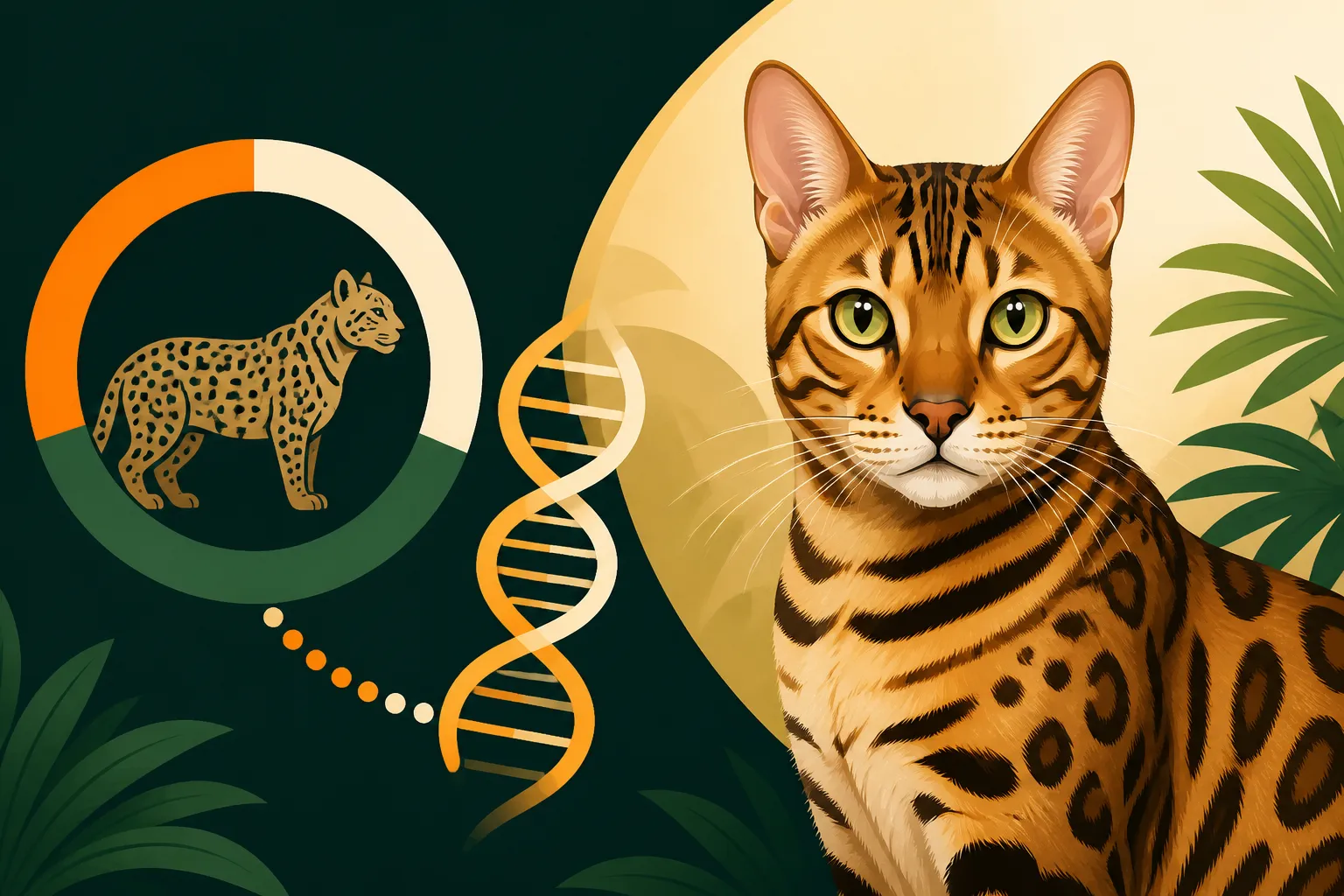
An F3 Bengal is often described as having about 12.5% Asian leopard cat ancestry, but that figure is a pedigree estimate—not a DNA reading stamped on every cat. If you are trying to understand what “F3” means, how the percentage is calculated, or what it says about a cat’s behavior and ownership, this guide explains the numbers and their limits.
What F3 means in a Bengal cat’s pedigree
The generation number traces ancestry
The “F” in F3 stands for filial generation. It describes how many generations a Bengal is removed from an Asian leopard cat ancestor in a particular breeding line. It is a pedigree label, not a measure of a cat’s size, temperament, or exact genetic makeup.
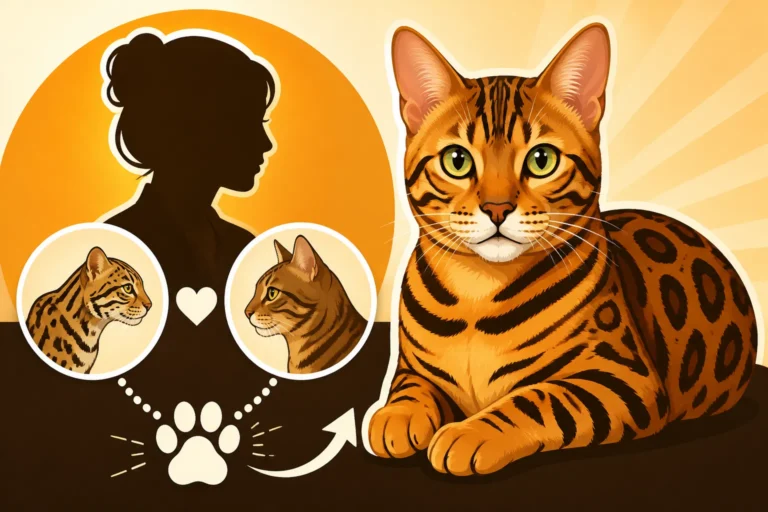
In a simplified example, an Asian leopard cat bred with a domestic cat produces an F1 Bengal. An F1 bred with a domestic cat produces an F2, and an F2 bred with a domestic cat produces an F3. Under that straightforward sequence, an F3 has an Asian leopard cat at the great-grandparent level in the example pedigree.
The real details are in the individual cat’s pedigree. A generation label should be understood in the context of the documented parentage and the terminology used by the breeder or registry. For a broader explanation of how the numbering works, see How a Bengal Cat's Generation Is Counted and What F2 and F3 Mean in a Bengal Cat.
How the 12.5% estimate is calculated
The familiar estimate comes from halving the expected wild ancestry at each backcross to a domestic cat. In the simplest pedigree model, each parent contributes roughly half of a kitten’s inherited nuclear DNA. If one parent has an expected 25% Asian leopard cat ancestry and the other is domestic with no recent Asian leopard cat ancestry in that pedigree, the kitten’s expected share is half of 25%.
| Generation in a simplified backcross | Expected Asian leopard cat ancestry |
|---|---|
| F1 | 50% |
| F2 | 25% |
| F3 | 12.5% |
| F4 | 6.25% |
These figures are useful for understanding the pedigree pattern, but they are not precise measurements of an individual cat’s genome. They assume a particular sequence of parentage and express an expected average. A real Bengal inherits a shuffled collection of DNA segments, so the amount passed down can differ from the tidy fraction in the table.
If you want to compare the earlier steps in the same simplified model, How Much Asian Leopard Cat DNA an F1 Bengal Cat Has and How Much Wild DNA an F2 Bengal Cat Has explain the corresponding estimates.
F3 does not mean the cat is exactly 12.5% wild
It is tempting to read “F3” as a laboratory result, but it is not one. The label tells you about a generation in a pedigree. It does not certify that a genetic test measured precisely 12.5% Asian leopard cat DNA in that cat.
Even when the family tree follows the standard backcross pattern, inheritance is not a perfect half-and-half transfer of every ancestor’s DNA at each step. Parents pass along a recombined assortment of their own genetic material. A kitten may inherit more of some ancestral segments and less of others. The 12.5% figure is therefore best treated as a helpful expectation, not an exact personal score.
This distinction matters when a breeder, advertisement, or online discussion presents the number as certain. Ask what the number is based on: a documented pedigree calculation, a registry designation, or a genetic test. Those are different kinds of information, and one should not be presented as another.
What the wild DNA percentage can and cannot tell you
It describes ancestry, not a predictable personality
A percentage of Asian leopard cat ancestry does not work like a temperament rating. It cannot tell you exactly how social, energetic, vocal, confident, or easy to handle an individual Bengal will be. Those traits reflect many influences, including the cat’s inherited characteristics, early socialization, environment, health, and experiences with people.
Two cats with similar pedigree estimates can behave quite differently. One may be comfortable with visitors and household routines, while another may need more time to adjust to unfamiliar people or changes at home. It is more useful to learn about the individual cat and its parents than to assume a fixed personality from the F3 label alone.
If you are comparing generations because you are choosing a companion, ask the breeder how the kittens are raised, what handling they have experienced, and what they observe about each kitten’s day-to-day temperament. A generation number can provide context, but it cannot replace those conversations. For an overview of the earlier categories, see What F1 Means in a Bengal Cat.
The estimate does not predict a cat’s appearance
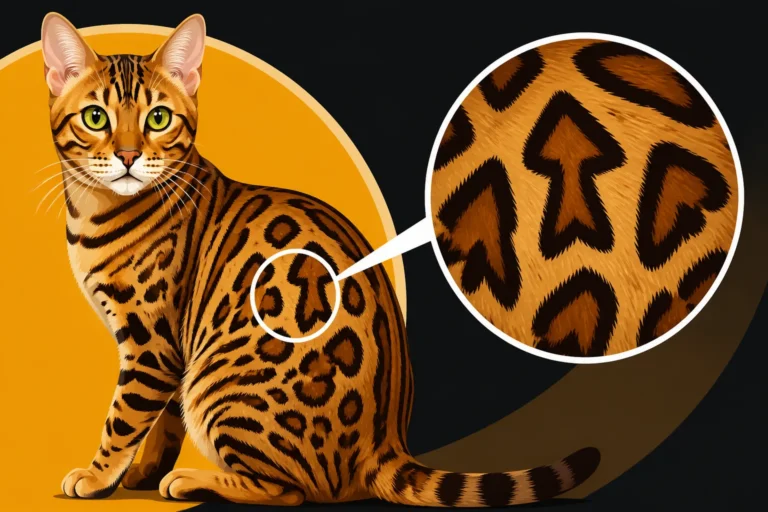
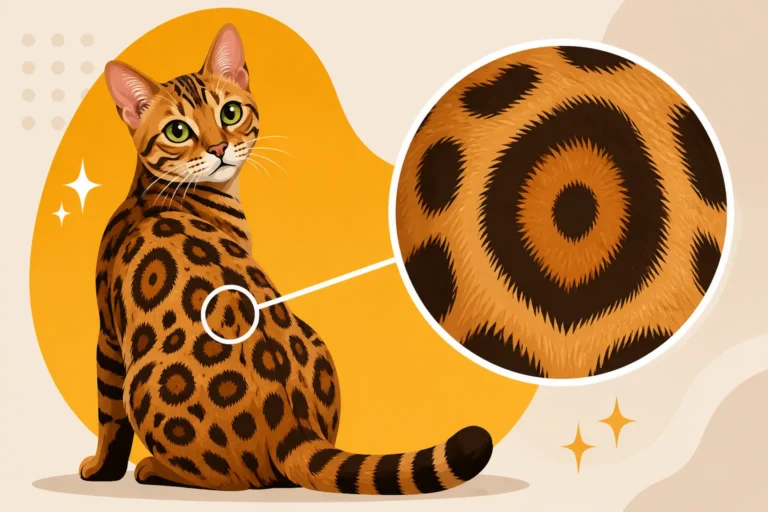
An F3 label does not guarantee a particular pattern, coat, body shape, or degree of “wild” appearance. Bengal appearance is shaped by many genes and by the breed’s selective breeding history. Rosettes, marbling, coat color, and other visible traits are not a simple visual ruler for estimating how much Asian leopard cat ancestry a cat carries.
This is why appearance alone cannot establish a generation. A spotted domestic shorthair may look strikingly similar to a Bengal, and a Bengal’s pattern does not prove its exact place in a pedigree. If the generation matters for your decision, request records that support the claim rather than relying on photographs or a seller’s description.
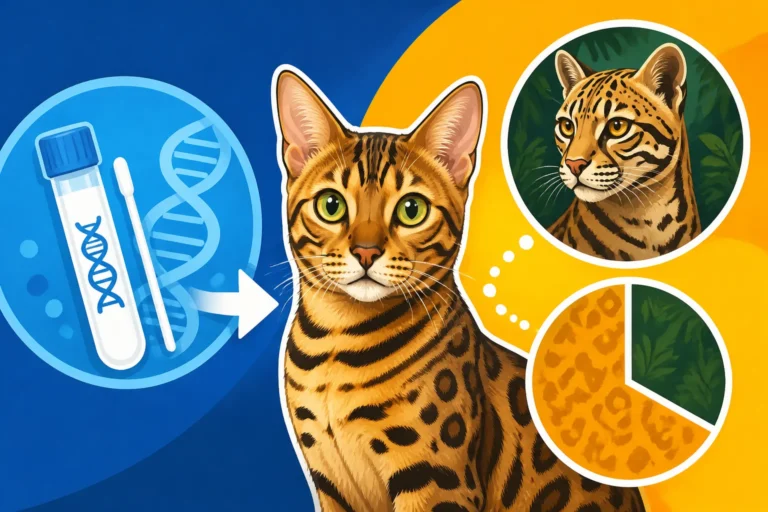
A pedigree can help establish the relationships in a line, while a DNA test may answer specific genetic questions depending on the test. Neither should be casually treated as a universal “wild percentage” certificate unless the test is specifically designed and validated for that purpose.
Pedigree percentage and individual DNA are different ideas
The expected percentage is a mathematical description of ancestry across a pedigree. The DNA that an individual cat actually inherits is the physical material passed from its parents. The two ideas are related, but they are not interchangeable.
Imagine two F3 littermates. They share the same parents and the same broad pedigree classification, yet they may inherit different combinations of DNA segments from those parents. Their expected ancestry estimate may be the same, but the exact inherited segments are not identical. This is one reason a simple fraction cannot capture every detail of an individual genome.
When someone asks, “How much wild DNA does an F3 Bengal have?” the most accurate everyday answer is: the conventional pedigree estimate is about 12.5% under a standard backcross sequence, but that is not necessarily an exact genetic measurement for the particular cat.
What F3 means for ownership and generation rules
F3 is an early-generation label, not the same as SBT
F3 Bengals are commonly discussed as early-generation cats because their pedigrees are closer to the Asian leopard cat ancestor than those of later-generation Bengals. The term does not mean that every F3 will behave the same way, nor does it describe a cat’s full domestic status by itself.
SBT is a separate pedigree term used in Bengal registration contexts. It generally refers to later-generation Bengals with qualifying domestic Bengal ancestry across several generations, rather than an early filial-generation label such as F3. The exact terminology and eligibility depend on registry rules and documented pedigree. Read What SBT Means in a Bengal Cat to understand how that label differs.
It helps to keep three questions separate: What does the pedigree say? What does the registry recognize? What rules apply where the cat will live? A breeder’s use of “F3” answers only part of that picture.
Local rules may use generation cutoffs
Some jurisdictions distinguish between early-generation hybrid cats and later-generation Bengals. The details can vary, and rules may be set at the state, regional, or city level. An F3 might be treated differently from a later-generation cat in one place, while another jurisdiction may use a different cutoff or impose other requirements.
Do not assume that a cat is automatically legal to own because it is called an F3, or that the same rule applies after a move. Before committing to a purchase or adoption, check the relevant local laws and any permit requirements. If the cat’s generation is part of the legal question, keep the pedigree and breeder documentation available and ask the appropriate local authority how it defines the category.
The generation distinction between early filial cats and later domestic Bengals is explained further in Why F4 Is the Line Between Wild and Domestic Bengal Cats. That context can help, but it should not replace checking the rules that apply to your own address.
Ask for evidence that supports the generation claim
A responsible breeder should be able to explain how the kitten’s generation was determined and show pedigree documentation that supports the description. Ask who the parents are, how the generations are counted, and whether the records match the wording in the sales agreement. If the explanation is vague or the seller treats a visual pattern as proof, pause before making a decision.
You can also ask what health testing, veterinary care, socialization, and return support are part of the breeder’s practices. Those questions are relevant regardless of whether the kitten is F3, F4, or SBT. A generation number is one piece of information; it does not replace the basics of responsible breeding and preparation.
For a useful checklist of generation-related questions, Which Generation a Bengal Cat Breeder Works With can help you organize what to ask before you choose a kitten.
How to use the F3 estimate when choosing a Bengal
Treat the number as context, then assess the individual cat
If you are considering an F3, use the pedigree estimate as background rather than a promise about what daily life will be like. Ask to meet the kitten if possible, observe how it responds to handling and ordinary household sounds, and talk with the breeder about the personalities of the parents and littermates. A kitten’s comfort with people and familiar routines offers more practical insight than a percentage alone.
Think about your own home, too. A busy household with frequent visitors, children, or other pets may call for a different match than a quiet home with an experienced cat owner. Ask how the breeder prepares kittens for everyday experiences and what support is available if your cat needs time to settle in.
Preparation still matters for any Bengal. Arrange secure windows and doors, scratching surfaces, litter facilities, interactive play, and places where the cat can retreat. If you are gathering basic supplies, retailers such as Chewy may be one place to compare routine food, litter, and enrichment options; choose items based on the cat’s needs and the breeder’s transition advice, not its generation label.
Plan for routine care rather than relying on ancestry assumptions
A cat’s estimated ancestry does not tell you which food it needs or whether it will have a particular health problem. Ask the breeder what the kitten currently eats and make any diet changes gradually with veterinary guidance. A retailer such as Chewy can be useful for sourcing familiar food or litter during the transition, but your veterinarian is the right person to advise on nutrition or health concerns.
For enrichment, provide opportunities for climbing, chasing toys, exploring, and resting. Some Bengals are exceptionally active; others have a more moderate rhythm. Watch your cat’s behavior and adjust the setup as you learn what it enjoys. If you shop for toys or puzzle feeders through stores such as Chewy, prioritize safe construction and supervise new items until you know how your cat uses them.
The goal is not to “manage a percentage.” It is to give an individual animal a secure home, consistent care, and enough interaction to thrive. Observing the cat in front of you will always be more useful than treating the 12.5% estimate as a behavioral forecast.
Keep the answer precise when discussing the number
When explaining an F3 Bengal to someone else, a careful description might be: “F3 is a pedigree generation label. In a standard backcross sequence, the expected Asian leopard cat ancestry is about 12.5%, but it is not an exact genetic test result.” That phrasing is both understandable and appropriately cautious.
If a seller claims a precise wild-DNA percentage, ask what evidence supports it. If you need a legal determination, check the local definition and documentation requirements. If you are choosing a pet, focus on temperament, health, socialization, and whether the household can meet the cat’s needs.
The short figure is useful, but its meaning depends on the pedigree behind it. Understanding that distinction helps you avoid confusing a neat fraction with a guarantee about an individual Bengal.
Disclaimer
This article is for general informational purposes only and does not constitute professional advice. Laws, prices and regulations vary by location and change over time. Consult a qualified professional for guidance on your specific situation.