Why a Bengal Cat’s Profile Curves
A Bengal’s side profile can look subtly different from the straight-faced shape many people expect in a domestic cat: the forehead flows into the nose with a gentle curve rather than a sharp dip or abrupt stop. This guide explains what that curve means, how it fits the breed’s head shape, and when a change in profile might be worth discussing with a veterinarian.
What a Bengal Cat’s Curved Profile Looks Like
The curve is easiest to see from the side
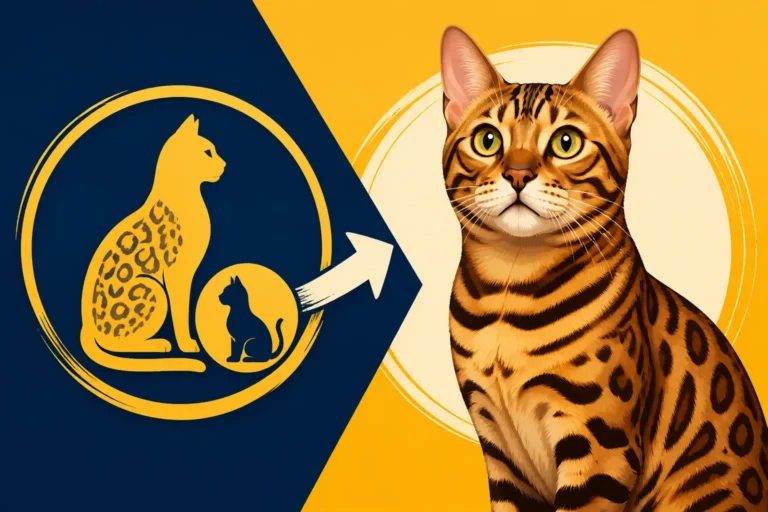
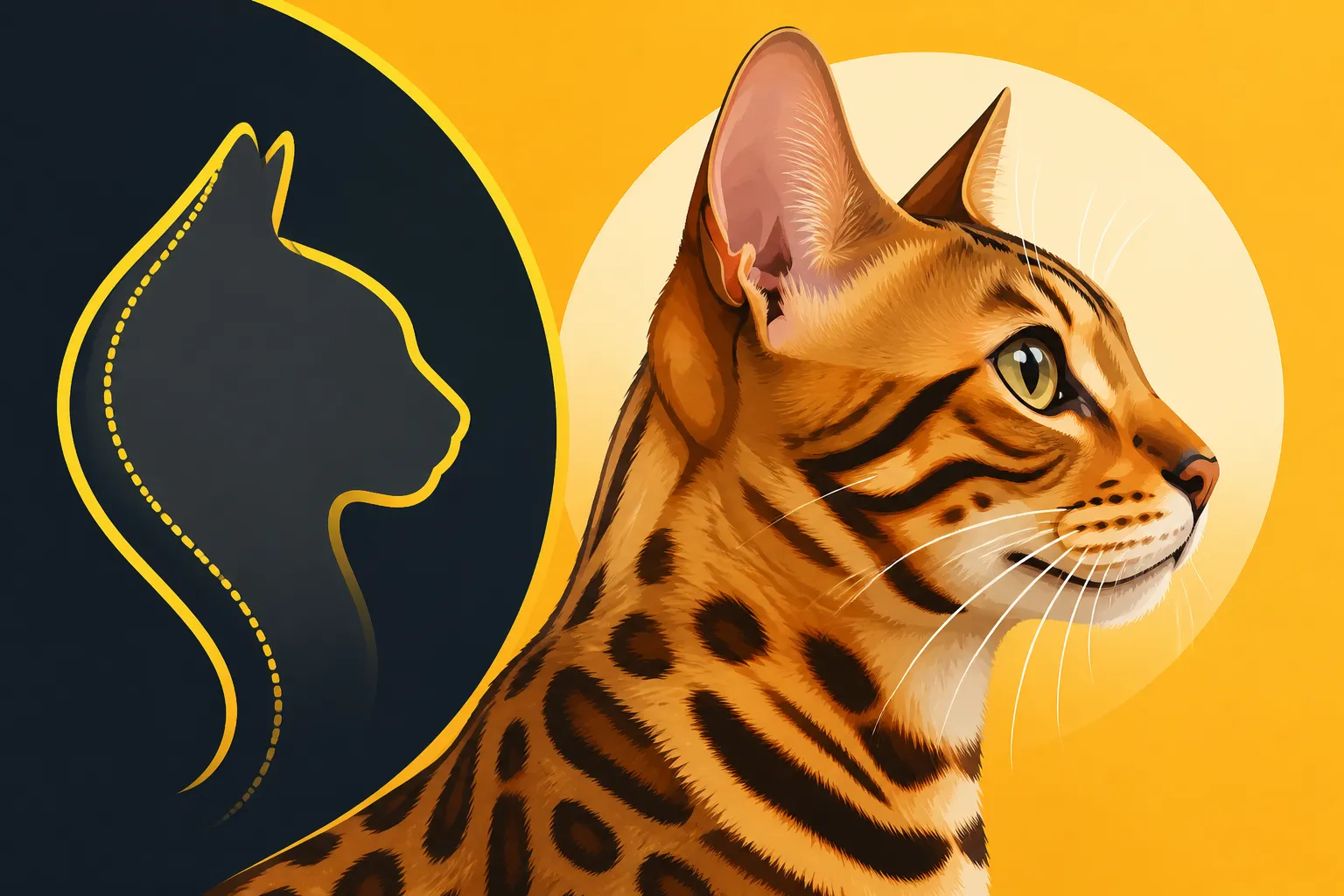
A Bengal’s profile is the outline of its head viewed from the side, running from the forehead across the bridge of the nose to the nose leather. In a typical Bengal, those contours flow into one another with a soft, continuous transition. The profile may look gently curved rather than perfectly straight, but it should not appear sharply pinched or dramatically hooked.
The curve is often subtle. In a front-facing photo, it can be difficult to spot because the nose and cheeks are seen head-on. A side view in even lighting is more useful: look at the forehead, the bridge of the nose, and how the bridge meets the nose leather. A kitten may have a less defined adult head shape, so a single early photo is not a reliable way to judge its eventual appearance.
People sometimes describe the Bengal’s profile as “curved” as if every cat should have the same pronounced bend. That’s not a helpful expectation. Individual cats vary, and a breed standard describes an overall type rather than a single exact outline. The curve should read as a smooth part of the head’s structure, not as a dramatic feature by itself.
The profile is only one part of the head
A Bengal’s head is considered as a whole. Its width, muzzle, cheekbones, ears, eyes, and nose all affect the impression of its profile. A broad nose and substantial muzzle, for example, can make the outline look different from that of a fine-boned cat even when the transition from forehead to nose is gentle.
This is why a curved profile should not be judged in isolation. The Bengal’s head is often described as a modified wedge, with rounded contours rather than sharp angles. The eyes and ears contribute to that balance, too. For more detail on the overall shape, see What a Bengal Cat's Head Should Look Like and What Shape a Bengal Cat's Eyes Should Be.
Photos can also exaggerate or flatten a curve. A camera held below a cat’s face, a close-up taken with a wide-angle lens, or a head turned slightly away from the camera can distort proportions. If you’re comparing cats, try to use clear side views taken from a similar distance and angle. Avoid treating a stylized photo, show pose, or seller’s close-up as a definitive measure of head shape.
Why the Bengal’s Profile Curves
Breed type reflects a mix of ancestry and selective breeding
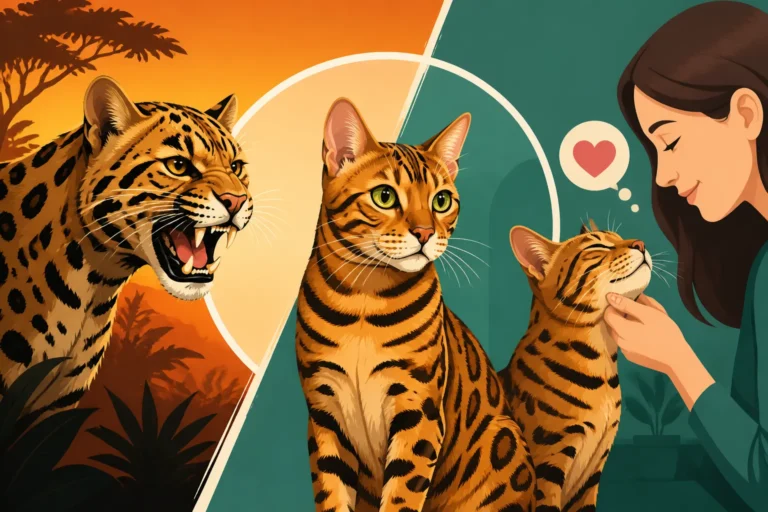
Bengals descend from domestic cats and the Asian leopard cat, but the appearance of a modern Bengal is not simply a copy of its wild ancestor. The breed has been developed through generations of selective breeding for a distinctive domestic-cat type, including its coat pattern, body, and head. The history behind that appearance is explored in What a Bengal Cat's Wild Ancestor Is Like.
A gentle curve in the profile is one feature that helps create the Bengal’s characteristic head shape. It sits alongside other traits, rather than acting as proof of ancestry or a special adaptation. The curve does not mean a Bengal has a wild cat’s face, and it is not a measure of how much wild ancestry a particular cat has.
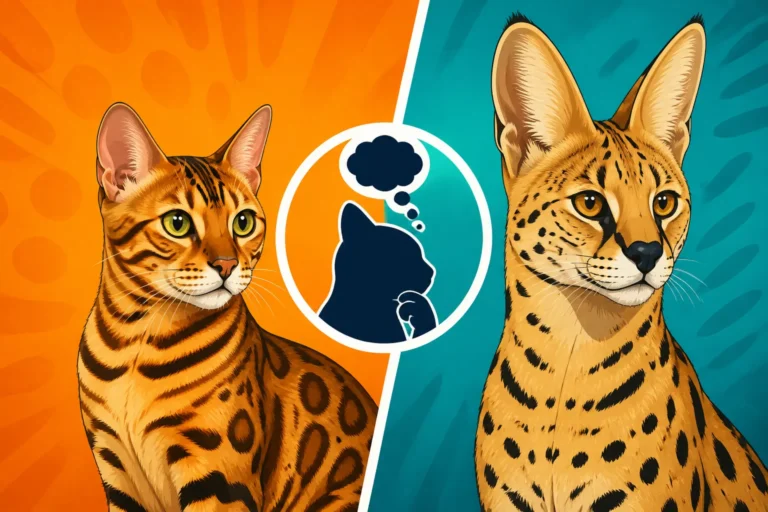
The same distinction matters when people compare Bengals with other spotted cats. Coat markings alone do not establish breed, and neither does one facial feature. For context on visual differences, read How to Tell a Bengal Cat From an Egyptian Mau and How a Bengal Cat Differs From an Ocicat. These comparisons are useful for understanding appearance, but a cat’s pedigree and registration history are separate questions from what its face looks like.
Standards describe a range, not a perfect template
Cat breed standards offer judges and breeders a shared framework for assessing type. They do not mean that every healthy Bengal must have an identical profile, or that a small difference automatically makes a cat unhealthy or “not a Bengal.” Standards can also vary in wording between registries, so descriptions should be read in the context of the organization involved. What the Bengal Cat Standard Asks For explains how standards fit into the larger picture.
A pet owner does not need to measure a cat’s nose angle or compare it with show photographs to care for it well. A Bengal with a less noticeable curve can still be a beloved, healthy companion. Conversely, a cat that appears very close to a show ideal may still need ordinary veterinary care like any other cat.
When looking at a kitten, prioritize health, behavior, and reliable background information over a single feature in a photo. Ask the breeder or rescue for clear, unedited pictures and the cat’s records. If you are uncertain whether a cat is actually a Bengal, see Whether a Spotted Domestic Shorthair Is a Bengal Cat. Appearance alone cannot establish pedigree.
How to Compare a Bengal’s Profile Fairly
Use a consistent viewing angle
To get a clearer sense of the profile, view the cat from the side at eye level, with the head relaxed and facing forward. A natural standing or sitting pose is often more useful than a forced pose. If the cat is squirming, distracted, or turning its head, wait and try again rather than drawing conclusions from a distorted angle.
| What you’re looking at | A useful observation | What not to assume |
|---|---|---|
| Forehead and nose bridge | The outline appears smooth and gently flowing | Every Bengal has the same degree of curve |
| Nose and muzzle | The nose and muzzle look balanced with the rest of the head | A broad nose alone confirms breed |
| Side-view photo | The head is shown clearly from the side without obvious distortion | One photo captures the cat’s exact adult appearance |
| Overall head | The features look proportionate together | A small difference from a standard means poor health |
| A sudden change | The face looks different from the cat’s usual appearance | A new change is simply a breed trait |
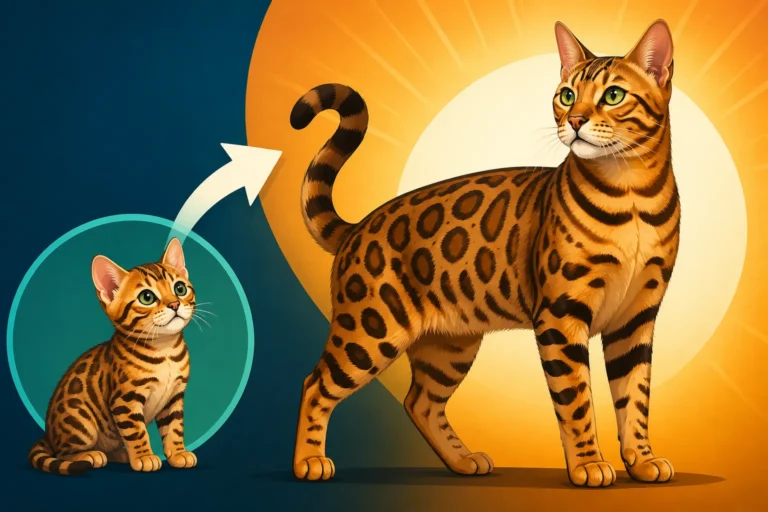
If you are assessing a kitten, remember that proportions can change as it grows. A young cat’s face may look less defined or less balanced than it will later. Breed type also develops alongside the rest of the body, so avoid making a firm judgment from a very young kitten’s profile alone.
For a breeder comparison, look across several cats and several photos rather than focusing on one striking example. A useful question is not “Does this kitten have the biggest curve?” but “Does the breeder explain the cat’s health, parentage, and expected development clearly?” A retailer such as Chewy may be useful when preparing for a cat’s everyday needs, but shopping listings are not a substitute for pedigree documentation or a breeder’s records.
Separate appearance questions from health questions
A naturally shaped profile is usually just an appearance trait. It does not, by itself, predict breathing problems, dental trouble, or another medical condition. If your Bengal has always had the same gentle curve and is eating, breathing, and behaving normally, the shape alone is not a reason to assume something is wrong.
A sudden change is different. Swelling, a new lump, facial asymmetry, discharge, pain when touched, or difficulty eating should not be explained away as “just the Bengal profile.” Contact a veterinarian, especially if the change appeared after an injury or is getting worse. Trouble breathing or a rapidly worsening facial change calls for prompt veterinary attention.
Owners sometimes search for breed-specific explanations when a cat’s face looks unusual. It is reasonable to notice changes, but a photograph or breed description cannot diagnose their cause. Your veterinarian can examine the cat’s nose, mouth, teeth, and surrounding tissues and decide whether further assessment is needed. Chewy can help with general pet supplies, but medical concerns about a changing profile belong with a veterinary professional.
Questions Bengal Owners Commonly Ask
Does a curved profile prove a cat is a Bengal?
No. A smooth curve can be one part of a Bengal’s appearance, but it is not a breed test. Many domestic cats have gently shaped profiles, and cats with Bengal-like spots may not have Bengal ancestry. A breeder’s records and pedigree provide different information from the cat’s appearance; even then, documents should be checked carefully and understood in context.
If you are choosing a kitten, ask about its parents, health history, and registration rather than relying on a close-up of its face. The Bengal’s coat pattern, body, and head type are considered together, and none of them alone proves a cat’s lineage. The article What a Bengal Cat Looks Like by the Standard offers additional context about the breed’s overall appearance.
If you are adopting an adult cat, you may not have access to a complete pedigree. That does not lessen the cat’s value as a companion. It simply means it is more accurate to describe the animal as Bengal-like or a possible mix unless reliable documentation supports a specific breed claim.
Should I worry if my Bengal’s profile looks straighter than photos online?
Usually, no. Online images often show show cats, carefully chosen angles, or particularly photogenic examples. They can create the impression that every Bengal has a pronounced, identical curve. In real life, head shapes vary, and a subtle profile may be perfectly normal for an individual cat.
Look at your cat’s overall wellbeing instead of comparing its face with a heavily edited or carefully posed picture. Is the cat breathing comfortably, eating normally, and acting like itself? If so, a mild difference from online examples is generally an appearance question, not automatically a health problem. If you have a specific concern, show your veterinarian a clear photo and describe when you first noticed it.
For new owners, Chewy may be one place to find everyday supplies such as food bowls, carriers, or scratching items, but those purchases do not answer questions about breed type or facial anatomy. Keep the distinction simple: use reliable records for pedigree questions and a veterinary exam for health questions.
Does the curve become more obvious as a Bengal grows?
It can look different as a kitten matures, because the head and body do not develop in identical proportions at every stage. The appearance of a young cat can also change with posture, coat condition, and photography. That does not mean every kitten’s curve will become more pronounced, or that growth follows one predictable pattern.
If you are tracking development, take occasional photos from the same side, at a similar distance and height. That gives you a more useful comparison than switching between close-ups and wide shots. Still, photos are a record of appearance, not a way to diagnose a facial change.
When a new lump, swelling, or asymmetry appears, don’t wait for the cat to “grow into” its face. Arrange veterinary advice, particularly if the cat seems uncomfortable or the change is progressing. For ordinary care questions as your kitten settles in, Chewy can be a retail option for supplies; for health questions, speak with your veterinary clinic.
Disclaimer
This article is for general informational purposes only and does not constitute professional advice. Laws, prices and regulations vary by location and change over time. Consult a qualified professional for guidance on your specific situation.