What Shape a Bengal Cat’s Eyes Should Be
A Bengal’s eyes are one of the features that give the breed its alert, slightly wild-looking expression. But “correct” shape does not mean every Bengal has identical eyes, and a sudden change in shape can be a health concern rather than a breed trait. This guide explains the typical eye shape, what affects its appearance, and when a difference deserves a veterinary check.
The typical shape of a Bengal cat’s eyes
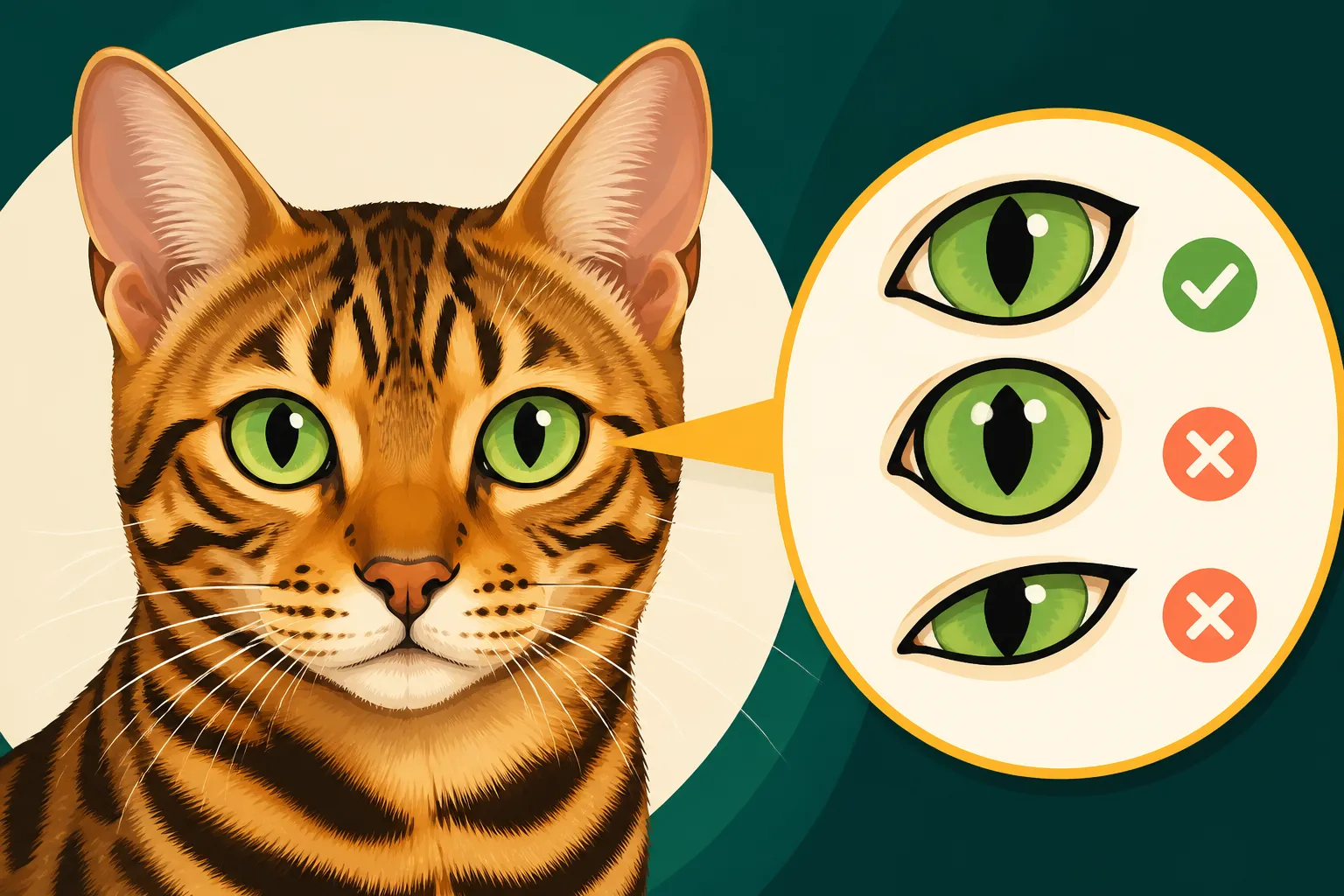
Oval to almost round
Bengal eyes are generally described as large and oval, with some appearing almost round. The outline should look open and expressive, not narrow or pinched. Because “oval” and “almost round” cover a range, two healthy Bengals can look noticeably different while still having eyes that fit the breed’s general appearance.
The shape is easiest to judge when a cat is relaxed and looking straight ahead. A Bengal who is squinting in bright light, following a toy, or half asleep may look as though their eyes have a different outline. Try comparing photographs taken in similar lighting and with the cat facing the camera, rather than deciding from a single candid image.
The eyes sit within a broad, modified-wedge-shaped head, and the surrounding facial features affect how large or round they appear. If you are learning how the whole face fits together, What the Bengal Cat Standard Asks For and What a Bengal Cat's Head Should Look Like provide useful context. Eye shape is one part of the overall expression, not a feature to assess in isolation.
Wide-set, with a subtle slant
Bengal eyes are typically set fairly wide apart. They may also have a slight slant toward the base of the ears, which contributes to the breed’s distinctive, attentive look. That slant should be subtle: it is not the same as eyes that appear dramatically angled, uneven, or permanently narrowed.
A head-on view can make the spacing easier to compare. Look at the distance between the eyes and how each eye sits in relation to the bridge of the nose. Avoid judging the spacing from a steep overhead angle or a close-up taken with a phone camera, since perspective can make the eyes seem farther apart or more prominent than they are.
If you are comparing a Bengal with another spotted cat, remember that similar markings do not guarantee the same head shape or eye placement. Eye shape alone cannot establish breed. For a broader comparison, see How to Tell a Bengal Cat From an Egyptian Mau and Whether a Spotted Domestic Shorthair Is a Bengal Cat.
Why there is room for natural variation
Breed descriptions offer a guide, not a promise that every individual will have identical features. Age, facial proportions, expression, camera angle, and lighting can all change how a Bengal’s eyes look. Kittens, in particular, can look different from adults as their faces and bodies mature.
There can also be variation among cats from different breeding lines. One Bengal may have a more rounded outline, while another’s eyes look distinctly oval. If the eyes are symmetrical, comfortable, and free of discharge or redness, a difference in the exact outline may simply be part of that cat’s appearance.
A standard should not be used to excuse a concerning change. If one eye suddenly looks smaller, more closed, or differently positioned than the other, focus on the change and the cat’s comfort rather than whether the shape looks “breed correct.”
Eye shape, color, and facial expression
Shape and color are separate features
People often discuss eye shape and eye color together because both contribute to a Bengal’s expression. They are separate traits, though. A cat can have eyes that look rounder or more oval without that determining whether the eyes are green, gold, blue, or another accepted color for its coat variety.
Color expectations can vary with coat pattern and registry descriptions. Blue eyes are associated with certain pointed Bengals, while other coat varieties may show different eye colors. For a closer look at those distinctions, read Which Eye Colors a Bengal Cat Has. Eye color does not tell you whether the eye’s surface is healthy, and a striking color is not by itself proof of pedigree.
A photograph can also distort color. Indoor bulbs, sunlight, flash, and phone-camera processing may shift an eye from greenish to gold or make it look unusually bright. When assessing color, look at the cat in ordinary natural light without using flash directly at the face.
How the eyes contribute to the Bengal look
The Bengal’s alert expression comes from several features working together: eye size and placement, the shape of the head, the muzzle, and the markings around the eyes. Dark lines around the eyes can make them seem more defined, while lighter fur around the face may make the eyes appear larger by contrast.
This is one reason a photograph can be misleading. A dark facial marking may create a visual border that makes the eye look narrower, even when the eye itself is a normal oval. Likewise, a pale or high-contrast face may make the eyes seem especially round. Look at the eyes themselves, not only the pattern surrounding them.
The profile and ear placement also influence the overall impression. If you want to understand how those features relate to the face, Why a Bengal Cat's Profile Curves and Why a Bengal Cat Has an Ocelli on Each Ear explain other details people notice when looking at the breed.
What eye shape does not tell you
A particular outline cannot confirm a Bengal’s health, ancestry, or vision. Nor does a photo showing attractive, symmetrical eyes rule out an eye condition. Some problems affect the retina or other structures inside the eye without changing the visible shape at first.
For example, progressive retinal atrophy affects the retina and can interfere with vision. A Bengal may not show obvious external changes in the eye’s outline early in the process. Learn about screening and diagnosis in Whether an Eye Exam Finds PRA-b in a Bengal Cat and How a Bengal Cat's PRA-b DNA Test Works.
If your Bengal navigates familiar rooms normally, that is reassuring but not a substitute for an exam when you notice a change. Cats can adapt quietly, and gradual vision changes may be easy to miss at home.
When a Bengal’s eye shape may signal a problem
A sudden difference deserves attention
A healthy cat’s eyes should generally look comfortable and reasonably symmetrical. If one eye begins to look more closed than the other, appears unusually swollen, or has a new change in pupil size, contact a veterinarian for advice. Sudden squinting can be a sign of pain, even if the eye looks mostly normal otherwise.
Also watch for redness, cloudiness, excess tearing, yellow or green discharge, repeated pawing at the face, or sensitivity to light. These signs do not point to one specific diagnosis, and an online photograph cannot reliably distinguish a minor irritation from a problem that needs prompt treatment.
If there is a sudden injury, marked swelling, severe pain, a visibly cloudy eye, or a cat that cannot open the eye, seek veterinary care promptly. Do not wait for a shape difference to resolve on its own, and do not use human eye drops or leftover medication unless a veterinarian has specifically told you to use them.
A quick comparison of appearance and action
| What you notice | What it might mean | A sensible next step |
|---|---|---|
| Both eyes look oval or nearly round, with no discomfort | Normal variation in appearance may be likely | Mention it at a routine wellness visit if you have questions |
| One eye looks newly smaller or more closed | Squinting, irritation, pain, or another eye problem may be involved | Contact your veterinarian, especially if it persists or worsens |
| Redness, discharge, cloudiness, or repeated rubbing | Possible irritation, infection, injury, or another condition | Arrange veterinary advice; seek prompt care for severe signs |
| Different pupil sizes or a sudden change in how the cat navigates | An eye or neurologic concern may need assessment | Contact a veterinarian promptly |
| Eyes look different only in a photo or under bright light | Angle, expression, lighting, or flash may be changing their appearance | Compare in calm, even natural light, without shining a flash into the eyes |
This table is a practical guide, not a diagnosis. If you are unsure whether a change is new, take a clear photo in soft natural light and note when you first noticed it. A photo can help you describe the change to your veterinary clinic, but it cannot replace an eye examination.
Preparing for a veterinary visit
Some cats dislike having their face examined, and a curious, active Bengal may be especially eager to investigate the carrier instead of sitting still. A secure carrier and a familiar blanket can make the trip calmer. If you need to replace a carrier or pick up a washable blanket, Chewy is one example of a pet retailer that carries those everyday supplies.
Keep the carrier accessible at home rather than bringing it out only for veterinary visits. Leaving it open with familiar bedding can make it feel less like a warning that something unpleasant is about to happen. Chewy and other pet retailers offer carriers in different styles, but choose one that closes securely and gives your cat enough room to turn around and settle.
Before the appointment, write down when the eye change began and whether you have noticed discharge, rubbing, appetite changes, or altered behavior. If your Bengal becomes stressed in the car, a familiar towel from home may help. A Chewy-bought carrier can be useful if it is stable and familiar to your cat, but the most important point is safe transport and clear information for the veterinarian.
How to assess your Bengal’s eyes at home
Compare both eyes in calm, even light
Choose a moment when your cat is relaxed, not immediately after waking or during bright sun. Look from the front, at the cat’s level, and compare the outline, openness, and general symmetry of both eyes. Do not hold the eyelids open or shine a flashlight into them to get a better view.
Repeat the check occasionally so you learn what is normal for your cat. A quick look during grooming or a quiet cuddle is often enough. This is not about inspecting every detail every day; it is about recognizing a new change instead of relying on memory after several weeks.
If you see something concerning, avoid repeatedly handling the eye. Take a photo only if you can do so without upsetting your cat, then call your veterinary clinic and describe what you noticed.
Separate a normal expression from persistent squinting
A Bengal may narrow its eyes when relaxed, sleepy, or facing bright light. That temporary expression is different from persistent squinting, blinking, or holding one eye partly closed when the cat is otherwise alert. The key questions are whether the appearance is new, whether it affects one or both eyes, and whether there are other signs of discomfort.
A cat that rubs its face, avoids light, or suddenly resists being touched near the head may be uncomfortable even if the eye does not look dramatically different. Cats often hide pain, so changes in behavior can matter as much as visible redness or discharge.
If the shape difference continues after your cat has rested and moved into softer light, do not assume it is simply a Bengal feature. Contact a veterinarian and let them decide whether an examination is needed.
Keep routine eye care simple
For most cats, routine care means looking for changes rather than cleaning the eyes on a schedule. If there is a small amount of dried material near the corner, ask your veterinarian what is appropriate for your cat, particularly if it recurs. Avoid putting household products, medicated drops, or unprescribed cleaners into the eye.
A vet may recommend a specific approach after examining the cat and identifying the cause of irritation or discharge. That distinction matters: wiping away material may make the area look cleaner, but it does not treat an underlying problem.
Regular wellness visits are also a good time to ask whether your Bengal’s eyes look normal for them. Bring up any family history of eye disease, vision changes, or repeated irritation. A calm, consistent baseline helps you spot what is genuinely different from your cat’s usual appearance.
Disclaimer
This article is for general informational purposes only and does not constitute professional advice. Laws, prices and regulations vary by location and change over time. Consult a qualified professional for guidance on your specific situation.