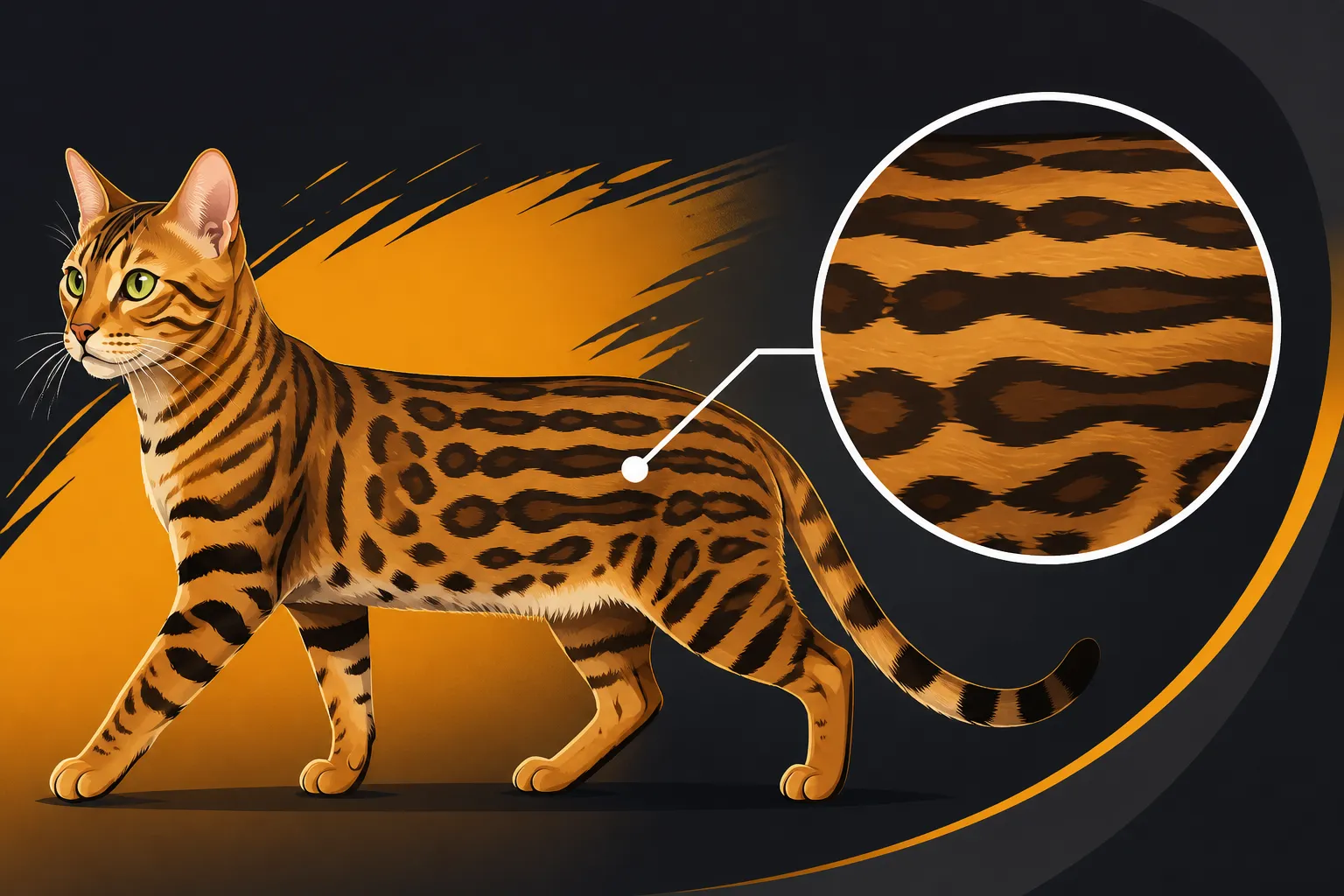
What a Horizontal Flow Bengal Cat Pattern Is
A Bengal kitten’s markings can look like dark stripes at first, then open into broad, flowing shapes as the coat develops. If you have heard a breeder describe a “horizontal flow” pattern, the phrase can sound more technical than it is. This guide explains what the pattern looks like, how it differs from other Bengal markings, and what to check as your cat matures.
What horizontal flow means on a Bengal cat
A pattern that moves across the body
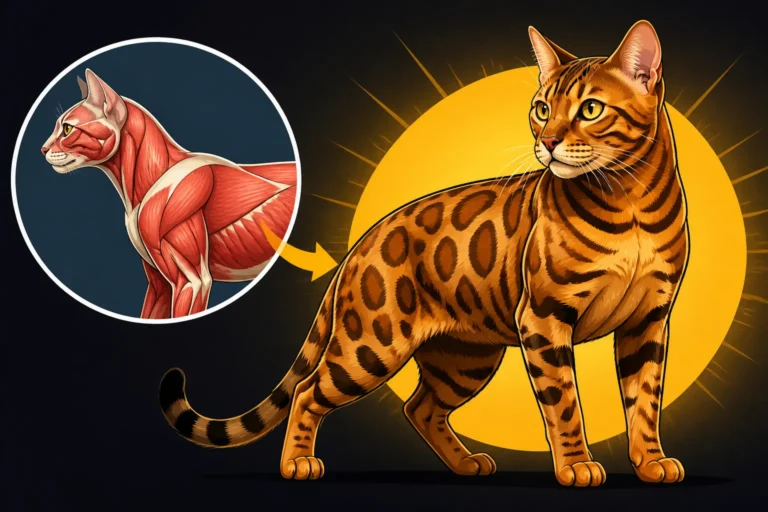
“Horizontal flow” describes the direction and visual movement of a Bengal’s coat markings. Instead of appearing as straight vertical stripes or a row of separate spots, the markings seem to sweep across the cat’s sides in sideways curves, bands, or linked shapes. On a marbled Bengal, the dark and light areas can look almost like ribbons moving along the flank.
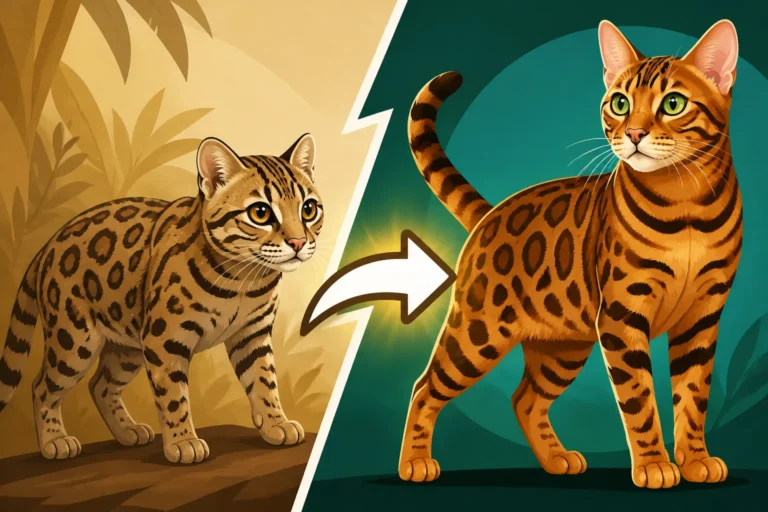
The phrase is most often used when talking about a marbled pattern. A marble Bengal has larger, connected areas of color rather than the distinct, individually outlined spots associated with a spotted or rosetted coat. The markings may twist and branch, but a pleasing example often gives the eye a sense of movement from the shoulder toward the hindquarters rather than a series of upright bars.
Horizontal flow is a description, not a separate coat color or a standalone pattern category. Two breeders may use the words slightly differently, and a cat’s markings rarely form neat, identical bands on both sides. It is best understood as a way to describe how the pattern is arranged and how it reads when you look at the whole cat. For a broader look at the pattern family, see What a Marbled Bengal Cat Is.
What it looks like in practice
Imagine looking at a Bengal from the side. A pattern with strong horizontal flow might have dark lines that curve along the ribs, broaden into patches, and then taper toward the hips. The spaces between those markings can be just as important: open, lighter areas help the dark shapes stand out and keep the coat from reading as a solid mass of stripes.
The shapes do not have to be perfectly level. A marking can rise over the shoulder, dip at the rib cage, or curl around a flank while still contributing to an overall sideways impression. Flow is about the pattern’s visual direction, not about every individual line being a straight horizontal stripe.
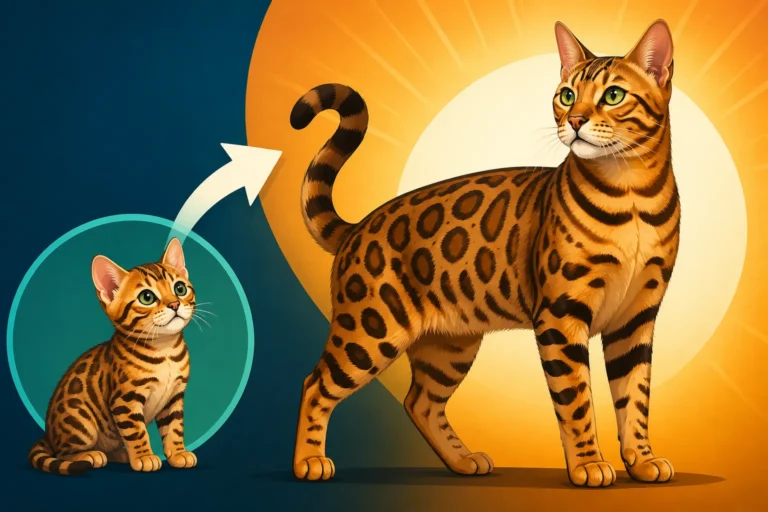
A kitten may not show its eventual pattern clearly at first. Young Bengal kittens often have a softer, fuzzier coat that can make markings look muted or blurry. As the coat changes, the contrast and definition may become easier to see. If you are trying to understand the timing, When a Bengal Cat's Adult Pattern Comes Through explains why a kitten’s appearance can change as it grows.
How it differs from spots, rosettes, and other marbling
Horizontal flow versus rosettes
A rosetted Bengal has spots with darker outlines and lighter centers. Those markings are usually read as separate shapes across the body, even when the spots are large or irregular. Horizontal flow, by contrast, describes a connected or directional look: the markings seem to travel across the side rather than sit as isolated marks.
The distinction is not always obvious in a quick photo. A rosette can be elongated, and a marbled marking can break into smaller shapes. Lighting, posture, and the angle of the photograph can also make a pattern look more stripe-like or more connected than it does in person. Looking at the entire side of the cat is more helpful than judging one patch close up.
| Coat appearance | What you are likely to notice | How horizontal flow relates |
|---|---|---|
| Spotted | Separate dark spots across the coat | Usually less connected than a flowing marble pattern |
| Rosetted | Spots with darker edges and lighter centers | Individual rosettes may be distinct rather than forming broad bands |
| Marbled | Large, connected swirls or patches | Horizontal flow describes the sideways movement of those shapes |
| Strongly striped | Narrow, fairly regular bars | May look more vertical or less open than the flowing look people describe |
For a closer comparison of the two main pattern styles, read How Marbling Differs From Rosetting in a Bengal Cat. The practical point is that “horizontal flow” is about arrangement and direction, while “marbled” and “rosetted” describe broader pattern types.
Horizontal flow versus a sheet marble
A sheet marble is a particular kind of marbled appearance in which the pattern can look broad and continuous, with large areas of color spreading across the body. It may have a strong sweeping quality, but the terms are not interchangeable: horizontal flow describes the direction the pattern seems to take, while sheet marble describes a particular overall look within the marbled family.
A cat can have a marble pattern with some sideways movement without having the broad, blanket-like appearance people associate with a sheet marble. Conversely, a sheet marble may show complex curves and swirls rather than simple, parallel bands. The coat is three-dimensional, and the markings can look different when the cat stretches, sits, or turns.
Photos can make the distinction harder. A curled-up Bengal may show only a small section of its side, while a standing cat gives you a better view of how the pattern travels from shoulder to flank. To see what breeders mean by the more continuous look, What a Sheet Marble Bengal Cat Is offers a useful comparison.
What makes a Bengal pattern look balanced
Contrast, open space, and connected shapes
Horizontal movement is only one part of how a Bengal’s markings read. Contrast matters too. Dark markings against a lighter ground color are easier to follow, while very dense markings can blend together and make the coat look busier. A pattern with open areas between its dark shapes may look more defined, even if the markings themselves are irregular.
The shapes also matter. A pattern may have curves, loops, and branching lines, but those elements should work together visually rather than appear as unrelated marks. This is why one Bengal’s coat can feel fluid and lively while another’s looks more like narrow stripes, even when both have a marbled pattern.
There is no need to expect a perfectly even design on both sides. Natural coat patterns vary, and the left flank may not mirror the right. Instead of searching for symmetry, look at whether the markings have a coherent direction and whether you can see the ground color between them. The breed’s overall appearance is broader than a single marking feature; What a Bengal Cat Looks Like by the Standard explains how the coat fits into the full picture.
How standards and breeder descriptions fit in
Breed standards describe the qualities expected in a Bengal, including coat pattern and appearance. They can help explain why breeders and judges pay attention to the direction, clarity, and overall balance of markings. But a phrase such as “horizontal flow” should not be treated as a guarantee that a cat meets every aspect of a show standard, nor as a substitute for looking at the whole animal.
A breeder may use the phrase to describe a kitten’s promise, a parent’s pattern, or a particular visual feature they admire. Ask what they mean in the specific case: Are they referring to the direction of the markings, the openness of the pattern, or the way the marbling connects across the flanks? A clear answer is more useful than relying on a label alone.
If you are comparing kittens, ask to see photographs taken from the side in natural, even light, and, if possible, see the cat in person. A relaxed standing posture makes it easier to follow the pattern. For context on how pattern traits relate to breed expectations, read What a Bengal Cat Standard Asks For. And if you are trying to tell a Bengal from a cat with a similar coat, Whether a Spotted Domestic Shorthair Is a Bengal Cat covers why markings alone do not confirm breed.
How to assess the pattern as your Bengal grows
Photograph the coat consistently
If you want to see how your kitten’s pattern changes, take occasional photographs from the same angle and in similar lighting. A side view is especially useful because it shows whether the markings travel across the body or appear as separate spots. Avoid harsh flash when possible; it can flatten the coat’s colors and create glare that hides the shape of the markings.
Take photos when your cat is standing naturally rather than twisting or stretching. A stretch can pull the skin and make the pattern appear unusually long, while a curled posture can hide large sections of the flank. You do not need a formal photography setup. A quiet room and steady light are usually enough to make a useful record.
Coat condition can affect what you see, too. Dust, loose hair, or a greasy-looking coat may reduce contrast in photographs. A gentle grooming routine can help keep the coat tidy, but Bengal coats generally do not need heavy styling or frequent bathing just to show their pattern. If you are gathering basic supplies, Chewy is one place owners may look for a soft grooming glove or cat-safe brush; choose a tool your cat tolerates, rather than brushing simply to make markings look sharper.
Ask useful questions before choosing a kitten
A pattern name can be appealing, but it should not be the only thing you consider when choosing a Bengal. Ask the breeder how they describe the kitten’s coat and whether the markings have changed as the kitten has grown. If they mention horizontal flow, ask them to point out the areas they mean in a current photo or during a visit.
It is also reasonable to ask for pictures of the kitten’s parents, especially if you are curious about how patterns can vary within a family. Parent photos offer context, not a promise: kittens can inherit different combinations of traits, and their adult appearance may not exactly match either parent. A breeder should be comfortable explaining what they can and cannot predict.
Finally, pay attention to health, temperament, and the conditions in which the kittens are raised. A striking pattern does not compensate for missing health information or an unsuitable match for your household. Chewy may be useful for ordinary starter supplies after you have chosen a kitten, but it cannot validate a breeder’s claims or confirm a cat’s pedigree. If the pattern is the detail you are unsure about, request clear, recent photos and a plain-language explanation rather than relying on a sales label. A neutral background and a simple phone photo can be enough; there is no need to buy special equipment to assess the coat.
Horizontal flow is best thought of as a visual description of how a Bengal’s markings move across the body, especially in a marbled coat. It is not a separate breed, color, or guarantee of show quality. Look at the full pattern, consider how the kitten’s coat may change with age, and ask the breeder to explain exactly what they mean by the phrase. For everyday care, Chewy can be a source for basic grooming tools, but the pattern itself needs no special product or treatment.
Disclaimer
This article is for general informational purposes only and does not constitute professional advice. Laws, prices and regulations vary by location and change over time. Consult a qualified professional for guidance on your specific situation.