Whether the Bengal Cat Has Welfare Critics
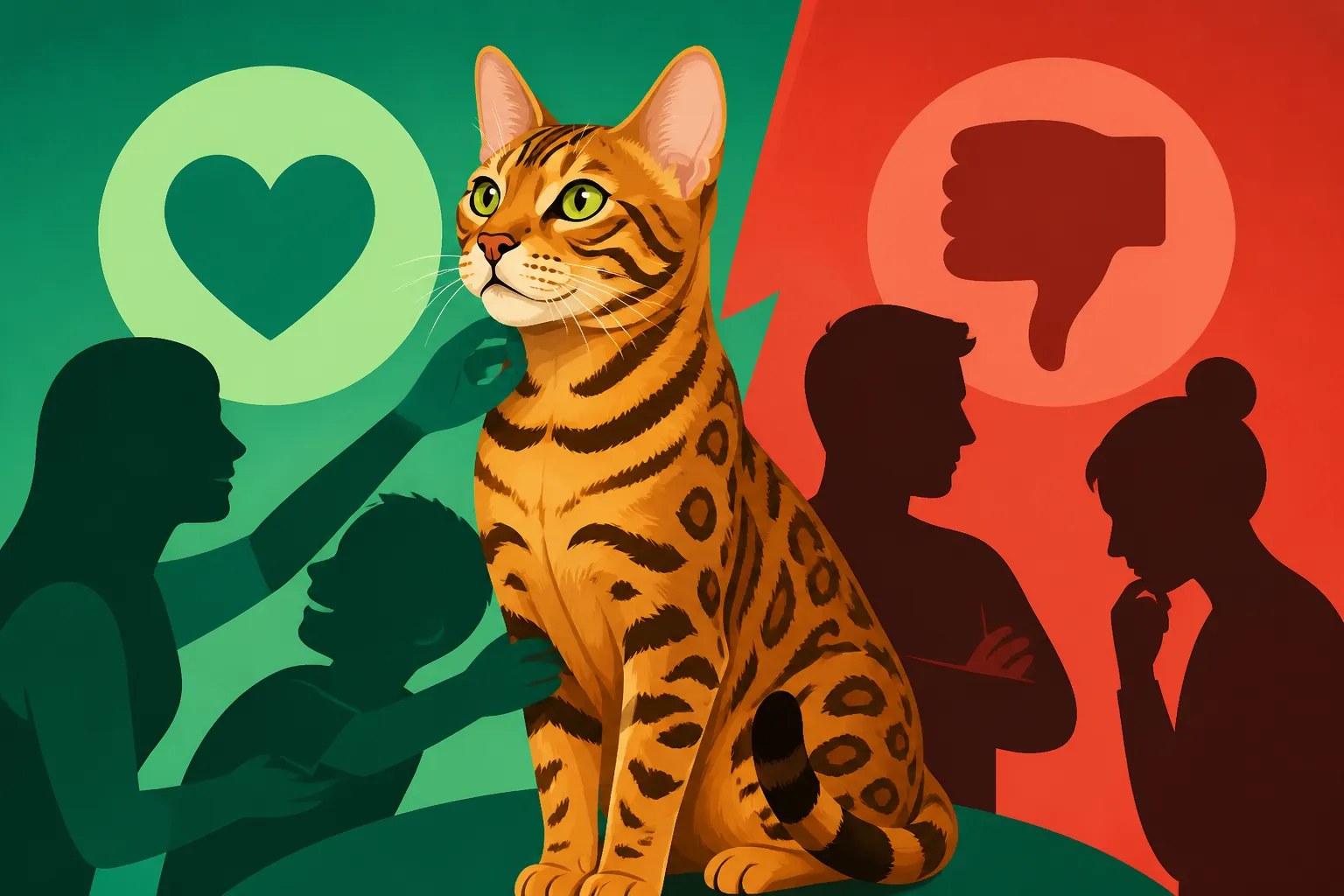
A Bengal’s striking coat can make the breed look like an effortless piece of living art, but appearance is only one part of the welfare conversation. Critics raise questions about hybrid ancestry, breeding priorities, health, and whether busy homes can meet these cats’ needs. This guide explains those concerns, what responsible ownership looks like, and how to assess a Bengal’s welfare without relying on stereotypes.
Why Bengal cats have welfare critics
Hybrid ancestry raises ethical questions
The Bengal breed began through crosses between domestic cats and the Asian leopard cat. That history still shapes debates about whether breeding a cat for a wild-looking appearance is appropriate, even though many Bengals kept as pets today are several generations removed from their wild ancestor and are bred from domestic Bengals.
Critics may object to the idea of deliberately creating animals with hybrid ancestry, or worry that the exotic appearance encourages people to treat a cat as a status symbol. Those concerns are not the same as saying every Bengal is wild, unsafe, or unable to live as a companion animal. A cat’s needs and behavior depend on the individual, its lineage, socialization, health, and home environment.
It helps to understand what a generation label does and does not tell you. It describes a cat’s position in a pedigree relative to the original wild-domestic crosses; it does not, by itself, guarantee a particular temperament or predict how well a cat will fit into a household. For background, see How a Bengal Cat's Generation Is Counted and Whether Bengal Cats Are Still Bred From Wild Cats.
Some critics also ask whether new wild cats should be introduced into domestic breeding programs. This is a separate question from how established, later-generation Bengals are cared for as pets. The ethical debate includes animal welfare, conservation concerns, breeding goals, and how the cats themselves are housed and managed. Whether a New Wild Cross Into the Bengal Cat Is Allowed explores that issue in more detail.
High activity can become a welfare problem when needs go unmet
Bengals are often described as active, curious, and keen to interact with their people. Those traits are not automatically welfare concerns. They can be part of a healthy, rewarding relationship when a cat has safe opportunities to play, climb, explore, rest, and choose whether to engage.
The trouble starts when a cat’s normal behaviors have nowhere suitable to go. A Bengal left alone for long stretches with little to do may climb curtains, open cupboards, vocalize persistently, or pester people for attention. Those behaviors can be exhausting for an owner, but they may also signal that the home setup or daily routine is not working for the cat. How Much Enrichment a Bengal Cat Actually Needs and What a Bengal Cat's Temperament Is Really Like offer useful context for what living with this breed can involve.
A cat’s energy level is not a license to punish it for acting like a cat. Shouting, spraying with water, or locking a cat away for ordinary exploratory behavior can increase stress without addressing the underlying need. A better first step is to look at what happens before the behavior: Is the cat bored, hungry, anxious, seeking interaction, or responding to something in the environment? If the behavior changes suddenly, a veterinary check can help rule out pain or illness.
What welfare-focused Bengal care looks like
A safe home supports choice and natural behavior
Good welfare is more than a full food bowl. Cats need access to clean water, appropriate litter facilities, comfortable resting places, scratching options, and opportunities to climb, play, hide, and retreat. A Bengal does not need an elaborate custom build, but its home should offer enough safe outlets for an alert, athletic cat.
Vertical space can be as simple as sturdy shelves, a stable cat tree, or a window perch. Scratching posts should be secure and tall enough for a full stretch. Puzzle feeders and food-search games can make part of a meal more engaging, while short interactive play sessions let the cat chase, pounce, and catch a toy. Rotate toys rather than leaving every option out all the time; a familiar toy can become interesting again after a break.
Outdoor access should be planned carefully. Free roaming exposes cats to traffic, disease, fights, getting lost, and other hazards, and cats can also pose risks to wildlife. A secure enclosure or supervised harness time may provide exploration with more protection, provided the individual cat is comfortable with it. Indoor life can be suitable when the environment is thoughtfully arranged; see Whether a Bengal Cat Can Be an Indoor Only Cat.
Practical supplies can help, but buying more equipment is not a substitute for interaction or a safe layout. Owners comparing food puzzles, scratching surfaces, or other basic supplies may browse retailers such as Chewy, while focusing on sturdy, appropriate items rather than buying products simply because they are marketed for a particular breed. The most useful setup is the one the cat actually uses and the household can maintain.
Responsible breeding includes health and honest placement
Welfare concerns also involve how cats are bred and placed. A responsible breeder should be willing to discuss the cats’ health, temperament, care, and pedigree, and should be candid about what they can and cannot predict. Prospective owners should be able to ask questions without being pressured to make a quick decision or pay a deposit before they understand the commitment.
Ask how kittens are raised, how they are introduced to ordinary household experiences, what veterinary care they receive, and what support is available if a placement does not work out. Pay attention to whether the breeder wants to learn about your home and schedule as well as whether you like a kitten’s appearance. A seller who treats the cat mainly as a luxury accessory, promises a guaranteed personality, or dismisses reasonable questions deserves extra scrutiny.
Health matters throughout the cat’s life, not just before purchase. Ask what screening is relevant to the parents and what documentation is available; a general claim that a cat is “healthy” is not the same as clear records. Also consider whether you can manage routine veterinary care and unexpected needs. If adopting an adult Bengal, ask about known medical history and behavior in its current or previous home, while recognizing that any cat may need time to settle after a move.
Criticism of a breed should not turn into blame directed at individual cats. A Bengal in a shelter or rescue is not responsible for the circumstances that brought it there. Potential adopters can assess the cat in front of them, ask about its needs and history, and make a realistic plan for a gradual transition.
How to judge common welfare concerns fairly
Separate breed stereotypes from the individual cat
Some people assume Bengals are inherently aggressive, impossible to manage, or unsuitable as pets. Those sweeping claims are not a reliable way to assess an individual animal. A cat’s behavior reflects many factors, including early experiences, health, environment, genetics, and the way people interact with it.
At the same time, dismissing every concern as prejudice against the breed is not helpful. A prospective owner should take seriously the possibility that a highly active, persistent cat may not fit every schedule or household. A person who wants a low-interaction companion, travels frequently, or cannot provide safe play and climbing opportunities may find a Bengal demanding. That does not make the person uncaring; it may mean another cat is a better match. Why a Bengal Cat Is a Bad First Cat can help readers consider that fit.
Look for observable signs rather than relying only on labels. Is the cat able to rest undisturbed? Does it have places to hide and climb? Does it show curiosity and play, or does it seem persistently fearful or withdrawn? Are there repeated conflicts with people or other pets? No single behavior proves poor welfare, but a pattern can prompt a closer look at the cat’s environment and health.
Consider the full life commitment
A Bengal’s welfare depends on what happens after the kitten stage. Energy, play preferences, health, and tolerance for change can shift with age. A home that works for a young cat may need adjustments as the cat matures or develops medical needs. Planning ahead for veterinary care, enrichment, travel arrangements, and changes in household routine is part of responsible ownership.
Before bringing one home, make a practical plan:
- Check local rules and housing conditions. Confirm that the cat can legally be kept where you live, and review lease or building rules before committing.
- Assess your routine. Consider how much time the cat would spend alone and who can provide interaction and care when you are away.
- Prepare the environment. Set up secure windows and doors, litter areas, scratching options, resting places, and safe climbing opportunities.
- Budget for ongoing care. Account for food, litter, routine veterinary visits, preventive care, and unexpected treatment. A pet retailer such as Chewy may be one place to compare everyday supplies, but medical decisions and diet changes should be discussed with a veterinarian.
- Choose for temperament and fit. Do not select a cat solely for rosettes, coat color, or the idea of having an “exotic” pet. Ask about the individual’s behavior and needs.
- Have a backup plan. Identify who can care for the cat during travel, illness, or a major change in circumstances, and understand the breeder’s or rescue’s return-support arrangements.
Welfare critics are right to ask whether breeding and ownership practices put the cat’s needs first. That question is most useful when it leads to careful sourcing, realistic expectations, informed care, and support for cats whose placements do not work out. It is less useful when reduced to a blanket verdict that every Bengal is either a problem or a perfect pet.
For households considering supplies to make play and feeding more engaging, Chewy is one possible source to compare, alongside local pet shops and veterinary recommendations. The essential test is not where an item comes from, but whether it is safe, durable, suitable for the cat, and used as part of a broader care routine.
Disclaimer
This article is for general informational purposes only and does not constitute professional advice. Laws, prices and regulations vary by location and change over time. Consult a qualified professional for guidance on your specific situation.